TV Guide Abbreviation Crossword Clue: 12 Common Answers to Know
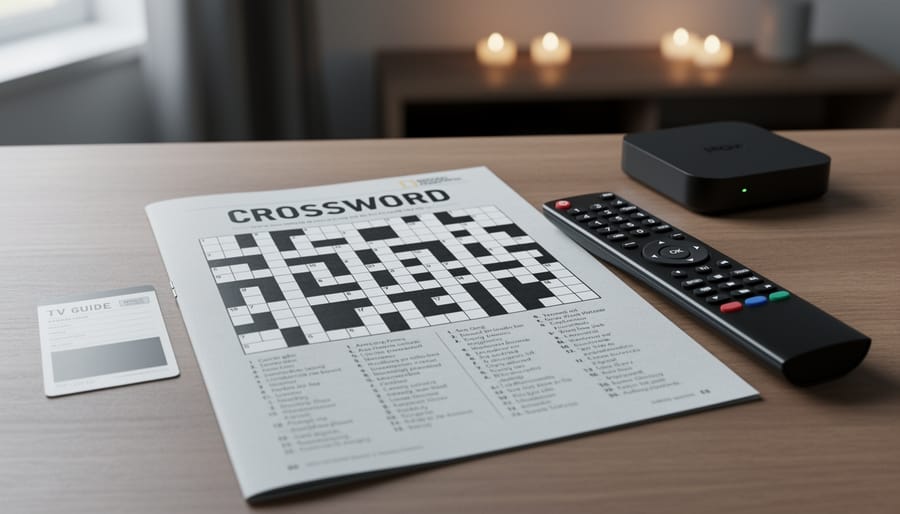
Stuck on a crossword clue asking for a TV guide abbreviation? The answer is almost always CH (channel), SER (series), EP (episode), or TBA (to be announced), depending on the number of letters your puzzle requires. These shorthand terms appear constantly in television listings, making them perfect fodder for crossword constructors who love abbreviation-based clues.
For teachers looking to sharpen students’ puzzle-solving skills or create engaging classroom review games, understanding TV guide abbreviations opens up a whole category of crossword clue types that students encounter regularly. These clues test vocabulary, pattern recognition, and real-world media literacy all at once.
Beyond the big four, you’ll find dozens of other TV-related abbreviations that pop up in puzzles: CC for closed captioning, HD for high definition, RE for repeat, and time zone markers like EST and PST. Day abbreviations (MON, TUE, WED) and program ratings (TV-MA) round out the list. The beauty of teaching these clues? Students already see them every time they browse streaming guides or check what’s on tonight.
This guide breaks down the most common TV guide abbreviations you’ll encounter in crosswords, complete with letter counts and context clues that help you (or your students) crack these puzzles faster. You can customize this knowledge into your own classroom crossword activities, turning a frustrating puzzle moment into a teachable pattern that sticks.
Why TV Guide Abbreviations Make Perfect Crossword Clues
Crossword constructors love TV guide abbreviations for several practical reasons. First, they’re short, most clock in at two or three letters, making them perfect fits for those tight grid spaces that longer words can’t fill. Second, they’re instantly recognizable. Nearly everyone has seen a TV listing at some point, so clues pointing to these abbreviations don’t require specialized knowledge. Third, they offer varied letter patterns. CH, EP, HD, and TBA all start with different letters and use different vowel-consonant combinations, giving constructors flexibility when building interlocking answers.
What makes an abbreviation crossword-worthy? It needs to be standard, widely used, and unambiguous. SER for series works because it appears consistently across TV guides. Made-up shortened forms or industry-only jargon won’t cut it. The abbreviation also needs to create fair, solvable clues that match the puzzle’s difficulty level.
For this guide, we chose the twelve abbreviations teachers and students encounter most often in classroom crossword activities and popular puzzles. CH, EP, and TBA top the list because they appear frequently and work for beginners. We included less common options like SAP and TV-MA to prepare students for trickier puzzles they might tackle as they gain confidence. Each abbreviation here represents a genuine TV guide term you’ll find in real programming schedules, making them authentic learning tools for vocabulary building and pattern recognition.
1. CH (Channel)
“CH” stands as the absolute king of TV guide abbreviations in crossword puzzles. You’ll see it everywhere because it’s short, instantly recognizable, and fits perfectly into tight puzzle grids.
Constructors love using this two-letter gem with clues like “TV guide abbr.” or “Part of a TV listing.” Sometimes they get creative with phrasings such as “What a remote surfs through, briefly” or “Station abbr.” The beauty of CH is that even beginning solvers can crack it once they spot the TV context.
When you’re teaching students to solve crosswords, CH makes an excellent entry point. It demonstrates how abbreviations work in puzzles while connecting to something familiar from their everyday media experience.
2. SER (Series)
SER is another three-letter workhorse that puzzle constructors rely on when crafting TV guide-related clues. This abbreviation shows up in program listings to indicate a series rather than a one-off special or movie. You’ll see it paired with episode numbers in actual TV guides, making it recognizable to anyone who’s browsed programming schedules.
Crossword clues for SER typically reference TV listings directly with phrasings like “TV listing abbr.” or “Program guide letters.” Some constructors get more specific with clues such as “Alternative to ‘EP'” or “TV schedule designation.” The beauty of SER lies in its versatility, it fits neatly into puzzle grids and offers enough vowel-consonant balance to work with various crossing answers.
When teaching students to recognize abbreviation patterns, SER makes an excellent example because it abbreviates a complete word they already know, helping them connect the dots between full terms and their shortened forms.
3. EP (Episode)
EP stands for “episode” and ranks among the most compact answers you’ll find in crossword puzzles. Constructors love this two-letter gem because it fits tight spaces and connects with something everyone recognizes from TV schedules.
You’ll typically see clues like “TV Guide abbr.” or “Series unit, briefly.” Some puzzles get more creative with phrasings such as “Part of a Netflix binge, for short” or “Season segment: Abbr.” The clue might reference specific shows too: “Single installment of ‘Friends,’ in TV listings.”
When you spot “for short” or “briefly” alongside television terminology, EP is often your answer. It’s straightforward enough for beginner puzzlers yet versatile enough to appear in challenging grids. Students catch on quickly once they recognize the pattern of two-letter TV abbreviations.
4. CC (Closed Captioning)
CC stands for Closed Captioning, the accessibility feature that displays dialogue and sound descriptions on screen for viewers who are deaf or hard of hearing. You’ll find this two-letter abbreviation in TV guides next to programs that offer captioning support.
Crossword constructors love CC because it’s short, widely recognized, and versatile. Clues often reference TV listings directly with phrases like “TV guide letters” or “Accessibility feature in TV guides, briefly.” You might also see clues about subtitles or hearing assistance that point to CC as the answer.
The accessibility angle makes CC especially valuable for classroom discussions. When this clue appears in student puzzles, it opens conversations about inclusive design and how technology helps everyone access entertainment and information equally.
5. HD (High Definition)
HD stands for High Definition, the broadcast quality standard that transformed television viewing in the 2000s. This two-letter abbreviation appears constantly in TV listings to indicate enhanced picture quality, making it instantly familiar to most solvers.
Crossword constructors appreciate HD’s versatility. You’ll encounter clues like “TV quality letters,” “Sharp broadcast inits.,” or “Modern TV standard: Abbr.” The clue might reference clarity directly with phrases like “Crystal-clear TV format” or play on the definition aspect with “High ___.”
For classroom puzzles, HD works beautifully as an accessible answer that students recognize from their everyday media consumption. It demonstrates how modern technology creates new vocabulary while maintaining the two-letter brevity that makes crosswords challenging yet solvable.
6. RE (Repeat or Rerun)
RE stands for “repeat” or “rerun” in TV guide listings, marking shows that have already aired. This two-letter abbreviation packs a lot of meaning into a tiny space, making it perfect for crossword grids where real estate matters.
Crossword constructors love RE because it’s short and versatile. You’ll typically see clues like “TV guide letters for a rerun,” “Repeat programming abbr.,” or “Encore airing letters.” Some constructors get creative with wordplay: “Second showing, for short” or “Not a first-run, briefly.”
When teaching students to solve these clues, point out the telltale words: “repeat,” “rerun,” “encore,” “again,” or “second airing.” Combined with “abbr.” or “briefly,” these signal a two-letter answer. RE works beautifully in classroom crossword games because students already understand the concept of reruns from their own TV watching experience.
7. MIN (Minutes)

MIN is one of those crossword staples that appears regularly in TV guide contexts, though solvers sometimes overlook it because they’re thinking too literally about television terms. This three-letter abbreviation shows up whenever programming guides list show durations like “30 MIN” or “90 MIN,” making it a natural fit for puzzles.
Crossword constructors typically clue MIN with straightforward phrases like “TV listing time unit: Abbr.” or “Program duration, briefly.” You might also see clues that play on the dual nature of minutes as both time and meeting records, such as “They’re kept at meetings: Abbr.” The inclusion of “Abbr.” signals that you’re looking for a shortened form rather than spelling out “minutes.”
When creating classroom crosswords, MIN works beautifully because students encounter this abbreviation across multiple contexts, math problems, science experiments, and daily schedules. Teachers can adapt keyword localization strategies to ensure these common abbreviations resonate with students from different backgrounds, making puzzle-solving more inclusive and accessible for everyone in the classroom.
8. TBA (To Be Announced)
TBA stands for “To Be Announced” and appears frequently in TV listings when programming details haven’t been finalized yet. This three-letter abbreviation is a crossword constructor’s dream because it’s instantly recognizable and fits perfectly into tight grid spaces. You’ll see it clued as “TV schedule letters,” “Programming unknown, in TV guides,” or simply “Not yet scheduled, briefly.”
What makes TBA especially valuable for classroom crossword puzzles is its versatility, students encounter these letters in sports schedules, concert announcements, and event planning, not just television. When creating review games like a printable Jeopardy template or custom crossword, TBA works beautifully as a clue that tests students’ understanding of common abbreviations while keeping the puzzle accessible and engaging.
9. SAP (Secondary Audio Program)
SAP stands for Secondary Audio Program, a feature that lets viewers switch to an alternate audio track, often in a different language. While less frequent than CH or EP, SAP appears in crosswords when constructors need a three-letter TV-related abbreviation. You’ll typically see clues like “Alternate audio option: Abbr.” or “Bilingual broadcast feature: Abbr.” that hint at the language-switching function. Because SAP involves language choice, it connects naturally to classroom language learning activities. Teachers working on media literacy or Spanish class review might incorporate this abbreviation when they write Jeopardy questions about broadcasting terms or accessibility features, helping students understand how television accommodates diverse audiences.
10. TV-MA (Mature Audience Rating)
TV-MA stands for “TV Mature Audience” and represents content suitable only for adults. While this five-letter abbreviation appears less frequently in crosswords than shorter answers, constructors occasionally use it when they need a longer fill or want to reference television ratings. You might see clues like “Adult programming designation” or “Mature content abbr.” This rating became standard in 1997, so it works well for modern puzzle themes.
Crossword constructors generally prefer shorter rating abbreviations like TV-G or TV-Y because they fit grid constraints better. However, TV-MA offers variety when builders need exactly five letters. The hyphen technically makes it two separate elements, but puzzles treat it as one continuous answer without the dash.
When teaching students about rating abbreviations, explain that these codes help families choose appropriate programming, a real-world application that makes the puzzle answer more meaningful than just random letters.
11. EST and PST (Time Zone Abbreviations)
TV schedules routinely list show times followed by EST (Eastern Standard Time) or PST (Pacific Standard Time), making these three-letter abbreviations crossword puzzle regulars. Constructors love them because they’re instantly recognizable to American solvers and fit neatly into grid patterns.
Clues typically reference broadcasting or scheduling: “TV schedule letters,” “Broadcast time abbr.,” or “L.A. time zone initials.” Sometimes you’ll see location-based hints like “West Coast time zone: Abbr.” for PST or “N.Y. time zone” for EST.
Other time zones appear less frequently but are valid answers: CST (Central Standard Time) and MST (Mountain Standard Time) follow the same three-letter pattern. During daylight saving months, you might encounter EDT (Eastern Daylight Time) or PDT (Pacific Daylight Time) instead.
For classroom puzzles, time zone abbreviations connect geography with everyday scheduling concepts. Students learn abbreviation patterns while reinforcing their understanding of how time zones work across different regions.
12. MON, TUE, WED (Day Abbreviations)
Day-of-the-week abbreviations are among the most reliable three-letter answers in crossword puzzles, and they appear frequently in TV guide contexts. MON, TUE, WED, THU, FRI, SAT, and SUN are standard abbreviations that television schedules use to indicate when programs air.
Crossword constructors love these abbreviations because they provide consistent three-letter patterns with varied vowel and consonant combinations. You’ll see clues like “TV schedule abbr.” or “Day in a TV listing.” Sometimes the clue gets more specific: “Primetime day: Abbr.” or “Weekend day in a program guide.”
These abbreviations work perfectly for classroom crosswords because students already know the days of the week. They’re accessible entry points that build confidence in beginning puzzle solvers. When creating review games, you can use day abbreviations as “gimme” clues that help students get started and feel successful. The recognition comes quickly, making these abbreviations ideal for crosswords designed for younger grades or students new to puzzle solving.
Quick Reference Guide to Crossword Abbreviation Clues
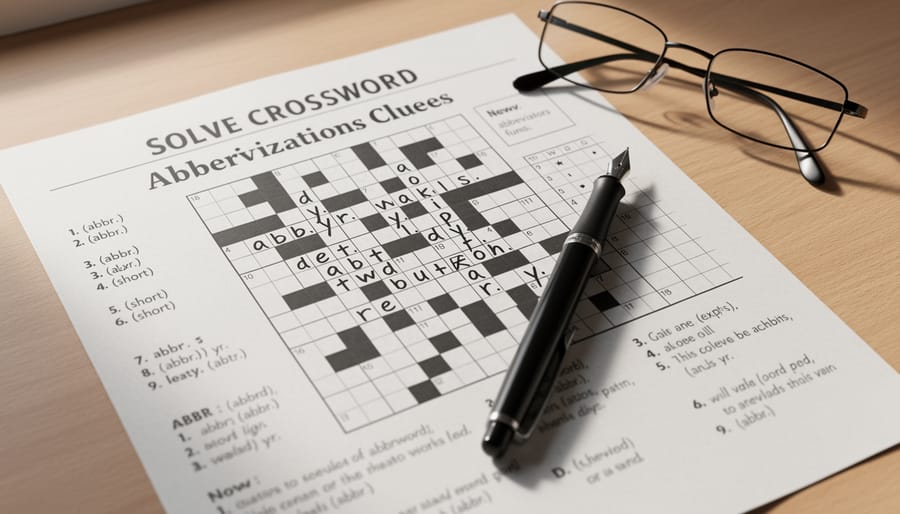
Crossword constructors leave you breadcrumbs when they’re asking for an abbreviation. Once you spot the signals, you’ll know immediately that the answer should be shortened rather than spelled out in full.
The most obvious clue is when you see “Abbr.” at the end of the clue, which directly tells you the answer is abbreviated. But constructors use many other hints too. Watch for these telltale phrases that signal an abbreviation answer:
- “For short”, indicates the answer is a shortened version
- “Briefly”, suggests a condensed form of a longer word
- “In brief”, points to an abbreviated answer
- “In short”, another way of saying the answer is shortened
- “Initially”, sometimes indicates an acronym using first letters
- Periods within the clue, often mirror the format of the answer
Teaching students to recognize these patterns turns puzzle-solving into a detective game. Point out that TV guide clues often include context words like “schedule,” “listing,” “programming,” or “broadcast” paired with these abbreviation signals. When they see “Channel, briefly” or “Episode, for short,” they’ll know to think in letters rather than full words.
Create a classroom anchor chart listing common signal phrases alongside examples of abbreviated answers. Students catch on quickly when they practice with familiar TV guide terms like CH, EP, and TBA. The pattern recognition skills they develop apply across all types of crossword abbreviation clues, not just television-related ones.
Using Crossword Puzzles as Classroom Review Games
Crossword puzzles transform abbreviation practice from mundane memorization into an engaging challenge that students actually look forward to. When you create custom puzzles featuring TV guide abbreviations and other subject-specific terms, you’re building a review activity that works across multiple cognitive levels simultaneously.
Start by identifying vocabulary terms from your current unit that can work as crossword answers. Mix in common abbreviations like CH, EP, or TBA alongside content-specific terms to create varied puzzle difficulty. For elementary students, focus on simpler three-letter answers like MON, TUE, and WED when teaching days of the week or time concepts. Middle and high school teachers can incorporate more sophisticated abbreviations like SAP or TV-MA while connecting them to media literacy discussions or language arts units.
The beauty of crossword puzzles lies in their flexibility. A science teacher might create clues about measurement abbreviations (MIN for minutes) alongside scientific terms. Language arts educators can build puzzles that reinforce literary terms while including abbreviations like SER (series) when discussing episodic storytelling. Social studies teachers find time zone abbreviations (EST, PST) perfect for geography lessons.
These puzzles work particularly well for differentiated instruction. Create multiple versions with varying difficulty levels, or use the same puzzle structure with adjusted clues for different reading abilities. Students working in pairs develop collaboration skills while solving, and the immediate feedback of completed puzzles provides satisfying closure that motivates continued effort. You can even challenge advanced students to create their own crossword puzzles using abbreviations from any subject area, which deepens understanding through the creative process.
Common Questions About TV Guide Crossword Clues
Students often feel stuck when they encounter abbreviation clues for the first time, and teachers want practical ways to help them develop pattern recognition. These questions come up frequently in classrooms where crosswords are used as review tools.
How do I know when a crossword clue wants an abbreviation?
Look for words like “abbr.” or “briefly” in the clue, or phrases such as “in short” or “for short.” Clues mentioning TV guides, programming schedules, or listings usually want abbreviated answers like CH, SER, or EP.
What if the letter count doesn’t match the abbreviations I know?
Check whether the clue specifies a time zone (EST, PST) or a day (MON, TUE) rather than a program element. Three-letter answers like TBA, MIN, or SAP expand your options beyond the common two-letter abbreviations.
Are crossword abbreviations the same as what appears in actual TV guides?
Yes, constructors use authentic abbreviations that viewers see in real programming schedules. Learning these for puzzles also helps students read and understand actual TV listings.
What’s the best strategy for teaching abbreviation clues to beginners?
Start by having students create a reference list of common two-letter and three-letter abbreviations they encounter. Practice with puzzles that clearly mark abbreviation clues before moving to more subtle phrasing.
The beauty of abbreviation clues is that they follow predictable patterns once students learn to spot the signals. Encourage your class to keep a running list of abbreviations they discover, which builds both puzzle-solving confidence and real-world media literacy. When students understand that CC means closed captioning or RE signals a rerun, they’re developing vocabulary that extends beyond the puzzle grid into everyday viewing experiences.
Understanding common TV guide abbreviations transforms crosswords from frustrating puzzles into enjoyable challenges your students can actually solve. When learners recognize that CH means channel, EP stands for episode, or TBA signals “to be announced,” they approach clues with confidence instead of confusion. These twelve abbreviations you’ve explored aren’t just crossword answers, they’re patterns that help students decode clues across all puzzle types.
The beauty of crossword puzzles in your classroom lies in their flexibility. You can customize them for any subject, any grade level, and any learning objective. Use them as warm-up activities on Monday mornings, review games before tests, or engaging Friday fun that still builds vocabulary and critical thinking skills. Students who struggle with traditional worksheets often shine when solving puzzles, because the format feels less like work and more like play.
Start small if you’re new to classroom crosswords. Pick five or six abbreviations like CH, HD, and MIN for a simple puzzle, then gradually increase complexity as your students gain confidence. The moment they shout out answers and race to complete sections, you’ll see firsthand how these interactive tools energize learning and make even routine review sessions something students look forward to.