
How to Solve ‘Boarded’ Crossword Clues: Quick Answers and Patterns for Your Classroom Puzzles
The crossword clue “Boarded” most commonly answers to GOTON (5 letters), GOTONTO (7 letters), STY (3 letters), or FED (3 letters), depending on the puzzle’s letter count and context. GOTON works when the clue refers to getting on a vehicle or plane, while STY fits wordplay variations like “Where boars are boarded.” FED appears when “boarded” means providing meals or lodging, and GOTONTO suits longer spaces describing the act of climbing aboard. Your students can crack these clues quickly by first counting the available spaces, then considering whether the clue uses straightforward or punny language.
Teaching crossword solving in your classroom transforms puzzle time from guesswork into strategic thinking. When students learn to decode “Boarded” clues systematically, they’re actually practicing context analysis, vocabulary building, and pattern recognition. The best part? Once they master the approach for this clue type, they can apply the same method to hundreds of others. “Boarded” appears frequently in major publications, including the NYT Crossword, Thomas Joseph puzzles, the Wall Street Journal, and Newsday, making it an excellent teaching example that students will encounter again.
This guide walks you through a step-by-step process for helping students identify the right answer every time, complete with classroom-ready strategies you can customize for any grade level. You’ll discover how to set up quick verification checks, build student confidence with multiple solving paths, and turn a single clue into a repeatable learning moment.
What You Need to Solve ‘Boarded’ Clues
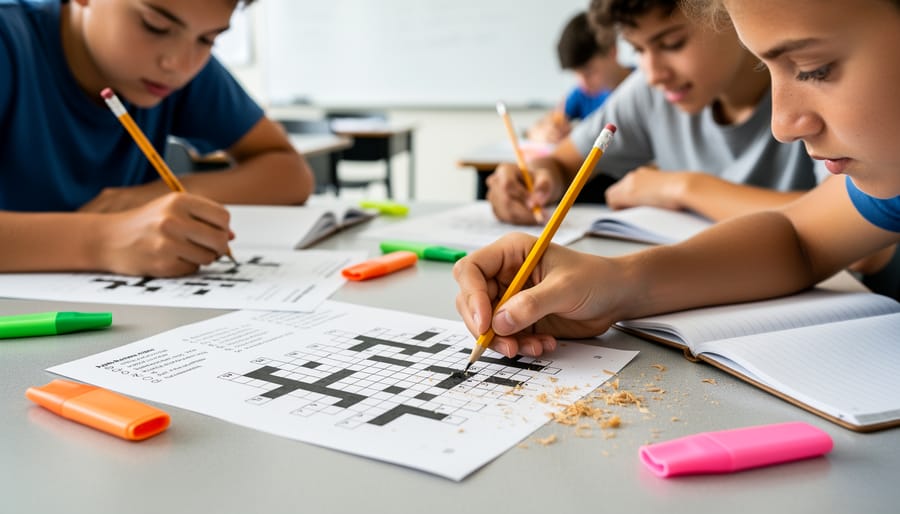
You don’t need fancy equipment to tackle “boarded” clues, just a few basics that help you work methodically through the puzzle. Having these tools ready makes solving faster and builds your students’ confidence as they learn to navigate crossword patterns.
Here’s what you’ll need:
- The crossword puzzle grid itself, with visible blank squares to count letters
- Publication name and date (like “Word Craze Mini, July 15, 2026”) if available
- Pencil or erasable pen for testing answers before committing
- Access to a crossword solver database (optional but helpful for checking possibilities)
The letter count matters most because it immediately tells you whether you’re looking for a 3-letter answer like STY or FED, a 5-letter answer like GOTON, or a 7-letter answer like GOTONTO. Without counting those squares first, you’re just guessing.
Knowing the publication source helps too. Different newspapers and puzzle apps favor different clue styles, the New York Times tends toward straightforward definitions, while Word Craze Mini loves puns like “Where boars are boarded.” If you know where the puzzle came from, you can anticipate the constructor’s likely approach.
A crossword database becomes especially useful when the obvious answer doesn’t fit. Since “boarded” has over 40 possible answers depending on context and length, having that reference lets you explore alternatives rather than getting stuck. For classroom use, showing students how to check their work against these resources teaches research skills alongside puzzle-solving.
Watch Out for Multiple Meanings

Before you fill in that grid, slow down. The word “boarded” doesn’t mean just one thing in crossword land, and jumping to the first answer that pops into your head can send students down the wrong path fast.
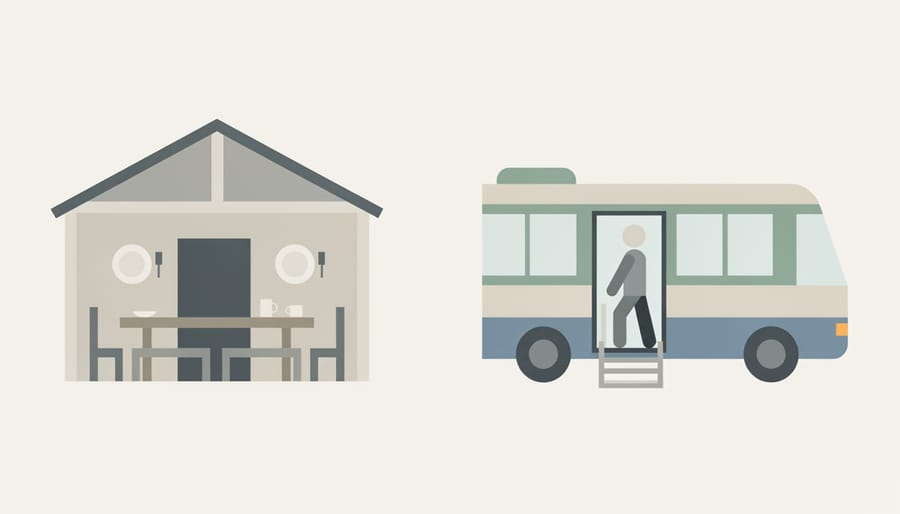
Think about how many ways you can “board” something. You board a bus or train when you get on (GOTON works for five letters). A stable boards horses, meaning it houses them. A hotel boards guests by providing meals (FED fits three letters). You can even board up a window by covering it with planks. Each meaning points to a completely different answer.
That’s where things get tricky for classroom puzzles. The clue “Where boars are boarded” isn’t asking about getting on transportation, it’s a pun leading to STY, the three-letter word for where pigs live. This appeared in Word Craze Mini as recently as July 15, 2026, and it catches solvers off guard every time because they’re thinking about the wrong kind of boarding.
Here’s your safety check: always count the letter spaces first. That alone eliminates most wrong answers. Then read the clue twice, looking for puns or double meanings. If the clue feels oddly worded or includes an unexpected noun like “boars,” you’re probably dealing with wordplay. Check crossing letters from other clues before committing to an answer. A student who fills in GOTON when the answer is actually STY just created problems for every intersecting word in that section of the puzzle.
Step-by-Step: Finding the Right Answer
Step 1: Count the Letter Spaces
The first move in solving any crossword clue is counting those blank squares in the grid. Look at the numbered space where your answer goes and count each box carefully, that’s your exact letter count, and it cuts your options down fast.
For ‘boarded,’ you’ll typically find 3, 5, or 7 squares waiting to be filled. A 3-letter space means you’re looking at answers like STY or FED. Five squares? You’re probably dealing with GOTON. Seven boxes lined up point toward GOTONTO. This simple count eliminates dozens of wrong answers before you even think about the clue’s meaning.
Students often skip this step and jump straight to guessing, but that wastes time. Train them to count first, write down the number, then move to the next step. It’s the quickest way to know whether they’re solving a transportation clue, a lodging reference, or something else entirely.
Step 2: Check Recent Puzzle Appearances
Knowing where a clue recently appeared helps you find the right answer faster. Most crossword databases let you search by clue phrase and see which publications used it. For example, “Where boars are boarded” showed up in Word Craze Mini on July 15, 2026, January 18, 2026, and November 21, 2025, all with the same 3-letter answer, STY. Other versions of “Boarded” appeared in the New York Times Crossword as a 5-letter answer back in January 1998, in Thomas Joseph puzzles as GOTON, and in the Wall Street Journal in July 2024 as the 7-letter GOTONTO.
If you’re helping students with a specific puzzle, check the publication name first. Each crossword has its own style, NYT tends toward wordplay, while smaller dailies often use straightforward definitions. Seeing past appearances tells you which interpretation of “boarded” the constructor likely intended, saving you from testing every possible meaning. Students can bookmark crossword-solver sites and practice this lookup step until it becomes second nature.
Step 3: Match Common Answers to Length
Once you know the letter count, match it to the most common answers that puzzle constructors use. Here’s what typically works for each length:
3-letter answers: STY and FED are your go-to options. STY solves the classic pun “Where boars are boarded”, think of a pig pen where boars are housed. FED means provided meals, as in “boarded and fed.” If you see a 3-letter slot, check whether the clue hints at animals or meal provision.
5-letter answers: GOTON is the most frequent choice. This represents boarding in the transportation sense, got on a bus, train, or plane. If the clue reads simply “Boarded” without extra context, GOTON usually fits the 5-letter spaces.
7-letter answers: GOTONTO works when you need more letters. It’s the same transportation meaning as GOTON, just expanded. The Wall Street Journal used this version in July 2024.
The key is recognizing which meaning the constructor wants. Transportation clues (GOTON, GOTONTO) are straightforward. Lodging clues might point to STY, especially with animal wordplay. Meal-related clues lean toward FED. Count your letters first, then consider the context, that combination narrows your choices fast.
Step 4: Cross-Check with Intersecting Letters
Intersecting letters are your built-in fact-checker. Once you’ve narrowed down a likely answer for ‘boarded,’ look at the squares where other words cross through it. Each crossing word shares one letter with your answer, and those letters must work in both directions.
If you think the answer is GOTON, check the vertical clues that intersect with those five squares. Does the second letter match what the crossing word needs? If a vertical word requires a vowel in that spot but GOTON has a consonant there, you’ve caught an error before committing to the wrong answer.
This cross-checking method works especially well with crossword hints that share letters. Start with the easiest clues in the grid, ones you’re confident about, and use those confirmed letters to validate your answer for ‘boarded.’ If three crossing words give you G-T-N in GOTON, and those letters fit perfectly, you’ve got strong confirmation.
When letters don’t match, don’t force it. Go back to Step 3 and try a different answer that fits the length. STY might work where GOTON doesn’t, or vice versa, depending on what the crossing words reveal.
Verify Your Answer and Move Forward
Once you’ve selected your answer, take a moment to confirm it before moving on. A quick verification catches mistakes early and saves time.
Start with the basics. Count the letters in your proposed answer and match them to the blank squares. GOTON fits five spaces, GOTONTO needs seven, and STY or FED each fill three. If your answer is too long or too short, it’s automatically wrong, no exceptions.
Next, check every crossing word. Write your answer into the grid and look at the letters it shares with intersecting clues. If GOTON creates an impossible letter combination in a down clue, you’ve got the wrong answer. Each crossing letter must work for both the across and down words simultaneously.
- Does the letter count match the number of blank squares exactly?
- Do all crossing words still form valid answers with the shared letters?
- Does the meaning fit the clue’s context (transportation, lodging, meals)?
- If stuck, consult a crossword solver database to review all 40+ possible answers for ‘boarded’
When something doesn’t fit, don’t force it. Recheck your letter count first, students often miscount the squares. Then reconsider the clue’s wording. Does “boarded” refer to getting on a train (GOTON), providing meals (FED), or housing animals (STY)? The context matters.
If you’re still stuck after trying the common answers, a crossword database becomes your best tool. With 40+ possible answers for “boarded” recorded across different publications, the database shows variations you might not have considered. Look up the specific clue wording, check when it last appeared, and review all verified answers for that exact phrase.
Once everything checks out, fill in the answer confidently and move to the next clue. Each verified answer gives you more crossing letters to work with, making the remaining puzzle easier to solve.
Why ‘Boarded’ Appears in So Many Forms
Crossword constructors treasure words like “boarded” because they unlock multiple puzzle-building opportunities. A single word can mean boarding a train (GOTON, GOTONTO), providing meals (FED), or housing animals (STY for the “boars” pun). This flexibility lets editors use the same base word across different puzzles without repeating themselves, which is why you’ll see “boarded” appearing in the NYT Crossword, Wall Street Journal, Thomas Joseph, and Word Craze Mini with completely different answers based on context.
When students work through these versatile clues, they develop pattern recognition skills that transfer across puzzles. They learn that context matters more than memorization. A clue about transportation likely wants GOTON, while animal-related wordplay points toward STY. This active problem-solving helps students remember better than passive vocabulary lists because they’re making connections between word meanings and puzzle mechanics. The 40+ possible answers for “boarded” in crossword databases prove that flexibility drives engagement, both for puzzle creators and classroom learners tackling these brain-teasers.
Common Questions About ‘Boarded’ Crossword Clues
Your students will likely have similar questions when they first encounter “boarded” clues, so addressing these upfront saves classroom time and builds their critical thinking skills. Here’s what educators and students ask most often about this versatile crossword entry.
What’s the most common answer for “boarded”?
It depends entirely on the letter count. For 5-letter spaces, GOTON is the standard answer. For 3-letter pun clues like “Where boars are boarded,” STY is the answer you want. FED works for 3-letter meal-related clues, while GOTONTO fits 7-letter transportation contexts.
How many possible answers exist for “boarded” clues?
Crossword databases list 40+ possible answers because “boarded” has multiple meanings. The actual answer depends on the specific clue wording, letter count, and the publication’s style.
Why does the same clue have different answers in different puzzles?
Different publications have different difficulty levels and wordplay preferences. The NYT might use GOTON for a straightforward transportation clue, while Word Craze Mini favors punny variations like STY for “Where boars are boarded.”
Can “boarded” actually mean FED?
Yes. When someone is “boarded,” they can receive room and board, which includes meals. FED appeared as a 3-letter answer in Newsday on September 16, 2023, showing this meal-provision meaning is valid in crosswords.
These questions highlight why context matters so much in puzzle-solving. Teaching your students to consider multiple meanings and check letter counts first prevents frustration and speeds up their solving process. When they understand that one clue can legitimately have dozens of answers depending on the puzzle’s requirements, they stop second-guessing themselves and start working methodically through the options.
Every time your students wrestle with a tricky crossword clue like ‘boarded,’ they’re building skills that reach far beyond the puzzle grid. These moments teach them to think flexibly about language, recognize patterns, and work through ambiguity, all while having fun. When you bring word puzzle games into your review sessions, you’re not just filling time; you’re creating opportunities for genuine problem-solving practice.
The ‘boarded’ clue perfectly demonstrates why puzzles work so well in education. Students learn that one word can mean multiple things depending on context, that abbreviations and wordplay follow discoverable rules, and that systematic thinking beats guessing every time. Whether they’re tackling GOTON for transportation, STY for a clever pun, or FED for provision of meals, they’re training their brains to analyze, evaluate, and verify.
Make these puzzle moments count. Celebrate when students spot the wordplay, encourage them to explain their reasoning, and watch as crossword-solving transforms from frustration into confidence. That’s the real answer you’re looking for.