
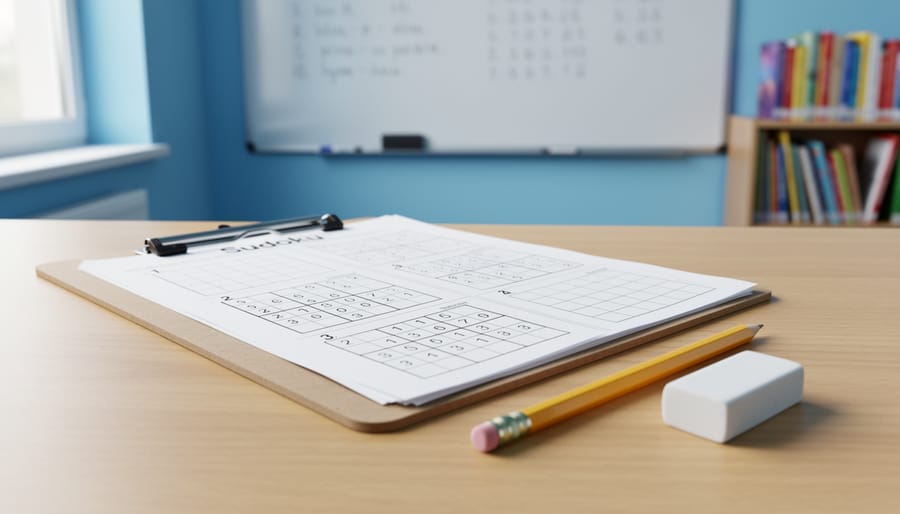
How to Print and Use Printable Sudoku Puzzles 4 Per Page in Your Classroom
Printing four Sudoku puzzles on a single page is as simple as downloading a ready-made PDF worksheet and selecting the right print settings on your computer. This format lets you maximize paper use, minimize prep time, and provide students with quick brain breaks that fit perfectly into those spare 10-15 minutes between lessons. As a practical application of game-based learning these compact puzzle sheets work beautifully for morning warm-ups, early finisher activities, or take-home homework assignments.
Teachers love this format because it’s budget-friendly and incredibly versatile. You can print sets ranging from 50 to 150 puzzles in various difficulty levels, including both beginner-friendly 4×4 grids for younger students and classic 9×9 puzzles for older learners. Most downloadable sets include answer keys, which means less grading time for you and immediate feedback opportunities for students who want to self-check their work.
The beauty of four-per-page layouts is that you can easily differentiate instruction by cutting the sheets into individual puzzles. Hand out just one puzzle to students who need extra time, or give the full sheet to advanced learners who crave a challenge. Whether you’re building critical thinking skills, teaching patience and persistence, or simply giving kids a mental reset during a long school day, these printable puzzles deliver real classroom value without eating into your planning time.
What You’ll Need to Get Started
Getting started with printable Sudoku puzzles for your classroom takes just a few basic supplies you probably already have on hand. Here’s everything you’ll need to begin incorporating these brain-boosting activities into your daily routine.
First, you’ll need access to printable Sudoku puzzle packs. These come in various formats designed for different age groups and skill levels. For younger students or beginners, look for 4×4 puzzle sets, which typically include 90-150 puzzles with mixed difficulty levels. Older students and more experienced puzzle-solvers can tackle classic 9×9 grids, available in sets ranging from 50 to 100 puzzles. Many packs include answer keys, making it easy to check student work quickly.
The essential materials and supplies include:
- A reliable printer with sufficient ink for multiple copies
- Standard printer paper (8.5×11 inches works perfectly for the 4-per-page format)
- Laminating sheets and a laminator for creating reusable puzzles
- File folders or binders to organize puzzles by difficulty level
- Dry-erase markers if you choose to laminate puzzles for repeated use
- Scissors or paper cutter for separating individual puzzles if needed
You don’t need all the optional supplies right away. Start with the basics and add organizational tools as you discover what works best for your classroom setup and teaching style.
Before You Print: Important Considerations
Before printing a stack of Sudoku puzzles, take a moment to make smart choices that’ll save you time, paper, and student frustration down the road.
The difficulty level matters more than you might think. A 4×4 puzzle set works beautifully for younger elementary students or complete beginners, while classic 9×9 grids suit older students who’ve mastered the basics. If you’re unsure where your class falls, print just one page first and test it with a few students before committing to printing 25 copies.
Check your ink levels before printing large batches. Sudoku grids use a fair amount of ink, especially when you’re printing four puzzles per page with bold lines and numbers. Running out halfway through printing 50 pages creates unnecessary hassle.
Make absolutely certain your puzzle pack includes answer keys. You’ll need them for quick verification during class and to help students who get genuinely stuck. The available sets mentioned earlier all come with answer sheets, but it’s worth double-checking before you download.
Finally, preview the PDF quality on your screen. Look for clear, readable numbers and well-defined grid lines. Blurry or faint grids frustrate students and make the puzzles harder than they should be. If the preview looks questionable, find a different source rather than wasting paper on poor-quality prints.
Step-by-Step: Printing Your 4-Per-Page Sudoku Puzzles
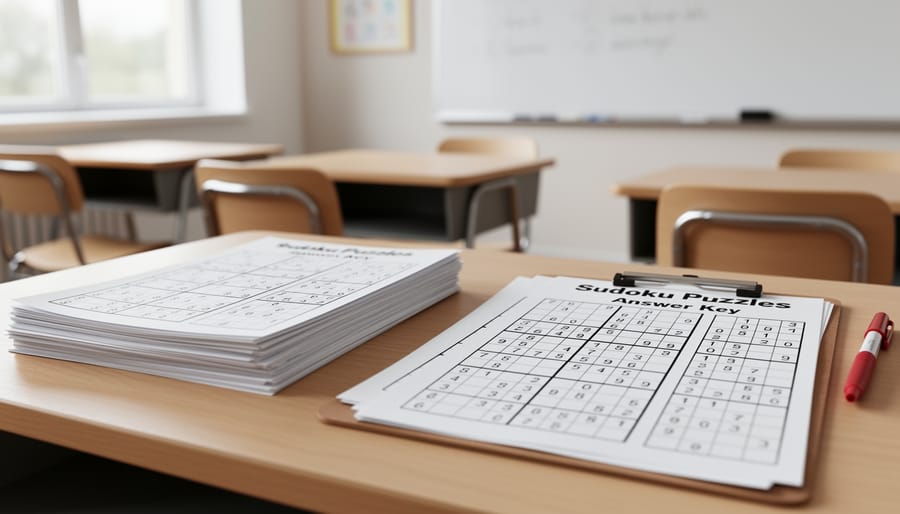
Choosing Your Puzzle Pack
Start by thinking about how you’ll use the puzzles. For 5-minute warm-ups or quick brain breaks, grab a set of 100 easy Sudoku puzzles with answer keys. They’re perfect for mixed-ability classrooms since everyone can jump in without getting stuck.
Teaching younger students or complete beginners? Pick the 150 4×4 puzzle sets designed for kids just starting out. These smaller grids build confidence fast. If you want more variety, the 90 4×4 puzzle pack offers easy, medium, and hard levels in one download, so you can differentiate without printing multiple files.
For older students who need bigger grids but struggle with tiny numbers, try the 100 large print Sudoku puzzles at easy to medium levels. The larger format works great for whole-class instruction when you’re projecting examples on the board.
Match your choice to how often you’ll use them. A 50-page easy set works well if you’re testing the waters. Larger collections of 100 to 150 puzzles give you enough variety to last all year without students seeing repeats.
Printing and Preparing Materials
Start by printing a test page to check alignment and quality before running multiple copies. Most puzzle packs come in standard PDF format that prints reliably on letter-size paper without special settings. Print your puzzle pages first, then run the answer sheets separately, this lets you distribute puzzles while keeping answer keys secure at your desk for quick checking.
For maximum efficiency, print puzzles in batches that match your class size. If you have 24 students, print six copies of a 4-per-page sheet for single-use activities. You can keep sheets whole and hand them out intact, or cut them into individual puzzles to distribute throughout the week. Whole sheets work great for homework or independent work time. Individual cut puzzles fit perfectly into morning work folders or early finisher stations.
Create a simple distribution system that saves prep time. Keep a folder labeled by difficulty level, Easy, Medium, Hard, so you can grab the right puzzles quickly. Store answer sheets in a separate folder or binder at your desk where students can’t access them. Some teachers laminate a few sets for stations where students use dry-erase markers, stretching each print job across weeks of use. This approach works especially well for morning warm-ups when you want reusable materials.
Using Sudoku Puzzles in Your Classroom

Once your puzzles are printed and organized, you’re ready to put them into action. The 4-per-page format gives you flexibility to try different approaches until you find what works best for your students.
Morning warm-ups work beautifully with these puzzles. Hand out one puzzle section as students arrive or settle in for the day. Set a timer for 5-10 minutes and let students work independently while you handle attendance or other administrative tasks. The consistent routine helps students transition into focused learning mode, and you’ll notice their solving speed improve over time.
Brain breaks between lessons offer another perfect opportunity. When you sense restlessness or need to shift gears between subjects, distribute puzzle sections for a quick 5-minute mental reset. This gives students a chance to step away from the previous lesson while keeping their minds engaged. You can also explore Sudoku variations to add variety to these breaks.
For early finishers, keep a folder or basket of puzzles at different difficulty levels within easy reach. Students who complete assignments ahead of classmates can grab a puzzle section without disrupting others. This eliminates the “what do I do now?” question and keeps advanced students productively engaged.
Homework assignments provide independent practice that parents appreciate. Send home one or two puzzle sections with the corresponding answer sheet. Students can self-check their work, building confidence and accountability. Since the puzzles don’t require parental teaching, they’re ideal for reinforcing problem-solving skills at home.
Checking student work takes seconds with the included answer sheets. Glance at completed puzzles to verify accuracy, or have students swap and check each other’s work for peer learning. Track which students consistently complete puzzles correctly and which struggle, then adjust difficulty levels accordingly. If most students finish easily, move to the next level up. If many leave puzzles incomplete or frustrated, step back to an easier set until confidence builds.
Tips for Maximizing Your Sudoku Puzzle Collection
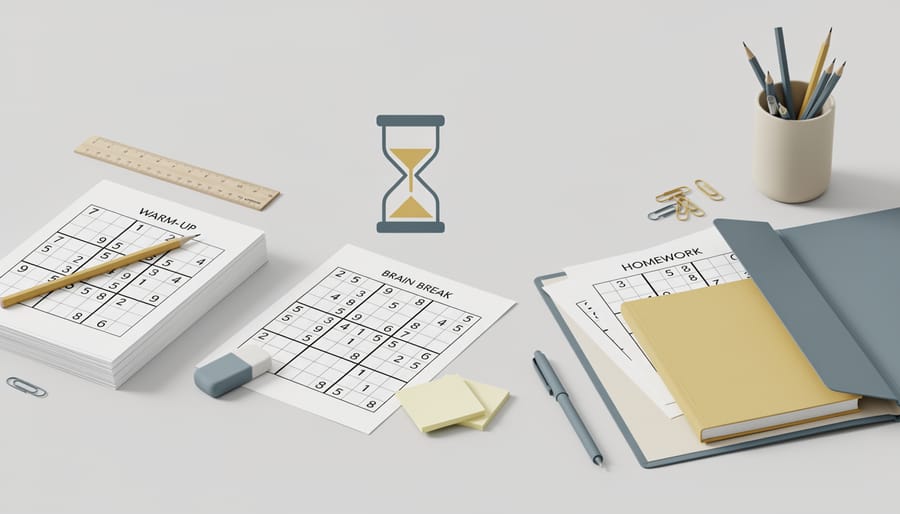
Stretch your puzzle collection further with a few smart strategies. Laminating sheets turns single-use puzzles into reusable resources. Students solve them with dry-erase markers, you wipe them clean, and the same puzzles work for multiple classes or the entire year. This approach cuts printing costs and gives you a permanent set of brain break activities.
Set up difficulty-based stations around your classroom. Designate one area for 4×4 beginner puzzles, another for easy 9×9 grids, and a third for medium or hard challenges. Students choose their level or rotate through stations as they build confidence. This setup works beautifully alongside other logic puzzles when you want varied thinking activities.
Mix formats deliberately to support all learners. Keep both 4×4 and 9×9 puzzle packs on hand. Struggling students start with smaller grids, advanced students tackle classic puzzles, and everyone finds the right challenge level. You can also differentiate within a single lesson by handing out different formats to different groups.
Organize your collection using folders or binders labeled by difficulty. Sort your 100-puzzle easy set into one folder, your medium-level pack into another, and your 4×4 beginner puzzles into a third. Clear labels save you from shuffling through papers when you need a quick warm-up activity.
Rotate puzzle sets every few weeks. If students see the same 50 puzzles repeatedly, engagement drops. Switch between your easy set, your 150-puzzle 4×4 collection, and your large print medium pack. Fresh puzzles maintain interest and prevent students from memorizing solutions instead of solving them.
Common Questions About Classroom Sudoku Puzzles
The questions teachers ask most often about using 4-per-page Sudoku puzzles reveal a need for practical guidance on implementation. You don’t have to be a Sudoku expert yourself to make these puzzles work in your classroom, but knowing what to expect helps you plan effectively.
What grade levels work best with the 4-per-page format?
The format itself works for grades 2-12, but you’ll want 4×4 puzzles for younger students (grades 2-4) and classic 9×9 grids for grades 5 and up. The key is matching puzzle difficulty to student ability, not just age.
How do I introduce Sudoku to students who’ve never played?
Start with a whole-class demonstration using a simple 4×4 puzzle on your board or projector. Walk through the rules (no repeating numbers in rows, columns, or boxes), complete one puzzle together, then let students try an easy puzzle independently with answer sheets available for self-checking.
Should I grade these puzzles or use them just for practice?
Most teachers find Sudoku works best as ungraded practice or enrichment since the goal is providing brain breaks and building logical thinking skills. If you do grade them, consider effort-based points rather than accuracy to reduce frustration and keep the activity enjoyable.
How often should I use Sudoku puzzles in my lessons?
Two to three times per week works well for most classrooms, either as a morning warm-up activity or a brain-teaser between lessons. Daily use can work too, especially if you rotate between different types of puzzles to maintain student interest throughout the year.
Teachers also wonder about differentiation. You can absolutely use multiple difficulty levels simultaneously. Keep sets of 50-150 puzzles organized by level in separate folders, and let students choose their own challenge or assign specific levels based on what you’ve observed about each student’s problem-solving comfort. Some students will fly through easy 4×4 puzzles and ask for harder ones within weeks, while others may need the entire year working with beginner-level grids.
The answer sheets included with puzzle packs make classroom management much easier. Students can check their own work, which builds independence and saves you from having to verify dozens of completed puzzles. This self-checking approach turns Sudoku into a genuinely independent activity rather than creating more grading work for you.
The 4-per-page format transforms a simple puzzle into a practical classroom tool that respects your budget and your time. You’ll cut paper usage significantly while keeping students engaged during those critical transition moments when focus starts to drift. Start small, download one pack of 50 or 100 puzzles that matches your grade level and test them during morning arrival or before lunch. Watch how students respond, notice which difficulty levels work best, and build from there. You don’t need a massive collection on day one. As you see what clicks with your class, add puzzle packs gradually: mix in some 4×4 grids for struggling learners, grab a set of medium-level challenges for your advanced students, or try large print versions for better visibility. The beauty of this format is its flexibility, you can grow your collection naturally based on what your students actually enjoy and what fits your classroom rhythm.