
How Strategy Games Help Develop Critical Thinking
Strategy games are not just entertainment. They are structured systems that require planning, analysis, and decision-making under constraints. Players are constantly evaluating options, predicting outcomes, and adjusting based on new information.
This process mirrors real-world problem-solving. Over time, it strengthens critical thinking by forcing players to think ahead, manage risk, and learn from mistakes.
Decision-Making Under Constraints
Strategy games limit resources, time, or available actions. Players cannot do everything at once, so they must prioritize.
This creates pressure to make decisions based on incomplete information. Players learn to weigh trade-offs and choose the best option given the situation.
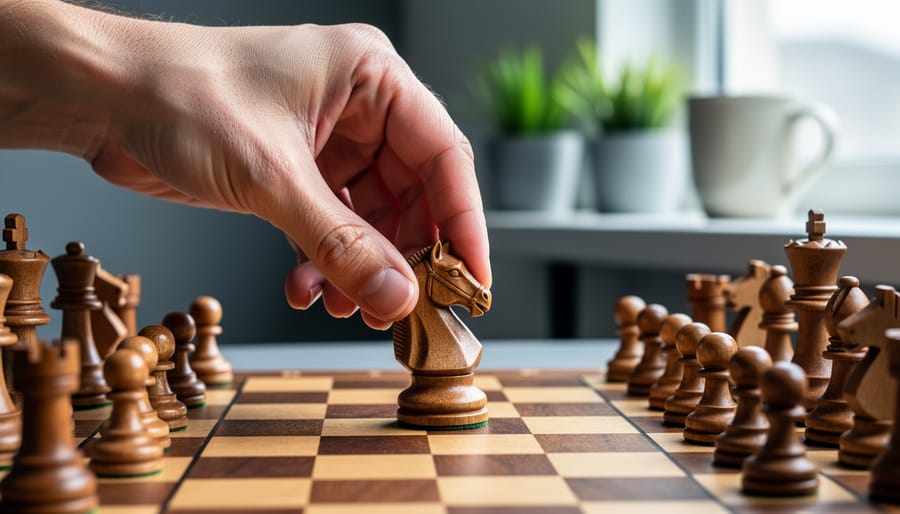
In games like chess or turn-based strategy titles, every move has consequences. One mistake can shift the entire outcome.
Skills Developed Through Constraint-Based Play
- Evaluating multiple options quickly
- Prioritizing actions based on impact
- Managing limited resources effectively
These skills translate directly to real-world scenarios where decisions must be made with limited data.
Pattern Recognition and Predictive Thinking
Strategy games rely heavily on patterns. Players begin to recognize common scenarios and anticipate what will happen next.
This is not memorization. It is the ability to identify structures and apply them to new situations.
Predictive thinking develops as players try to anticipate opponents’ moves. They learn to think several steps ahead and adjust strategies accordingly.
Over time, this builds a more analytical approach to problem-solving.
Adapting to Changing Conditions
No strategy game stays static. Conditions change as the game progresses. New variables are introduced, and initial plans may no longer work.
Players must adapt quickly. Sticking to a failing strategy leads to loss.
This teaches flexibility. Instead of relying on a fixed approach, players learn to adjust based on feedback.
Adaptability is a key component of critical thinking. It allows individuals to respond effectively when conditions shift.
Managing Risk and Uncertainty
Many strategy games involve uncertainty. Outcomes are not always predictable, and players must make decisions without knowing all variables.
This introduces risk management. Players learn to balance aggressive and conservative approaches depending on the situation.
They also learn to accept that not every decision will lead to success.
Risk Management Skills in Strategy Games
- Evaluating potential outcomes before acting
- Balancing short-term gains with long-term strategy
- Adjusting decisions based on probability and feedback
These skills improve decision-making in uncertain environments.
Logical Reasoning and Structured Thinking
Strategy games require logical progression. Each move builds on the previous one, and actions must follow a clear structure.
Players develop the ability to break down complex problems into smaller steps. This makes challenges easier to analyze and solve.
Games with defined rules reinforce structured thinking. Players must operate within constraints while still achieving their objectives.
This strengthens logical reasoning, which is essential for critical thinking.
Attention to Detail and Focus
Small details often determine success in strategy games. Missing a single move or misreading a situation can lead to failure.
Players learn to pay close attention to information. This includes tracking variables, monitoring opponents, and analyzing outcomes.
Sustained focus becomes necessary, especially in longer or more complex games.
This level of attention improves accuracy and reduces errors in decision-making.
Learning Through Feedback and Iteration
Strategy games provide immediate feedback. Players see the results of their decisions in real time.
Losses are part of the process. Each mistake provides information that can be used to improve future performance.
Players begin to analyze their own decisions. They identify what worked, what failed, and why.
This iterative process is one of the most effective ways to develop critical thinking.
Application in Card-Based Strategy Games
Card-based strategy games add another layer of complexity. Players must manage decks, anticipate draws, and adapt to random elements.
Games like Pokémon trading card battles require both planning and flexibility. Players build decks based on strategy, then adjust based on how the game unfolds.
Protecting and maintaining cards is also part of the experience. Using items like Pokemon card sleeves helps preserve decks, especially for players who engage in frequent play and testing.
This combination of planning, randomness, and adaptation strengthens analytical thinking.
Transferable Skills Beyond Gaming
The skills developed through strategy games extend beyond gameplay. They apply to academics, work, and everyday decision-making.
Players become more comfortable analyzing situations, identifying patterns, and making informed decisions.
They also develop resilience. Losing and improving builds a mindset focused on progress rather than immediate success.
These outcomes are valuable in any environment that requires problem-solving.
Final Take
Strategy games are effective tools for developing critical thinking because they simulate complex decision-making environments. They require analysis, planning, and adaptation under constraints.
Players learn to evaluate options, manage risk, and adjust strategies based on feedback. These skills are directly applicable to real-world challenges.
Consistent engagement with strategy-based systems builds stronger, more structured thinking over time.