
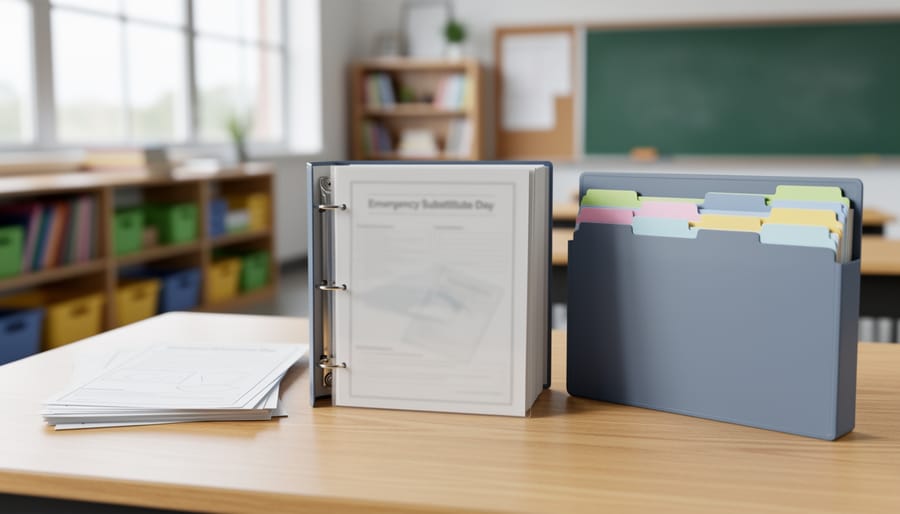
Free Emergency Sub Plans That Actually Work When You Need Them Most
You can download free emergency sub plans in PDF format from teacher resource sites, educational blogs, and district platforms that offer ready-to-print lesson packets for grades K-12. These no-prep materials save you from scrambling at 5 a.m. when you wake up sick or need an unexpected day off.
The best free PDFs come packed with clear instructions substitute teachers can follow without additional explanation. They include self-contained activities like reading comprehension passages, math review worksheets, creative writing prompts, and subject-specific enrichment tasks that keep students engaged without requiring special materials or advance setup.
Building a digital folder of these resources now means you’ll have a go-to solution ready when you need it most. Teachers who maintain organized emergency sub plans report less stress during absences and more confidence that their classrooms will run smoothly in their absence.
The key is finding quality free resources that match your grade level and curriculum, then customizing them slightly to fit your classroom routines. Most downloadable PDFs work for single-day absences, but you can mix and match several to create multi-day coverage if needed.
This guide shows you exactly where to find the best free emergency sub plan PDFs, what makes them effective for substitute teachers, and how to organize them into grab-and-go packets. You’ll also learn smart strategies for tailoring generic templates to reflect your students’ needs and your classroom culture, so every absence feels manageable instead of chaotic.
What Makes a Great Emergency Sub Plan PDF
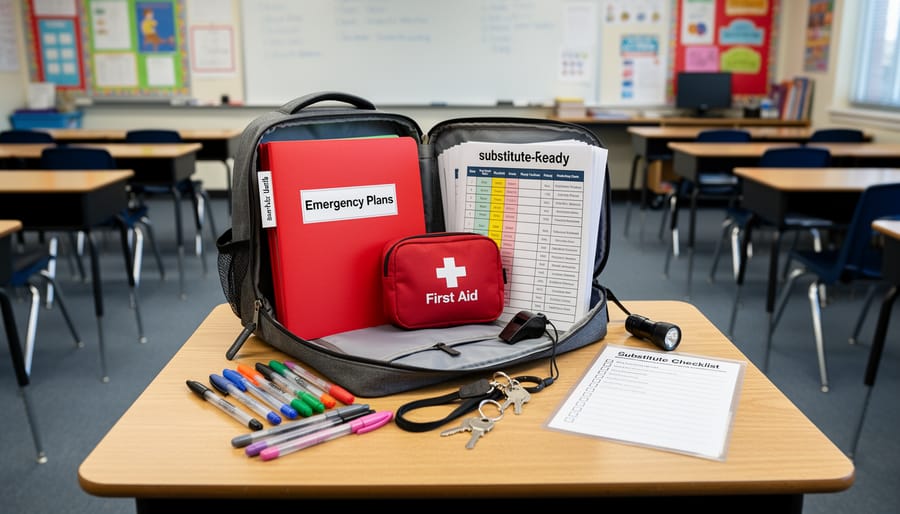
A great emergency sub plan PDF is one that a substitute teacher can pick up and run with, no questions asked, no frantic texts to you at the doctor’s office, and no chaos in your classroom while you’re out.
The best free emergency sub plans share a few key characteristics. First, they’re genuinely self-explanatory. Think crystal-clear instructions that a substitute who’s never met your students can follow without guessing. Every activity should include step-by-step directions, expected time frames, and what to do if students finish early. If a sub needs to interpret vague instructions or make judgment calls about your teaching style, the plan isn’t truly emergency-ready.
Second, effective emergency plans require zero prep and minimal materials. You shouldn’t need copies made, special supplies gathered, or technology set up. The activities work with basic classroom supplies, pencils, paper, maybe crayons. If a worksheet needs copying, it should already be copied and waiting in your emergency folder. Technology-dependent plans sound great until the substitute can’t log into your computer or the internet goes down.
Third, they keep students engaged without relying on your presence. Look for activities that are inherently interesting rather than just busy work. Puzzles that challenge critical thinking, reading passages with discussion questions, or math games that review skills all work better than endless worksheets. Students should be learning something, not just filling time.
The activities also need built-in differentiation. Your emergency plans will be used across different situations, so they should work for the range of learners in your class. The best free PDFs include extension activities for early finishers and simplified options for students who need more support.
Finally, truly great emergency sub plans include clear classroom management guidelines, your basic rules, seating chart, trusted student helpers, and what to do if problems arise. The substitute needs this context to maintain your classroom culture, even when you’re not there.
Where to Find Quality Free Emergency Sub Plan PDFs
When you need emergency sub plans at 6 a.m., you don’t have time to hunt through dozens of websites. Here’s where experienced teachers consistently find reliable, free PDFs that actually work.
Teachers Pay Teachers remains the go-to starting point, even though it’s known for paid resources. Filter specifically for “free” under price, and you’ll discover thousands of emergency sub plan PDFs. Many veteran teachers share their tested materials for free, and reviews from other educators help you identify which ones substitutes can genuinely follow without confusion.
Scholastic’s Teacher Resources section offers grade-specific emergency activities in PDF format. Their worksheets and reading comprehension materials work across subjects, and they’re professionally designed so they look polished when handed to a sub. No account creation needed for basic downloads.
provides hundreds of free printable worksheets and activity pages. While not labeled as “sub plans,” their materials work perfectly for emergency situations because each activity is self-contained with clear instructions. You can filter by grade, subject, and time required.
Pinterest serves as a powerful aggregator. Search “emergency sub plans PDF free” and you’ll find pins linking to teacher blogs where educators share their actual sub plan files. The visual layout helps you quickly assess whether materials match your grade level and teaching style.
| Source | Grade Levels | Subjects | Download Requirements |
|---|---|---|---|
| Teachers Pay Teachers | PreK-12 | All subjects | Free account required |
| Scholastic Teachers | PreK-8 | Reading, Math, Science | None for basic resources |
| PreK-5 | All elementary subjects | Free account (limited downloads) | |
| Teacher Blogs (via Pinterest) | Varies by blog | Varies by blog | Usually none |
Your school district’s shared drive often holds hidden gems. Check if your team has a folder for emergency plans. Many districts maintain collections of approved materials specifically for substitute situations, and these have the advantage of matching your curriculum and school policies.
The key is downloading and organizing these resources before you need them. Bookmark your three best sources, create a folder on your computer labeled “Emergency Sub Plans,” and spend one afternoon building your collection. That preparation means you’ll never face a panicked morning scramble again.
Building Your Own Plug-and-Teach Day Pack
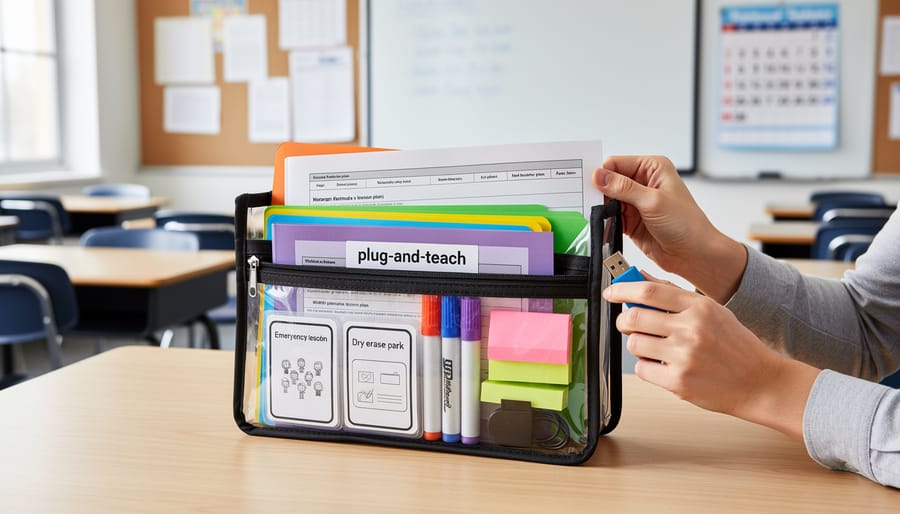
Essential Components Every Day Pack Needs
Every emergency sub pack needs a solid foundation of core materials that make the day run smoothly without you there. Think of these as the “sub survival kit” basics, documents and resources that answer the substitute’s most urgent questions and keep students productively engaged.
Start with a Class Information Sheet that covers the essentials: your daily schedule with exact times, class rules with consequences clearly stated, helpful student names (reading buddies, line leaders, or students who can answer procedural questions), and any critical allergies or medical needs. Include your classroom shouting control strategies and attention-getting signals the class already knows.
Your pack should include:
- Seating chart with student names (mark any students who need special accommodations or supports)
- Complete daily schedule including specials, lunch, recess, and dismissal procedures
- Emergency procedures and school-specific protocols (lockdown, fire drill, etc.)
- Master copies of all activities for the day, enough for your largest class
- Answer keys for any worksheets or activities included
- List of reliable student helpers and their typical roles
Beyond documentation, pack actual teaching materials that require zero prep. Include pencils, crayons or markers, scissors if needed, and any manipulatives or supplies the activities require. The substitute shouldn’t need to hunt through your cabinets or guess where materials live. Everything for the entire day should live in one clearly labeled folder or envelope, ready to grab and go the moment you realize you won’t make it to school.
Customizing Free Templates for Your Classroom
Generic templates give you a solid foundation, but the magic happens when you make them yours. Start by adding your classroom’s daily routine, your specific lunch time, recess schedule, and specialist rotations. Subs feel instantly more confident when they know exactly when things happen in your room.
Next, swap out the placeholder activities for ones that actually match what you’re teaching. If your free template includes a generic reading worksheet but you’re studying ecosystems, drop in a science article instead. Most PDFs are editable, so you can replace text boxes and activities while keeping the helpful formatting and structure.
Add your classroom management strategies right into the template. If you use a specific attention signal, behavior chart, or reward system, write it directly on the first page. Include where students sit, who needs extra support, and which kids can be trusted as helpers. These personal touches prevent chaos and help your sub maintain your established routines.
Create a “Class Cheat Sheet” section at the top of any template. List your non-negotiables (students must walk in the hallway), your go-to solutions (bathroom passes are on the hook by the door), and emergency contacts specific to your school. This transforms a general template into a roadmap for your particular classroom.
Keep one master copy of each customized template in a folder labeled by subject or grade level. When you need to update information, like a new student or changed schedule, you’ll only need to edit the master, then print fresh copies. This fifteen-minute investment now saves you from scrambling later when you wake up sick.
Subject-Specific Free Emergency Activities
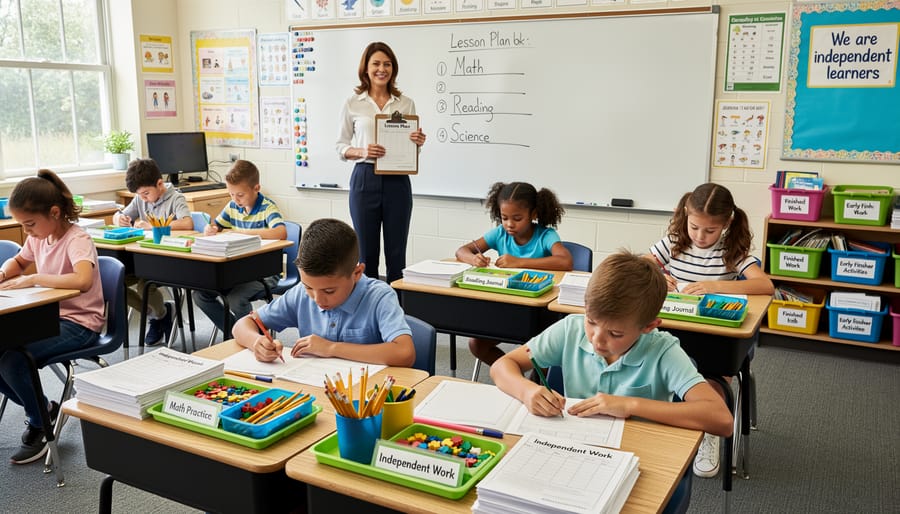
Math works best when subs have self-checking activities. Logic puzzles, Sudoku variations, and number pattern challenges let students work independently while staying productively engaged. Math riddles and problem-solving tasks that require showing work give substitutes an easy way to monitor participation without needing deep content knowledge.
For language arts, reading comprehension passages with multiple-choice questions are reliable standbys. Add vocabulary crosswords, grammar scavenger hunts, or creative writing prompts with clear rubrics. Free exit ticket PDFs adapted as quick writing assessments work surprisingly well, they’re short, focused, and subs can collect them as proof of engagement.
- Math Activities
- Logic puzzles, Sudoku, and self-checking problem sets work best because students can complete them independently and substitutes can verify completion without extensive subject expertise.
- Language Arts Resources
- Reading passages with comprehension questions, vocabulary games, and structured writing prompts give subs clear materials that don’t require lesson planning or deep literature knowledge.
- Science and Social Studies
- Article-based activities, diagram labeling, and research organizers keep students learning content while giving substitutes straightforward materials to distribute and collect.
- Review Games
- Subject-neutral formats like printable Jeopardy or trivia templates work across topics because you can pre-fill questions from any unit, making them adaptable for different subject emergencies.
Science and social studies benefit from article-based activities. Print current event analyses, diagram labeling sheets, or research graphic organizers that connect to ongoing units. These keep students engaged with content without requiring the sub to teach new concepts.
Universal options include brain teasers, word searches using unit vocabulary, and “Would You Rather” discussion prompts that connect to your curriculum. Keep a mix of grade-appropriate challenge levels so advanced students stay engaged while struggling learners aren’t overwhelmed. The best emergency activities require minimal explanation, have clear completion criteria, and actually relate to what students are learning rather than feeling like busywork.
Quick Tips for Organizing and Updating Your Sub Plans
Store your emergency sub plans where someone else can grab them, a clearly labeled binder on your desk, a specific drawer, or a bright folder pinned to a bulletin board. Tell a trusted colleague and your school secretary exactly where they live. You don’t want to be texting directions from a doctor’s office at 6 AM.
Update your plans at the end of each grading period or whenever your schedule changes. Student rosters shift, classroom procedures evolve, and that weekly helper chart you referenced in September looks nothing like the one you use in March. Set a recurring calendar reminder to review your materials every six to eight weeks.
Print fresh copies of time-sensitive activities before they expire. That “current events discussion” worksheet or seasonal word search loses relevance fast. Swap them out quarterly to keep content appropriate. If you use scoreboard timers for review games, include a quick reference sheet showing how to launch and display them, subs shouldn’t have to figure out your tech on the fly.
Create a simple one-page cover sheet that lives at the front of your binder. List your daily schedule, dismissal procedures, students with special accommodations, and where to find extra supplies. This cheat sheet saves substitutes from hunting through pages of plans when they just need to know when lunch happens.
Keep digital backups in your school email or cloud storage. If your printed binder walks away or you’re stuck at home, you can email a copy to the office instantly.