

10 Engaging Logic Puzzles for 4th Graders That Build Critical Thinking Skills
Logic puzzles give your 4th graders a powerful way to build critical thinking skills while keeping them genuinely engaged. These brain teasers range from grid-based deduction challenges to pattern recognition games, all calibrated to the sweet spot where your students can stretch their reasoning abilities without hitting frustration. You’ll find hundreds of ready-to-print options designed specifically for this age group, with difficulty levels from easy to intermediate that match where 9 and 10-year-olds naturally excel.
The best part? Most puzzles come with complete answer keys and require zero prep time beyond hitting print. Resources like Wayground offer 50+ worksheets targeting Grade 4 mathematical reasoning, while collections from WOO! Jr. provide variety packs with 9 different puzzle types to keep every student interested. Whether you need a quick warm-up activity, differentiated work for early finishers, or a full lesson on logical reasoning, having a diverse toolkit of puzzle formats means you can customize each challenge to your classroom’s needs and watch students light up when they crack the solution.
How We Selected These Logic Puzzles
We carefully chose these logic puzzles using criteria that matter most to teachers working with 4th graders. Each puzzle type needed to meet specific standards to earn a spot on this list:
- Difficulty level matched to 4th grade abilities (easy to intermediate range)
- Available as printable or customizable formats for classroom flexibility
- Clear alignment with critical thinking and mathematical reasoning development
- Proven engagement potential that keeps students motivated
- Variety in puzzle types to reach different learning styles
We focused on resources with substantial offerings, like Wayground’s collection of 50+ worksheets with complete answer keys and WOO! Jr.’s sets featuring 9 puzzles at varying difficulty levels. These verified resources provide the reliability you need when planning lessons. Our goal was identifying puzzles you can print today and use tomorrow without spending hours adapting materials or wondering if they’ll match your students’ abilities.
1. Grid-Based Logic Puzzles
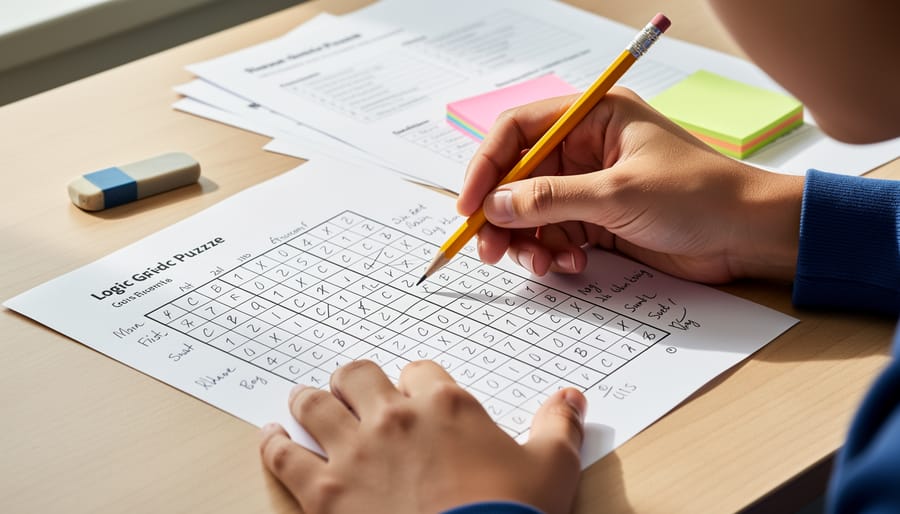
Grid-based logic puzzles are the workhorses of classroom critical thinking exercises. Students receive a blank chart and a set of clues, then use deductive reasoning to figure out which items match up. A classic example: five students each have a different pet and a different favorite color, and kids must determine who owns which pet by crossing off impossibilities until the solution emerges.
These puzzles teach students to organize information systematically and think methodically through a problem. Research shows logic puzzles build deductive reasoning skills that transfer directly to mathematical proof-writing later in their academic careers. Fourth graders love the “aha!” moment when the final pieces click into place.
Grid puzzles work beautifully as printable worksheets with answer keys (Wayground offers 50+ logic puzzle worksheets specifically for Grade 4), but they’re equally effective projected on a screen for whole-class solving. Try having teams work through one puzzle together during review time, with each group explaining their reasoning process afterward to build both logical thinking and communication skills.
2. Number Sequence Puzzles

Number sequence puzzles ask students to spot patterns and fill in missing numbers, a perfect match for 4th grade math skills. These puzzles might show a series like 2, 4, 6, 8, ___, where students identify the pattern (adding 2) and complete the sequence, or more challenging ones involving multiplication or skip-counting patterns.
What makes these puzzles particularly valuable is how they strengthen the pattern recognition skills students need for algebra readiness. When kids figure out whether a sequence grows by addition, multiplication, or another rule, they’re building mathematical reasoning muscles they’ll use throughout their education.
Try incorporating number sequences into your math warm-ups or exit tickets. You can adjust difficulty by changing the numbers or complexity of the pattern, start with simple addition sequences and gradually introduce multiplication patterns or two-step rules. Many teachers find these puzzles work beautifully as quick five-minute challenges that get students thinking mathematically right from the start of class, and they’re easy to display on your board or include in worksheet format.
3. Sudoku for Kids (4×4 and 6×6 Grids)
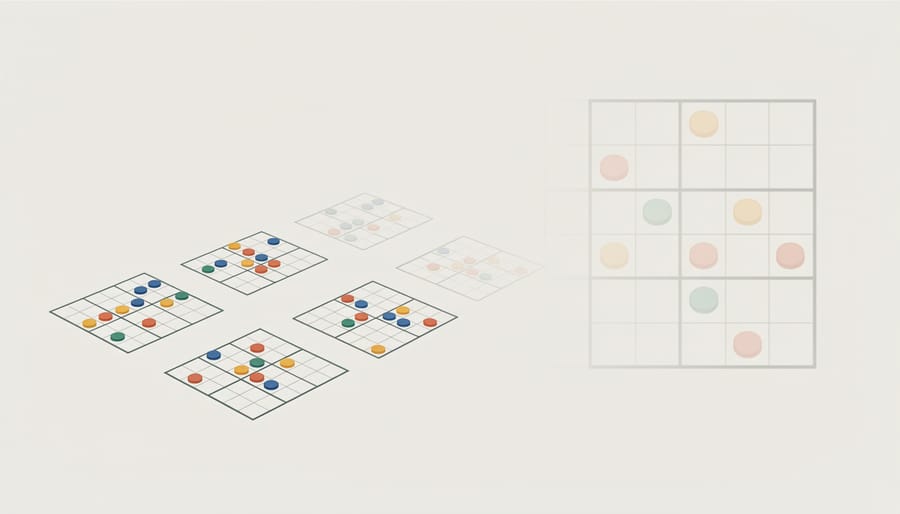
Sudoku puzzles designed for 4th graders use smaller grids that make the classic number puzzle accessible without frustration. Instead of the traditional 9×9 grid, these kid-friendly versions typically feature 4×4 or 6×6 grids that students can complete in 10-15 minutes. The simplified format introduces the core logical thinking skills that make Sudoku valuable while keeping the challenge manageable for developing brains.
These scaled-down puzzles teach students to scan rows and columns systematically, hold multiple constraints in working memory, and use process-of-elimination reasoning. A 4th grader working through a 6×6 grid learns to ask, “What numbers are already in this row? What’s left?” This type of methodical thinking transfers directly to math problem-solving and other academic tasks.
The beauty of Sudoku for this age group is its clear success feedback. When students fill in that final square correctly, they experience an immediate sense of accomplishment that builds confidence. Start with several 4×4 puzzles to establish the rules, then gradually introduce 6×6 grids as students gain comfort with the format.
4. Who Am I? Riddle Puzzles
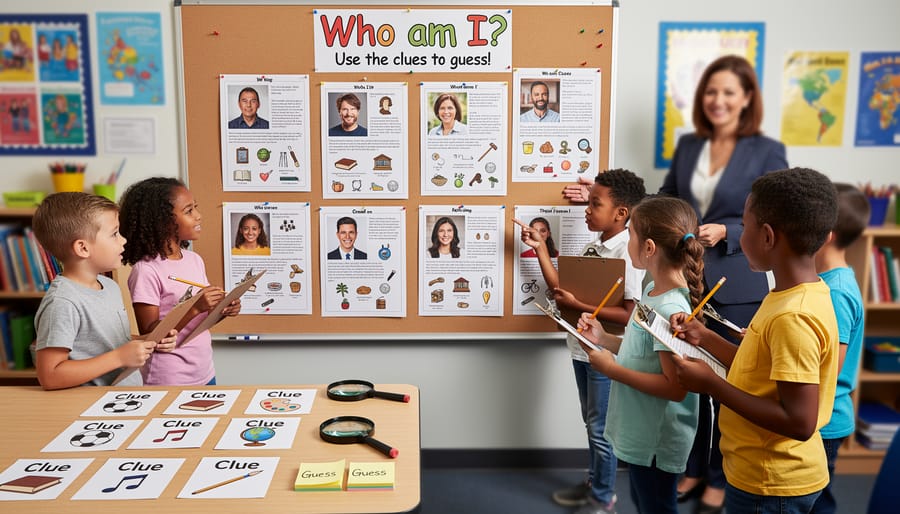
Who Am I? riddles invite students to play detective with words. Each puzzle presents three to five clues that progressively narrow down possibilities until students can identify the mystery subject. A typical example might start with “I have four legs,” continue with “You find me in the dining room,” and conclude with “People sit on chairs around me” (answer: table).
These puzzles strengthen reading comprehension because students must parse each statement carefully and hold multiple facts in working memory simultaneously. The logical deduction happens when they eliminate options that don’t fit all the clues. Unlike grid puzzles that show relationships visually, Who Am I? riddles require students to build their own mental model from text alone.
Teachers love these as five-minute warm-ups because they’re self-contained and require no materials beyond the riddle itself. You can read them aloud for struggling readers or display them as morning work. The format also scales beautifully, start with concrete objects (animals, classroom items) and progress to abstract concepts (seasons, emotions) as students gain confidence. Many printable worksheet collections include Who Am I? riddles alongside other puzzle types, giving you variety within a single resource.
5. Visual Pattern Puzzles

Visual pattern puzzles tap into a different kind of thinking than word-based logic problems, making them perfect for reaching students who are strong visual learners. These puzzles present sequences of shapes, colors, or images where students must identify the underlying rule and predict what comes next or find the missing piece. A classic example might show a pattern like circle-square-square-circle-square-square, and students determine that two squares always follow each circle.
What makes these puzzles particularly valuable in 4th grade classrooms is how they develop visual-spatial reasoning, which connects to math concepts like geometry and patterns while also supporting skills used in science and art. They’re quick to complete, which means you can use them as brain breaks or warm-up activities when transitioning between subjects. Students who sometimes struggle with reading-heavy logic puzzles often shine with visual patterns, giving you another way to build their confidence in logical thinking.
You’ll find visual pattern puzzles mixed into many printable logic puzzle collections, and they work beautifully when projected on your classroom screen for whole-group problem-solving discussions.
6. Story Logic Problems
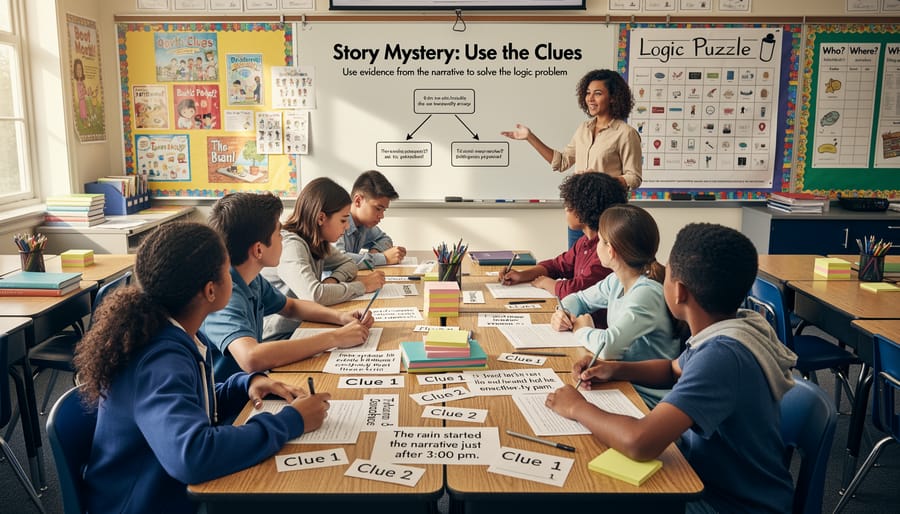
Story logic problems transform traditional word problems into engaging mini-mysteries that fourth graders can’t wait to solve. These narrative puzzles present a scenario, maybe a missing item at school, friends planning a party, or animals preparing for winter, and students must read carefully, track multiple clues, and apply logical reasoning to reach the solution. Unlike straightforward comprehension questions, story logic problems require kids to hold several pieces of information in their minds simultaneously while eliminating possibilities.
The dual benefit makes these puzzles particularly valuable in the classroom. Students strengthen reading comprehension as they parse complex sentences and identify relevant details, while simultaneously building the same deductive reasoning skills they use in math review games. A puzzle about organizing a field trip roster, for example, exercises literacy and logic in equal measure. Many teachers use story logic problems as bridge activities between language arts and math periods, or as Friday challenges that reward careful reading with that satisfying “aha!” moment. The narrative format keeps students engaged longer than abstract puzzles might, because they’re invested in solving the story.
7. Code-Breaking Puzzles
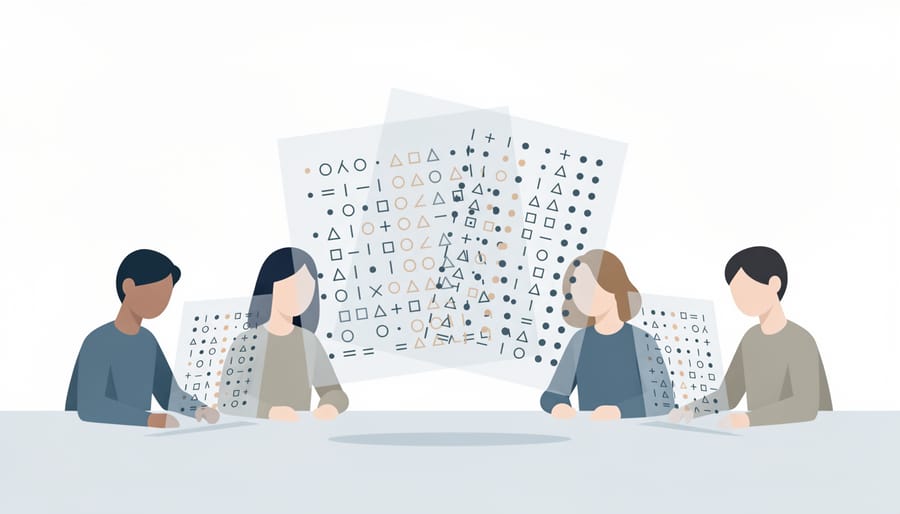
Code-breaking puzzles turn your 4th graders into secret agents for the day, and the motivational power of cracking a hidden message can’t be overstated. These cipher and substitution puzzles require students to recognize patterns, test hypotheses, and apply logical rules to decode words or phrases. A simple letter-substitution cipher (where A becomes D, B becomes E, and so on) challenges students to spot relationships between symbols and letters, building both analytical skills and persistence.
What makes these puzzles particularly valuable is their connection to real-world problem-solving. Students learn that complex challenges can be solved systematically by breaking them into smaller steps, identifying the most common letters, looking for single-letter words, testing their theories. The “aha!” moment when the message finally makes sense reinforces that logical thinking pays off. Code-breakers work beautifully as Friday fun activities or as extension challenges for early finishers, and you can easily customize difficulty by adjusting cipher complexity or message length to match your students’ abilities.
8. Math Logic Riddles

Math logic riddles combine computation with clever thinking, making them perfect for students who need extra challenge or those who claim they “don’t like math.” These puzzles present scenarios like: “I’m thinking of two numbers. When I add them, I get 15. When I multiply them, I get 56. What are the numbers?” Students can’t just calculate their way out, they need to test possibilities, eliminate options, and apply logical reasoning alongside their multiplication and addition facts.
What makes these riddles especially valuable is how naturally they align with 4th grade standards. You’re covering operations, fractions, or word problem skills while students barely notice they’re practicing math. They work beautifully for differentiation too: give struggling students riddles with smaller numbers and one logical step, while advanced learners tackle multi-step problems involving larger numbers or fractions. Use them as brain teasers to start math class, challenge problems for early finishers, or bonus questions on assessments. Students who typically resist traditional worksheets often light up when presented with a riddle’s puzzle-like format.
9. Crossword-Style Logic Puzzles
Crossword-style logic puzzles flip the traditional format by requiring students to think through clues that demand deduction, not just vocabulary recall. Instead of “Five-letter word for feline,” a clue might read “This animal can be found in two boxes: one owned by someone who loves math, and one by someone who doesn’t like dogs.” Students must work across clues to eliminate possibilities and arrive at the answer.
These puzzles shine in their versatility. You can theme them around science vocabulary (where clues describe properties or relationships), social studies (where geographic or historical facts connect), or even character traits in a current read-aloud. They naturally build vocabulary in context while reinforcing the logical connections between concepts.
Fourth graders often find crossword-style formats less intimidating than dense grid puzzles, making them ideal gateway activities. The familiar structure gives students confidence, while the logic component ensures they’re truly thinking, not just guessing words. They work beautifully as collaborative challenges where partners can talk through the deduction process together.
10. Team Challenge Logic Sets
Team challenge logic sets bundle multiple puzzle types into ready-made collections perfect for group work. These sets typically include 9 or more puzzles ranging from easy to intermediate difficulty, giving you built-in differentiation without extra prep work. Each student can tackle puzzles at their level while contributing to the team’s overall progress.
Use these sets to make review fun through collaborative problem-solving. Divide your class into small groups and assign each team a set of varied puzzles, grid challenges, number sequences, and riddles mixed together. This approach keeps engagement high because students encounter different formats rather than repeating the same puzzle type.
The varying difficulty levels let you assign roles strategically. Stronger logical thinkers can mentor peers through tougher puzzles while everyone contributes to easier ones. You can even create friendly competition by tracking which team completes their full set first, turning critical thinking practice into an energizing classroom event that builds both reasoning skills and teamwork.
Where to Find Quality Logic Puzzles for Your 4th Graders
Finding quality logic puzzles that match your 4th graders’ skill level doesn’t have to be time-consuming. Printable PDF worksheets with complete answer keys are your best bet for classroom-ready materials that save prep time and support independent learning.
Free educational websites offer substantial collections specifically designed for Grade 4 students. Wayground provides 50+ logic puzzles worksheets for Grade 4, all formatted as printable PDFs with practice problems and answer keys. These worksheets focus on enhancing critical thinking skills and mathematical reasoning development at an age-appropriate level.
For variety in a single download, sites like WOO! Jr. offer printable logic puzzle sets featuring 9 puzzles ranging from easy to intermediate difficulty. This built-in differentiation lets you match puzzles to individual student readiness without hunting through multiple sources.
When selecting puzzles, prioritize resources that clearly indicate grade level and difficulty range. Look for collections that offer multiple puzzle types rather than just one format, and verify that answer keys are included. Many teachers save their favorite printable PDFs to a classroom drive, making it easy to reuse puzzles year after year or customize them by editing before printing.
Making Logic Puzzles Work in Your Classroom
Getting puzzles into your classroom routine is easier than you might think. Start small by using a single puzzle type as a Friday review game or morning warm-up activity. Once students understand the format, you can expand to more complex implementations.
Here are simple ways to integrate logic puzzles into your daily routine:
- Use 5-minute puzzles as bell-ringers while you take attendance
- Create a logic puzzle learning center students rotate through during independent work time
- Project printable worksheets as whole-class challenges using your interactive whiteboard
- Pair struggling students with puzzle-confident partners for peer support
- Keep a folder of easier puzzles for early finishers and harder ones for extension work
Differentiation works beautifully with logic puzzles because you can adjust complexity without changing the core activity. If a grid puzzle feels too challenging, reduce the number of clues or pre-fill a few squares. For advanced students, add time limits or require them to explain their reasoning process.
Transform those printable PDF worksheets into interactive PowerPoint slides by typing the puzzle directly into slides, then revealing answers one by one during class review. This turns individual practice into a collaborative learning experience where students can discuss their thinking strategies. You can even customize the puzzle content to match your current unit vocabulary or math concepts, making review time feel fresh and engaging rather than repetitive.
Frequently Asked Questions
What skills do logic puzzles develop in 4th graders?
Logic puzzles enhance critical thinking skills and mathematical reasoning development, helping students learn to analyze information, recognize patterns, and draw logical conclusions. They also strengthen reading comprehension, organizational abilities, and problem-solving strategies that apply across different subjects.
How difficult should puzzles be for this age group?
Fourth graders work best with puzzles ranging from easy to intermediate difficulty. Start with simpler puzzles to build confidence, then gradually introduce more challenging ones as students develop their reasoning skills.
How many puzzles should I use in a lesson?
One to three puzzles per session works well, depending on complexity and available time. A single challenging puzzle can fill a 15-minute activity period, while quicker puzzles can serve as warm-ups or transition activities between lessons.
Can logic puzzles work for different ability levels?
Absolutely! Sets with varying difficulty levels let you differentiate naturally, some students tackle easier puzzles while advanced learners work on intermediate challenges. You can also modify existing puzzles by adjusting the number of clues or changing the grid size to match individual needs.
These questions come up repeatedly in teacher communities, and they’re worth addressing because logic puzzles only work when they match your students’ readiness levels. The beauty of having access to multiple puzzle types and difficulty ranges is that you can customize your approach based on what you observe in your classroom, making adjustments as students grow more confident with logical reasoning.
Logic puzzles aren’t just engaging classroom activities, they’re powerful tools that build the critical thinking and mathematical reasoning skills your 4th graders need for academic success. Whether you choose grid-based challenges, number sequences, or team puzzle sets, you’re giving students practice with deductive reasoning, pattern recognition, and problem-solving that transfers across every subject area.
Start small by picking a few favorites from this list that feel right for your students. Try different formats during warm-ups or learning centers, then customize them to match your classroom’s unique personality. The printable worksheets and puzzle sets we’ve discussed give you flexibility to differentiate, adapt, and make each activity your own.
Your review sessions don’t have to feel like drill work. With the right logic puzzles in rotation, you’ll create a classroom where students eagerly tackle challenges, support each other’s thinking, and develop reasoning skills that last far beyond fourth grade. That’s the kind of learning culture every teacher dreams about building.