Why Students Remember Better When They Play
Ask a student what they learned in class a few days ago, and the answer may be difficult to predict. Some lessons stay with them for years, while others disappear soon after the test is over. One factor that can make a significant difference is how actively students participate in the learning process.
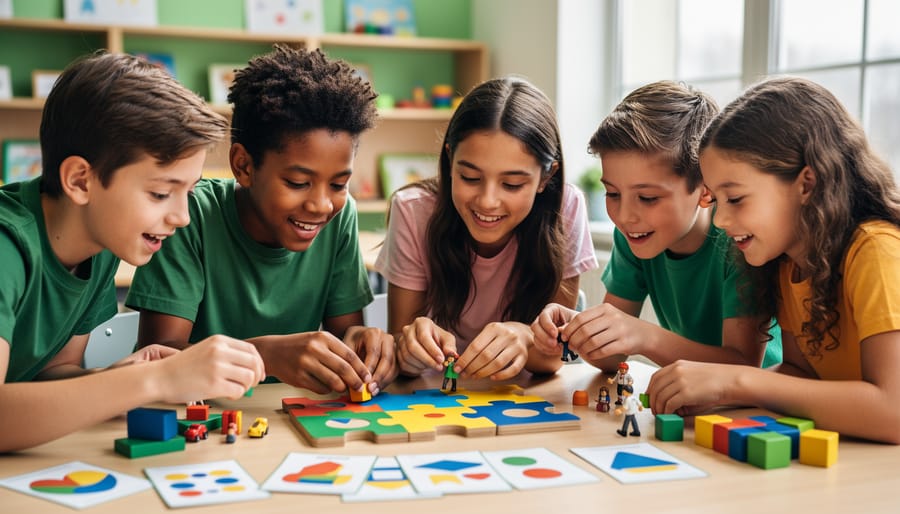
Play gives students an opportunity to interact with ideas rather than simply receive information. Games, challenges, simulations, role-playing activities, puzzles, and hands-on tasks can turn a lesson into an experience. When students make decisions, solve problems, and respond to outcomes, they create stronger connections with the information they are learning.
This is one reason play has an important place in education. It can make lessons more engaging while giving students more opportunities to recall and apply what they have learned.
Active Learning Strengthens Memory
Memory can improve when learners actively work with information. Simply seeing or hearing an answer does not always create a strong memory of it. Students are more likely to remember information when they have to retrieve it, use it, explain it, or make decisions with it.
Play naturally creates these opportunities.
“The research shows very clearly that children learn better in guided play, especially young children. In the context of the classroom, a child might be learning to go through a book about the green monster who’s grumpy, but also what is grumpy? What would it mean if you weren’t grumpy?” says Dr Kathy Hirsh-Pasek, a psychology expert for early childhood education.
Direct instruction depends heavily on working memory, which can become overloaded quickly. Active, exploratory learning engages brain pathways associated with curiosity and reward instead. A neuroscience review found that activating the brain’s reinforcement-learning system can support better retention when working memory reaches its limits.
Creating Effective Game-Based Learning Requires Strategy
Creating a simple educational game can be easy, but developing a game-based learning strategy requires a stronger understanding of education. Someone with the right educational background can identify learning goals, select suitable activities, and scale successful approaches across different classrooms.
A K12 EdD degree can be an ideal educational path for professionals seeking to develop this expertise. According to Rockhurst University, such a program prepares students for education in an evolving world. The program can help educators build advanced knowledge that supports instructional planning, leadership, and innovation.
For some professionals, an online format can also make sense because it allows them to continue working while pursuing advanced education. An online K12 EdD degree can provide an option for educators who want to develop their skills without stepping away from existing responsibilities.
Game-based learning can also be adapted as students’ needs and classroom goals change. A thoughtful strategy makes it easier to refine activities over time while keeping them aligned with desired learning outcomes.
Play Creates Emotional Connections
People tend to remember experiences that made them curious, excited, surprised, challenged, or amused. Play can introduce these emotional elements into lessons. A mystery-based activity may make students curious about the answer. A team challenge may create excitement. A role-playing exercise may make students feel personally connected to a historical or social situation.
Brain Agents, a trauma-informed game, was tested with students in grades 5 through 9 across Milwaukee schools. Researchers reported that the game helped students exposed to adversity develop emotional regulation and coping skills. The younger participants showed the highest level of enthusiasm for the game.
Play can also help children develop coping abilities that remain useful during difficult experiences. One study followed children from a Reggio Emilia-inspired program to examine how they responded to disruptions during the 2020-2021 school year.
Parents and teachers observed that children relied on skills developed through early play to regulate their emotions and behavior. These signs of resilience persisted even after the play experiences ended.
Play Encourages Students to Solve Problems
When students face a challenge, they have to decide what information matters and how they can use it. They may test an idea, discover that it does not work, and then try another approach. This process requires students to think about information rather than simply repeat it.
A 2026 scoping review examined findings from dozens of studies on play-based learning among young children. The review identified consistent improvements in cognitive abilities, academic performance, and socio-emotional development associated with play. It also found that children involved in these programs demonstrated greater independence and stronger problem-solving abilities.
Play-based learning can also encourage physical activities and movement. A Norwegian initiative known as HOPP replaced some traditional classroom instruction with active learning across seven elementary schools.
Over a five-year period, students in the intervention group made progress in reading, arithmetic, and English. Researchers writing in Frontiers in Education reported that students in the lowest performance quartile experienced the greatest benefits. The results suggested that sustained consistency, rather than a one-time intensive effort, contributed most to the improvements.
Broader research on physical activity and cognitive performance reveals similar trends. Exercise can promote the alertness and concentration needed for active, play-based lessons. Even brief periods of movement may help prepare students to engage with upcoming material.
Teachers Can Use Play Without Losing Academic Focus
Playful learning does not mean removing structure from the classroom. The activity should still have a clear purpose.
A useful educational game can begin with a specific learning objective. The teacher can then select an activity that gives students a chance to practice that objective.
For example:
- Objective: Understand fractions
- Activity: Students divide virtual or physical objects into equal portions.
- Objective: Learn historical decision-making
- Activity: Students take different roles and respond to a historical scenario.
- Objective: Improve vocabulary
- Activity: Students use new words to solve clues or construct sentences.
- Objective: Practice scientific reasoning
- Activity: Students investigate a simulated problem and choose an explanation.
Assessment can follow the activity. Teachers can ask students to explain what they learned, describe the strategy they used, or solve a related problem independently.
This final step helps connect the fun experience to the academic concept.
Frequently Asked Questions
What age groups benefit most from game-based learning?
Game-based learning can benefit students across different age groups, from elementary school through high school. The type of game should match students’ developmental levels, interests, and academic needs. Younger learners may respond well to simple movement-based activities, while older students may prefer strategy games and challenges that require deeper reasoning.
Can game-based learning work in a virtual classroom?
Yes, game-based learning can work effectively in virtual classrooms when activities are selected with the online environment in mind. Digital quizzes, interactive simulations, virtual escape rooms, collaborative challenges, and educational platforms can give students opportunities to participate. Teachers can also use breakout rooms and shared digital tools to support group-based activities.
How can teachers measure whether a learning game is effective?
Teachers can measure effectiveness through short assessments, student reflections, performance during the activity, and follow-up assignments. Comparing students’ understanding before and after an activity can also provide useful information. The goal should be to determine whether the game helped students meet the intended learning objective rather than focusing only on participation or enjoyment.
Key Facts and Statistics on Play-Based Learning
Guided play research | Children can learn better through guided play, particularly in early childhood education. |
Neuroscience review | Activating the brain’s reinforcement-learning system may support information retention when working memory becomes overloaded. |
Brain Agents game | Tested with students in grades 5–9 across Milwaukee schools; younger participants showed the highest enthusiasm. |
Reggio Emilia-inspired program study | Children demonstrated emotional regulation and behavioral coping skills developed through early play, including during major disruptions. |
HOPP outcomes | Students improved in reading, arithmetic, and English, with the greatest gains among those in the lowest performance quartile. |
Physical activity research | Even brief periods of movement may help improve the alertness and concentration needed for learning. |
Students often remember experiences more easily when they actively participate in them. Play gives learners opportunities to make decisions, solve problems, receive feedback, collaborate with others, and repeatedly use information in different ways. The strongest educational games are not distractions from learning. They are structured experiences that give students a reason to think about what they are studying.
When a lesson becomes something students do rather than something they only hear or read, the information can become connected to actions and emotions. Those connections give students more ways to retrieve what they learned later.