
Trashketball Rules: Throw, Score and Learn
I absolutely love playing Trashket Ball with my students because it’s such a cool way to mix learning, reviewing, and moving around. This trashketball classroom game combines quiz questions with basketball-style shooting, where students answer academic questions to earn chances to toss paper balls into a trash bin for points. Understanding the trashketball game rules is simple: teams answer review questions correctly, then shoot from different distances to score points, turning ordinary test prep into competitive fun.
There’s something super fun about trying to get those balls into the bin and racking up points. It turns what could be just another dull class review into a real game that everyone wants to win.
Plus, it gets everyone working together, thinking on their feet, and really getting into it. You can use it for any subject and set it up in no time. It’s like a breath of fresh air compared to the usual sit-down reviews, and it really helps the lessons stick.
Materials Needed
- Trash bin or basket
- Soft balls (like paper balls or foam balls)
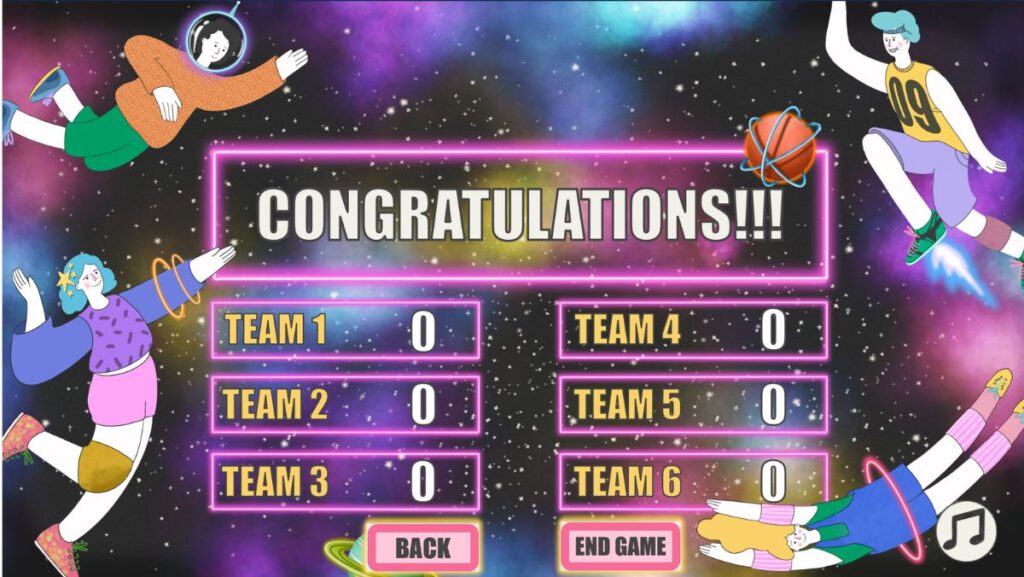
- This Trashketball game template
- Timer (clock or stopwatch)
- Scoreboard (whiteboard or paper)
- Tape or markers (to make lines on the floor)
To play Trashket Ball, you need a few simple items. First, find a trash bin or a basket that will serve as your goal. Choose something sturdy that won’t tip over easily. Next, gather some soft balls – paper balls or foam balls work best to ensure safety and prevent damage. You also need a timer, which can be a clock or a stopwatch, to keep track of time during the game. A scoreboard is essential to keep score; you can use a whiteboard, PowerPoint template, or just a piece of paper. Lastly, have some tape or markers on hand to mark the floor, indicating where players should stand when they take their shots.
Preparation
Setting up trashketball takes just a few minutes, but thoughtful placement makes a big difference in how well the game flows.
Start by placing the trash bin at one end of the room, away from any windows or breakable items. Position it at least 3 feet from the wall to prevent players from crowding into corners.
Next, create your scoring zones using painter’s tape or chalk. Mark three distinct throwing lines at different distances from the bin:
- 1-point line: 5 feet for grades K-2, 6 feet for grades 3-5, 8 feet for middle school and up
- 2-point line: 8 feet for grades K-2, 10 feet for grades 3-5, 12 feet for middle school and up
- 3-point line: 10 feet for grades K-2, 13 feet for grades 3-5, 15 feet for middle school and up
Label each line clearly with its point value. If you’re short on space, you can reduce these distances by a foot or two, but maintain the relative spacing between zones.
Divide the class into two teams and write each team’s name on your scoreboard. A simple T-chart on the whiteboard works perfectly. Keep the team sizes balanced, ideally with 3-6 players per team for active games that don’t leave anyone waiting too long.
Have a supply of crumpled paper balls ready. Ten to fifteen paper balls keeps the game moving without constant interruptions to remake ammunition.
Time
- 20-30 minutes
- Each round is 3 minutes long.
Trashket Ball is played in short, fast-paced rounds, making it exciting and keeping everyone engaged. Each round should last about 3 minutes, which is enough time for several turns but short enough to keep the energy high. Depending on how much time you have and the players’ enthusiasm, you can play multiple rounds. The flexibility in timing makes Trashket Ball perfect for filling in gaps in your schedule or as a main activity.
Rules
The teacher poses a question to the class, and teams collaborate quickly to come up with their answer.
If the team answers correctly, they earn the chance to throw the ball into the trash bin from a marked line. When a team answers a question correctly, they earn the right to attempt a throw.
Around the trash bin, there are marked zones, each indicating a different point value. The further away from the bin, the higher the points awarded for a successful throw, reflecting the increased difficulty of scoring from a distance.This setup encourages students to weigh their options; they can opt for a closer, potentially easier shot for fewer points, or take a risk with a longer throw to gain more points if successful. The decision of where to throw from is left to the student making the throw, adding a personal touch to each attempt and fostering individual judgment and risk assessment. This also teaches valuable lessons about evaluating risks and rewards.
This video will help you understand how to play Trashket Ball with your students:
Extra Tips
When playing Trashket Ball, the priority is to ensure everyone has fun and stays safe. Choosing soft balls like paper or foam can prevent injuries and protect the room from damage.
Depending on the players’ ages and skill levels, you might need to adjust the throwing line distance to keep the game challenging yet achievable. For younger students or those with motor skill challenges, move the line closer. Advanced players can step back for bonus points.
Trashketball Variations to Keep It Fresh
Once students know the basic format, try mixing things up. Speed rounds work great: set a timer for two minutes and see how many baskets each team can make. Lightning rounds where each player gets just one shot keep the pace moving and attention high.
Subject-specific trashketball variations add depth to review sessions. In math, assign point values that students must calculate (make a basket from the two-point line, answer a multiplication question, then multiply your score). For vocabulary or spelling, students spell a word correctly before they can shoot. History classes can require naming a date or event. Science teachers can ask students to identify parts of a diagram or explain a concept before taking their shot.
Another option: create a tournament bracket where winning teams advance. This adds stakes and keeps everyone engaged, even after their turn.
Classroom Management Tips
Keeping the game chill and fun is key. I’m not here to be super strict about every rule. What I really want is for everyone to have a great time and feel included.
Set clear expectations before starting. Remind students that we’re celebrating effort, not just perfect shots. One missed basket shouldn’t derail the mood. Designate a scorekeeper and a question reader so you’re free to monitor the room and keep energy positive.
If your class gets rowdy, pause between rounds. A quick reset helps. For classes that struggle with wait time, have students work on review worksheets between their turns or assign roles like ball retriever and score announcer.
Differentiation Strategies
Not every student will feel confident shooting. Offer options: they can answer two questions instead of taking a shot, or a teammate can shoot for them. Some students prefer being the official scorekeeper or timekeeper, which keeps them involved without pressure.
Adjust question difficulty by team or individual. Struggling students get foundational questions; advanced students tackle harder material. This keeps everyone appropriately challenged.
It’s awesome to see everyone cheering each other on, even for the tries that don’t quite make it, and high-fiving for the shots that do. This way, the game’s not just fun; it also creates a really positive vibe in the room.
Trashket Ball is a fantastic game for encouraging physical activity, teamwork, and hand-eye coordination among players. Whether you’re a teacher looking for a fun class review or someone organizing a casual get-together, this game is sure to bring smiles and laughter to all participants. Enjoy the game!
If you are using Trashketball before a quiz or exam, these test review games give you more formats for structured review day.