
How to Use Crossword Puzzle Hints to Solve Any Puzzle in Your Classroom
Crossword puzzle hints are strategic learning tools that reveal just enough information to help students move forward without giving away the answer, and they work best when you use them intentionally after a genuine attempt at solving. When your class hits a roadblock on a tricky clue, a well-timed hint can transform frustration into a teaching moment, keeping engagement high while building vocabulary and critical thinking skills. The key is treating hints as educational scaffolding rather than shortcuts.
Many educators worry that offering hints undermines the benefits of educational games but research shows the opposite: students who receive strategic guidance learn persistence and develop better problem-solving strategies than those left to struggle indefinitely or those who give up entirely. The trick lies in knowing when to offer support and what type of hint will push thinking forward without removing the challenge.
Modern crossword solver tools give you multiple hint options, from revealing a single letter to exposing the entire word or providing synonym clues. You’ll want to match the hint level to your students’ grade and skill, starting with the least revealing option first. For classroom use, this means creating a clear progression so students understand hints are earned through effort, not handed out freely. That framework turns hint usage into a metacognitive skill itself, teaching kids to recognize when they truly need help versus when they need to try a different strategy.
What You’ll Need to Get Started
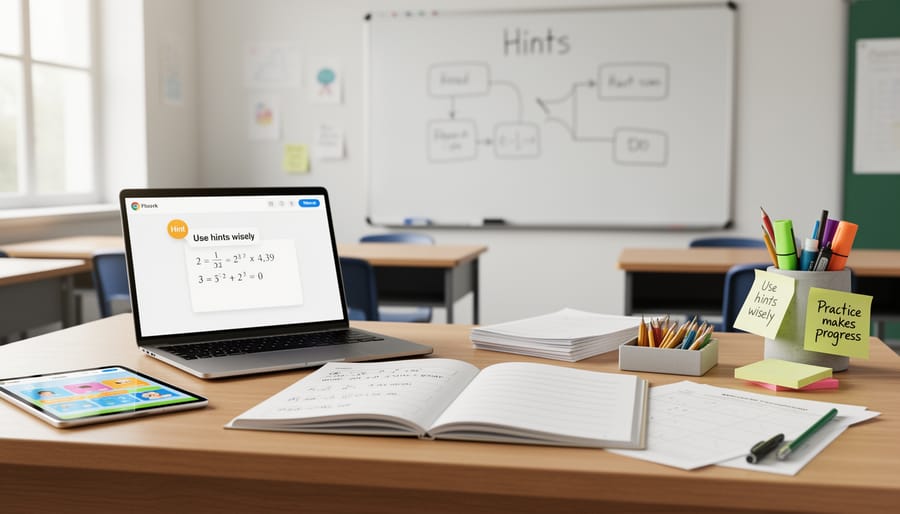
Getting started with crossword hints in your classroom is simple and requires just a few basic materials. Whether you choose print or digital puzzles, the core tools remain the same, and many options cost nothing to implement.
Here’s what you’ll need:
- A crossword puzzle source: printed worksheets, puzzle books, or digital apps with built-in hint features
- Hint access: built-in app hints, teacher-provided clue sheets, or vocabulary references
- Erasers for paper puzzles or undo buttons for digital versions
- A timer or clock for managing hint usage and puzzle completion time
- Optional: pencils rather than pens to encourage revision and learning from mistakes
The good news for budget-conscious teachers is that excellent free options exist. Daily Themed Crossword Puzzles, for example, is a free offline app that includes different difficulty levels published daily, from easy to hard. The app offers hints specifically designed to help students get past obscure words, and if students make mistakes, they can erase and try again until discovering the correct solution. While the app includes optional in-app purchases and a VIP Membership with perks like five free archived puzzles daily, the basic hint features work perfectly well in the free version.
For print puzzles, you can create simple hint cards yourself: write definitions, synonyms, or the first letter of challenging answers on index cards that students can request when stuck.
When to Use Hints (and When to Hold Off)

Hints work best when they nudge students forward without solving the puzzle for them. The goal is to use hints as scaffolding, support that helps learners reach just beyond their current ability, rather than as crutches that prevent them from developing problem-solving skills. When a student has genuinely tried context clues, examined crossing letters, and applied their existing vocabulary knowledge, a hint can turn frustration into a productive learning moment. But if students reach for hints at the first sign of difficulty, they miss the chance to build resilience and critical thinking.
Watch for productive struggle, that focused thinking time when students are engaged but challenged. If a student stares blankly for thirty seconds without any strategy, that’s different from a student who’s testing letter combinations and rereading the clue. The first needs a hint or a prompt; the second needs more time to work through the problem.
Set clear classroom rules about hint usage before students start solving. You might allow one hint per puzzle, or require students to attempt every crossing word first, or designate certain puzzles as “no hint” challenges. Some teachers use a token system where students earn hints by completing puzzles independently. Others allow unlimited hints on Monday’s easier puzzles but restrict them as the week progresses and difficulty increases.
The key is intention. Ask yourself: will this hint help my student learn something new, or will it just fill in a blank? If the word is genuinely beyond their grade level or requires specialized knowledge they haven’t encountered, a hint becomes a teaching tool. If they simply haven’t tried yet, hold off and encourage another approach first.
Step-by-Step: Using Hints to Solve Crossword Puzzles
Step 1: Choose the Right Puzzle Level
Start with puzzles that match where your students are right now, not where you wish they were. A fourth-grader wrestling with a college-level puzzle won’t learn vocabulary, they’ll learn frustration. Most crossword sources label puzzles by difficulty (easy, medium, hard), and some apps like Daily Themed Crossword Puzzles publish different levels every day, giving you fresh options at each tier.
For elementary students, stick with easy puzzles featuring short words and straightforward clues. Middle schoolers can handle medium puzzles with more complex vocabulary and wordplay. High schoolers ready for a challenge? Try hard puzzles with obscure terms and tricky phrasing.
Your learning objective matters too. Teaching basic spelling? Choose puzzles with simple, phonetic words. Building subject-specific vocabulary for a science unit? Look for themed puzzles that match your content. The goal is a sweet spot where students can solve some clues independently, struggle productively with others, and use hints to push past genuine gaps in knowledge. If everyone finishes in two minutes or gives up after two clues, you’ve missed the mark. Adjust accordingly for next time.
Step 2: Attempt Answers Using Context Clues First
Before students reach for that hint button, they need to develop their detective skills. Start by having them read each clue slowly and completely, rushing through leads to missed context. Ask students to think about what they already know: Does the clue reference something from a recent lesson? Is it a synonym for a familiar word?
Crossing letters are your students’ best friends. If a puzzle shows “_ A _ _” for a four-letter word meaning “feline,” the existing “A” dramatically narrows possibilities. Teach students to work between across and down clues, using confirmed letters to unlock intersecting answers. This creates a natural solving rhythm.
Encourage educated guessing based on word patterns. If they know the answer is six letters and ends in “-ing,” they’re already halfway there. Let students write in pencil answers they’re unsure about, this builds confidence in their reasoning process.
Set a classroom expectation: try at least three clues independently before requesting help. This brief struggle period activates prior knowledge and builds problem-solving stamina. Students who skip straight to hints miss the satisfaction of cracking a clue through their own thinking, which is where real learning happens.
Step 3: Use Hints for Obscure Words
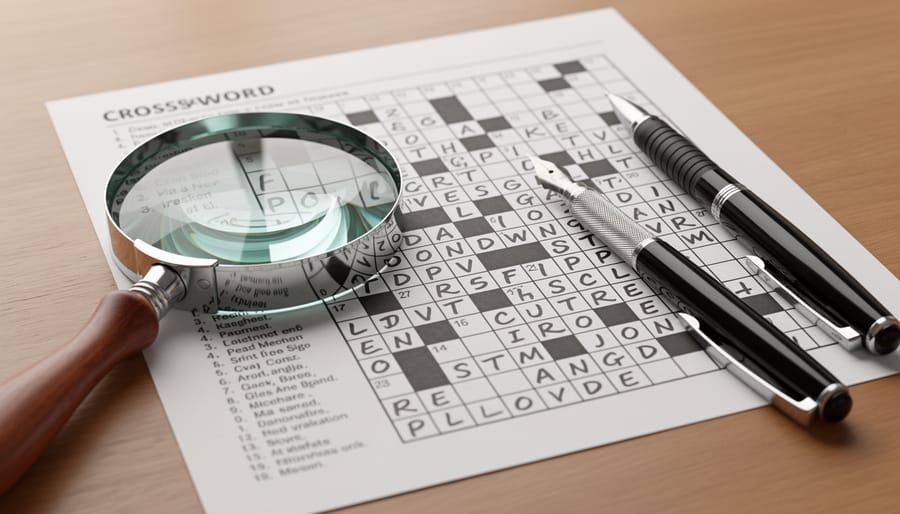
After your students have worked through context clues and crossing letters, some words will remain stubbornly blank. These obscure terms, unusual vocabulary, archaic language, or highly specific references, are exactly when hints become valuable teaching tools rather than crutches.
The key is recognizing the right moment. If a student has genuinely tried multiple approaches and the blank word is blocking progress on surrounding clues, it’s time for a hint. Most puzzle apps and platforms offer several hint formats, each revealing different amounts of information:
- Letter reveals show a single correct letter in the answer, helping students confirm or eliminate their guesses
- Word length indicators display the number of letters needed, narrowing possibilities considerably
- Definition hints provide synonyms or alternative phrasings of the clue, approaching the answer from a fresh angle
- Full answer reveals show the complete word as a last resort when all other strategies fail
Apps like Daily Themed Crossword Puzzles offer hints specifically designed to help with tough vocabulary, making them particularly useful for classroom settings where you want scaffolding built into the tool itself. The free app includes hint features that let students choose their level of support.
Teach your students to start with the least revealing hint first. Can a single letter unlock the answer? Try that before requesting a definition or full reveal. This graduated approach maintains the learning challenge while preventing complete frustration.
Step 4: Erase and Try Again
Sometimes the best learning happens when students realize their first answer wasn’t right. After using a hint, encourage your students to try the revealed letter or clue in context with the rest of the puzzle. If the word doesn’t quite fit the crossing answers or the clue meaning, that’s perfectly okay. On paper puzzles, erasers become valuable teaching tools. With digital platforms like Daily Themed Crossword Puzzles, students can erase and try again until they discover the correct solution without the mess.
This trial-and-error process isn’t a sign of failure, it’s actually how vocabulary retention works. Each attempt reinforces letter patterns, word structure, and contextual reasoning. Students start recognizing why certain letter combinations make sense and others don’t. They learn to question their assumptions and test multiple possibilities.
Create a classroom culture where erasing is celebrated as part of the learning journey. Remind students that professional puzzle solvers rarely get everything right on the first try. The puzzle isn’t complete until all the answers work together, and sometimes finding that solution requires multiple attempts and strategic hint usage along the way.
Step 5: Complete the Puzzle and Review
Once your students fill in that final square, take a moment to celebrate, then make the learning stick. Have students review the completed puzzle together, checking each answer against its clue. This verification step catches any remaining errors and reinforces correct spellings.
Now comes the real payoff: vocabulary discussion. Ask students to identify words they only solved because of hints, then explore those words together. What does the word mean? Can anyone use it in a sentence? Where might they encounter it again? This quick review transforms hints from shortcuts into genuine learning opportunities.
For digital puzzles, many apps automatically verify answers as you go, but don’t skip the verbal review. Even correct answers deserve discussion, especially obscure vocabulary that stumped students initially. Create a “word wall” where students post challenging words they’ve learned through hints, building a visual reminder that struggle plus support equals growth. The goal isn’t just completing puzzles, it’s expanding vocabulary one hint at a time.
How to Know Your Students Are Actually Learning
The best way to verify that hints are working as learning tools is to watch for patterns over time. When students genuinely improve, they’ll need fewer hints in each subsequent puzzle and start solving clues independently that once stumped them. Keep a simple log of how many hints each student uses per puzzle, improvement looks like a downward trend over two to three weeks, not constant reliance.
Test vocabulary retention by casually dropping puzzle words into other lessons or discussions a few days later. If students recognize and use those words correctly, the hints served their purpose. You can also turn completed puzzles into quick formative assessments by asking students to define three words they initially needed hints for, their answers will show whether they absorbed the meaning or just filled in letters.
As students progress, gradually increase the challenge. Try puzzles from harder difficulty levels, or set a classroom rule limiting hints to two per puzzle. This scaffolded approach builds confidence while preventing hint dependency. Some teachers create a “hint budget” where students earn hint tokens through participation or previous puzzle success, making them think carefully before spending one. The goal isn’t to eliminate hints entirely but to make them one strategy among many that students use thoughtfully.
If you notice a student consistently burning through all available hints without improvement, that’s a signal to adjust your approach. They might need easier puzzles to build foundational skills first, or they may benefit from partner work where peers can explain clues conversationally before hints come into play.
Common Questions About Using Crossword Hints in the Classroom
Are hints cheating?
Not when used as a learning tool. Hints help students move past frustrating roadblocks so they can keep building vocabulary and pattern recognition skills, rather than giving up entirely on challenging puzzles.
How many hints should students be allowed?
Start with a generous limit like three to five hints per puzzle, then adjust based on your classroom goals and student progress. The key is setting clear expectations upfront so students use hints strategically rather than reflexively.
What if students become dependent on hints?
Gradually reduce hint availability as students gain confidence. You can implement a “hint budget” system where students earn hints through effort, or schedule hint-free puzzle days to build independence while still offering support when genuinely needed.
Can crossword puzzles work offline in my classroom?
Yes, many free options work without internet access in 2026. Daily Themed Crossword Puzzles is a free, offline crossword game that includes hints and different difficulty levels, making it practical for classrooms with limited connectivity or device restrictions.
These questions come up frequently because teachers want hint features to support learning, not replace critical thinking. When students use hints purposefully, they encounter new vocabulary in context and remember better than through rote memorization alone. The goal is creating scaffolded challenges where hints serve as temporary support structures, not permanent crutches.
Consider documenting which students use hints most frequently and for what types of clues. This data helps you identify vocabulary gaps, adjust future puzzle selections, and differentiate instruction for students who need more or less support. Some students might need hints for proper nouns while others struggle with abstract concepts, giving you insight into where to focus your direct instruction.
Crossword puzzle hints aren’t shortcuts, they’re scaffolding that helps every student reach the finish line while building real vocabulary skills. When you set clear expectations about hint usage and customize the rules for your classroom, you transform puzzles from exclusive challenges into inclusive learning word games that work for all ability levels. Don’t be afraid to experiment with different puzzle sources, adjust hint availability as students progress, and make the activity your own. The goal isn’t perfection, it’s engagement, curiosity, and those lightbulb moments when a new word finally clicks. With the right approach to hints, you’re not just helping students solve puzzles; you’re teaching them how to tackle unfamiliar words confidently, a skill they’ll carry far beyond your classroom walls.