
7 Directory Games That Make Learning Stick in 2026
Quick note — a few of the links in this article earn us a small commission if you buy through them.
Directory games are ready-made, customizable game templates that let you turn any lesson content into an engaging classroom competition in minutes. These platforms provide the structure (think Jeopardy-style setups, Family Feud formats, or escape room puzzles) while you add your own questions, vocabulary, or review material. The result? A cost-effective review tool that works across subjects and grade levels without demanding hours of prep time.
For educators juggling packed schedules, directory games solve a common problem: how to keep students motivated during review sessions without reinventing the wheel each time. Instead of building games from scratch, you select a proven format, plug in your content, and launch. Students stay focused because the game mechanics add excitement, while you maintain complete control over what they’re actually learning.
The seven directory game formats we’ll explore here represent the most versatile, classroom-tested options available in 2026. Each one brings something different to your teaching toolkit. Jeopardy-style setups work beautifully for comprehensive unit reviews. Family Feud formats spark team collaboration. Board game adventures turn progress through material into a visual journey. Quiz show spinners add an element of chance that keeps everyone alert. Tic-tac-toe challenges blend strategy with content mastery. Escape rooms transform problem-solving into an adventure. And minute-to-win-it challenges create quick-fire energy perfect for bell ringers or concept checks.
What makes these tools particularly valuable is their adaptability. You’re not locked into someone else’s questions or learning objectives. Every template becomes yours the moment you customize it.
How We Selected These Directory Games
Choosing the right directory games for your classroom isn’t about finding the flashiest option, it’s about identifying formats that save you time while maximizing student participation. We evaluated dozens of directory game templates and narrowed our picks based on what actually works in real classrooms.
Every game featured here met these essential criteria:
- Customization options: Quick editing for your specific content without tech headaches
- Cross-curricular use: Adapts seamlessly from math facts to vocabulary to science concepts
- Student engagement: Proven formats that get even reluctant learners involved
- Minimal prep time: Ready to use in under 10 minutes, even for first-time users
- Grade-level flexibility: Works for elementary through high school with simple adjustments
Beyond these fundamentals, each selection includes built-in features that make classroom management easier. You’ll find automatic scoreboards that eliminate arguments over points, sound effects that ramp up excitement without requiring extra downloads, and visual designs that keep students focused on the content rather than fumbling with confusing interfaces. These aren’t just games, they’re teaching tools designed by educators who understand that your planning time is precious.
1. Jeopardy-Style Review Games: The Classroom Classic Reinvented

This game format transforms review sessions into the kind of class-period highlight students request by name. Directory-based Jeopardy templates deliver the familiar question-and-answer structure with categories and point values, but without the hours you’d spend building it from scratch.
The beauty lies in the instant setup. You’ll find templates already loaded with scoreboards, sound effects, and Daily Double features, just swap in your content and you’re ready to go. Want to review multiplication facts? Create categories like “Times Tables,” “Word Problems,” and “Skip Counting.” Prepping for a history test? Try “Famous Battles,” “Presidential Trivia,” and “Timeline Challenge.” The category system naturally organizes your review material while letting you adjust difficulty through point values.
Customization takes minutes, not hours. Most directory templates use simple text boxes where you paste your questions and answers. You control everything: increase point values for harder concepts, add bonus rounds for topics students struggle with, or reduce the question count for shorter class periods. The built-in scoreboards handle all the math automatically, so you can focus on facilitation instead of tallying points.
This format excels at test prep because it covers broad content while maintaining high engagement. Students who might zone out during traditional review suddenly lean forward, strategizing which category to tackle next. The competitive element keeps everyone alert, even students who already know answers stay invested in their team’s score.
The point-value system also works as informal assessment. When a $400 question stumps the class, you’ve identified a concept that needs reteaching. That real-time feedback makes Jeopardy-style games valuable beyond just the fun factor.
2. Family Feud Formats: Team Competition at Its Best
Family Feud-style directory games turn your classroom into a collaborative arena where students work together to guess top survey answers. Unlike traditional quiz formats that spotlight individual knowledge, these templates put teams at the center, naturally encouraging students to discuss, debate, and strategize before committing to an answer.
The survey-says format works beautifully because it mirrors real brainstorming. Instead of one right answer, students must think about multiple correct responses ranked by popularity or frequency. For vocabulary lessons, you might ask “Name words that mean happy” with answers like joyful, cheerful, and ecstatic ranked by how often they appear in literature. In math, try “Name factors of 24” where teams compete to identify all possibilities. History teachers can customize surveys like “Name causes of the American Revolution” where students must think broadly about taxation, representation, and colonial grievances.
The built-in scoring system rewards both speed and accuracy. Teams that guess the number-one answer celebrate loudly, while others scramble to find remaining responses. This layered approach keeps every student engaged because there’s always another answer to discover, not just one chance to be right.
What makes these templates especially powerful is how they level the playing field. Quieter students often contribute winning answers during team huddles that they might never volunteer in whole-class discussions. The team format reduces individual pressure while multiplying participation, and the competitive element adds just enough urgency to maintain focus without creating anxiety.
3. Board Game Adventures: Gamified Learning Paths
Board game adventure templates transform your classroom into an interactive game board where every correct answer moves students closer to victory. These digital formats recreate the beloved experience of classic board games, complete with colorful paths, character tokens, and finish lines, while sneaking in serious learning along the way.
The visual design hooks students immediately. Bright game boards featuring themed paths (think jungle treks, space missions, or treasure hunts) give learners something engaging to look at beyond another worksheet. Students see their progress as tokens advance square by square, creating tangible motivation that abstract point systems can’t match. This visual feedback works especially well for younger learners who need concrete representations of their achievements.
What makes these templates brilliant is their flexibility across your curriculum. Use them for math fact practice where each correct equation moves the token forward, vocabulary review where defining terms earns moves, or science concept checks where explaining processes advances play. The same board game template adapts to introducing brand-new material too. Present a mini-lesson, ask a question, and students apply what they just learned to progress on the board.
Setup takes minutes. Drop your custom questions into the template, choose how many spaces each correct answer earns, and you’re ready. Most directory versions include automatic progress tracking, so you can see exactly which concepts trip up which students. Teams can compete on parallel paths, or you can run whole-class games where everyone collaborates to reach the finish before time runs out.
4. Quiz Show Spinners: Random Fun Meets Focused Learning

Spinner-based quiz show games bring the thrill of game-show randomness straight into your classroom, keeping every student on their toes because nobody knows who’ll face the next question. These directory templates feature colorful digital spinners that select students, teams, or question categories at random, instantly transforming ordinary review sessions into can’t-look-away moments.
The beauty of these templates lies in that unpredictable spin. When students can’t predict who’s up next, the entire class stays engaged rather than tuning out until their turn arrives. You’ll notice even your quietest learners leaning forward as the spinner whirls, ready to jump in. Most templates include customizable difficulty tiers, so you can assign different point values or question complexity levels based on where the spinner lands. This built-in differentiation means advanced students get appropriately challenging questions while struggling learners tackle accessible content, all within the same game flow.
Customization takes minutes. Drop your questions into the template’s question bank, adjust the spinner segments to match your teams or topics, and you’re ready. Many templates include energizing sound effects, the whoosh of the spinning wheel, the ding when it stops, victory fanfares for correct answers, that amp up classroom energy without you lifting a finger.
These games work brilliantly for mixed-ability groups because the random element removes any perception of the teacher playing favorites or targeting specific students. Everyone gets a fair shot, the spinner decides, and the focus stays squarely on the content rather than classroom dynamics.
5. Tic-Tac-Toe Challenges: Strategy Plus Content Mastery
Tic-tac-toe directory games layer content mastery onto a format every student already knows, eliminating the need to explain complex rules. Players earn their X or O by correctly answering questions, turning a simple strategy game into a focused review tool that keeps both thinking and recall sharp.
The beauty here is dual engagement. Students can’t zone out because they need to answer correctly and plan their grid strategy. Will they block an opponent’s winning line or go for their own three-in-a-row? That decision-making piece activates a different part of the brain than pure recall, making the learning stick better than flashcards alone.
Most directory templates offer team play where pairs collaborate on answers, which works brilliantly for mixed-ability classrooms. Stronger students explain their reasoning while learners who need support get immediate peer scaffolding. You’ll customize the question bank by subject and difficulty, swap in multiplication facts for third grade or vocabulary terms for high school Spanish.
The format shines during those first-five-minutes-of-class moments when you need everyone focused fast. No lengthy setup, no complicated scoring system to manage. Project the grid, divide into teams, and you’re playing within sixty seconds. It’s equally effective as an ice-breaker for substitute teacher days or when introducing a new unit, since the familiar game structure puts students at ease while you assess their baseline knowledge.
Adjust difficulty on the fly by mixing review questions with preview material, keeping challenge levels just right without needing separate game versions.
6. Escape Room Templates: Puzzle-Solving That Teaches
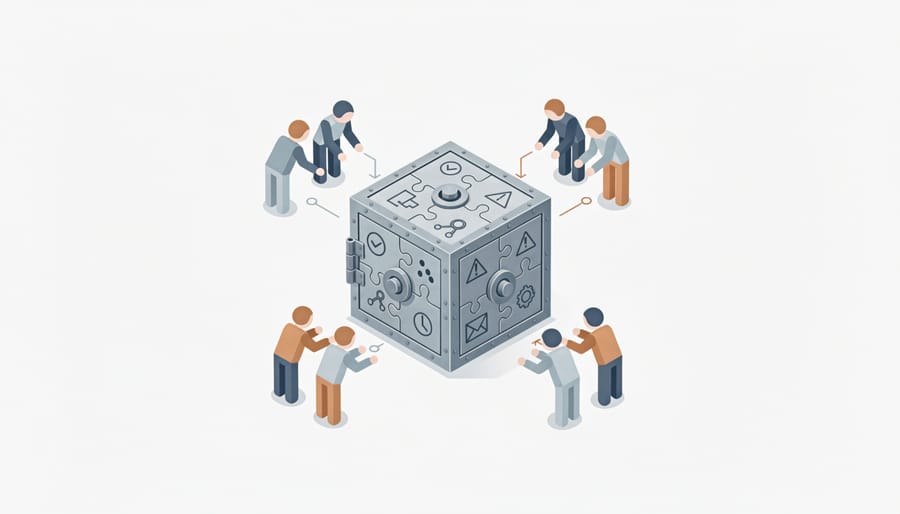
Escape room templates turn your classroom into an immersive puzzle adventure where students unlock clues by demonstrating content mastery. Unlike physical escape rooms, directory-based digital versions let you customize every puzzle, riddle, and lock code to match whatever you’re teaching, from chemical equations to historical timelines to literary analysis.
The magic lies in the narrative framework. Students aren’t just answering questions; they’re cracking codes to defuse a fictional bomb, unlocking ancient treasure chests, or solving mysteries to free trapped characters. This storytelling element transforms routine review into a mission students genuinely want to complete. Each correct answer reveals the next clue or unlocks a digital padlock, creating natural momentum that keeps teams engaged from start to finish.
Customization takes minutes once you’ve selected a template. You replace placeholder puzzles with your own content, vocabulary definitions become cipher keys, math problems unlock combination locks, and reading comprehension questions reveal hidden map coordinates. Most directory templates include four to six puzzle stages, giving you flexibility to adjust challenge length based on your available class time.
The collaborative benefits extend beyond content review. Escape room formats require students to communicate clearly, divide tasks strategically, and support teammates who struggle with specific questions. Quieter students often shine when solving visual or logic-based puzzles, while verbal learners tackle word riddles. This natural task distribution builds classroom community while reinforcing academic content.
Best of all, escape room templates work across grade levels with simple difficulty adjustments. Elementary teachers use them for fraction practice and spelling challenges, while high school educators create complex multi-step problems requiring synthesis of unit concepts. The timer element adds urgency without feeling punitive, students race the clock together, not against each other.
7. Minute-to-Win-It Challenges: Fast-Paced Brain Workouts
Minute-to-Win-It templates turn any content review into a heart-racing challenge that has every student on the edge of their seat. These rapid-fire formats give students sixty seconds to answer as many questions as possible, complete a vocabulary matching sprint, or solve a series of quick problems. The ticking clock creates instant urgency without requiring you to redesign your lesson plans.
What makes these directory games brilliant for busy classrooms is their flexibility. You can customize question sets for multiplication facts during morning math, vocabulary terms before lunch, or historical dates as an afternoon energizer. Most templates include adjustable difficulty settings, so you can challenge your advanced learners while supporting students who need more processing time by reducing the number of required answers.
The high-energy format works perfectly for those tricky transition moments when attention starts drifting. Got five minutes before lunch? Launch a Minute-to-Win-It challenge. Need to re-energize a sluggish afternoon? These games flip the switch instantly. They are also exceptional for end-of-class reviews when traditional instruction feels like pushing a boulder uphill.
Here’s the real win: these challenges shift your role from lecturer to game show host. Instead of constantly redirecting attention, you are managing excitement and celebrating quick thinking. That’s the difference between facilitation vs lecturing in action.
Minute-to-Win-It games also scale your game effortlessly whether you have fifteen students or thirty-five. Run them as individual challenges, pair competitions, or team relay races. The built-in timers and sound effects handle the pressure while you focus on cheering students forward.
Getting the Most from Your Directory Games
Start small and build your confidence. Pick one game format, customize it for a single lesson, and run it with your students. Once you see their reactions, you’ll naturally find more opportunities to weave these tools into your regular routine.
The fastest customization trick is reusing your existing materials. Copy questions directly from worksheets, study guides, or quiz banks into your game template. Most directory games accept simple copy-paste content, which means you can transform a standard review sheet into an ELA classroom game in under ten minutes.
Balance competition with collaboration by mixing team formats. Use individual games like Quiz Show Spinners for formative assessment, then switch to team-based options like Family Feud for unit reviews. This variety keeps competitive students engaged while supporting those who thrive in cooperative settings.
For mixed-ability classrooms, adjust difficulty on the fly. Start with easier questions to build confidence, then increase complexity as the game progresses. Many templates let you assign different point values to harder questions, allowing all students to contribute at their level while still chasing the same goal.
Integrate games strategically without eating into instruction time. Use Minute-to-Win-It formats for five-minute warm-ups, Tic-Tac-Toe for transitions between lessons, and longer formats like Escape Rooms for end-of-week reviews. The key is treating games as instructional tools, not rewards, so they reinforce learning rather than replace it.
Your Classroom Game Questions Answered
Most educators have similar questions when they first explore directory games. Here’s what you need to know before diving in.
How long do these games take to customize?
Most directory game templates take 10-15 minutes to customize once you’ve prepared your content. Simply copy and paste your questions, and you’re ready to play, no complex formatting required.
Can I use the same template multiple times?
Absolutely! That’s one of the biggest advantages. Save your customized versions for different units, or swap out questions to refresh a game format your students already love.
Do I need special software to run these games?
Most directory games run in standard web browsers or PowerPoint, so you don’t need additional software. Check each template’s requirements, but you’ll likely use tools already on your school computer.
Are these suitable for virtual classrooms?
Yes! Screen-sharing makes games like Jeopardy-Style Review and Quiz Show Spinners work perfectly in video calls. Students can type answers in chat or use virtual hand-raising for team responses.
How do I manage overly competitive students?
Emphasize team scores over individual winners, rotate team members frequently, and try formats like Tic-Tac-Toe Challenges that balance luck with skill. Celebrating effort and improvement helps shift focus from pure competition to learning.
The beauty of directory games lies in their flexibility. You can adjust difficulty on the fly, pause for teaching moments, and reuse favorites throughout the year. Start with one format that matches your teaching style, get comfortable with customization, and gradually build your game library. Your students won’t even realize they’re reviewing, they’ll just know class suddenly got a lot more fun.
Directory games transform review sessions from routine drills into moments your students actually look forward to. You get instant access to proven formats that work across every subject and grade level, complete customization to match your exact lesson content, and engagement levels that turn even reluctant learners into active participants. Whether you choose Jeopardy-style classics, escape room adventures, or minute-to-win-it challenges, you’re selecting tools that respect your time while delivering real educational impact.
Exploring curated directories opens up a world of ready-made templates designed specifically for educators like you. You’ll find formats that fit your teaching style, match your classroom dynamics, and adapt to whatever content you’re covering this week. The best part? Once you’ve customized a game template, you can reuse it throughout the year with fresh questions.
When students start asking “Are we playing that game today?” instead of groaning at review time, you’ll know these tools are working. That’s the power of directory games: they make the learning stick while students are too busy having fun to notice they’re actually studying.