

How to Run a 4 Team Tournament Bracket in Your Classroom
Setting up a 4 team tournament bracket is one of the simplest ways to run a competitive classroom activity. You need exactly three games: two semifinals and one final. The structure is straightforward, the pacing keeps students engaged, and you can complete the entire tournament in a single class period or stretch it across several days depending on your goals.
This format works beautifully because it eliminates complexity while maintaining all the excitement of tournament play. Every team competes at least once, and the bracket visually shows students how winners advance. You can use it for academic competitions, review games, physical education challenges, or creative projects where teams present their work head-to-head.
The beauty of a 4 team bracket lies in its flexibility. Whether you’re running a math bowl, vocabulary challenge, science quiz, or group presentation competition, the same basic structure applies. You’ll seed your teams, run two simultaneous or sequential semifinal matches, then bring the winners together for a championship round. Many teachers also add a third-place game between the semifinal losers to ensure every team plays twice and stays engaged throughout the event.
This guide walks you through everything you need to set up your bracket, organize teams fairly, run each round smoothly, and troubleshoot common challenges. You’ll have a tournament structure that’s easy to explain, simple to execute, and genuinely fun for students at any grade level.
What You’ll Need to Set Up Your 4 Team Tournament Bracket
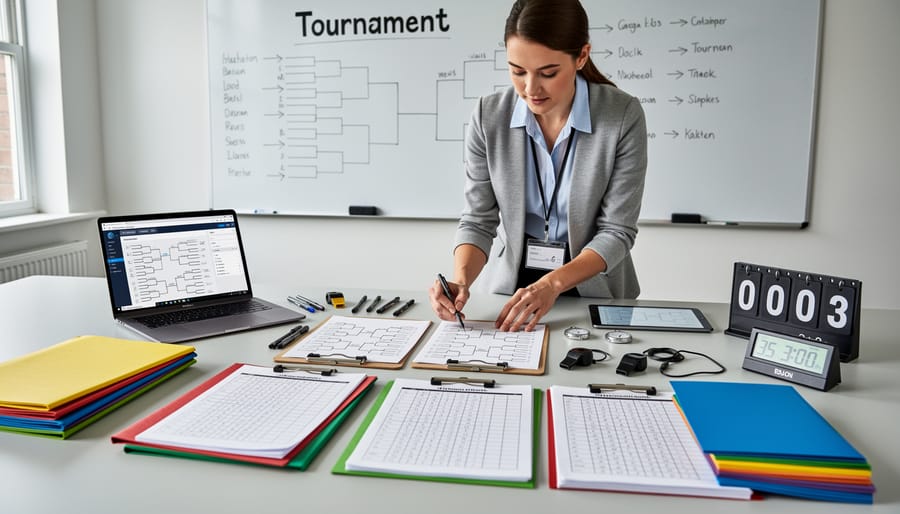
Getting started with a 4 team tournament bracket requires almost nothing, most items you already have in your classroom! The beauty of this setup is its simplicity and flexibility. You can customize everything to match your available resources, grade level, and subject area.
Here’s what you’ll need:
- A bracket template, print a simple chart or draw one on your whiteboard
- Team names or labels (student groups, color teams, creative team names they choose)
- A timer or clock to keep rounds moving
- A scoring method that fits your activity (points, correct answers, completion time)
- Optional: Small prizes, certificates, or classroom recognition for winners and participants
You don’t need fancy technology or expensive materials. A piece of chart paper works just as well as a digital bracket displayed on your smartboard. Many teachers use sticky notes for team names so they can easily move winners forward through the rounds.
The scoring method depends entirely on your competition type. Running a math facts race? Count correct answers. Hosting a vocabulary showdown? Track definitions explained correctly. Planning a science challenge? Award points for completed tasks. The bracket structure works with any measurement system you choose.
Consider what motivates your students. Sometimes the thrill of competition itself is enough, but having a small reward ready, like choosing seats for the day, extra recess time, or a homework pass, adds excitement without breaking your budget.
Before You Begin: Important Planning Tips
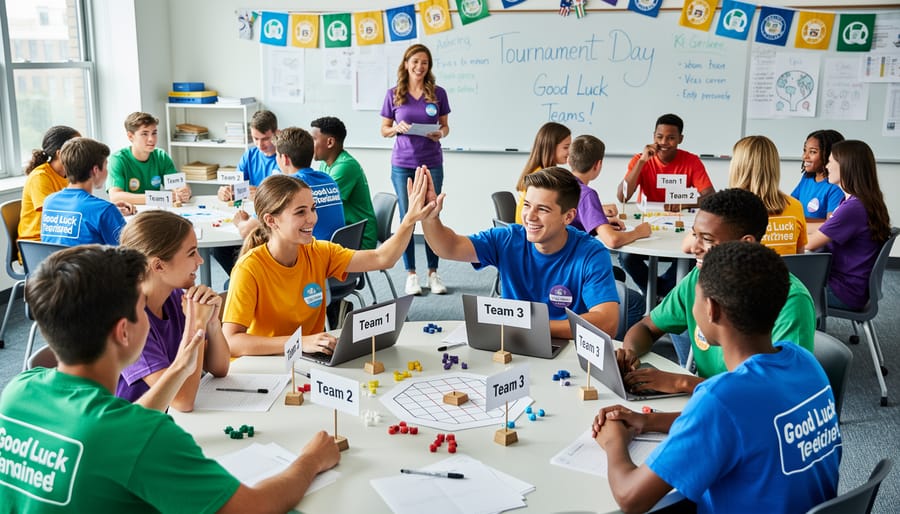
A little advance preparation goes a long way when you’re setting up a 4 team tournament bracket. Spending a few minutes thinking through logistics and classroom dynamics will help your competition run smoothly and keep the focus on learning and fun.
Start by distributing teams fairly. Random selection works great for keeping things lighthearted, but if you know your students well, you might strategically balance skill levels so every team has a fighting chance. Lopsided matches deflate enthusiasm fast.
Decide your tie-breaker method ahead of time. Will you use a sudden-death question, a timed lightning round, or a predetermined criterion like fastest completion time? Don’t leave this to figure out in the moment when two teams are neck-and-neck and everyone’s watching.
Time constraints matter more than you think. A full 4 team bracket with semifinals and a final takes at least 20-30 minutes, depending on your activity. Build in a cushion for transitions, celebrations, and those inevitable “Can we have one more chance?” requests.
Plan how you’ll handle student emotions. Winning feels amazing, but losing stings, especially for competitive kids. Have a script ready for acknowledging effort, celebrating everyone’s participation, and redirecting eliminated teams into supportive roles like scorekeepers or cheerleaders. This keeps the energy positive and inclusive throughout your tournament.
Step-by-Step: Running Your 4 Team Tournament Bracket
Understanding the 4 Team Bracket Structure
The 4 team tournament bracket is beautifully simple. You’ve got four teams, two rounds, and one winner. That’s it!
Here’s how it works: divide your four teams into two pairs. Team 1 competes against Team 2 in the first semifinal match. At the same time (or right after), Team 3 faces Team 4 in the second semifinal. These are your opening rounds.
The winners from each semifinal then advance to the championship match. If Team 1 beats Team 2, and Team 3 defeats Team 4, your final round features Team 1 versus Team 3. The victor of that final match becomes your tournament champion.
Picture it like a tree branching backward: four teams at the wide base, narrowing to two semifinal winners, then converging at a single champion at the top. The losing teams from the semifinals are out, no complicated second chances or consolation rounds to track.
This straightforward structure means you can run a complete tournament in one class period. Two quick rounds, minimal confusion, maximum excitement.
Seeding Your Teams Fairly
Getting your teams sorted fairly sets the tone for the whole competition. You have four main options, each with its own classroom benefits.
Random draw works great when skill levels are similar. Have students pick team numbers from a hat, or use a random name generator. It’s quick, eliminates favoritism, and teaches acceptance of chance outcomes.
Skill-based seeding pairs your strongest team against your weakest in the first round, with the middle two facing off. This creates more balanced semifinals and helps prevent blowouts. If you’ve run practice rounds or previous activities, you already know which students excel.
Student choice lets kids form their own teams, then you seed them based on group vote or a quick preliminary quiz. It builds ownership but watch for lopsided groups.
Rotating captains gives four students leadership roles. They alternate picking teammates, which naturally balances things out.
Whatever method you choose, announce the seeding system beforehand. Transparency prevents “that’s not fair” complaints and keeps the focus on fun competition rather than team politics.
Running the Semifinal and Final Rounds
Start with your first semifinal match and set a clear time limit, 5 to 10 minutes works well for most classroom activities. Use a visible timer so students can see the countdown, which builds excitement and keeps everyone focused. While Match 1 plays out, have the other semifinal pair observe and take mental notes on strategy. This keeps all four teams engaged from the start.
Once you’ve crowned a winner for the first semifinal, immediately transition to Match 2. Don’t let momentum drop. Announce the next matchup with enthusiasm: “Alright, Team 3 and Team 4, you’re up!” The energy you bring directly affects student engagement.
Between the semifinals and the final, take a two-minute break. This gives everyone a breather and builds anticipation for the championship round. Here’s where you involve your eliminated teams, assign them as official cheerleaders, scorekeepers, or judges. You might say, “Team 2, you’re now the official hype squad for Team 4. Let’s hear some encouragement!” This keeps everyone invested rather than sitting idle.
For the final match, consider extending the time slightly or adding a bonus challenge to make it feel special. Narrate the action like a sports announcer: “It’s neck and neck, who will take the championship?” Your enthusiasm is contagious.
Throughout all rounds, keep transitions snappy. Have your bracket template ready for quick updates, announce results clearly, and celebrate each winner before moving forward. The tighter your pacing, the higher the energy stays.
How to Know Your Tournament Was Successful
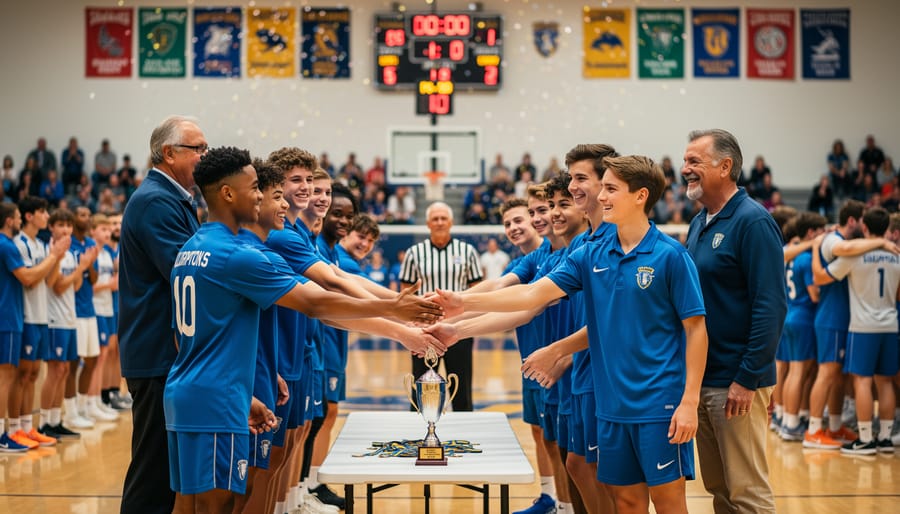
The best measure of a successful 4 team tournament bracket isn’t just a clear winner, it’s the energy in your classroom. Watch for students leaning forward during matches, cheering for their teammates, and staying engaged even after elimination. When you see good sportsmanship, hear students using content vocabulary during competition, and notice excited chatter about the next round, you’ve nailed it.
Take five minutes after crowning your champion to debrief with the whole class. Ask what strategies worked, what they learned, and how the competition felt. This reflection turns a fun activity into a meaningful learning moment and gives you insights for next time. Celebrate all four teams, not just the winners, acknowledge the runner-up’s effort, highlight a great answer from an eliminated team, or create fun titles like “Best Team Spirit” or “Toughest Competitor.”
Keep notes on what worked and what didn’t. Did the timing feel right? Were the questions appropriately challenging? Did one team dominate too easily? Use these observations to tweak your next bracket. Many teachers find their second and third tournaments run even smoother because they’ve refined the format to fit their students perfectly. The beauty of a 4 team tournament bracket is its simplicity, you can easily adjust rules, change subjects, or try new seeding methods based on what you learned.
Creative Ways to Use 4 Team Brackets in Any Subject
The beauty of a 4 team tournament bracket is how easily it adapts to any subject you teach. Once you’ve got the basic structure down, you can plug in content from across your curriculum to create engaging review sessions, skill-building competitions, or end-of-unit celebrations.
Math: Turn multiplication tables into fast-paced challenges where teams race to solve problem sets correctly. You can run fraction comparison tournaments, geometry problem-solving battles, or mental math showdowns. The competitive element often motivates students who normally shy away from math practice.
Language Arts: Vocabulary tournaments work brilliantly with 4 team brackets. Teams compete to define words, use them in sentences, or identify synonyms and antonyms. Reading comprehension battles where teams answer questions about a shared text create accountability and discussion. You can also run spelling bees, grammar correction challenges, or creative storytelling contests.
Science: Quiz bowl formats shine in science classrooms. Teams answer questions about the solar system, life cycles, chemical reactions, or scientific method steps. Lab safety tournaments help reinforce crucial concepts, and classification challenges (sorting organisms, rocks, or elements) combine knowledge with teamwork.
Social Studies: History trivia tournaments bring excitement to date memorization, historical figure identification, or event sequencing. Geography challenges work wonderfully, teams compete to identify capitals, landforms, or map locations. Government and civics content translates perfectly into bracket-style competitions.
Cross-Curricular Ideas:
– STEM challenges combining math problem-solving with scientific reasoning
– Literacy and art mashups where teams create and defend visual interpretations of texts
– Physical education skill competitions using academic team names and bracket tracking
– Music theory battles or rhythm pattern recognition tournaments
– Foreign language vocabulary races or translation speed rounds
The format stays the same whether you’re reviewing last week’s lesson or celebrating mastery at year’s end. Mix subjects for interdisciplinary tournaments, or stick with one content area for focused practice. Students love the variety, and you’ll find yourself inventing new tournament ideas once you see how engaged they become.
Common Questions About 4 Team Tournament Brackets
What if I don’t have exactly four teams?
No problem! With three teams, give one a bye to the final and have the other two compete in a semifinal. With five or six teams, consider adding play-in matches or creating two mini-tournaments with winners competing. You can also adjust team sizes by combining or splitting groups to hit that perfect number of four.
How long does a 4 team tournament bracket take?
Most 4 team brackets fit comfortably in a 30-45 minute class period. You’ll run two semifinal matches (about 5-10 minutes each) and one final match (10-15 minutes), with a few minutes for setup and celebrating. Quick quiz-style tournaments can wrap up in 20 minutes, while more complex challenges might need the full hour.
What should I do if there’s a tie?
Plan your tie-breaker before starting. Popular options include sudden-death bonus questions, fastest correct answer wins, rock-paper-scissors, or giving the win to the team with better sportsmanship during the match. Whatever you choose, explain the rule clearly so everyone knows what happens if scores are even.
Can I use tournament brackets with individual students instead of teams?
Absolutely! A 4 team tournament bracket works perfectly as a 4 student bracket. This setup is great for one-on-one challenges like spelling bees, math speed drills, or trivia competitions where you want head-to-head matchups.
How do I keep eliminated teams engaged after they lose?
Turn them into your tournament’s hype squad! Eliminated teams can serve as judges, scorekeepers, cheerleaders, or commentators for the remaining matches. You might also give them a consolation challenge or task related to the tournament topic, or let them predict the winner and earn bonus points for correct guesses.
These questions come up constantly when teachers first try tournament brackets, and the answers are simpler than you might think. The beauty of a 4 team setup is its flexibility, you’re not locked into a rigid format that falls apart when real classroom situations pop up.
Remember, the goal isn’t running a perfect championship-level competition. You’re creating an engaging learning experience that gets students excited about the content. If you need to improvise a rule mid-tournament or adjust the format on the fly, that’s completely fine. Your students will appreciate the energy and fun far more than they’ll notice any tweaks to the original plan.
Running a 4 team tournament bracket in your classroom doesn’t have to be complicated. With just a few materials and a clear plan, you can transform any lesson into an engaging competition that students will remember. The beauty of this format is its flexibility, whether you’re reviewing math facts, testing vocabulary, or reinforcing science concepts, the bracket structure works. You’ve seen how to set up teams, run fair matches, and keep everyone involved from start to finish.
Don’t wait for the perfect moment. Try a 4 team bracket with your next unit review or Friday afternoon activity. Start simple, watch how your students respond, and adjust the format to fit your classroom’s unique personality. Some groups might love dramatic championship announcements, while others prefer quiet, focused competition. That’s the magic of this approach, you can make it yours. Your students are ready for the challenge, and you’ve got everything you need to make it happen.