
These 4 School Games Transform Your High School Classroom Into an Active Learning Space
Transform your classroom into an engaging learning hub with these four versatile games that require minimal prep time and deliver maximum student participation. Teachers consistently struggle with maintaining energy during review sessions and practice activities, but game-based learning flips that script entirely. These games work across subjects and grade levels because you control the content, the pace, and the complexity to match your students’ needs perfectly.
Stop searching for the perfect ready-made game that never quite fits your curriculum. These four classroom favorites give you the framework while you customize every question, challenge, and learning objective. Whether you need a quick five-minute energizer or a full-period review session, you’ll have options that get students moving, thinking, and genuinely excited about participating.
Each game addresses specific classroom challenges: maintaining focus during review, differentiating for mixed-ability groups, encouraging collaboration, and creating friendly competition that motivates rather than discourages. You’ll find straightforward setup instructions, practical tips for managing classroom dynamics, and creative variations that keep these games fresh all year long. Your students will ask to play these again and again, which means more practice and better retention without the usual resistance to review activities.
Why Game-Based Learning Works for High School Students
High school students respond powerfully to game-based learning ideas because games tap into their natural desire for challenge and achievement. Unlike younger learners who might enjoy games purely for fun, teens engage deeply when games provide meaningful competition and recognition among peers. This psychological sweet spot is exactly what makes classroom games so effective for this age group.
The magic happens when games transform ordinary review sessions into dynamic experiences where students actively participate rather than passively absorb information. Research shows that game-based learning increases motivation and engagement, particularly among students who might otherwise tune out during traditional instruction. When points are on the line and teams are counting on each other, suddenly everyone cares about knowing the correct answer.
What’s really exciting is how games level the playing field in your classroom. Quieter students who rarely raise their hands often shine in game formats where they can contribute without the spotlight of individual call-outs. Meanwhile, competitive students channel their energy productively, and collaborative learners thrive in team-based activities.
Game-based approaches also improves student achievement by providing immediate feedback in low-stakes environments. Students learn from mistakes without the pressure of formal assessments, building confidence as they master content. Plus, the repetition built into games helps move information from short-term to long-term memory naturally.
The best part? You can customize games to fit any subject or skill level, making them perfect tools to increase student engagement across your entire curriculum. Whether you’re reviewing for finals or introducing new concepts, games create the active learning environment where high schoolers truly thrive.
Game 1: Quiz Show Showdown
How to Set It Up in Minutes
Getting your game up and running is easier than you might think! The beauty of these templates is that they’re designed with busy teachers in mind, so you can focus on the fun part—watching your students engage.
- Download your chosen game template and open it in your preferred presentation software or digital platform.
- Replace the placeholder questions with your own content, matching them to your current unit or lesson objectives.
- Customize point values, categories, or difficulty levels based on your students’ abilities and learning goals.
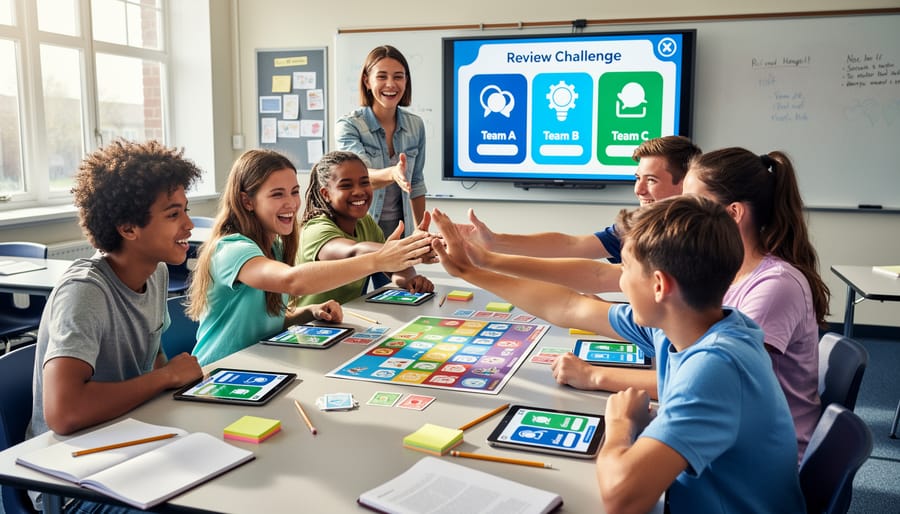
- Divide your class into four teams (or schools) and let students choose creative team names to build excitement.
- Display the game on your screen or interactive whiteboard and explain the basic rules—keep it simple and clear.
- Designate a scorekeeper or use the built-in scoring features to track progress as you play.
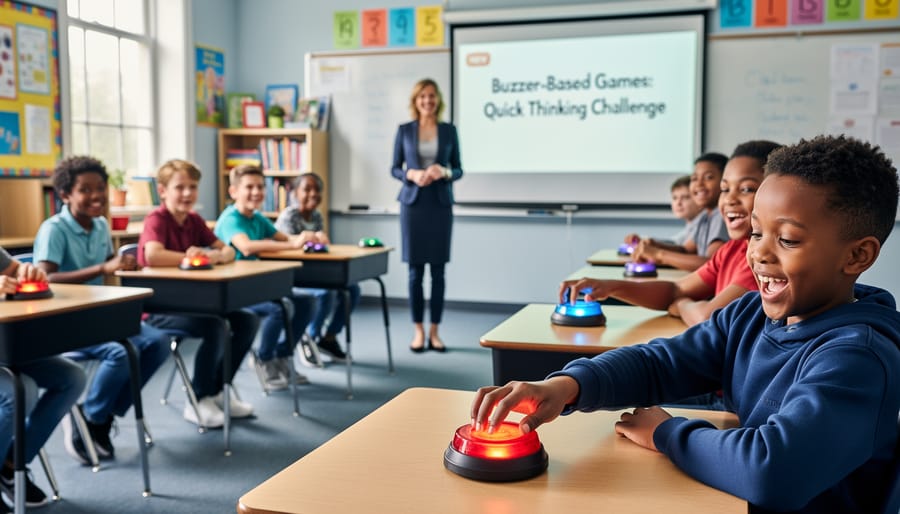
Before you start, take a moment to establish ground rules with your class. Will students raise hands or use buzzers? How will you handle disputes? Setting these expectations upfront keeps gameplay smooth and maximizes learning time. Most teachers find that a quick five-minute setup session transforms a standard template into a personalized learning experience that feels tailor-made for their classroom.
Pro Tips for Maximum Engagement
Keep the momentum going by setting clear time limits for each round—this creates natural excitement and prevents games from dragging. Mix up team compositions regularly so students interact with different classmates and skill levels balance out naturally. When you notice quieter students holding back, assign rotating roles like scorekeeper, team captain, or question reader to give everyone a moment in the spotlight.
Celebrate creative answers and effort, not just correct responses. This encourages risk-taking and keeps struggling students engaged. For classes with wide ability ranges, offer tiered questions or let teams choose difficulty levels for bonus points. Quick mid-game energy boosters like stand-up stretches or victory dances work wonders when focus starts slipping.
Most importantly, play along! Your enthusiasm is contagious. When students see you genuinely enjoying the activity, they’ll mirror that energy and participation soars.
Game 2: Battle of the Buzzer
When to Use This High-Energy Format
Timing is everything when it comes to maximizing the impact of 4 Schools games in your classroom. These high-energy competitions work best when your students need an adrenaline boost or a mental reset. Monday mornings are perfect for this format—the competitive structure helps shake off weekend sluggishness and gets everyone mentally engaged right away.
Consider pulling out 4 Schools games the day before winter or spring break when focus tends to wander. The fast-paced nature keeps students on task while still feeling celebratory. They’re also fantastic for classes that naturally lean competitive. If you’ve got students who light up during challenges and thrive on speed-based activities, this format will have them completely invested.
Use these games strategically when you need to review material quickly or want to assess understanding without the pressure of a traditional quiz. The format also works wonders as a Friday reward activity that still reinforces learning. Just remember that classes needing calmer energy might benefit from lower-key review options instead. Match the format to your classroom’s mood and watch engagement soar.
Adapting for Different Learning Styles
Every classroom is beautifully diverse, and 4 Schools games shine when you tweak them to meet different learning needs. For visual learners, create color-coded team zones or use poster boards to track progress throughout the game. Display question categories with icons or images rather than just text.
Introverted students benefit from think-pair-share modifications. Give everyone 30 seconds of quiet thinking time before teams discuss answers. You can also offer a “write first, share later” option where students jot down responses on mini whiteboards before group discussion.
Processing time matters too. Build in strategic pauses by using a timer that gives teams 60-90 seconds to confer before answering. Consider allowing one “phone a friend” lifeline per round where teams can consult reference materials.
Try rotating team roles so different students lead each round. Some kids thrive as the spokesperson while others excel as researchers or strategists. The beauty of these games is their flexibility – once you understand your students’ needs, you can customize the experience to help everyone succeed and feel included.
Game 3: Team Tournament Challenge

Building Teams That Work
Creating balanced teams can make or break your game-based activities! The secret is mixing skill levels strategically rather than letting students choose their own groups. Try pairing stronger students with those who need support, but rotate these partnerships regularly so everyone learns from different peers.
Here’s a quick approach that works: assign each student a number from one to four, then group all ones together, all twos together, and so on. This random method prevents the same friendship groups from forming every time and encourages new connections.
For optimal peer learning, give each team member a specific role like timekeeper, recorder, spokesperson, or materials manager. When everyone has a job, participation increases naturally. You can also use achievement-based grouping where you intentionally place high and low performers together, creating built-in peer tutoring opportunities.
Keep groups small, ideally three to four students maximum. Smaller teams mean less opportunity for anyone to hide in the background and greater accountability for contributions.
Game 4: Spin the Wheel Review
Adding Your Own Creative Twists
The beauty of wheel-based games is how easily you can adapt them to fit your unique classroom needs! Start by customizing your wheel categories to match whatever you’re teaching. Instead of generic subjects, try specific topics like “Photosynthesis Vocab,” “Civil War Battles,” or “Algebraic Equations.” This laser-focused approach reinforces exactly what your students need to master.
Consider adding bonus rounds to amp up the excitement. Create special wheel sections like “Double Points,” “Lightning Round” (30-second rapid-fire questions), or “Team Steal” where other groups can jump in. These variations keep everyone alert and engaged, even when it’s not their turn.
For differentiated instruction, color-code your wheel sections by difficulty level. Green might represent foundational questions, yellow for intermediate challenges, and red for advanced problems. This lets you quickly adjust the game’s complexity based on your students’ readiness levels.
Subject-specific twists work wonderfully too. In language arts, include “Act It Out” sections where students perform vocabulary words. For math classes, try “Show Your Work” segments worth extra points. Science teachers might add “Real-World Connection” slices where students explain how concepts apply to everyday life.
The key is making the game truly yours while keeping your learning objectives front and center.
Making Game-Based Learning a Regular Part of Your Routine
The secret to successful game-based learning isn’t using games every single day—it’s about strategic placement that maximizes engagement without eating up your planning time. Start by choosing one or two games from your toolkit and rotate them based on where you are in your teaching unit.
Think of games as learning checkpoints rather than standalone activities. Use them at natural transition points: introducing new concepts, reinforcing midpoint skills, or reviewing before assessments. Most teachers find that incorporating games two to three times per week strikes the perfect balance between novelty and routine.
| Unit Phase | Best Game Type | Timing |
|---|---|---|
| Beginning of Unit | Kahoot or Blooket | 10-15 minutes to activate prior knowledge |
| Middle of Unit | Quizizz or Gimkit | 15-20 minutes for skill practice |
| End of Unit | Any competitive game | 20-25 minutes for comprehensive review |
Here’s where customization saves you time: create one solid question set, then adapt it across multiple platforms. That vocabulary list works equally well in Kahoot and Quizizz with minimal tweaking.
Tracking progress doesn’t require complicated spreadsheets. Most platforms automatically generate reports showing which questions students struggle with most. Screenshot these insights or download the data to inform your next lesson—no extra grading required.
For days when you’re short on time, keep a folder of quick classroom games ready to go. These work perfectly as bell ringers or lesson wrap-ups, keeping students engaged even during those hectic weeks when planning time disappears.
Review time doesn’t have to be boring anymore! These four game templates offer you practical, engaging ways to transform your classroom into an interactive learning space where students actually want to participate. The best part? You don’t need to be a game design expert or spend hours creating materials from scratch.
Start small and build your confidence. Pick one game that matches your teaching style and content area, download the template, and customize it with your review questions. You’ll be amazed at how quickly your students engage when learning feels more like play. Once you see the energy shift in your classroom, you’ll naturally want to rotate in the other games to keep things fresh.
These classroom games that work across different subjects and grade levels, making them valuable additions to your teaching toolkit year after year. The instant download format means you can prep a game during your lunch break and use it that same afternoon. Customization takes minutes, not hours, and the payoff in student engagement is immediate. Give your students the gift of review sessions they’ll actually look forward to attending.