
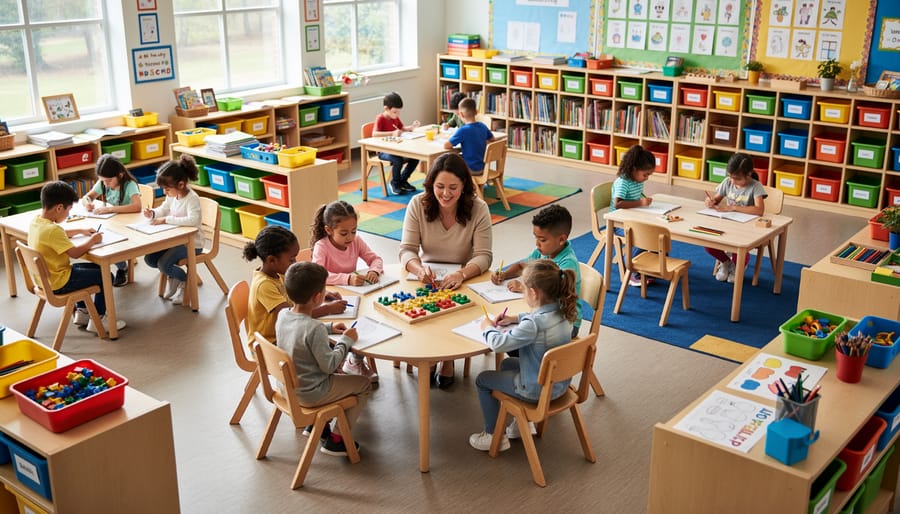
Why Your Classroom Struggles When You Confuse Management with Discipline
You’re juggling two powerful tools in your teaching toolkit, and mixing them up could be why your classroom feels chaotic. Classroom management is your proactive game plan—the systems, routines, and engaging strategies you set up before problems even start. Think seating arrangements that minimize distractions, clear procedures for turning in homework, and interactive activities that keep students naturally engaged. Discipline, on the other hand, is your reactive response when students cross boundaries—the consequences and corrective actions you take after misbehavior happens.
Here’s the game-changer: great teachers spend 80% of their energy on management and only 20% on discipline. When you design your classroom environment thoughtfully from day one, you’ll find yourself dealing with fewer disruptions. Picture it like this—management is building a fence at the top of a cliff, while discipline is the ambulance waiting at the bottom. Both matter, but prevention beats intervention every time.
The confusion between these concepts leaves many teachers feeling frustrated, wondering why their discipline strategies aren’t working. The truth? You might not need stricter consequences; you might need stronger systems. When students know exactly what’s expected, how to transition between activities, and feel genuinely engaged in learning, behavior problems naturally decrease. This isn’t about being the “fun teacher” or the “strict teacher”—it’s about being the strategic teacher who sets everyone up for success before challenges arise.
The Core Difference: Management Builds, Discipline Corrects
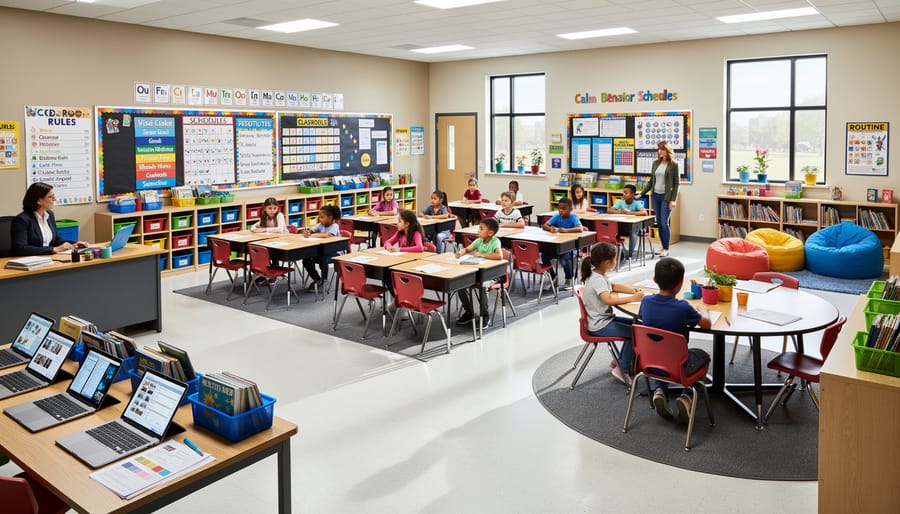
What Classroom Management Really Means
Think of classroom management as the foundation of your teaching space—it’s everything you do to create an environment where learning naturally thrives. This is your proactive game plan, the behind-the-scenes magic that keeps your classroom humming along smoothly.
At its heart, classroom management is about setting up systems that work for you and your students. It includes the physical arrangement of your room (yes, where those desks go matters!), the routines you establish from day one, and the clear expectations you communicate about how your classroom community functions. It’s the morning routine that helps students settle in, the transition signals that move everyone from one activity to the next, and the procedures for everything from sharpening pencils to turning in assignments.
But classroom management goes beyond just logistics. It’s also about engagement strategies that keep students interested and connected to their learning. When you’re planning interactive activities, varying your teaching methods, and building positive relationships with students, you’re managing your classroom. You’re creating conditions where students want to participate and succeed.
The beauty of strong classroom management is that it prevents most problems before they even start. When students know what’s expected, feel connected to their learning environment, and understand how things work, there’s simply less opportunity for disruption. You’re being proactive rather than reactive, which makes your teaching life so much easier and more enjoyable.
What Discipline Actually Does
Think of discipline as your backup plan—those specific actions you take when students need redirection or correction. While classroom management sets the stage for success, discipline steps in when someone veers off course. Here’s the important part: effective discipline isn’t about punishment or control. It’s about teaching!
When a student disrupts the class or forgets to follow expectations, discipline becomes your opportunity to guide them back on track. Maybe that looks like a quiet one-on-one conversation, a logical consequence that connects to their choice, or a chance to practice the correct behavior. The goal is helping students understand what went wrong and how to make better choices next time.
Great discipline is responsive and educational. Instead of simply saying “stop that,” you’re asking questions like “What could you do differently?” or offering support with “Let’s work on this together.” You’re building their problem-solving skills and self-awareness.
Here’s what makes discipline truly effective: it’s consistent, fair, and tied to learning. When students understand that discipline isn’t about getting in trouble but about growing and improving, they become more receptive to correction. You’re not the enforcer—you’re their coach helping them develop better habits and decision-making skills.
Remember, every discipline moment is a teaching moment. When you approach it with patience and purpose, you’re reinforcing those classroom expectations while showing students you believe in their ability to do better.
Why This Distinction Changes Everything in Your Classroom
Understanding this distinction is honestly a game-changer for your teaching practice. When you grasp the difference between classroom management and discipline, you naturally shift from feeling like you’re constantly putting out fires to actually preventing them from starting in the first place.
Think about it this way: teachers who focus primarily on discipline spend their energy responding to problems after they happen. It’s exhausting, right? You’re constantly interrupting your lessons to address misbehavior, which leaves everyone feeling frustrated. But when you prioritize classroom management, you’re designing an environment where those disruptions are less likely to occur. You’re being proactive instead of reactive, and that changes the entire atmosphere of your classroom.
This shift in mindset transforms your role from enforcer to facilitator. Instead of wondering what consequences to give when problems arise, you’re asking yourself how to structure your classroom so students know exactly what’s expected and feel motivated to meet those expectations. Your students pick up on this energy too. They feel safer, more supported, and more engaged when they’re part of a well-managed classroom rather than one focused mainly on punishment.
The practical impact shows up in your daily experience. You’ll spend less time dealing with behavioral issues and more time actually teaching. Your stress levels decrease because you’ve built systems that work. Students develop better self-regulation skills because they understand the routines and expectations. Even when discipline becomes necessary, it happens within a framework of respect and clear guidelines rather than frustration and conflict.
The best part? This understanding gives you permission to invest time in setting up systems and building relationships, knowing that this upfront work pays off exponentially throughout the year.
Adaptive Discipline: The Missing Link in Your Management Strategy
What Makes Discipline ‘Adaptive’
Here’s the thing about discipline: it’s not a cookie-cutter solution! Adaptive discipline means recognizing that every student is unique, every situation is different, and what works for one child might not work for another.
Think of it this way: when a student acts out, there’s usually a reason behind it. Maybe they’re struggling with content and feeling frustrated. Perhaps they didn’t eat breakfast and can’t focus. Or they might be dealing with something tough at home. Adaptive discipline strategies take these factors into account instead of automatically applying the same consequence to everyone.
This approach means you’re being flexible and thoughtful. Instead of “three strikes and you’re out” for everyone, you might give extra support to one student while holding firm boundaries with another. You’re adjusting your response based on what each student needs to learn and grow from the experience.
The beauty of adaptive discipline is that it strengthens your relationships with students. They feel seen and understood, which makes them more likely to respond positively and change their behavior for the better.
The Three Pillars of Adaptive Discipline
Here’s the great news: adaptive discipline doesn’t have to be complicated! Think of it as resting on three simple yet powerful pillars that work together to create a responsive, student-centered environment.
First up is observation. Take time to really watch your students in action. What triggers certain behaviors? When do they thrive? Notice patterns before jumping to consequences. This detective work helps you understand the why behind student actions, making your responses more effective and personalized.
Next comes flexibility. What works for one student might flop with another, and that’s perfectly okay! Stay open to adjusting your strategies based on what you observe. Maybe Jake needs a quiet space to reset while Maria benefits from a quick check-in chat. Customize your approach to fit individual needs rather than applying one-size-fits-all solutions.
Finally, there’s relationship-building, the secret ingredient that makes everything else work. When students feel genuinely connected to you, they’re more likely to respond positively to guidance. Invest time in getting to know them beyond academics. Share a laugh, celebrate their interests, and show you care about them as people. Strong relationships transform discipline from something you do to students into something you work through together.
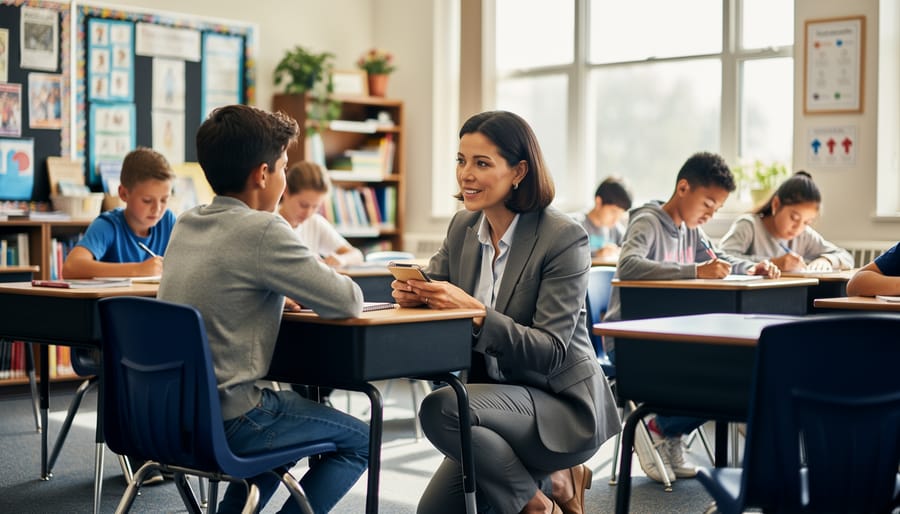
Building Your Management Foundation First
Set Clear Expectations from Day One
Think of your first week as laying the foundation for everything that comes after! Start by creating classroom norms together with your students—yes, together! When students help shape the rules, they’re far more likely to follow them. Keep your expectations simple, specific, and positively worded. Instead of “No talking,” try “Use quiet voices during independent work.”
Make these norms visible everywhere. Post them on colorful charts, reference them during lessons, and celebrate when students follow them. The key is consistency—follow through every single time, so students know exactly what to expect.
Here’s a game-changer: teach your expectations like you’d teach math or reading! Model what “lining up respectfully” actually looks like. Let students practice and provide feedback. This proactive approach prevents problems before they start.
Connect your expectations to fun engagement strategies that reinforce positive behavior. Maybe students earn points toward a class reward when everyone follows the norms, or you use quick games to review expectations weekly.
Remember, clarity creates confidence! When students know exactly what’s expected and why it matters, they’re set up for success from day one.
Create Engaging Routines That Keep Students on Track
Great routines are the backbone of smooth classroom management because they keep everyone focused and reduce downtime where disruptions can creep in. Start by creating clear, predictable transitions between activities. Use timers, music cues, or fun countdowns to signal when it’s time to switch gears. This helps students know exactly what to expect and minimizes confusion.
Design your daily schedule with varied activities that match student energy levels. Break up longer lessons with quick movement breaks or interactive moments that re-energize the room. The key is maintaining momentum so students stay engaged rather than drifting off task.
Consider incorporating classroom management games into your routines to make transitions more enjoyable. Quick team challenges, brain breaks, or review games can transform potentially chaotic moments into structured fun. These game-based tools add excitement while keeping students on track.
Customize your routines based on your specific classroom needs. What works for morning arrival might differ from dismissal procedures. Pay attention to where disruptions typically happen and build stronger routines around those moments. Remember, the goal is creating structure that feels natural and keeps learning flowing smoothly throughout the day.
Design Your Space for Success
Your physical classroom setup can work wonders for preventing behavior issues before they start! Think of your space as a silent partner in classroom management. Simple tweaks make a huge difference. Position desks so you can easily circulate and see every student—this naturally reduces off-task behavior without saying a word. Create clear pathways that prevent traffic jams during transitions. Designate specific zones for different activities: a cozy reading corner, collaborative group spaces, and quiet work areas. Strategic seating matters too! Place students thoughtfully based on their needs and social dynamics. Keep high-traffic areas like the pencil sharpener away from quiet zones. Display visual reminders of routines and expectations at eye level where students naturally look. Add personal touches that reflect your students’ interests and cultures—when learners feel the space is theirs, they’re more invested in maintaining positive behavior. Remember, your classroom design communicates expectations and sets the stage for success before you even begin teaching!
When Management Isn’t Enough: Adaptive Discipline in Action
Read the Room: Adjusting Your Response
Here’s the thing: not every situation calls for the same response! Before you react to misbehavior, take a quick moment to assess what’s really happening. Is this a first-time slip-up or a repeated pattern? Is the student having a rough day, or are they deliberately disrupting learning?
Think of yourself as a detective gathering clues. Consider the student’s usual behavior, what happened right before the incident, and whether there might be underlying issues like hunger, stress, or learning struggles. A student who forgot their homework once might just need a gentle reminder, while someone consistently unprepared might need a conversation about organization strategies.
Context matters too! A chatty moment during independent work requires a different approach than talking during a fire drill. The same behavior might need a quiet redirect in one situation and a more serious intervention in another.
Remember, customization is your superpower! What works for one student might not work for another. Some kids respond well to a look or proximity, while others need explicit verbal reminders. Get to know your students’ personalities, triggers, and what motivates them. This doesn’t mean being inconsistent with your expectations—it means being flexible in how you help different learners meet those expectations. When you match your response to the situation and the student, you’ll build trust and see better results.
Match Your Strategy to the Student
Here’s the exciting truth: there’s no one-size-fits-all approach! Your classroom management and discipline strategies should flex and adapt based on who you’re working with.
For shy or anxious students, prevention is your best friend. Build trust through consistent routines and quiet check-ins. When issues arise, private conversations work better than public corrections. Think of it as creating a safe bubble where they can thrive without fear of embarrassment.
Your energetic, hands-on learners need movement breaks built right into your management plan. Rather than constantly disciplining fidgeting, channel that energy! Use standing desks, brain breaks, or learning stations. When redirection is necessary, keep it brief and get them moving again quickly.
Students who struggle with transitions benefit from visual schedules and countdown timers. Give them structure to lean on, and you’ll prevent meltdowns before they start. If behavioral issues pop up during changes, revisit your transition routines rather than jumping straight to consequences.
For strong-willed students, offer choices within boundaries. “Would you like to complete this activity at your desk or at the reading corner?” This approach prevents power struggles while maintaining your classroom structure.
Remember, customizing your approach isn’t about lowering standards. It’s about being smart and responsive, meeting each student where they are while guiding them forward!
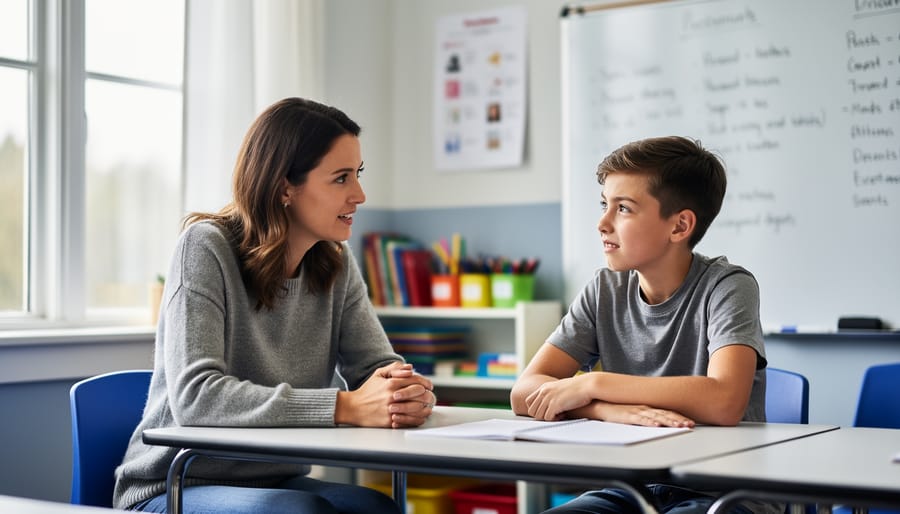
Keep Consequences Connected and Meaningful
Effective discipline maintains strong relationships while helping students learn from their mistakes. The key is connecting consequences directly to the behavior in a way that feels fair and helps students grow.
When a student disrupts learning time, a meaningful consequence might involve helping restore that lost time—perhaps by organizing materials or creating a helpful resource for classmates. This approach teaches responsibility rather than just delivering punishment. Keep conversations respectful and private when possible, protecting student dignity even during correction.
Time matters too! Address issues promptly while emotions are still manageable, but avoid power struggles in heated moments. A brief cool-down period can help everyone think more clearly.
Remember that consequences should be proportional and predictable. Students need to understand the “why” behind your response. Pair correction with positive reinforcement techniques so students see you notice their good choices too, not just mistakes.
The goal is helping students reflect on their actions, understand impact on others, and make better choices next time. When discipline focuses on learning rather than punishment, you preserve trust and keep your classroom community strong.
Your Action Plan: Bringing It All Together
Ready to bring classroom management and discipline together in your teaching practice? Let’s create a simple action plan you can start using today!
Think of your approach in three layers. First, build your foundation with strong management systems. Set clear expectations, establish routines, and design your physical space to support learning. Spend the first weeks of school teaching procedures explicitly, just like you’d teach any subject. When students know what’s expected and how things work, you’ve already prevented most problems before they start!
Next, layer in your responsive discipline toolkit. Despite amazing management systems, you’ll still need to address individual behaviors. Keep your responses calm, consistent, and connected to your classroom values. Remember that discipline is about teaching, not punishing. When a student struggles, ask yourself: “What skill are they missing?” rather than “How should I punish this?”
Finally, make it adaptive! Customize both your management and discipline approaches to fit your unique classroom. What works beautifully for first graders might flop with high schoolers. Pay attention to what resonates with your students and adjust accordingly.
Here are three quick wins for immediate implementation:
Start tomorrow by greeting every student at the door. This simple management technique sets a positive tone and helps you catch small issues before they escalate.
Create a personal “reset routine” for when discipline situations arise. Take three deep breaths, speak calmly, and address behavior privately when possible.
End each day by identifying one management success and one discipline learning moment. This reflection keeps you growing and helps you see progress even on challenging days.
You’ve got this! Strong management plus thoughtful discipline equals a classroom where everyone thrives.
Understanding the difference between classroom management and discipline is truly a game-changer for your teaching practice. Remember, management is your proactive foundation—those systems, routines, and engaging strategies you set up to prevent issues before they start. Discipline is your responsive toolkit for addressing specific behaviors when they happen. The good news? You absolutely can master both, and they work beautifully together when you combine clear expectations with positive relationships.
Here’s the exciting part: interactive tools and games naturally support both areas. When you incorporate fun, customizable activities into your daily routine, you’re building that proactive management structure students thrive in. Games create engagement, reduce boredom, and give students positive ways to channel their energy. At the same time, these interactive moments strengthen your connections with students, making any necessary discipline conversations more effective because you’ve already built trust and rapport.
Start small, stay consistent, and celebrate your progress. Every routine you establish and every positive interaction you create moves you closer to the classroom environment you envision. You’ve got this!