

Turn Classroom Chaos Into Cooperation With These Three Rule-Setting Guidelines
Involve students in creating the rules to boost ownership and buy-in from day one. When kids help craft the guidelines, they understand the reasoning behind them and feel invested in following them. Turn rule-making into a collaborative discussion where everyone contributes ideas about what helps them learn best.
Keep your rules positive and crystal clear so students know exactly what to do, not just what to avoid. Instead of “No running,” try “Walk safely in the classroom.” Replace “Don’t interrupt” with “Raise your hand to share ideas.” This simple shift focuses on the behavior you want to see and eliminates confusion about expectations.
Limit your list to 3-5 essential rules that cover the most important classroom behaviors. Too many rules overwhelm students and become impossible to enforce consistently. Choose guidelines broad enough to address multiple situations but specific enough to be meaningful. Think “Respect yourself, others, and our space” rather than twenty micro-rules about pencil sharpening and bathroom passes.
These three guidelines transform classroom management from a top-down mandate into a shared responsibility. Your students will take pride in their learning environment when they help shape it, understand what’s expected, and can actually remember the rules that matter most.
Why Interactive Rule-Setting Changes Everything
Remember when classroom rules meant the teacher writing a list on the board while students passively copied them down? Those days are behind us, and for good reason. When students help create the rules they’re expected to follow, something magical happens: they actually follow them.
Here’s the difference. Traditional top-down rule-setting creates compliance at best and resistance at worst. Students see rules as restrictions imposed on them rather than guidelines they’ve agreed to uphold. But student-created classroom rules flip this dynamic entirely. When kids have a voice in the process, they develop genuine ownership and understanding of why each rule matters.
Think about it from their perspective. Would you rather follow someone else’s arbitrary rules, or guidelines you helped design? The answer is obvious. This collaborative approach taps into intrinsic motivation, which is far more powerful than external enforcement. Students become invested in maintaining a positive classroom environment because they built it together.
Interactive rule-setting also aligns perfectly with modern classroom management principles. Today’s educators know that engagement and student voice aren’t just nice extras, they’re essential for effective learning environments. When you involve students in creating expectations, you’re teaching critical skills like negotiation, consensus-building, and civic responsibility.
Game-based approaches make this process even more effective. Turning rule creation into an interactive activity keeps energy high and ensures every voice gets heard. Students aren’t just sitting through another lecture about behavior; they’re actively participating in building their classroom community. The result? Rules that stick because students believe in them.
Guideline #1: Start With Student Voice (Not Your List)

Make It Fun With Interactive Activities
Let’s face it—students are way more invested in rules they helped create! Transform your rule-setting session into an exciting activity rather than a lecture. Start with engaging brainstorming games where students shout out ideas while you capture them on colorful sticky notes or a digital whiteboard. You’ll be amazed at how creative they get when it feels like play instead of work.
Try using a “Rule Builder” game where small groups compete to draft the best classroom rule using specific criteria like clarity, fairness, and positivity. Give each team markers and poster paper, then have them present their rules with enthusiasm. This friendly competition sparks creativity and gets everyone talking about what really matters in your classroom community.
Interactive voting systems make students feel heard and valued. Use digital polling tools, hand-raising apps, or simple thumbs up/thumbs down gestures to let the class vote on proposed rules. You can even gamify the process by awarding points for thoughtful contributions or creating rule categories that teams must fill like a scavenger hunt.
Consider incorporating game-based rule-setting activities that turn the entire process into a memorable experience. Templates with game mechanics—like spin wheels to select discussion topics or digital cards for sorting rules—keep energy high and participation soaring. When students laugh, collaborate, and actively participate in creating guidelines, they develop genuine ownership and commitment to following them throughout the year.
Turn Ideas Into Actionable Rules
Now comes the exciting part – transforming all those great ideas into rules that actually work! Here’s how to make the magic happen.
Start by grouping similar suggestions together. If students mentioned “be nice,” “don’t bully,” and “help each other,” you can combine these into one positive rule like “Treat everyone with kindness and respect.” This approach keeps your list manageable while honoring everyone’s input.
Keep your language positive and clear. Instead of “Don’t run in the classroom,” try “Walk safely in our learning space.” Positive phrasing tells students what to do rather than what not to do, which is way more empowering! Aim for 4-6 core rules that cover the big picture without overwhelming anyone.
Make sure each rule is specific enough to guide behavior but flexible enough to apply to different situations. “Be responsible for your learning” works better than a dozen tiny rules about pencils, homework, and notebooks. Students are smart – they’ll understand what responsibility looks like in different contexts.
Here’s a fun twist: let students help write the final versions! Break into small groups and assign each group one rule to wordsmith. They’ll feel extra ownership when they see their own language reflected in the classroom expectations. You can even have students create visual reminders or design posters that showcase your new rules.
Remember, these rules should feel like a shared commitment, not a list of restrictions. When everyone contributed to creating them, following them becomes a matter of pride rather than compliance.
Guideline #2: Keep It Simple and Positive
The Magic Number for Classroom Rules
Here’s the secret: less is definitely more when it comes to classroom rules! Research shows that students remember and follow 3-5 rules far better than lengthy lists. Think about it – when you’re juggling 10 or more rules, students get overwhelmed and forget what really matters.
The key is consolidating related expectations into broader categories. Instead of separate rules like “raise your hand,” “wait your turn,” and “listen when others speak,” try one umbrella rule: “Respect others and their ideas.” This approach gives you flexibility while keeping things crystal clear.
Start by brainstorming with your students – you’ll probably end up with 20+ suggestions! That’s perfect. Work together to group similar ideas into themes. Maybe “no running” and “walk carefully” both fall under “Keep our classroom safe.” This collaborative sorting process actually helps students understand the why behind each rule, making them more likely to follow through.
Remember, memorable rules stick! Aim for statements that are positive, specific enough to guide behavior, but broad enough to cover multiple situations. Your students will thank you for the clarity, and you’ll spend less time managing and more time teaching.
Flip the Script: From ‘Don’t’ to ‘Do’
Here’s the game-changer: students respond better when they know what to do, not just what to avoid. Instead of filling your classroom with “don’ts,” flip the script and frame your rules as positive actions. This simple shift creates a more welcoming environment and sets students up for success.
Start by reviewing your current rules and spotting the negative language. “Don’t run in the classroom” becomes “Walk safely in our space.” “Don’t interrupt others” transforms into “Listen respectfully when classmates are speaking.” See the difference? You’re painting a picture of the behavior you want to see rather than focusing on what’s wrong.
The magic happens when you make these positive rules specific and actionable. “Be respectful” sounds nice but it’s too vague. Break it down: “Use kind words with classmates,” “Raise your hand before speaking,” and “Help others when they need support.” Now students have a clear roadmap for success.
Want to supercharge this approach? Pair your positive rules with positive reinforcement techniques that celebrate when students follow them. Catch kids doing things right and acknowledge it immediately. This creates momentum and motivates everyone to keep up the good work.
Try this practical exercise: gather your students and give them a “negative rule.” Challenge them to reframe it positively. You’ll be amazed at their creativity and they’ll take ownership of the classroom expectations because they helped shape them. Plus, involving students in this process builds buy-in from day one.
Remember, positive language isn’t about sugarcoating expectations. It’s about clarity and encouragement. You’re showing students exactly what success looks like in your classroom, making it easier for everyone to thrive together.
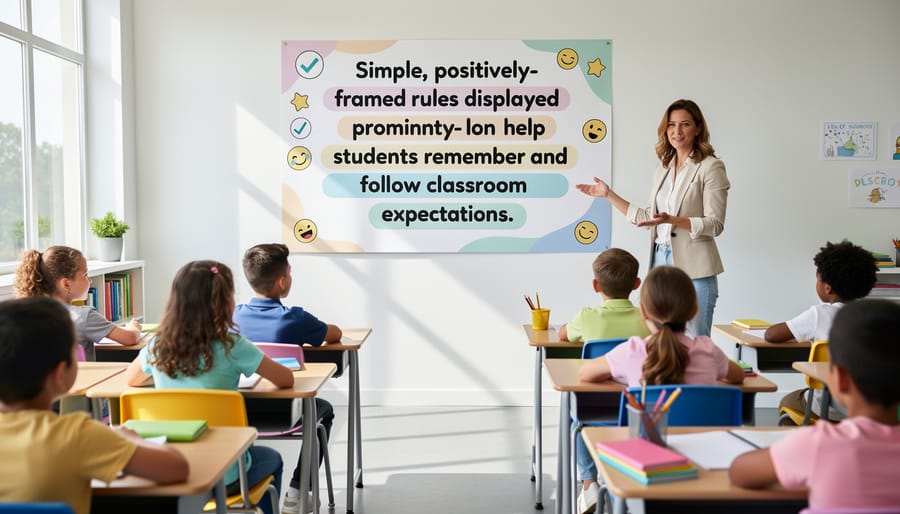
Guideline #3: Make Rules Visible and Revisit Them Often
Creative Ways to Display Your Classroom Rules
Making your classroom rules visible is half the fun! Start with colorful posters that reflect your students’ personalities. Let them design rule posters using their favorite characters, memes, or art styles. This ownership makes rules feel less like restrictions and more like shared agreements.
Try creating an interactive rules wall where students can add sticky notes about why each rule matters to them. You could even rotate which student decorates the rules display each month, keeping things fresh and engaging.
Digital displays work wonders too! Use your classroom screen to showcase animated rules or student-created videos explaining each guideline. Consider designing a rules anchor chart together during the first week, complete with student illustrations and real-life examples.
For younger learners, turn rules into a visual storyboard with photos of students demonstrating proper behavior. Older students might enjoy creating infographics or digital posters using free design tools.
The key is making rules impossible to ignore while keeping them positive and inviting. When students see their creativity reflected in classroom expectations, they’re naturally more invested in following them. Plus, beautiful displays create a welcoming environment that celebrates your classroom community from day one.
Gamify Your Rule Reinforcement
Here’s the truth: even the best classroom rules lose their power when students forget about them. That’s why you need to keep those expectations fresh and fun throughout the year.
The secret? Turn rule review into something your students actually look forward to. When you gamify rule reinforcement, you transform boring reminders into engaging activities that stick in their minds.
Start with quick review games at the beginning of each week or after breaks. Try a simple matching game where students pair scenarios with the appropriate classroom rule. You can also create a quiz show format where teams compete to identify which rule applies in different situations. These activities take just five minutes but make a huge difference in retention.
Interactive templates are your best friend here. Create digital or physical boards where students can drag and drop examples of good behavior under the correct rule. Design spin-the-wheel activities where students land on different rules and share how they’ve followed them that week. The more hands-on and visual, the better.
Mix up your approach to keep things fresh. One week, try a rule scavenger hunt where students find examples of classmates following the rules. Another week, have students create their own scenarios and challenge others to identify the rule at play. You can even let students design their own review games, giving them ownership of the process.
Remember, the goal isn’t just repetition but engagement. When students are actively involved in reviewing rules through games and activities, they’re not just memorizing expectations. They’re internalizing them, which leads to lasting behavioral change and a more positive classroom environment.
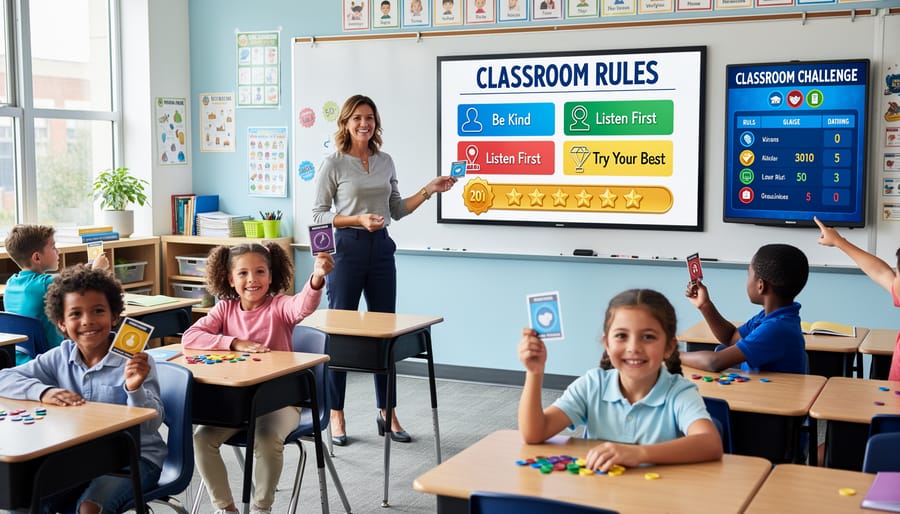
You’ve got this! By following these three key guidelines—involving students in the process, keeping rules clear and positive, and making the experience interactive—you’re setting up your classroom for success from day one. Remember, the goal isn’t just to post rules on a wall and move on. It’s about creating a collaborative culture where everyone feels heard and invested in making your classroom the best learning space possible.
Ready to bring these guidelines to life? Start by planning a fun rule-setting session that gets your students talking, sharing, and brainstorming together. The more interactive you make it, the more engaged they’ll be. And here’s the exciting part: you don’t have to create everything from scratch. Game templates and interactive activities can transform rule-setting from a boring lecture into an exciting collaborative experience that students actually remember.
When students help shape the rules, they take ownership of their behavior and build a stronger classroom community. So take that first step, involve your students, and watch how a simple shift in approach can create positive ripples throughout your entire school year. Your collaborative classroom culture starts now!