
Transform Your Valentine’s Day Into the Best Classroom Party Ever
Transform your Valentine’s Day celebration into a stress-free classroom win with activities that take 15 minutes or less to prep. Print ready-made game templates, grab some candy hearts, and you’re set for a memorable celebration that keeps learning on track.
Skip the Pinterest rabbit hole this year. The best classroom Valentine’s ideas work because they’re simple: a quick math scavenger hunt using conversation hearts, a five-minute kindness card exchange, or team-based games that channel all that sugar-fueled energy into productive fun. You don’t need elaborate craft supplies or hours of prep time to create special memories.
Focus on activities that serve double duty. Choose options that reinforce your current curriculum while celebrating the holiday. A Valentine’s word scramble teaches vocabulary. A heart-themed estimation jar practices math skills. Group challenges build teamwork while burning off excitement before lunch.
The secret is having grab-and-go resources ready. Keep a folder of printable games, simple templates you can customize with student names, and flexible activities that work whether you have 10 minutes or a full class period. When you’re juggling lesson plans, parent emails, and February’s chaos, easy wins matter most.
Why Quick Valentine Activities Work Better Than Elaborate Parties
Let’s be honest—elaborate Valentine’s Day parties sound wonderful in theory, but they often create more stress than joy. You’re already juggling lesson plans, assessments, and daily classroom management, so spending hours on party preparation just isn’t realistic.
Quick Valentine activities are your secret weapon for celebrating the holiday without sacrificing learning time or your sanity. These focused celebrations typically last 15-30 minutes, which is the sweet spot for maintaining student excitement without losing momentum in your instructional day. When activities are brief and purposeful, students stay enthusiastic from start to finish rather than becoming overstimbed or distracted.
Short activities also keep students engaged because they create anticipation and structure. Students know there’s a clear beginning and end, which helps them transition back to regular classroom routines more smoothly. You’re not dealing with the afternoon crash that often follows lengthy parties filled with sugar and chaos.
From a practical standpoint, quick activities require minimal setup and cleanup. You can incorporate educational elements—like vocabulary review games with Valentine themes or math challenges using conversation hearts—that reinforce your curriculum while honoring the holiday. This approach satisfies administrators who want to see learning happen every day while still giving students the celebration they’re excited about.
The best part? You maintain control of your classroom environment. Quick, structured activities mean fewer behavioral issues and more genuine fun for everyone involved.
Valentine Review Games That Take 5 Minutes to Set Up
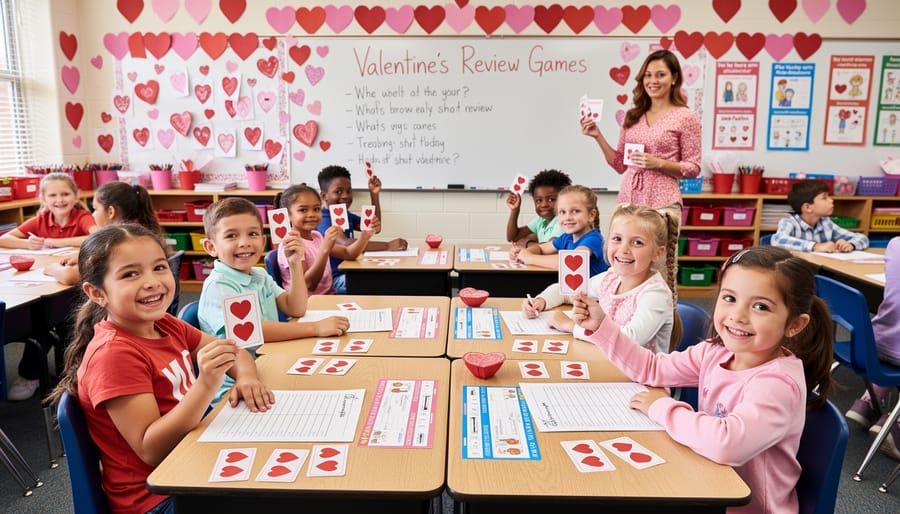
Valentine Trivia With Heart-Themed Scoreboards
You don’t need to create brand new review games from scratch! Take any trivia or quiz game you already use in your classroom and give it an instant Valentine’s makeover with themed graphics and heart-shaped scoreboards.
Start by choosing review questions from your current curriculum—math facts, spelling words, science concepts, or historical dates all work perfectly. The academic content stays exactly the same, but you’ll display it using Valentine-themed templates. Replace standard point counters with heart scoreboards where teams collect hearts instead of regular points. Red, pink, and white color schemes instantly transform the visual appeal without changing the educational value.
This approach saves you tons of prep time since you’re recycling content you’ve already created. Simply drop your existing questions into a Valentine-themed template, add some cupid graphics or conversation heart borders, and you’re ready to go. Students get excited about the festive presentation while you maintain your learning objectives.
Consider using digital presentation tools with Valentine backgrounds, or print heart-shaped cards for question displays. Team names can be Valentine-themed too—think “Cupid’s Crew” or “Sweet Hearts”—adding another layer of fun without extra work. The best part? Once you set up the template, you can reuse it year after year with different question sets, making this truly one of the easiest Valentine classroom ideas you’ll find.
Team-Building Games With a Valentine Twist
Turn ordinary game templates into Valentine’s Day celebrations that bring your class together! These collaborative activities take just minutes to set up and keep everyone engaged while spreading kindness throughout your classroom.
Start with a Valentine Bingo game where students search for classmates who match each square’s friendship quality—like “someone who shares their lunch” or “a great listener.” This gets kids moving, talking, and recognizing the positive traits in their peers. You can customize the squares to match your class’s values and grade level.
Try a Hearts Memory Match game where pairs work together to find matching cards. Add Valentine vocabulary words, math problems, or historical figures to sneak in learning while they play. Partner activities like these naturally encourage cooperation and problem-solving.
For a whole-class option, set up a Valentine Scavenger Hunt with clues hidden around the room. Each clue leads to the next, and students must work as a team to solve riddles about friendship, kindness, or even curriculum content you’re currently covering.
The best part? Most game templates are completely customizable, so you can adjust difficulty levels, incorporate current lessons, and reuse them year after year. Just print, prep once, and you’ve got an instant activity that builds community while giving your students a meaningful break from regular routines.
No-Prep Valentine Card Activities
The Random Acts of Kindness Card Game
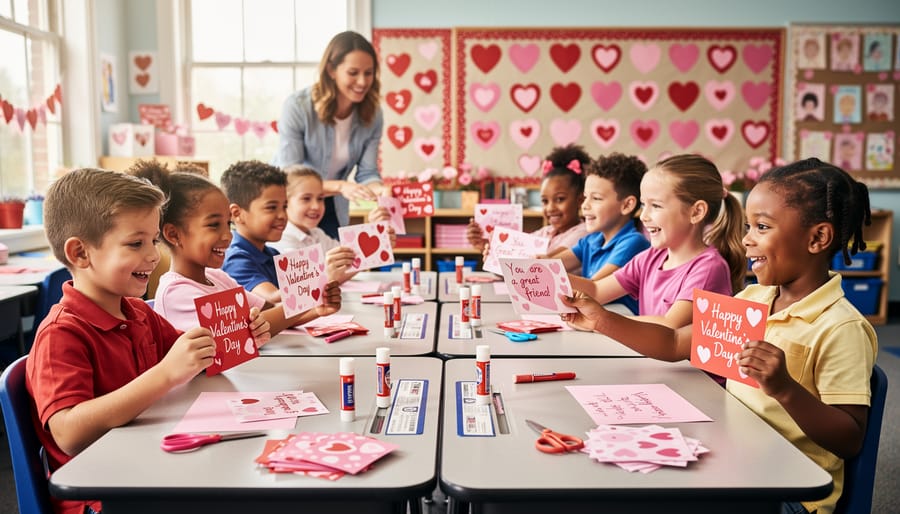
Here’s a twist on traditional Valentine’s Day cards that adds excitement and personal meaning to the exchange. Instead of students creating generic cards for everyone, turn it into a game where each student draws a name and writes something truly special.
Start by having students draw names from a container (you can do this a few days before Valentine’s Day to give them time to think). Ask them to write down a specific compliment, a favorite memory with that person, or something they appreciate about their classmate. This personalized approach means each student receives one thoughtful, meaningful card instead of dozens of quick notes.
To make it even more engaging, provide a few creative prompts: “I’ll never forget when you…” or “You make our classroom better by…” These starters help students move beyond surface-level compliments and really think about their classmates’ positive qualities.
The beauty of this activity is that it encourages observation and gratitude while keeping prep time minimal. You’ll need just a few supplies like cardstock, markers, and maybe some stickers for decoration. Plus, it eliminates the stress of making sure every student receives equal amounts of cards since everyone gets exactly one special message crafted just for them.
Speed Card Exchange Challenge
Turn card exchange time into an exciting, organized event with this speed challenge approach! Set up stations around your classroom where students rotate in small groups, spending just 2-3 minutes at each station to exchange valentines. Use a timer with a fun sound effect to signal when it’s time to switch stations.
Here’s how it works: Divide your class into groups of 4-5 students. Create station cards with numbers or fun Valentine themes like “Cupid’s Corner” or “Friendship Station.” When the timer starts, students exchange cards only with their current group members. When time’s up, groups rotate clockwise to the next station.
This method keeps everyone moving and engaged while preventing the typical crowded chaos of free-for-all exchanges. You’ll love how it naturally manages traffic flow and ensures every student gets equal interaction time. Plus, the timed element adds excitement and keeps the energy positive throughout the activity.
For added fun, play upbeat music during rotations and pause it when students should freeze at their new stations. The whole exchange typically takes 15-20 minutes, and you’ll be amazed at how smoothly it runs. Students stay focused, cards get distributed fairly, and nobody feels left out or overwhelmed in the shuffle.
Quick Valentine Brain Breaks and Energizers
Valentine Word Puzzles for Instant Engagement
Word puzzles are perfect quick classroom activities that need zero prep and keep students engaged during those transition moments. Start with a Valentine word scramble by writing mixed-up holiday words on the board like VEOL (love), TRHEA (heart), or DUFNIP (cupid). Students can work individually or compete in teams to solve them first.
Try “I Spy Valentine Edition” where you give clues about items in the classroom using Valentine vocabulary. For example, “I spy something red and heart-shaped” gets students observing their environment while practicing descriptive language.
Create riddles on the spot: “I have wings but I’m not a bird. I carry arrows but I’m not a soldier. Who am I?” These brain teasers require zero materials and can fill any awkward five-minute gap.
Another winner is the Valentine alphabet game where students list Valentine words from A to Z. Challenge them to find at least 15 letters, and you’ll be amazed at their creativity. These simple puzzles keep energy positive while maintaining your learning environment, making them ideal for any moment when you need quick engagement without losing instructional time.
Movement-Based Valentine Games
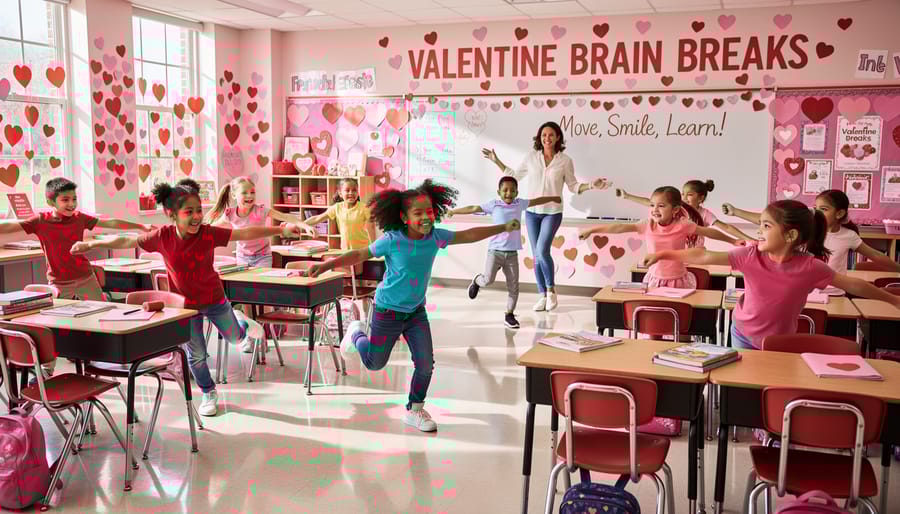
Getting kids up and moving makes Valentine’s Day memorable while burning off that holiday energy! These active games require minimal setup and keep everyone engaged.
Valentine Freeze Dance is your go-to activity when you need something quick. Simply play music and have students dance. When you pause the music, they freeze in a heart shape or with their arms forming a Valentine pose. Kids love the silliness, and you can play multiple rounds in just 10 minutes.
Heart Relay Races add friendly competition to your celebration. Divide students into teams and have them carry paper hearts on spoons, balance conversation hearts on their heads, or pass heart-shaped beanbags without using their hands. Create stations around your classroom to keep things moving smoothly.
Cupid Says puts a Valentine twist on the classic Simon Says game. Students follow movement commands only when you say “Cupid says” first. Incorporate themed actions like “blow kisses,” “flutter like a butterfly,” or “shoot your bow and arrow” to make it festive.
For a calmer option, try Valentine Yoga Poses. Have students create heart shapes with partners, stretch into arrow positions, or form valentine letters with their bodies. This works perfectly as a brain break between academic activities.
These movement games transform restless energy into Valentine fun without requiring elaborate materials or complicated instructions!
Valentine Activities That Double as Academic Review
You don’t have to sacrifice learning goals to celebrate Valentine’s Day! With a little creativity, you can transform standard review activities into festive experiences your students will love.
Turn vocabulary practice into a Valentine word hunt by hiding heart-shaped cards with review words around the classroom. Students work in pairs to find and define them, then use each word in a sentence about friendship or kindness. Math facts become more engaging when students solve problems to “unlock” Valentine messages or decode secret admirer notes using answer keys.
Create conversation heart challenges that reinforce whatever you’re currently teaching. For younger students, sort candy hearts by color to practice graphing and data analysis. Older students can calculate percentages, create statistical reports, or even write persuasive essays about their favorite flavors.
Reading comprehension gets a boost with Valentine-themed passages followed by heart-shaped response activities. Have students write book recommendations for classmates on decorative cards, explaining why they’d “love” a particular story. This practices summarizing skills while building your classroom library culture.
Science classes can explore the chemistry of candy-making or investigate how the heart works as a pump. Social studies teachers might examine the history of Valentine’s Day traditions across different cultures, incorporating research and presentation skills.
The key is planning activities that align with your existing curriculum rather than creating entirely new lessons. Simply adding Valentine elements to your regular review games makes them feel special without derailing your teaching schedule. When students are engaged and having fun, they’re actually retaining more information. That’s the real win for everyone involved, and you’ll finish the day knowing your students both celebrated and learned something valuable.
Last-Minute Valentine Solutions for Any Grade Level
Running short on time? No worries! These adaptable Valentine’s Day activities work beautifully across grade levels and require zero advance prep.
Try a Valentine Word Chain game where students build words using heart-themed vocabulary. Elementary students can focus on simple rhyming words, while middle schoolers tackle compound words or creative adjectives. Just write “VALENTINE” on the board and give students three minutes to create as many words as possible using those letters. It’s engaging, educational, and fills those transition moments perfectly.
Create a Mystery Valentine challenge by having students solve age-appropriate riddles to discover their Valentine treats or cards. Younger students love simple picture clues, while older students enjoy wordplay and logic puzzles. This turns distribution time into an interactive learning moment.
For quick activities for middle school students, try a Valentine Debate where teams argue fun topics like “chocolate versus candy” or “pink versus red.” Elementary classes can do show-of-hands polls and graph their results for a math connection.
The beauty of these last-minute solutions is their flexibility. Adjust the complexity based on your students’ abilities, and remember that simple activities often create the most memorable moments. Keep materials minimal and focus on participation over perfection. Your enthusiasm will make any activity special, regardless of grade level or preparation time!
You don’t need elaborate crafts or complex lesson plans to create a memorable Valentine’s Day in your classroom. The activities and templates we’ve shared prove that meaningful celebrations can happen in just minutes, not hours. Whether you’re squeezing in a quick five-minute brain break or dedicating a full class period to festive learning, you have options that work for your schedule.
Remember, your students won’t remember the perfectly executed party. They’ll remember the fun they had playing games together, the laughter during silly activities, and the feeling that their classroom is a welcoming community. Those moments happen when you keep things simple and stress-free.
The best part? With ready-made templates and game options at your fingertips, you can customize activities to fit your students’ needs without starting from scratch. Choose what works for your time, energy, and classroom dynamics. A little celebration goes a long way in building connections and bringing joy to your learning space. This Valentine’s Day, give yourself permission to keep it easy and focus on what really matters – enjoying the day with your students.