Transform Your Kindergarten Classroom Into a Learning Playground That Actually Works
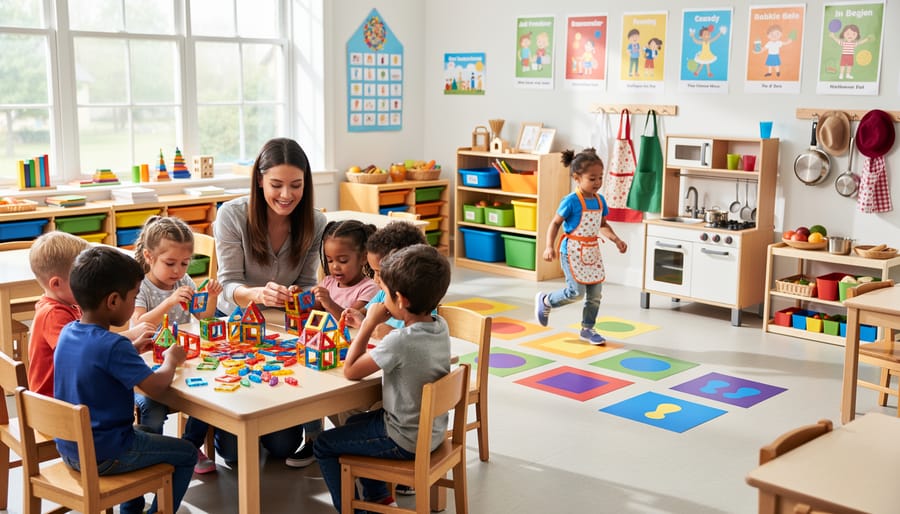
Transform your kindergarten classroom into a dynamic learning environment where education happens naturally. Learning through play isn’t just fun—it’s how 5-6 year olds absorb math concepts, develop literacy skills, and build social-emotional foundations while staying genuinely engaged.
Set up literacy stations using dramatic play corners where students become grocery store clerks writing shopping lists or veterinarians creating patient charts. These activities teach writing, reading, and vocabulary without worksheets that lose their attention in minutes.
Create movement-based math games where children hop on number mats to practice addition or sort objects by running them to labeled bins across the room. Physical activity keeps kindergarteners focused longer while reinforcing essential skills.
Design puzzle and building challenges that develop spatial reasoning and problem-solving. Give students magnetic tiles to construct shapes, pattern blocks to replicate designs, or simple coding activities using floor mats and direction cards.
The best part? Most play-based activities need minimal prep time, especially when you use customizable templates and reusable materials. You’ll spend less time creating worksheets and more time facilitating the rich learning that happens when kindergarteners explore, experiment, and discover through play that feels like pure fun to them.
Why Play-Based Learning Works Magic in Kindergarten
Here’s the thing about five and six-year-olds: they’re not wired to sit still and absorb information lecture-style. Their brains are literally designed to learn through movement, exploration, and hands-on experiences. That’s why play-based learning isn’t just fun—it’s actually the most effective teaching method for this age group.
When kindergarteners engage in play, they’re building critical cognitive skills without even realizing it. Block building develops spatial reasoning. Pretend play strengthens language and social-emotional skills. Game-based learning activities teach problem-solving and turn-taking. All of these experiences create neural pathways that traditional worksheets simply can’t match.
Here’s the bonus: play-based learning actually makes your life easier. When children are engaged in meaningful play, behavioral issues decrease dramatically. You’ll spend less time managing disruptions and more time facilitating rich learning experiences. Kids who are actively involved in hands-on activities naturally stay focused longer and transition more smoothly between tasks.
The beauty of this approach is how naturally it aligns with kindergarten standards. While students are “just playing” restaurant, they’re counting money, writing orders, and practicing social skills. During building center time, they’re exploring geometry and physics concepts. The learning happens organically, which means better retention and genuine enthusiasm.
You don’t need fancy materials or complicated lesson plans to make this work. Simple, customizable activities that you can adapt to your students’ interests and your curriculum goals are often the most effective. When play meets intentional teaching, magic happens in your classroom.
Movement and Physical Play Activities
Alphabet Hopscotch and Letter Movement Games
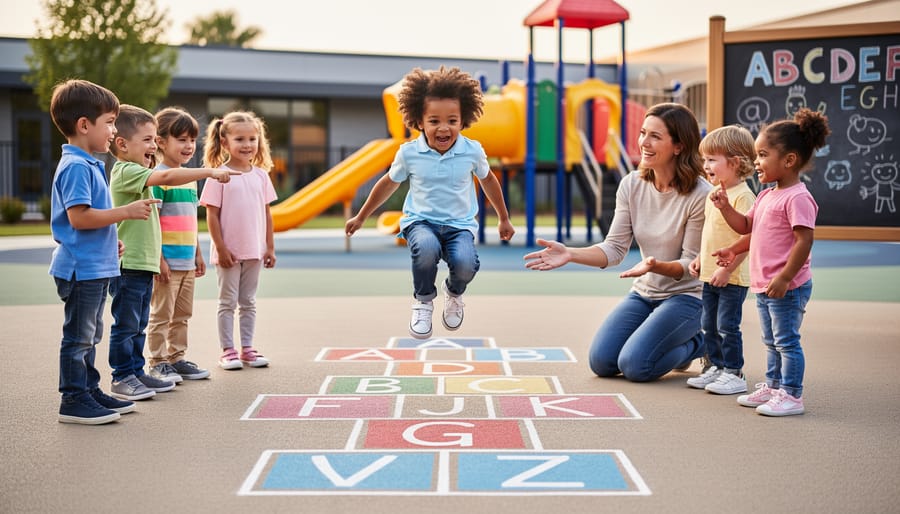
Get your kindergarteners moving while they master the alphabet with these energizing letter games! Traditional hopscotch gets an educational twist when you replace numbers with letters. Draw a hopscotch grid with chalk and fill each square with uppercase or lowercase letters. As children hop through, they call out each letter and its sound. You can customize this by focusing on letters they’re currently learning or arranging them alphabetically for sequence practice.
Try alphabet freeze dance where students move freely until the music stops, then you hold up a letter card. They must freeze in a position that forms that letter with their body. This builds letter recognition and body awareness simultaneously.
Letter relay races add excitement to phonics practice. Place letter cards at one end of your space and objects or pictures at the other. Students race to match letters with items that start with that sound. Team it up for collaborative learning or keep it individual for focused practice.
Musical alphabet is another crowd-pleaser. Arrange letter mats in a circle and play music while children walk around them. When the music stops, each child stands on a letter and identifies it or shares a word that begins with that sound. These movement activities transform abstract letter concepts into memorable physical experiences that stick with young learners.
Number Line Jump and Math in Motion
Get those little learners moving and counting at the same time with number line activities that make math physical and fun! Set up a giant floor number line using painter’s tape or chalk, and call out simple addition or subtraction problems. Kids jump to the first number, then hop forward or backward to find the answer. You can make it even more exciting by turning it into a relay race where teams compete to solve problems the fastest.
Another energy-burning option is “Math Hopscotch” where you create a hopscotch grid with numbers instead of the traditional pattern. Call out a number and have students jump to it, or ask them to hop on all even numbers or skip count by twos. For extra challenge, have them toss a beanbag and create math problems using where it lands.
Try “Number Line Freeze Dance” too! Play music while students move around numbered spots on the floor. When the music stops, call out a math fact and kids freeze on the correct answer. These activities are completely customizable to match your current lessons, whether you’re working on basic counting, simple operations, or number recognition. The best part? Your students won’t even realize they’re doing math while they’re having such a blast moving around.
Freeze Dance Learning Games
Freeze dance isn’t just a fun brain break—it’s a powerful learning tool you can customize for any subject! Here’s how to transform this classic game: Play music while students dance, then pause it and call out a learning prompt. For math practice, try “Freeze on one foot if the answer is 5!” or “Make a triangle shape with your body!” For literacy, have students freeze in the shape of letters you call out or act out vocabulary words when the music stops. You can even practice sight words by having children freeze only when they hear a specific word in a song. The best part? This activity requires zero prep and works for any skill level. Simply adjust your prompts based on what you’re teaching that week. Keep rounds short—about 30 seconds of dancing followed by quick freeze challenges—to maintain energy and focus. Students stay engaged because they never know what challenge is coming next!
Board Games and Card Games for Skill Building
Modified Classic Games for Kindergarten
You don’t need fancy materials to bring learning magic into your classroom! Those classic games gathering dust at home can transform into powerful teaching tools with just a few tweaks.
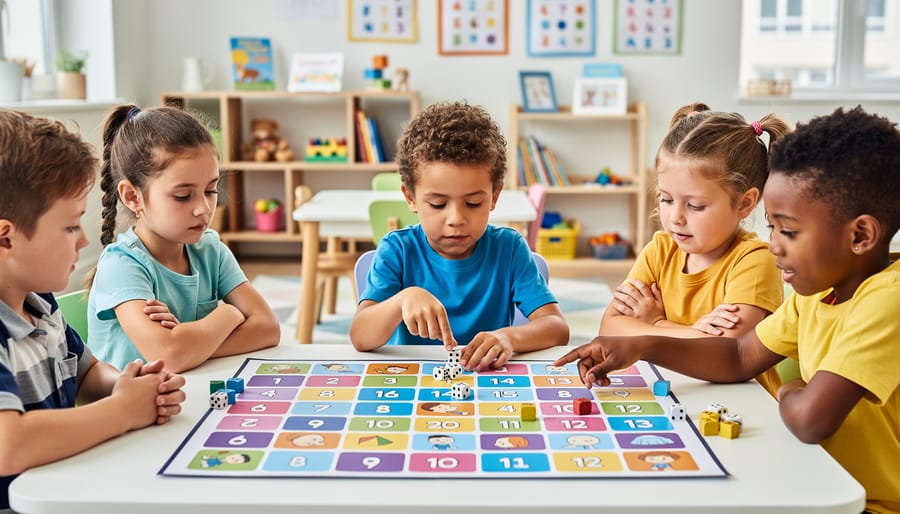
Start with games your students might already know. Candy Land becomes a letter recognition adventure when you add alphabet cards to each color space. Players say the letter sound before moving forward. Chutes and Ladders works wonderfully for counting practice—have kids count aloud as they move their pieces or solve simple addition problems to climb ladders.
Memory matching games are perfect for customization. Create your own cards featuring sight words, number bonds, or shape pairs. The best part? You can adjust difficulty instantly by changing how many cards you use.
Bingo transforms into any learning objective you need. Make boards with letters, numbers, shapes, or even student names for social learning. Your educational board games collection can cover multiple subjects throughout the year.
Dice games like Yahtzee simplify beautifully for kindergarteners. Roll, count the dots, and record numbers. Add two dice together for beginning math skills.
The real magic happens when you involve students in creating game variations. They’ll suggest rules, design game boards, and feel ownership over their learning adventures!
Custom Card Games Using PowerPoint Templates
Card games bring an instant energy boost to learning time, and the best part? You can customize them to review anything your kindergarteners are working on! PowerPoint templates make creating these games incredibly simple, even if you’re not tech-savvy.
Start with basic matching games where students pair letters with sounds, numbers with quantities, or shapes with real-world objects. You can print these as physical cards for hands-on play or display them on your smartboard for whole-class participation. The digital format lets you add fun animations and sounds that make each correct match feel like a celebration!
Memory games work wonderfully for sight word practice. Create pairs of cards with high-frequency words, then let students flip and match them during literacy centers. Color-coding different word families helps visual learners while keeping the game organized.
For math practice, design simple number card games where students draw cards and complete actions like “show me 4 fingers” or “jump 3 times.” These combine physical movement with number recognition, perfect for active kindergarteners.
The beauty of PowerPoint templates is that you create them once and reuse them all year, simply swapping out the content. Save your favorites and share them with grade-level teammates to build a collaborative game library everyone can enjoy!
Team-Based Game Rotations
Keep your whole class engaged and active by setting up multiple game stations around your classroom! This rotation system lets every student participate simultaneously while you manage the energy and excitement.
Start by creating 4-5 distinct game zones in different areas of your room. Think letter recognition games at one table, counting activities at another, and shape sorting in a cozy corner. Assign small groups of 4-5 students to each station, giving them about 10-12 minutes to play before rotating.
Use a fun timer or bell to signal transitions between stations. Color-code each station with matching folders or signs so students know exactly where to go next. This visual system helps even the youngest learners navigate independently.
The beauty of rotations is that you can customize each station to target different skills while maintaining that playful atmosphere kids crave. Plus, you’ll have opportunities to float between groups, observe learning in action, and provide support where needed. Mix up the stations weekly to keep things fresh and exciting for your kindergarteners!
Puzzle Activities That Build Problem-Solving Skills
Interactive Digital Puzzle Games
Digital puzzles bring exciting variety to your play-based learning toolkit without requiring expensive materials or complex prep work. PowerPoint templates let you create customizable puzzle activities that capture your kindergarteners’ attention while building critical thinking skills.
Start with simple drag-and-drop puzzles where students match pictures to words, complete patterns, or sort objects by color, shape, or size. Project these on your classroom screen for whole-group engagement, or use them at learning stations for small-group practice. The beauty of digital puzzles is their flexibility—you can adjust difficulty levels instantly based on your students’ needs.
Create interactive jigsaw puzzles using familiar classroom themes like animals, seasons, or community helpers. Students can work together to solve them, promoting collaboration and problem-solving discussions. Mystery reveal puzzles work wonderfully too, where children complete challenges to uncover a hidden picture piece by piece, keeping motivation high.
The best part? Once you’ve set up your template, customization takes minutes. Change images, swap vocabulary words, or adjust the number of pieces to match your current lesson plans. Your digital puzzles grow with your students throughout the year, making this a time-saving solution that delivers consistent engagement and learning outcomes.
Hands-On Puzzle Centers
Puzzle centers give kindergarteners the perfect opportunity to develop problem-solving skills while working at their own pace. Set up a dedicated station with a variety of jigsaw puzzles ranging from 12 to 48 pieces, allowing children to choose challenges that match their comfort level. This customization keeps everyone engaged without frustration.
Pattern blocks are absolute game-changers for independent exploration. Provide printed pattern cards that students can replicate, or let them create their own designs. These colorful geometric shapes help children recognize patterns, understand symmetry, and build spatial reasoning skills naturally through play.
Add manipulatives like lacing beads, connecting cubes, and magnetic tiles to your puzzle center rotation. These hands-on materials encourage creativity while strengthening fine motor skills and hand-eye coordination. The beauty of these centers is that children learn through discovery rather than direct instruction.
Keep your puzzle center fresh by rotating materials every few weeks. Store completed puzzles and introduce new ones to maintain excitement and challenge. Consider adding clipboards with simple recording sheets where students can draw their pattern block creations, giving them pride in documenting their work. The independence this center offers helps build confidence and self-directed learning habits that benefit kindergarteners throughout their educational journey.
Word and Number Puzzles for Early Literacy and Math
Puzzles are fantastic for building problem-solving skills while reinforcing literacy and math concepts! Start with simple alphabet puzzles where students match uppercase and lowercase letters, or create word-building puzzles using picture clues. Number puzzles work wonderfully too—try matching numerals with dot patterns or connecting number sequences. You can easily customize these activities by creating your own puzzle templates that match your current curriculum focus. Mix things up with tangram shapes for spatial reasoning or simple crossword-style puzzles using sight words. The hands-on nature keeps kindergarteners engaged while they practice essential skills without even realizing they’re learning!
Dramatic Play and Role-Playing Activities
Learning Centers with Real-World Themes
Transform a corner of your classroom into a mini-world where kindergarteners can explore real-life scenarios through imaginative play! Learning centers with real-world themes are perfect for teaching practical skills while keeping kids completely engaged.
Set up a grocery store complete with empty food boxes, a toy cash register, play money, and shopping baskets. Students practice counting, sorting, and basic math as they “shop” and “check out” items. You can even create price tags together to reinforce number recognition.
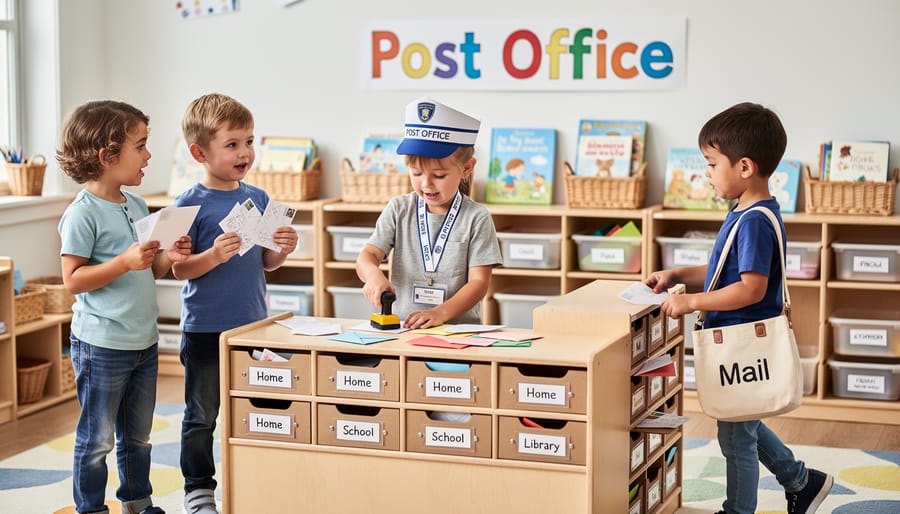
A pretend post office is another winner. Provide envelopes, stamps (stickers work great), a mailbox, and writing materials. Children practice writing their names and addresses, sorting mail by color or size, and delivering letters to classroom mailboxes. This builds early literacy skills in the most natural way possible.
Don’t forget about a restaurant or cafe setup! Kids can take orders using simple menus with pictures, serve pretend food, and handle play money. This encourages communication, teamwork, and sequencing skills.
The beauty of these centers is their flexibility. Rotate themes monthly to keep excitement high—try a doctor’s office, veterinary clinic, or flower shop. Add simple props you already have or ask families to contribute materials. Watch as your students develop social skills, problem-solving abilities, and confidence through meaningful, joyful play.
Story Retelling Through Drama
Bring stories to life by letting your kindergarteners step into the action! Story retelling through drama helps children understand plot sequences, character motivations, and key story elements while building confidence and language skills.
Start simple by reading a favorite story, then invite students to act it out using puppets. You can use store-bought puppets or create simple stick puppets together. Fairy tales like “The Three Little Pigs” or “Goldilocks” work wonderfully because kids already know them. As they manipulate the puppets, they naturally practice dialogue, sequencing, and expression.
Take it up a notch with a costume and prop bin. Scarves, hats, simple capes, and household items transform into magical storytelling tools. A cardboard box becomes a house, a blue blanket turns into an ocean, and suddenly your students are problem-solving their way through the story.
Create a designated drama corner where small groups can retell stories independently. Rotate props weekly to keep things fresh and match current read-alouds. This activity pairs perfectly with quick classroom games during transition times.
The beauty of story drama is its flexibility. You can customize any story to fit your classroom themes, and every child can participate at their comfort level, whether speaking, moving, or operating props behind the scenes.
Quick Review Games for Transition Times
PowerPoint Game Show Templates for Instant Engagement
Game show templates are absolute lifesavers when you need instant review activities that get kindergarteners excited! These pre-made PowerPoint slides come with built-in sound effects, animated scoreboards, and colorful designs that transform any learning concept into an entertaining competition.
Here’s why they’re perfect for young learners: you can customize the questions in minutes to match whatever you’re teaching—letter recognition, number sense, color identification, or vocabulary words. Simply type in your content, and you’re ready to play!
The sound effects add that extra layer of excitement. Kids absolutely light up when they hear the “ding” for correct answers or the playful buzzer sounds. You can divide your class into teams, let students take turns answering, or play whole-group style where everyone shouts out responses together.
These templates work beautifully for quick five-minute brain breaks or longer review sessions before assessments. The visual scoreboard keeps everyone motivated and engaged, and because you’re controlling the slides, you can adjust the pace based on your students’ energy levels and understanding. Best of all, once you’ve created a game, save it and reuse it throughout the year with different classes or concepts!
No-Prep Play-Based Transitions
Between activities or while waiting in line, these no-prep transition games keep kindergarteners engaged without any setup. Try “I Spy Learning Edition” where you give clues about letters, numbers, or shapes around the classroom. Play “Rhyme Time” by saying a word and having students respond with rhyming words—perfect for building phonemic awareness. “Simon Says” with educational twists works wonderfully: ask students to show you different shapes with their bodies or jump the number of times you call out. For quick brain breaks, use “Freeze Dance Learning” where students move freely until you pause and ask a question they answer by freezing in position. “Category Game” challenges kids to name items in a category like animals, colors, or foods that start with a specific letter. These games require nothing but your voice and creativity, yet they keep little ones focused while reinforcing essential skills. Best of all, you can customize them instantly to match whatever concept you’re currently teaching.
Making Play-Based Learning Work in Your Schedule
Let’s be honest—fitting play-based learning into your already packed schedule can feel overwhelming. But here’s the good news: you don’t need to overhaul everything at once. Start small and build gradually.
Begin by identifying natural transition times in your day. Those ten minutes before lunch? Perfect for a quick movement game. Waiting for dismissal? Pull out a quick puzzle challenge. These little pockets of time add up without disrupting your existing routine.
Try the “one play activity per day” approach. Choose just one meaningful play-based experience to incorporate daily, whether it’s a math game during centers or dramatic play during free choice time. Quality beats quantity every time, and your students will benefit more from one well-planned activity than several rushed ones.
Here’s a time-saving secret: let play activities do double duty. A restaurant dramatic play corner covers math skills (counting money), literacy (reading menus), and social studies (community helpers) all at once. That’s three curriculum boxes checked with one setup!
Customize activities to match what you’re already teaching. If you’re covering shapes this week, adapt your existing games to include shape recognition. This keeps everything connected and prevents that feeling of juggling too many different things.
Remember, preparation doesn’t have to eat up your evenings. Use templates and reusable materials that you can adapt throughout the year. Set up activity stations once, then rotate materials to keep them fresh.
Most importantly, give yourself permission to be flexible. Some days will be more play-focused than others, and that’s perfectly fine. The goal isn’t perfection—it’s creating engaging learning experiences that stick with your students long after they leave your classroom.
You don’t need to overhaul your entire classroom tomorrow. Start with just one play-based activity this week and see how it goes. Pick something simple that fits naturally into your existing routine, whether it’s a movement game during transition time or a quick puzzle activity before lunch.
Here’s the best part: play-based learning actually makes your teaching life easier, not harder. When kids are engaged through play, you’ll spend less time managing behavior and more time watching genuine learning happen. These activities work with children’s natural energy instead of against it, creating a classroom where everyone can breathe a little easier.
And yes, play-based learning absolutely meets academic standards. You’re still teaching literacy, math, and critical thinking skills. The difference? Your students are developing these skills through joyful experiences they’ll actually remember. They’re building confidence, creativity, and a genuine love of learning that goes far beyond test scores.
Your kindergarteners deserve a classroom where learning feels like an adventure, and you deserve teaching strategies that truly work. So grab one activity from this list, customize it for your students, and watch the magic unfold. You’ve got this!