
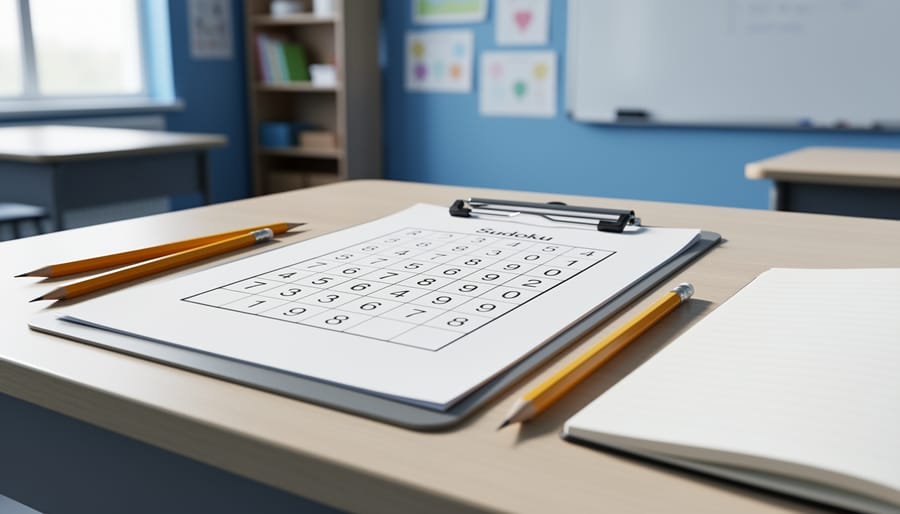
Sudoku Puzzles Net: Free Classroom-Ready Brain Teasers for Every Grade Level
is a completely free browser-based platform that delivers customizable Sudoku puzzles for every skill level, no registration required. Teachers can play puzzles instantly on any device or create downloadable PDFs with solutions for classroom use, making it an incredibly flexible tool for building logic and critical thinking skills. The platform offers puzzle sizes ranging from beginner-friendly 4×4 grids perfect for younger students to challenging 16×16 variants that push advanced learners, with difficulty levels including Simple, Moyen, and Difficile to match your classroom needs.
What makes this platform particularly valuable for educators is its clear usage rights: you can freely use these puzzles in your classroom, print them for student worksheets, or even include them in school publications as long as you credit as the source. There are no hidden costs, no premium upgrades to navigate, and no barriers between you and a fresh set of puzzles. Whether you need a quick five-minute brain teaser to start class, differentiated activities for mixed-ability groups, or a full problem-solving unit, the site’s straightforward design puts customization front and center. You can generate exactly what your students need, right when they need it.
What Makes Sudoku Puzzles Net Perfect for Teachers
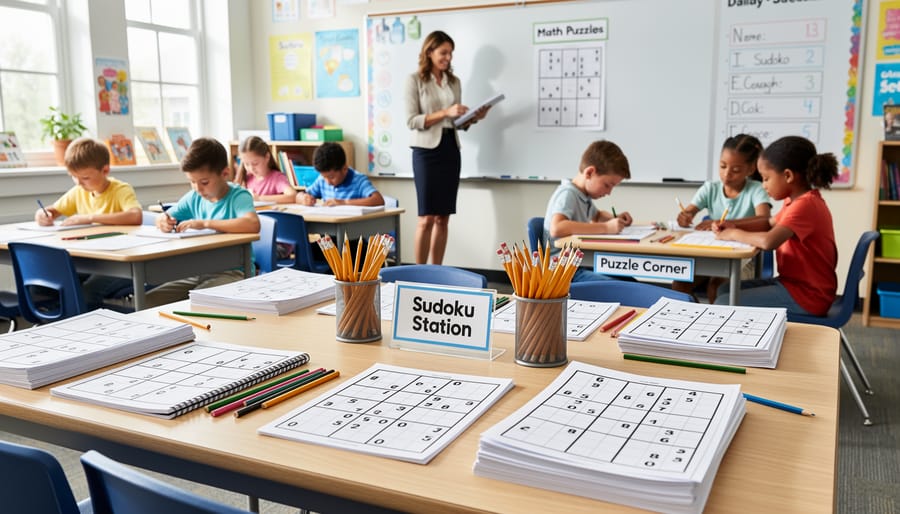
removes every tech barrier that usually slows teachers down. You don’t download anything, create an account, or deal with subscription prompts. Open the site on any device, computer, tablet, or smartphone, and the puzzles load instantly in your browser. This works perfectly whether you’re planning lessons on your laptop at home, pulling up a quick activity on the classroom computer, or letting students solve puzzles on school tablets during centers.
Everything on the platform is completely free. There are no hidden costs, no premium tiers, and no surprise paywalls asking you to upgrade for the good stuff. Every puzzle level, grid size, and feature is available immediately. This means you can experiment with different difficulty levels and puzzle types without worrying about budget approvals or purchasing decisions.
The printable PDF option is a game-changer for busy teachers. Generate a fresh puzzle in seconds, download it with the solution key included, and you’ve got an instant worksheet, homework assignment, or sub plan. Need ten different puzzles for a class set? Create them in minutes. The solutions eliminate grading guesswork and let students self-check their work.
No registration means no class lists to manage, no student emails to collect, and zero privacy concerns about sharing student information with yet another platform. You can start using Sudoku puzzles in your classroom five minutes from now without filling out a single form or reading through terms of service. That’s the kind of simplicity teachers actually need.
Puzzle Variety to Match Your Students’ Skill Levels
Starting Small: 4×4 and 6×6 Grids for Younger Learners
Younger students often find traditional 9×9 Sudoku grids intimidating. That’s where 4×4 and 6×6 puzzles shine. These smaller grids introduce the core concept, each row, column, and box needs unique numbers, without the cognitive overload that can frustrate elementary learners.
A 4×4 grid uses numbers 1-4 and features four small boxes. Most first and second graders can complete one in five to ten minutes once they understand the rules. It’s perfect for introducing logical thinking without requiring advanced math skills. Students focus on pattern recognition and elimination strategies in bite-sized chunks.
The 6×6 grid bridges the gap nicely for third through fifth graders. It uses numbers 1-6 and offers more challenge while remaining manageable. Students who master 4×4 puzzles often feel accomplished tackling this next level, building confidence alongside their reasoning skills.
Both sizes work beautifully as quick morning activities or transition tasks. You’ll notice students naturally developing systematic approaches, checking rows first, then columns, then boxes. These smaller grids teach the foundations that make standard Sudoku accessible later, creating problem-solvers who actually enjoy the challenge rather than shutting down before they start.
Leveling Up: Standard and Challenge Grids
Once your students have mastered the basics, the standard 9×9 grid becomes your go-to classroom staple. These puzzles strike the perfect balance, challenging enough to keep middle schoolers engaged during a 10-minute brain break, yet approachable enough that most students can complete one in a single sitting. The Moyen and Difficile levels ramp up the difficulty by giving fewer starting numbers, which means students need to rely more heavily on elimination strategies and pattern recognition rather than just filling in obvious blanks.
For advanced students or high school classes, the 12×12 and 16×16 grids offer serious mental workouts. These larger puzzles use letters instead of numbers (A-L for 12×12, A-P for 16×16), which adds a fresh twist while maintaining the same logical principles. A 16×16 Difficile puzzle can easily occupy a gifted student for an entire class period or serve as a take-home challenge. These bigger grids work particularly well for math clubs, enrichment programs, or as bonus assignments for students who consistently finish classwork early and need something genuinely challenging rather than just “more of the same.”
Creative Ways to Use Sudoku in Your Classroom
Sudoku works in more classroom moments than you might think. Once you’ve bookmarked, you’ve got a flexible tool that fits a dozen different teaching scenarios without extra prep.
Start your day with a quick logic warm-up. Project a 6×6 puzzle on your board as students arrive, and let them solve it individually or call out numbers as a group. It settles the room, gets brains humming, and takes five minutes. Switch up the difficulty each day to keep things fresh.
Early finishers love having something meaningful to do that isn’t just busywork. Keep a folder of printed puzzles at different levels, or let students grab a tablet and choose their own challenge from the site. They stay engaged, you avoid interruptions, and nobody’s sitting there bored while classmates catch up.
Brain breaks matter, especially during long blocks or test prep. When energy dips or focus wanders, pull up a 4×4 Simple puzzle and solve it together. Students can shout out numbers, debate placements, and reset their attention in under ten minutes. It’s way more effective than scrolling phones.
If you’re teaching a logic or problem-solving unit, Sudoku makes a perfect anchor activity. Use a 9×9 grid to demonstrate elimination strategies, pattern recognition, or deductive reasoning. Students can apply what they learn immediately by tackling their own puzzles, then compare approaches in pairs. The variety of grid sizes means you can differentiate without creating multiple lesson plans.
Team challenges add friendly competition. Split your class into small groups, assign each a puzzle at the same difficulty level, and see who solves it first. Or try a relay format where students take turns filling in numbers. You can even create a class leaderboard for weekly puzzle times if your students thrive on that kind of motivation.
The best part? Every idea works across subjects. Math teachers use Sudoku for number sense, but language arts teachers love it for pattern thinking, and history teachers deploy it when a lesson runs short. Customize however you want, no special training required.

Printable Puzzles: Your Backup Plan and Offline Solution
Printing puzzles takes seconds on, and you’ll use this feature constantly. Click the print icon on any puzzle, and the site generates a clean PDF with the puzzle and its solution on separate pages, perfect for quick worksheets or those days when technology decides not to cooperate.
This print function becomes your lifesaver for emergency sub plans. Keep a folder of printed Sudoku puzzles in varying difficulty levels ready to go, and you’ll never scramble when you’re out sick. Substitute teachers love them because the instructions are simple and the answer key is right there.
You can also print sudoku 4 per page by generating multiple puzzles and arranging them yourself, which saves paper and works great for station rotations or centers. The PDFs print clearly on standard paper, so you’re not fighting with margins or cutting off edges.
Homework assignments, extra credit options, test-day warm-ups, printables cover all these scenarios without requiring every student to have a device. The best part? explicitly permits classroom use as long as you credit the source. Just add “” to your worksheet footer, and you’re good to go. No permission forms, no licensing fees, no legal worries.
Why Sudoku Belongs in Every Educator’s Toolkit
Sudoku isn’t just a time-filler, it’s a powerful teaching tool that builds skills students need across every subject. When your students work through a puzzle, they’re developing critical thinking as they analyze which numbers fit where and test hypotheses about possible solutions. They’re strengthening pattern recognition by spotting number sequences and identifying what’s missing from each row, column, and box. And they’re practicing perseverance, learning that mistakes are part of the process and that working systematically through a challenge leads to success.
These cognitive benefits translate directly to classroom outcomes. The logical reasoning required for Sudoku mirrors the analytical thinking students use in math word problems and scientific inquiry. The patience and systematic approach they develop carries over to tackling multi-step assignments in any subject. You’ll notice students becoming more comfortable with productive struggle, that essential learning state where they’re challenged but not frustrated. Plus, Sudoku fits perfectly alongside the benefits of educational games you’re already leveraging, it provides immediate feedback, allows students to work at their own pace, and creates natural differentiation without extra planning on your part. The self-checking nature means students can identify and correct their own errors, building metacognitive awareness that helps them become independent learners.
Common Questions About Using Sudoku Puzzles Net
Teachers exploring Sudoku Puzzles Net often have practical questions about how the platform works in real classroom settings. Here are the answers to the most common concerns.
Do I need to create an account or pay anything?
No. The platform is completely free with no registration required and no hidden costs for online play or printable PDFs.
Will the puzzles work on my students’ tablets or Chromebooks?
Yes. The puzzles run directly in any web browser on computers, tablets, and smartphones without requiring installation or downloads.
Can I print puzzles for worksheets or homework?
Absolutely. You can create and download printable PDFs with solutions included, perfect for paper-based activities or backup plans.
Am I allowed to use these puzzles in my classroom materials?
Yes, as long as you credit the source as “” on any printed materials, newsletters, or classroom publications.
Beyond these basics, teachers sometimes wonder whether the difficulty levels match their curriculum needs. The Simple, Moyen, and Difficile options cover a wide range of student abilities, from beginners working through foundational logic to advanced learners tackling complex patterns. The smaller 4×4 and 6×6 grids work well for younger students building confidence, while the standard 9×9 and larger 12×12 and 16×16 puzzles challenge older learners without requiring teacher preparation time.
If you encounter technical hiccups, remember the platform’s browser-based design means you’re not troubleshooting app permissions or outdated software. Any internet-connected device with a modern browser handles the puzzles smoothly, making it simple to incorporate Sudoku into BYOD classrooms or one-to-one device programs without IT headaches.
Sudoku Puzzles Net gives you a classroom resource that’s genuinely free, truly accessible, and ready to use the moment you need it. There’s no software to install, no account to create, and no surprise costs waiting around the corner. Whether you’re planning a logic unit, searching for a reliable brain break activity, or simply want to keep early finishers engaged, this platform delivers puzzles that work on any device and scale to any grade level. Your students gain critical thinking practice while you gain a flexible tool that fits seamlessly into your existing routine. Try it once, and you’ll likely find yourself returning again and again, not because you have to, but because it works.