
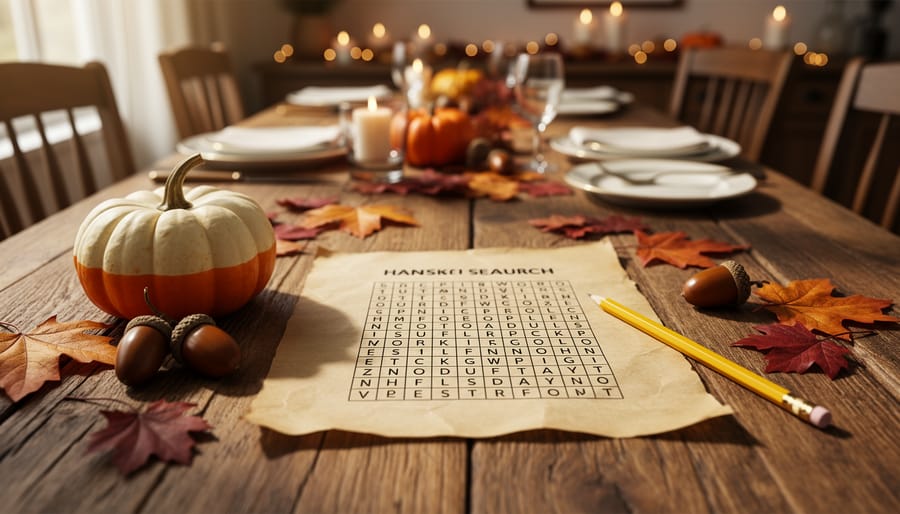
8 Word Search Puzzles for Thanksgiving That Adults Will Actually Enjoy
The best Thanksgiving word search puzzles for adults match the puzzle to the moment: a cozy feast grid for the dessert table, a hidden-phrase puzzle for a party icebreaker, or a large-print version so everyone can join in. Pick the style that fits your crowd, add a little customization, and you’ve got a ready-made activity that takes five minutes to set up and keeps people happily busy for twenty.
Why do these work so well? Word searches are low-pressure, quiet, and social all at once. Adults can solve alone, in pairs, or in teams, and nobody needs special skills to jump in. They’re also easy to use in the classroom, whether you’re teaching adult learners, running a staff event, or just wrapping up the week before break.
Below, you’ll find eight puzzle styles built for real grown-up situations, from gratitude-focused relaxation to trivia-powered team races. Swap in your own word lists, adjust the difficulty, and make each one yours.
How We Picked These Thanksgiving Word Search Ideas
Picking the right Thanksgiving word search isn’t just about finding one with a turkey on it. Since this is a curated list rather than a hands-on test, we focused on what actually makes a puzzle work for grown-ups. Here’s what we looked for:
- Adult-level challenge, with longer words and tricky placements
- A fresh theme that goes beyond turkey and pie
- Easy prep, so you’re not up late the night before
- Works for groups, whether that’s two people or twenty
- Simple to customize with your own word lists
We also kept your real-life settings in mind. Every idea below can work for an educator planning an adult class, a staff party, or a relaxed family get-together. Some are quiet and cozy, and others get a little competitive, so there’s something for every crowd. Best of all, you can tweak any of them to match your group’s interests, skill level, and time. Think of them as starting points you can make your own.
8 Thanksgiving Word Search Puzzles to Try This Season
1. Classic Thanksgiving Feast Word Search, Cozy and Familiar
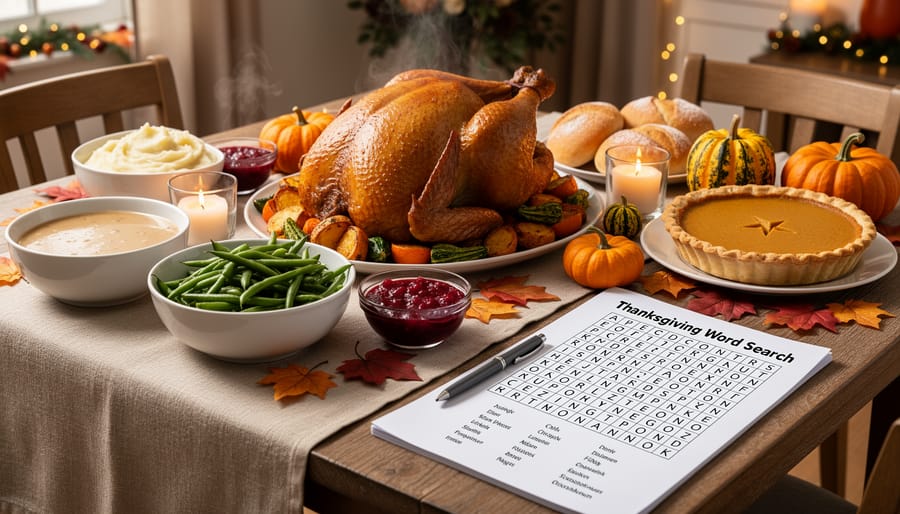
You can’t go wrong with the classic. A Thanksgiving feast word search is built around the foods everyone expects on the table: stuffing, cranberry, gravy, harvest, cornbread, and sweet potato. It feels cozy and familiar, which makes it a great starter puzzle for a mixed group.
To make it adult-level, think bigger and trickier. Go with a larger grid, around 20 by 20, so there’s more to scan. Choose longer words like “mashed potatoes” or “pumpkin pie” instead of short three-letter fillers. Then turn up the challenge by placing words diagonally and backward, so eyes have to hunt a little harder.
Here’s a fun customization tip: swap in your own family recipe names or potluck dishes. Aunt Linda’s famous green bean casserole or “Grandpa’s gravy” instantly makes the puzzle personal, and it gets people chatting about who brought what.
2. Hidden-Phrase Word Search, Find the Words, Reveal the Message
A hidden-phrase word search plays like a regular puzzle until the very end. Once every word on the list is circled, the letters left over spell out a secret message, such as a gratitude line or a short holiday quote. That last read-through is where the magic happens.
Adults tend to love this twist because it turns a simple find-and-circle task into a small mystery. You finish the grid, look at what remains, and suddenly the scattered letters click into something meaningful. That “aha” moment feels like a reward, and it gives the puzzle a real finish line rather than just a final word crossed off.
Here’s a tip to make it your own: write the hidden message yourself. For a staff gathering, try something like “Grateful for this team.” For a class, hide a sentence that connects to your lesson. Count the letters, build your word list around them, and your group gets a puzzle made just for them.
3. Thanksgiving History and Traditions Word Search, Learn While You Play
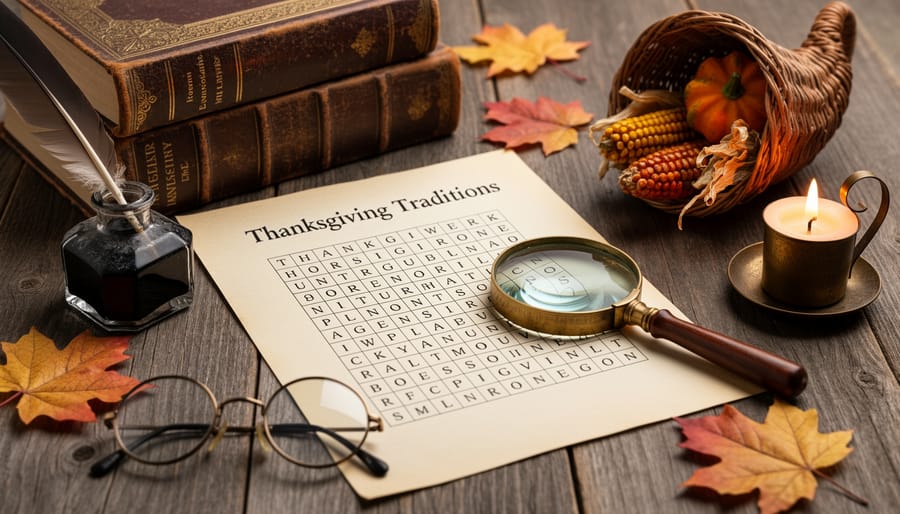
This one is a wonderful pick for adult education classrooms and ESL or ELL groups, because it teaches while people play. Build the grid around words tied to the holiday’s story, such as Pilgrim, Mayflower, Plymouth, harvest, parade, tradition, and gratitude. You can also add customs like football, pie, and family gatherings to round things out.
What makes it grown-up friendly is the context. As learners hunt for each word, they’re also seeing it in the spelling and meaning that matter for real conversations. Once the grid is solved, ask people to pick three words and use them in a sentence, or share how their own family marks the holiday. That turns a quiet puzzle into a lively discussion.
Tip: build the word list around the vocabulary your learners are already working on. If you’re teaching food words or holiday phrases this week, those go right into the puzzle.
4. Gratitude Word Search, Mindful and Relaxing

Not every Thanksgiving puzzle needs a ticking clock. The gratitude word search is the calm one, built around words like thankful, kindness, family, home, and blessing. Think of it as a small pause in a busy week.
It works well for a quiet break between meetings, a waiting room, or a slow morning with a cup of coffee. Because the words are warm and familiar, the grid feels relaxing instead of stressful. Players can settle in, scan at their own pace, and enjoy that gentle moment when a word finally pops out.
To keep it grown-up friendly, use a medium-sized grid and mix in a few longer words like appreciation or generosity. That gives the puzzle a little substance without taking away the peaceful feel.
Tip: invite everyone to add their own thankful words to the list before you build the grid. A coworker might pick “sunshine” while a student adds “friends,” and suddenly the puzzle feels personal.
5. Fall Harvest and Autumn Flavors Word Search, Seasonal Beyond the Turkey
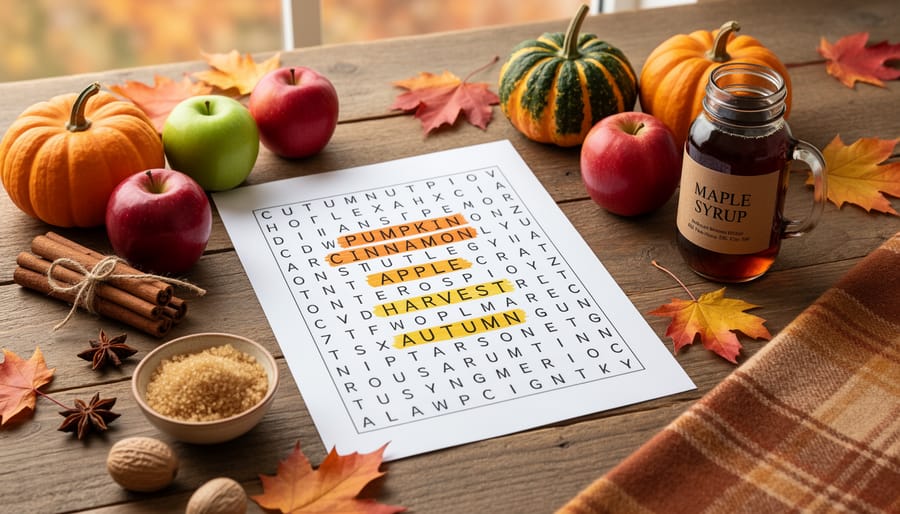
Not every autumn gathering centers on a turkey, and that’s exactly where a fall harvest word search shines. Build the grid around cozy flavors like pumpkin spice, apple cider, cinnamon, nutmeg, butternut squash, maple, and pecan. The theme feels seasonal without locking you into one meal, so it works for a Friendsgiving, a book club, an October staff break, or a quiet weekend afternoon.
To keep it grown-up friendly, mix in some longer, trickier entries such as “caramel apple” or “sweet potato casserole” and tuck a few of them diagonally or backward. Those multi-word phrases make adults slow down and scan more carefully.
Tip: tailor the word list to your region or your group’s favorites. Add local specialties like cranberry bog treats, pawpaw, green chile, or your town’s famous apple orchard donuts, and the puzzle instantly feels personal.
6. Team Challenge Word Search, Race to the Last Word

Here’s where a quiet puzzle turns into a room full of cheering. In a team challenge, groups race to circle every word first, and suddenly even your most reserved coworker is pointing at the grid and shouting “Found it!” It works beautifully for staff gatherings, team-building days, and icebreakers because everyone has something to contribute. One person spots the diagonals, another keeps track of the list.
To keep things lively, pair the puzzle with a simple scoreboard on a whiteboard or flip chart. Update it as teams call out words, and the energy stays high from start to finish. You can also add bonus points for the longest word found, which gives teams a reason to hunt for the tricky ones instead of grabbing only the easy wins. Swap in Thanksgiving words your group will recognize, and you’ve got a competition that feels personal.
7. Thanksgiving Trivia Word Search, Clue-Based and Brain-Boosting
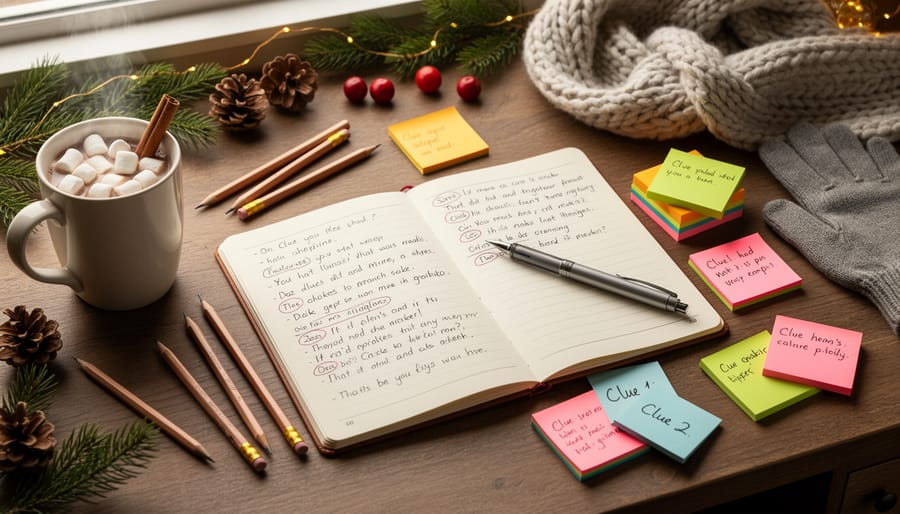
Here’s a twist that adults tend to love: skip the word list entirely. Instead, hand players a set of clues and let them hunt for the answers in the grid. A clue like “The bird most often roasted at the table” sends them searching for TURKEY, but only after they’ve thought it through first.
That extra step turns a simple search into a real brainteaser. Players have to recall the answer before they can spot it, which makes the puzzle feel more like a mini trivia game than a quick time-filler. It works beautifully at a party, where people can shout out guesses and compare answers.
You can mix easy clues with tougher ones, like “The president who made Thanksgiving a national holiday during the Civil War,” to keep everyone engaged.
Tip: write a few clues about your own group’s traditions, such as “Aunt Linda’s famous side dish” or “The game we always watch after dinner.” Those personal touches get big laughs and make the puzzle one-of-a-kind.
8. Large-Print Thanksgiving Word Search, Comfortable for Every Player

A large-print word search keeps the fun and removes the squinting. Bigger letters, generous spacing between rows, and a clear, simple font make the grid comfortable for older adults, senior center groups, and any gathering where players range from grandparents to grandkids. When people can see the letters easily, they stay relaxed and enjoy the hunt instead of getting frustrated by tiny type.
Easy to read doesn’t have to mean easy to solve. Use a medium-sized grid with longer Thanksgiving words, add a few diagonal placements, and include a mix of familiar terms like harvest and gratitude with a couple of trickier ones. That keeps minds engaged without straining eyes.
Customization tip: adjust the grid size and font to fit your group. Start with a smaller grid and a bold, extra-large font for a quiet afternoon at a senior program, or step up the grid size for sharper solvers.
Quick Tips for Making Your Thanksgiving Puzzles Your Own
Start with the word list, because that’s where the personality lives. Pick 15 to 25 words for a standard puzzle, and mix in a few that only your group would know, like a family recipe name or a favorite parade float. Longer words and more of them make things trickier, so bump up the grid size when you want a bigger challenge.
Difficulty is your other dial. Allow diagonal and backward words for seasoned solvers, or keep everything straight across and down for a gentler pace. For the large-print style, go bigger on the font and stay generous with spacing.
When it’s time to share, print a few extra copies, since someone will always want a second try. A quick pencil-and-paper session works just as well as a screen at the table.
Thanksgiving Word Search Questions, Answered
Got a few questions before you print? These quick answers should help you pick the right setup for your group.
How many words should an adult Thanksgiving word search have?
Aim for 20 to 30 words in a 15×15 or larger grid. That’s enough to feel like a real challenge without dragging on, and you can trim the list for a quick break-time puzzle.
How do I make a puzzle harder?
Use longer words, a bigger grid, and plenty of diagonal and backward placements. The Thanksgiving Trivia Word Search is another great route, since players have to work out the answer from a clue before they can even start hunting.
Can I use these with a group or class?
Absolutely. The Team Challenge Word Search is made for groups, and the Thanksgiving History and Traditions Word Search fits adult education and ESL or ELL classes nicely. Hand out the same puzzle to everyone or mix styles so learners can choose.
What’s a fun way to use them at a party?
Set out a puzzle at each table as a conversation starter, or run a timed race and give a small prize to the first finisher. The Hidden-Phrase Word Search works well too, because everyone gets to share the message they uncover.
One last thing: if you’re not sure which style fits, start with the Classic Thanksgiving Feast Word Search and tweak the word list from there. A few personal words from your own table go a long way.
The best Thanksgiving word search for adults is the one that fits your group, whether that’s a cozy Classic Feast puzzle at the family table or a Team Challenge at the staff party. A few personal touches, like your own family dishes, a hidden gratitude message, or a larger font, turn any grid into something people remember. If your crowd wants more of a stretch, our advanced solving strategies can help you make it harder in all the right ways. Happy puzzling, and happy Thanksgiving!