
What Is Advanced Game Theory in Education (and How Does It Work)?
Advanced game theory in the classroom refers to the practice of layering strategic decision-making elements into educational review games, transforming simple quiz formats into experiences where students must predict, cooperate, weigh risks, and think several moves ahead. This approach doesn’t involve complicated mathematical models or academic theory. Instead, it’s about making your classroom games more intellectually stimulating by giving students meaningful choices that affect outcomes.
When students face decisions like whether to wager points, form alliances, or choose between high-risk and safe options, they engage different cognitive skills than when simply answering questions. They’re analyzing probabilities, reading their peers’ intentions, and adjusting strategies based on changing game states. That deeper engagement keeps even your most advanced learners invested while reinforcing the content you’re reviewing.
This guide breaks down exactly how strategic elements work in classroom games, walks you through the core mechanics that create genuine strategic depth, and shows you specific ways to build these features into your PowerPoint review templates. You’ll see how choices like bluffing, resource management, and asymmetric information transform a standard quiz into something students remember long after the bell rings. The best part? These upgrades are surprisingly simple to customize once you understand the underlying principles.
What Advanced Game Theory Means for Your Classroom
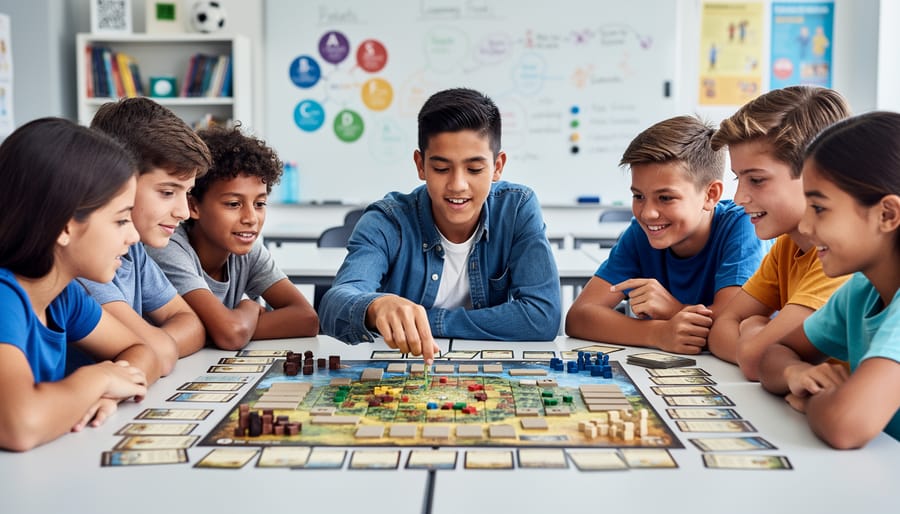
When you think about classroom review games, you might picture teams racing to answer questions or students competing for points. Advanced game theory takes that foundation and adds layers of strategic thinking that transform simple Q&A sessions into rich learning experiences. Instead of just knowing the right answer, students must decide when to risk points, whether to help teammates, which questions to tackle first, and how to respond to opponents’ moves.
This approach matters because it engages different parts of students’ brains. A traditional review game tests recall. A game built on strategic principles requires students to analyze situations, weigh trade-offs, anticipate consequences, and adapt their approach based on changing circumstances. They’re still reviewing content, but now they’re also practicing decision-making skills they’ll use throughout life.
The beauty of this framework is how it naturally deepens engagement. When students face meaningful choices, like whether to spend earned points on a hint, form an alliance with another team, or bet double on a challenging question, they become invested in the outcome. They’re not just passively answering when called upon. They’re actively strategizing, discussing options with teammates, and experiencing the satisfaction (or learning opportunity) that comes from their decisions. These strategic elements increase student engagement precisely because students feel genuine agency over their learning experience, not just compliance with a review activity.
How Game Theory Works in Educational Settings
Strategic Decision Points
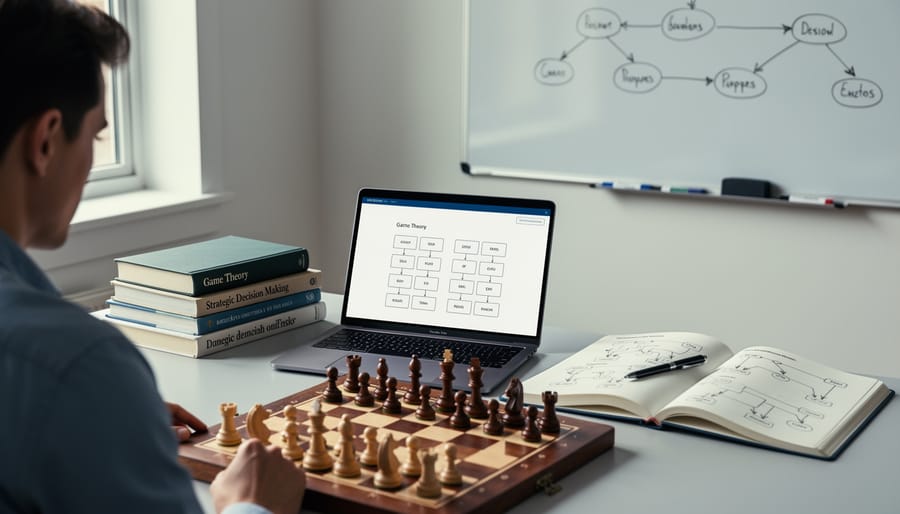
Strategic decision points transform classroom games from mindless button-clicking into real thinking exercises. The key is offering students genuine choices where different options lead to different outcomes, not fake choices where every path gives the same result.
Start by designing moments where students must decide before they know the question difficulty. For example, let them bet points on their confidence level, or choose between a safe two-point question and a risky five-pointer. This mirrors real-world decision-making where we assess our knowledge honestly.
Add choice cards that force trade-offs: steal points from another team but lose your next turn, or skip a hard question but forfeit the chance to answer the next one. When students pause to calculate risks and discuss strategy with teammates, they’re using the same analytical thinking you want them applying to your subject matter. The magic happens when the decision feels consequential enough that students actually debate what to do.
Competition vs. Cooperation Mechanics
Different classroom situations call for different game structures. Competitive mechanics, where teams race to answer first or accumulate the most points, create high energy and quick thinking. They work brilliantly for fact recall and vocabulary review, especially when you need to wake up a sleepy afternoon class.
Cooperative mechanics flip the script. Students work together against the game itself, pooling knowledge to unlock achievements or beat the clock. This approach shines for complex problem-solving and supports struggling learners who might freeze in head-to-head competition.
The sweet spot? Hybrid models. Try team competition where members must consult before answering, or cooperative rounds that unlock bonus competitive challenges. You can also rotate formats within one game session, start cooperative to build confidence, then shift to friendly competition.
Match your mechanics to both your content and your students’ needs that day.
Reward Structures That Drive Learning
Points aren’t just scorekeeping, they’re feedback loops that tell students what matters. Your reward structure shapes behavior, so design it to reinforce learning, not luck. Award points for accurate answers, strategic reasoning, and teamwork rather than speed alone. Layer in achievement unlocks like bonus rounds after three consecutive correct responses or power-ups earned through explanation quality. These micro-rewards create immediate motivation without waiting until game’s end.
Recognition mechanics matter beyond the leaderboard. Competence-based recognition badges tied to specific skills (collaboration, risk assessment, problem-solving) validate learning in ways points can’t. Offer multiple paths to success, highest score, best strategy, most improved, so different students can shine. Rotate reward criteria across games to keep everyone engaged and prevent the same top performers from dominating every session.
Types of Game Theory Strategies You Can Use
Zero-Sum Competition Games
In zero-sum games, one team’s points come directly from another team’s loss, creating intense, high-energy competition perfect for quick review sessions. These work brilliantly when you need rapid recall and want students fully alert. The clear win-lose structure makes scoring simple to track and builds immediate momentum in your classroom.
The catch? Zero-sum formats can discourage struggling students if the point gap widens too early. Balance this by using shorter rounds, offering comeback mechanics like double-point questions, or rotating team members between rounds so no single group dominates the entire game.
Cooperative Challenge Games
In cooperative challenge games, the entire class competes against the game itself rather than each other. Students pool their knowledge and resources to overcome obstacles, unlock levels, or beat a countdown timer. This format works beautifully for complex topics where collaboration reveals different perspectives and problem-solving approaches.
Design these games with shared win conditions, everyone succeeds together or fails together. Try creating scenarios where students must collectively answer a certain number of questions correctly within a time limit, or where each team contribution builds toward a class-wide goal. The shared stakes foster genuine teamwork and reduce the anxiety some students feel in head-to-head competition.
Sequential Turn-Based Games
Sequential turn-based games let students see the consequences of each choice before making their next move, creating a clear chain of cause and effect. Think of review games where teams answer questions to advance on a board, unlock new challenges, or build on previous answers, each decision shapes what happens next. This format naturally teaches strategic thinking because students must consider “If I do this now, what options will that give me later?” It’s perfect for reinforcing sequential processes like math problem-solving steps, historical timelines, or scientific methods where understanding order matters as much as knowing the facts.
Simultaneous Decision Games
In simultaneous decision games, all students commit to their answers or strategies at the same time without seeing what others choose. This format creates natural tension and forces kids to think independently rather than following the crowd. Try using answer reveal cards where everyone holds up their choice simultaneously, or digital polls where responses lock in before results display. These games teach students to trust their reasoning, consider multiple perspectives, and weigh probability, skills that transfer directly to test-taking and real-world decisions. The beauty here is that no one can simply copy the strongest student’s answer.
How to Apply Advanced Game Theory in Your Lessons
Start by identifying which game theory strategy best fits your learning objectives. If you want students to practice quick recall under pressure, a zero-sum competition works well. For content that requires collaboration and discussion, cooperative mechanics make more sense. Once you’ve chosen your framework, you can adapt almost any review game template to include strategic elements that make students think beyond just knowing the answer.
The easiest entry point is adding choice cards that let students make strategic decisions during gameplay. Create a simple deck of options like “Double Points,” “Question Swap,” “Steal from Another Team,” or “Skip and Save” that teams can play at key moments. Students must decide when to use each card for maximum benefit, do they burn their double points early or save it for a harder question later? This single addition transforms a basic quiz game into a strategic experience.
Here are actionable ways to layer game theory elements into classroom review games:
- Add betting mechanics where teams wager points before seeing a question, forcing risk assessment
- Design branching question paths where choosing topic A locks out topic B, requiring prioritization
- Include alliance options where teams can pool resources or share answers for reduced individual points
- Create power-up cards that activate on specific conditions, encouraging forward planning
- Build in sabotage opportunities with clear costs and benefits to teach strategic timing
For teachers looking to push further, branching question paths add real strategic depth to review games. Instead of a linear question sequence, let teams choose their path through the content, maybe selecting between math, science, or history questions, with each path offering different point values and difficulty levels. You can incorporate these mechanics into existing high school game ideas by simply adding decision points to your PowerPoint slides.
The key is starting small. Pick one strategic element to test in your next review game, watch how students respond, and build from there. Even minor additions create noticeably different engagement patterns compared to straight question-and-answer formats.
Customizing Game Templates with Strategic Elements
You don’t need to start from scratch, most classroom game templates can be upgraded with strategic elements using simple PowerPoint edits. Add a “Power Bank” slide where teams earn points they can spend on advantages like question skips, answer reveals, or bonus multipliers. This creates resource management decisions: Do we spend points now for safety, or save them for harder questions later?
Build in a “Steal or Shield” mechanic by adding choice buttons after each round. Teams decide whether to protect their points, attempt to steal from opponents, or bank their score. If two teams both choose “steal,” nobody gains, introducing the classic prisoner’s dilemma where cooperation often beats pure competition.
Create alliance cards that let teams combine scores for one round, then split the total. This works especially well in larger classes where forming temporary partnerships adds social strategy. Include a visual alliance tracker on your template so students see shifting relationships throughout the game.
Add betting slides before difficult questions where teams wager a percentage of their current points. Students must assess question difficulty, their knowledge confidence, and their position relative to other teams, all authentic strategic thinking. A simple gamification example like this transforms passive question-answering into active decision-making.
Include “wild card” or “strategy card” pickups that teams earn for correct answers. Cards might offer double points, question swaps, immunity from steals, or forcing another team to answer first. Store these on a separate slide with reveal animations.
The key is adding one or two strategic layers at first, not overwhelming your template with complexity. Start with a single choice point per round, then expand as students grasp the strategic possibilities.
Common Questions About Game Theory in the Classroom
Teachers new to game theory strategies often wonder how these concepts translate to real classroom constraints. Here’s what you need to know before experimenting with strategic game elements.
Is advanced game theory too complex for younger students?
Not when you scale it appropriately. Elementary students can handle simple choice mechanics like deciding whether to answer a hard question for more points or an easy one for safety. You’re teaching strategic thinking, not running a graduate seminar.
How much extra prep time does this require?
Adding one strategic element to an existing game takes about 10-15 minutes of planning. Start with a single mechanic like bonus betting or team alliances rather than overhauling your entire approach.
How do I assess learning when the focus is on strategy, not just right answers?
Watch for decision-making quality, not just outcomes. A student who chooses a cooperative move to help struggling classmates demonstrates social reasoning even if their team doesn’t win.
What if the strategic elements overwhelm the actual content review?
Keep game mechanics simple and content challenging. If students spend more time debating alliances than discussing material, scale back the complexity or use strategy breaks between content rounds.
The learning happens in the decision-making process itself. When students weigh whether to use their steal card now or save it for later, they’re practicing the same cost-benefit analysis they’ll use in real situations. That’s why use classroom games with strategic depth, they develop transferable thinking skills while reinforcing content.
Your first attempt won’t be perfect, and that’s expected. Try one new mechanic, observe how students respond, then adjust. Some classes thrive on competition, others prefer cooperation. The flexibility to adapt your approach based on what works for your specific students is what makes game theory practical rather than theoretical.
Advanced game theory takes your classroom games from “who knows the answer first” to “who can think three moves ahead.” By layering strategic choices, risk assessment, and cooperative challenges into your review activities, you’re not just checking if students remember content, you’re teaching them how to analyze situations, weigh options, and make smart decisions under pressure. These are skills they’ll carry far beyond your classroom.
Start simple. Pick one strategic element, maybe add a betting mechanic to your next quiz game, or let teams form temporary alliances during a review challenge. Watch how the energy shifts when students realize winning requires thinking, not just knowing. You’ll see engagement spike and deeper learning follow. Your PowerPoint templates are ready; now it’s time to add the strategy that makes the magic happen.