Why Your Students Keep Getting Visual Word Puzzles Wrong (And How to Fix It)
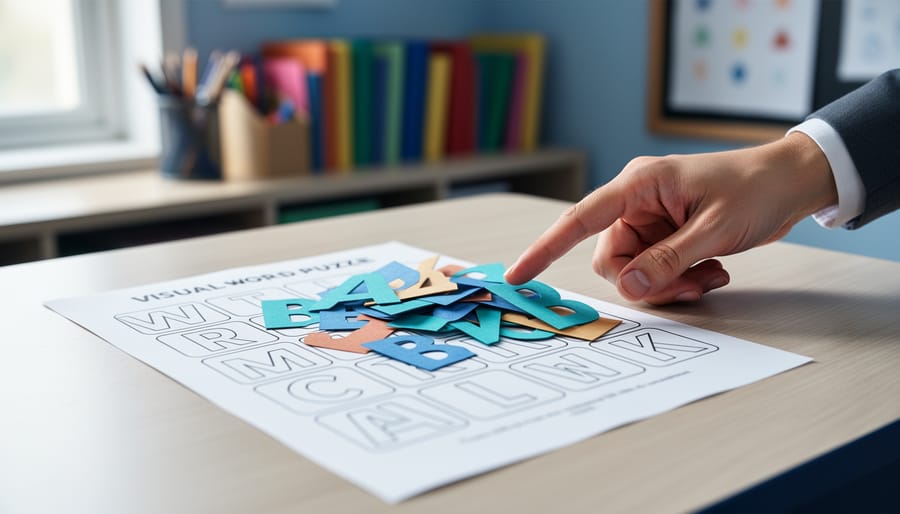
Visual word puzzles are brain teasers that combine images, positioning, size, and creative text arrangements to represent common phrases, idioms, or sayings. If you’re searching for answers, you’re likely holding a puzzle worksheet and need the solution key, or you’re an educator trying to help students crack the code independently. The good news? Once you understand the core patterns (words appearing “under” other words mean “under-standing,” backward text signals reversal, and size differences indicate “big” or “small”), you’ll solve most puzzles in seconds and teach your students to do the same.
These puzzles work brilliantly as learning word games because they strengthen critical thinking, vocabulary recognition, and lateral reasoning. Students learn to look beyond literal text and consider spatial relationships, which builds the kind of flexible thinking that transfers to reading comprehension and problem-solving across subjects.
The challenge many teachers face is balancing answer provision with skill development. Hand students a complete answer key and they’ll copy without learning. Skip the answers entirely and frustration builds when they’re genuinely stuck. The sweet spot lies in teaching the decoding system itself.
This article breaks down the most common visual word puzzle types you’ll encounter in classrooms, provides answer patterns for popular examples, and shares practical strategies for guiding students toward independence. You’ll learn how to recognize the telltale signs of each puzzle category, troubleshoot the trickiest varieties, and create customized versions that match your curriculum goals. Whether you need quick solutions for tomorrow’s lesson or want to build a sustainable puzzle-solving culture in your classroom, you’ll find both immediate answers and long-term teaching approaches here.
What Makes Visual Word Puzzles Tick
Visual word puzzles work because they force your brain to do something it doesn’t normally do: stop reading automatically and start looking at words as objects. When we read, our brains typically skip over the physical appearance of text and jump straight to meaning. These puzzles break that habit by making the presentation itself carry the message.
The mechanics are surprisingly straightforward. Visual word puzzles manipulate three main elements: position (where words sit relative to each other), presentation (how words appear visually), and structure (what’s missing or repeated). When “WEAR” appears inside a box with “LONG” underneath, the spatial relationship creates “long underwear.” The puzzle transforms text from pure information into a visual riddle where location matters as much as the letters themselves.
This manipulation requires students to engage multiple cognitive skills simultaneously. They’re practicing spatial reasoning when they notice “head” appears physically above “heels.” They’re using lateral thinking when they realize “TIMING TIM ING” means “split-second timing” because the word is literally split. They’re applying pattern recognition when they connect visual repetition to phrases like “over and over again.”
That’s what makes these puzzles valuable beyond just being fun time-fillers. Research shows that jigsaw puzzles strengthen critical thinking and problem-solving abilities, and visual word puzzles offer similar benefits with lower barriers to entry. Students don’t need specialized knowledge, they need observation skills and willingness to think differently about familiar words.
The beauty is that once students grasp how the mechanics work, they can apply that framework to any puzzle they encounter. They stop seeing random arrangements of letters and start asking productive questions: Is the position creating meaning? Does the visual style matter? What’s unusual about how this appears? These aren’t just puzzle-solving strategies, they’re transferable thinking skills that apply across subjects.
The Most Common Visual Word Puzzle Types Your Students Will Encounter
Position and Placement Puzzles
Position and placement puzzles are the bread and butter of visual word puzzles, and they’re often the easiest entry point for students who’ve never solved these before. These puzzles use spatial relationships to create meaning, literally showing you where words belong in relation to each other.
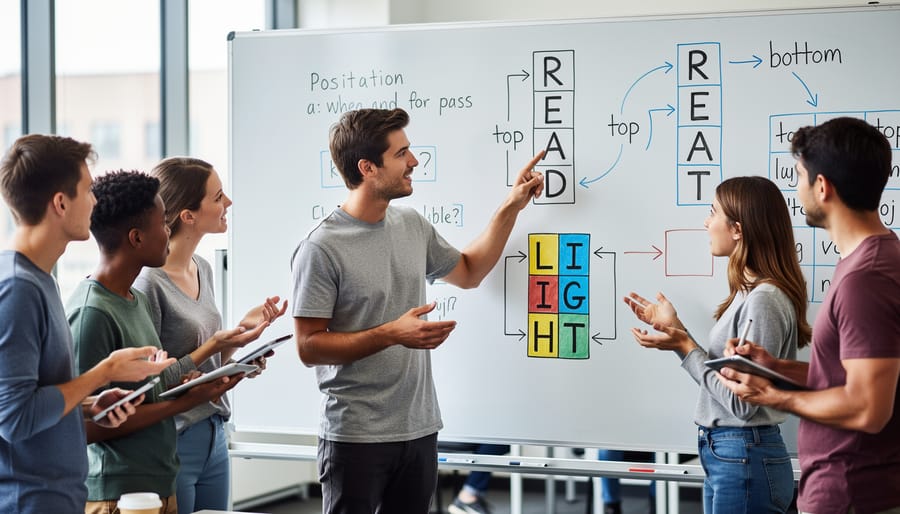
The classic example is when you see the word ‘STAND’ positioned directly above the letter ‘I’. Your students need to read the visual literally: “stand over I” becomes “I understand.” Once they grasp this concept, dozens of similar puzzles suddenly click into place.
Common patterns in this category include vertical positioning (words stacked to show over, under, or on top of), horizontal placement (words before or after each other), and containment (one word inside another). When you see ‘TOWN’ with letters getting progressively smaller, that’s “down town” or “downtown.” The word ‘JUST’ followed by ‘ME’ creates “just between you and me” when positioned correctly.
Here’s how to teach these effectively: Start by asking students to describe exactly what they see before jumping to answers. Make them say “I see the word STAND above the letter I” out loud. This verbal description often triggers the answer naturally. Practice with five to ten position puzzles in a row so students internalize the pattern, then mix in other types. Create anchor examples your class can reference, pick three position puzzles that clicked for most students and post them as your “greatest hits” reference board.
Size and Style Puzzles
Size and style puzzles are often the easiest entry point for students new to visual word puzzles. The answer literally jumps off the page when students learn to look at how the word appears, not just what it says.
The most common answer for oversized text is “big deal” or “big idea.” When ‘BIG’ appears in massive letters, students should read it as describing itself. Similarly, tiny text that says ‘little’ typically means “little thing” or “little matter.”
Teach students this simple question: “What does the way this word looks tell me?” When ‘BOLD’ appears in thick, heavy letters, the answer is “bold statement” or “bold move.” When ‘light’ appears in thin, barely visible text, it becomes “light touch” or “lightweight.”
The trickiest variation combines size with repetition. ‘DEAL DEAL DEAL’ in huge letters becomes “big deal” because the size matters more than the repetition. Walk through these examples slowly with your class, pointing at the visual clues as you explain. Once students grasp that the formatting is the puzzle, they’ll start solving these independently within minutes.
Repetition and Number Puzzles
Repetition puzzles trip up students because they read literally instead of thinking visually. When they see “ONCE ONCE ONCE,” they want to answer “three times” or “once repeated three times.” The trick? Teaching them to count occurrences and think figuratively. “ONCE ONCE ONCE” = “once upon a time” because there are three “onces” creating “once” three times, or “thrice.”
The pattern recognition key: If a word repeats, count how many times and see if that number connects to a common phrase. “TIME TIME” often equals “time after time.” “ME ME ME” could be “just between you and me” or “three of me.”
Number puzzles blend visual and mathematical thinking. In “2 + 2 = FISH,” students must see that two twos positioned together visually create the shape of a fish. “1234567890” missing some digits might spell “naughty” because zero is “naught.”
Here’s your teaching strategy: Start with obvious repetitions like “SHOT SHOT” equals “two shots.” Build to trickier ones. Ask students to say the repeated word out loud multiple times, sometimes hearing it triggers the phrase connection faster than seeing it. Create a class chart listing number-related idioms and common repeated phrases they can reference.
Missing or Hidden Element Puzzles
Missing or hidden element puzzles train students to notice what’s absent, not just what’s present. This type flips the usual thinking: the answer comes from identifying the gap or the unconventional spacing.
‘T_RN’ shows a word with a missing letter. Students should ask, “What letter is missing?” Here, the ‘U’ is gone, making it “no U-turn.” Similarly, ‘_ _ _ E’ with three blanks before the ‘E’ could be “three before E” (as in the spelling rule “I before E”).
‘head heels’ demonstrates missing words between two visible ones. Students might read it as “head heels” until they realize the phrase is “head OVER heels”, the word ‘over’ is implied by the spatial arrangement but not written. The same logic applies to ‘reading’ split across two lines as ‘read’ on top and ‘ing’ below, which becomes “reading between the lines.”
Teach students to scan for obvious gaps in letter sequences, unusual spacing between words, or phrases that feel incomplete. Ask, “What’s supposed to be here that isn’t?” This metacognitive prompt shifts them from passive reading to active detective work. Have them verbalize the missing piece before jumping to an answer, building that crucial pause-and-think habit.
The Three-Step Strategy for Teaching Visual Puzzle Solving
Start with Think-Alouds
The most powerful way to teach visual puzzle solving is to let students watch you think. When you encounter a puzzle like ‘STAND’ positioned over ‘I’, don’t just announce “The answer is ‘I understand.'” Instead, narrate your process: “I’m noticing the word STAND is sitting on top of the letter I. Let me think about phrases with these words… What if the position matters? STAND over I… I under STAND… Oh! I understand!” This external dialogue transforms what seems like magic into a learnable skill.
Pick one puzzle each week to solve out loud during your warm-up routine. Emphasize the wrong turns too, when you consider “stand on I” or “I below stand” before landing on the correct answer, you’re showing students that puzzle-solving involves testing multiple possibilities. Point to specific visual clues: “See how there’s extra space between these letters? That might mean something.” Or “This word is darker than the others, is that important?”
This strategy works beautifully alongside five-letter word games where students already practice pattern recognition. The key is consistency, regular think-aloud demonstrations build a shared vocabulary for discussing puzzles and normalize the trial-and-error process that leads to solutions.
Build a Class Answer Bank
Creating a visual puzzle reference guide transforms your classroom into a puzzle-solving community. Start a shared document, digital or physical, where students record each solved puzzle alongside its answer and the “trick” that made it work.
Have students add entries after successful solves. For example: “Puzzle: CHAIR | Answer: High chair | Pattern: Word positioned above another.” This cataloging process reinforces learning because students must articulate why the puzzle works, not just what the answer is.
Organize your bank by pattern type (position puzzles, size puzzles, repetition puzzles) so students can quickly reference similar examples when stuck. Before long, they’ll flip through looking for comparable patterns: “Oh, this one has a word inside another word, let me check the position section.”
The answer bank becomes institutional knowledge that carries over year to year. Students love seeing how many their class has cracked, and new students gain confidence by browsing solved examples. Plus, you’ll notice students consulting it less as patterns become automatic, exactly what you want.
Move to Partner Practice
Once your students understand the thinking process, partner work is the perfect bridge to independent solving. Pair students intentionally, mix strong puzzle solvers with those still building confidence. This isn’t about one student doing all the work while the other watches. Structure matters here.
Give each pair three to five puzzles and assign specific roles. One partner acts as the “observer” who reads the puzzle aloud and describes what they see visually. The other becomes the “connector” who links those observations to possible meanings. They switch roles with each new puzzle. This division forces both students to engage differently with every puzzle.
Set a timer for two minutes per puzzle. If they’re stuck, they can’t immediately ask you for help, they must try two strategies from your class anchor chart first. Maybe they’ll check the answer bank, or maybe they’ll sketch the puzzle on paper to see it differently. This builds problem-solving stamina.
Walk the room and listen rather than rescue. When you hear productive struggle, “Wait, could ‘head’ and ‘heels’ mean something about feet?”, let it continue. Jump in only when partners have truly exhausted their strategies.
After solving, have pairs explain one puzzle to another pair. Teaching someone else cements understanding faster than anything else. You’ll know they’re ready for solo practice when their explanations sound like your think-alouds did at the start.
Common Answer Patterns Students Should Memorize
Your students will solve visual word puzzles faster when they recognize that the same answer phrases appear repeatedly. Instead of approaching each puzzle as a completely new challenge, help them build a mental reference library of common solutions. When students know what to look for, they can spot patterns in seconds rather than minutes.
Teaching students to memorize these patterns isn’t about giving away answers, it’s about building their visual literacy. Just like recognizing common spelling patterns helps with reading fluency, recognizing puzzle patterns accelerates problem-solving skills.
| Pattern Category | Common Answers | Visual Clue Type |
|---|---|---|
| Directional Phrases | Understand, Overcome, Crossroads, Downfall, Upside Down | Word position (above, below, across) |
| Size Variations | Big Deal, Growing Economy, Small Talk, Larger Than Life | Font size differences |
| Position & Containment | Man in the Moon, Circle of Friends, Just Between You and Me | Words inside or around others |
| Repetition Patterns | Time After Time, One After Another, Three Blind Mice | Repeated words or numbers |
| Idiomatic Expressions | Head Over Heels, Split Second, Broken Promise, Mixed Feelings | Visual representation of phrases |
The table above covers the heavy hitters, but students should also watch for common themes. Time-related answers like “Long Time No See,” “Split Second,” and “Right on Time” show up constantly. Body part idioms are another favorite: “All Eyes on Me,” “Keep Your Head Above Water,” and “Put Your Foot Down” appear across puzzle sets.
Direction words generate tons of variations. Once students know that positioning creates directional meaning, they can extrapolate. If “STAND” over “I” makes “I understand,” then “COME” over “LOOK” probably means “overlook.” This generalization skill matters more than memorizing every possible answer.
Create a classroom poster featuring the most common twenty answers you encounter in your grade level’s puzzles. Add to it throughout the year when students discover new patterns. This living reference helps struggling students get unstuck and gives advanced students a springboard for creating their own puzzles.
Don’t present this list as homework to memorize cold. Instead, refer to it during practice sessions. When a student solves “Head Over Heels,” point to the poster and say, “Add that one to your mental bank.” Repeated exposure through active solving builds retention better than rote memorization ever will.
The goal is pattern recognition, not answer recall. Students who understand why “Paradise” appears as “DICE DICE” (pair of dice) can solve similar construction puzzles they’ve never seen before.
Using Visual Word Puzzles in Your Classroom Games
Visual word puzzles work best when they’re woven into existing classroom routines rather than treated as standalone activities. The most effective approach is embedding them into your PowerPoint review games as bonus questions or challenge rounds that break up standard content review.
Start by replacing every third or fourth regular question in your review game with a visual word puzzle. This rhythm keeps students engaged without overwhelming them. For instance, if you’re running a vocabulary quiz, insert a puzzle after students answer two definition questions. The mental shift from recall to visual reasoning actually helps cement the vocabulary words they just reviewed.
Create themed puzzle rounds that align with your current unit. Teaching fractions in math? Design puzzles where the visual element reinforces the concept (“1/2” sitting on top of “MOON” = “once in a blue moon” demonstrates positioning while keeping the mathematical context present). Studying ecosystems? Build puzzles using environmental vocabulary where the visual arrangement mirrors natural relationships.
For younger students in grades 2-4, limit puzzles to simple position-based types and use larger fonts with high contrast colors. Stick to familiar phrases they already know: “head over heels,” “circles around,” “high five.” Elementary students benefit from color-coding, make the visual clue one color and the answer phrase another.
Middle and high school students can handle multi-layered puzzles that require several cognitive leaps. Challenge them with puzzles that combine position, size, and hidden elements simultaneously. These work particularly well in subject-specific contexts: science classes can tackle “H2O” with “BRIDGE” overhead for “water under the bridge,” reinforcing both vocabulary and visual analysis.
The timing matters more than you’d expect. Use visual word puzzles as warm-up activities to activate thinking, as brain breaks between intense content blocks, or as end-of-class exit tickets. Avoid introducing new puzzle types when students are already cognitively taxed from difficult material.
Set up your PowerPoint slides with puzzles on a click-advance system rather than auto-advancing. This lets you control how long students see the puzzle before revealing the answer. Start with thirty seconds of think time, then allow partner discussion before showing the solution. This scaffolded reveal prevents the fastest students from shouting answers before others have processed the visual information.
Keep a running tally of correct solves by table group or row. Small-stakes competition motivates without creating anxiety. Award bonus points for students who can explain why the puzzle creates that specific answer, not just for guessing correctly.
When Students Still Struggle: Differentiation Strategies
Not every student will crack visual word puzzles at the same pace, and that’s completely normal. The key is recognizing where they’re getting stuck and adjusting your approach accordingly.
For students who struggle with visual processing, start by reducing the cognitive load. Present one puzzle type at a time rather than mixing categories. Give them puzzles with stronger visual contrast, larger fonts, bolder placement cues, more obvious spatial relationships. A puzzle like “BIG” in huge letters is easier to decode than subtle spacing tricks. Let them use physical manipulatives like letter tiles to recreate the puzzle in front of them, which helps bridge the gap between seeing and understanding.
ELL students benefit enormously from building the language foundation first. Before diving into abstract wordplay, ensure they know the base phrases. If a puzzle’s answer is “head over heels,” they need to understand that idiom in regular conversation first. Create a modified word games list that focuses on visual puzzles using high-frequency vocabulary and common phrases they’ve already mastered in class. Pair ELL students with supportive partners who can explain not just the answer, but why it makes sense in English.
For students who consistently struggle despite these supports, try reverse engineering. Show them the answer first, then work backward to understand how the visual clue creates that meaning. This takes the pressure off and lets them focus purely on pattern recognition. Once they’ve analyzed several solved examples, they’ll start recognizing those patterns in new puzzles.
Give extra time without making a big deal about it. Some students need to stare at a puzzle longer before the “aha” moment hits. Avoid the temptation to jump in with hints too quickly, that robs them of the satisfaction of solving it themselves.
Finally, celebrate small wins loudly. When a struggling student cracks their first puzzle independently, make sure they know you noticed. That confidence boost often matters more than the actual solving skill.
Creating Your Own Visual Word Puzzles
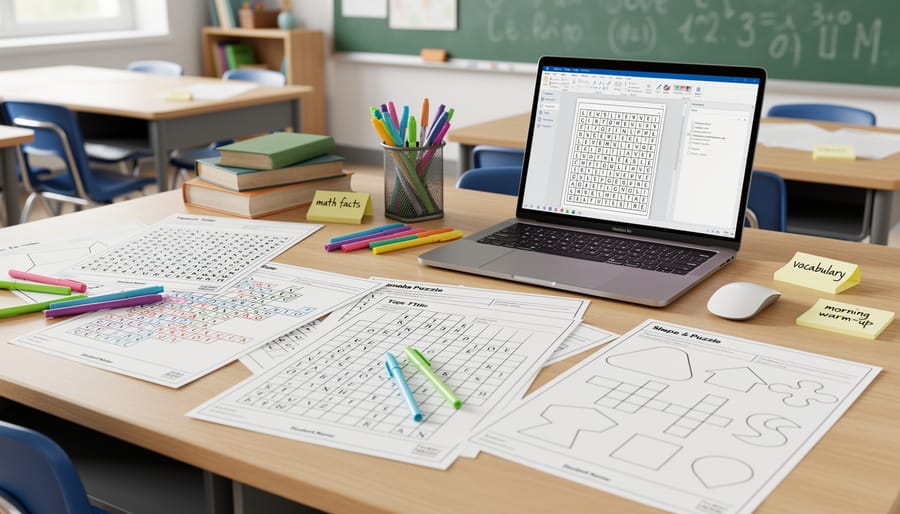
Creating your own visual word puzzles is easier than you might think, and it lets you tie puzzles directly to your current unit vocabulary or concepts. You don’t need graphic design skills, just PowerPoint and a few simple techniques.
Start by choosing words or phrases from your curriculum that students are currently learning. Vocabulary terms, historical events, scientific processes, or literary concepts all work beautifully. The key is selecting content that benefits from creative representation.
For position-based puzzles, use PowerPoint’s text box feature to place words strategically. Type one word in a text box, then layer another text box above, below, or beside it. For example, put “SIDE” in two text boxes next to each other to create “side by side,” or place “reading” in a text box with “lines” above and below it for “reading between the lines.” You can adjust text box sizing and positioning precisely using the arrow keys.
Size and emphasis puzzles are the quickest to make. Simply select your text and change the font size dramatically, make “BIG” 72-point or shrink “small” to 8-point. Use the bold button for emphasis puzzles where weight matters, or italics for slanted concepts.
For repetition puzzles, copy and paste the same word multiple times. “TIME TIME TIME” becomes “three times,” while “words words words” can represent “three words.” Space them evenly using PowerPoint’s align and distribute tools under the Format tab.
Missing element puzzles require creativity with spacing. Type a phrase but intentionally delete a letter or add unusual spacing. “T_RN” (with an underscore instead of U) creates “no U-turn.” You can also use the strikethrough feature or different colors to show deleted or hidden elements.
Save successful puzzles as individual slides you can reuse across units. Build a personal library organized by puzzle type and difficulty level, making future game creation quick and efficient.
Visual word puzzles aren’t mysterious tests of innate brilliance, they’re pattern recognition exercises that any student can learn with the right approach and consistent practice. When your students struggle with these puzzles, it’s not because they lack some special talent. They simply haven’t built the mental library of patterns yet, and that’s completely fixable.
Think about how your students learned to read. They didn’t magically understand words on day one. They learned letter sounds, practiced blending them together, and gradually built fluency through repetition. Visual word puzzles work exactly the same way. Once students internalize the common patterns we’ve covered, position clues, size variations, repetition tricks, and hidden elements, they’ll start recognizing them instantly. What felt impossible in September becomes easy by December.
The key is regular exposure. Don’t save visual word puzzles for “fun Fridays” or special occasions. Toss them into your warm-up routines, use them as brain breaks between lessons, or build them into your review games. Make them as ordinary as vocabulary practice or math drills. The more familiar these puzzles become, the more confident your students will grow.
And here’s the best part: watching students crack that first really tough puzzle on their own creates a classroom moment worth celebrating. Their faces light up. They feel genuinely smart. That’s the magic you’re after.
You don’t need hours of prep time to make this happen, either. Customizable PowerPoint game templates let you drop visual word puzzles into existing review games without rebuilding your whole lesson plan. Quick, adaptable, and instantly engaging.
Start small this week. Pick three puzzles. Model your thinking. Let students practice together. Before you know it, they’ll be solving puzzles you thought were too advanced, and asking for harder ones.