
Why the 8-1-1 Classroom Method Gets Students to Actually Follow the Rules
Transform your classroom management by implementing the 8-1-1 framework: dedicate 8 minutes to student-created classroom rules, 1 minute to teacher priorities, and 1 minute to collaborative agreements. This simple ratio shifts rule-setting from a lecture into an interactive experience where students take ownership of their learning environment.
Instead of posting pre-written rules that students ignore, invite your class to brainstorm the guidelines they need to succeed together. Start by asking students what makes a classroom feel safe, productive, and fun. Let them discuss in small groups for those crucial 8 minutes while you facilitate and listen. Then use your 1 minute to add any non-negotiables like safety requirements. Finally, spend the last minute having everyone commit to the combined list through a creative agreement method like signing a class poster or creating hand signals.
This approach works because students follow rules they helped create. You’ll spend less time managing behavior and more time actually teaching. The framework is quick enough to fit into a single class period, making it perfect for busy teachers who need results fast.
What Is the 8-1-1 Classroom Method?
The 8-1-1 classroom method is a brilliant approach to rule-setting that gets your students excited about expectations while keeping your classroom running smoothly. Here’s how it works: you create 8 essential rules based on your teaching experience and classroom needs, your class collaborates to develop 1 rule together, and each individual student establishes 1 personal learning goal or rule for themselves.
Think of it as the perfect recipe for classroom management success! Those 8 teacher-created rules form your foundation, covering the non-negotiables like respect, safety, and basic procedures. You know your classroom best, so these rules ensure everything runs efficiently. The 1 class-created rule is where the magic happens. When students work together to identify something they value as a group, they feel ownership and investment in their learning environment. Maybe they’ll choose “We help each other succeed” or “We celebrate mistakes as learning opportunities.” This shared rule builds community and gives everyone a voice.
The final ingredient, that 1 individual student rule, transforms classroom management into personalized learning. Each student reflects on their own needs and sets a meaningful goal like “I will ask questions when confused” or “I will stay organized.” This customization makes expectations feel relevant and achievable rather than one-size-fits-all.
Why does this combination work so beautifully? You maintain the structure and consistency your classroom needs through your 8 rules, while students gain authentic agency through their collective and individual contributions. It’s not about reducing your authority as the teacher but rather expanding student engagement and responsibility. When kids have a say in their learning environment, they’re naturally more motivated to follow through. The 8-1-1 framework strikes that sweet spot between guidance and independence.

Why Traditional Classroom Rules Fall Flat
We’ve all been there. You spend precious time at the start of the school year posting a beautifully crafted list of classroom rules on the wall. You explain each one carefully, maybe even have students copy them into their notebooks. Yet within days, those same rules seem invisible to your students.
Why do traditional classroom rules so often miss the mark? The answer is simple: students weren’t part of creating them. When rules come from the top down, they feel like restrictions rather than guidelines for success. Students see them as something being done to them, not for them or with them.
Think about it from a student’s perspective. Rules that appear out of nowhere don’t connect to their daily experiences or challenges. There’s no emotional investment, no sense of community responsibility, and frankly, no reason to care beyond avoiding consequences. This passive approach to classroom management creates compliance at best, but rarely genuine behavior change.
The disconnect deepens because traditional rules lack context. Students don’t understand the why behind each expectation, making the rules feel arbitrary. Without student ownership of rules, you’re essentially asking young people to follow a code they had no voice in developing.
This is exactly why interactive approaches like the 8-1-1 method are game-changers. When students actively participate in shaping their classroom environment, everything shifts. Engagement replaces resistance, and understanding replaces resentment.
How to Set Up Your 8-1-1 Classroom Rules
Step 1: Create Your 8 Core Rules
This is where the magic begins! Start by thinking about what truly matters in your classroom—those essential rules that keep everyone safe, respected, and ready to learn. Aim for around 8 core rules that are clear, positive, and absolutely non-negotiable.
Here’s the key: make them specific and actionable. Instead of “Be respectful,” try “Listen when others are speaking” or “Use kind words with classmates.” Keep your language simple enough that every student understands exactly what’s expected.
Consider covering these essential areas: safety, respect for others, respect for learning time, taking care of materials, and following directions. Remember, these aren’t just your rules—they’re the foundation for your entire classroom community!
Pro tip: Limit yourself to truly essential rules. The beauty of the 8-1-1 framework is that students will add their own ideas later, so resist the urge to include everything right now. Focus on the absolute must-haves that create a productive learning environment where everyone can thrive. Write them in student-friendly language, and make sure each rule is something you can realistically enforce every single day.
Step 2: Facilitate the Class Rule Discussion
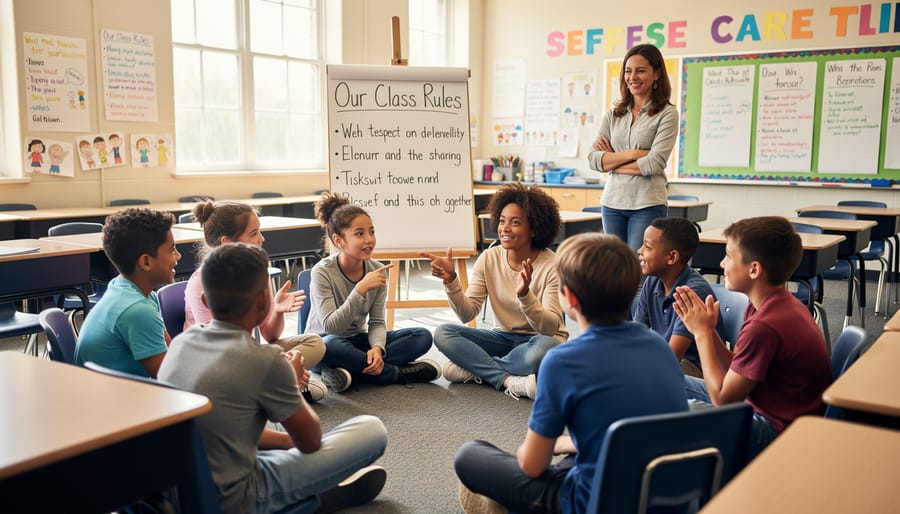
Now comes the fun part—bringing your students into the conversation! Start by gathering everyone in a circle or comfortable discussion area. Begin with an enthusiastic prompt like, “If we could create ONE super important rule that makes our classroom awesome for everyone, what would it be?”
Give students a few minutes to think independently or jot down ideas. This quiet reflection time helps everyone formulate thoughts before sharing. Next, invite students to share their suggestions while you write each idea on the board. Encourage creativity and remind them that all ideas are welcome at this stage.
As ideas flow, guide the conversation toward common themes. You might notice several students mentioning respect, kindness, or responsibility. Ask follow-up questions like, “How would this rule help us learn better?” or “What would our classroom look like if everyone followed this rule?” These prompts deepen their thinking and ownership.
Once you have a solid list, it’s voting time! Choose a method that fits your class:
– Dot voting: Give each student three sticky dots to place beside their top choices
– Hand raising: Read each option aloud and count raised hands
– Secret ballot: Students write their favorite on paper strips
– Digital poll: Use classroom technology for instant results
Tally the votes together and celebrate the winning rule. Make sure students understand why this rule matters and how it reflects their collective values. This democratic process shows them their voices truly count in shaping their learning environment.
Step 3: Have Students Craft Their Personal Rule
Now comes the exciting part where students take ownership! Give your class time to reflect on their personal challenges and strengths. Ask guiding questions like “What’s one behavior that would help you succeed this year?” or “What do you want to work on to become your best self?”
Encourage students to think beyond generic rules. Instead of “be respectful,” they might choose something specific like “I will listen when others are speaking” or “I will ask for help when I’m confused.” The more personal and meaningful the rule, the better.
Have students write their individual rule on an index card, poster, or digital document they can revisit regularly. For younger students, consider providing sentence starters like “This year, I will…” or offering a menu of options to choose from while still allowing personalization.
Make it official with a mini-celebration! Students can share their rules with a partner, sign their commitment, or even create a visual representation to display. This public declaration builds accountability and community. Remember, this is their rule, not yours, which makes all the difference in fostering genuine buy-in and growth throughout the year.
Making It Interactive and Fun
Turning the 8-1-1 framework into an interactive experience makes the rule-setting process memorable and meaningful for your students. Instead of simply announcing the rules, transform it into a collaborative adventure that gets everyone excited about creating their classroom community together.
Start with a voting game where students participate in selecting the top eight rules. Present 12-15 rule options on colorful cards or digital slides, then have students cast votes using fun methods like standing in different corners of the room, using thumbs up signals, or dropping tokens into labeled jars. This active participation ensures students feel ownership from the very beginning.
Create a rule design challenge where small groups compete to craft the most creative visual representation of your classroom rules. Provide art supplies, poster boards, or digital design tools, and watch as students translate rules into eye-catching graphics, catchy slogans, or even comic strips. Display these creations prominently to reinforce the message.
Try a consequence brainstorming relay where teams race to generate fair, reasonable consequences for the one major rule. Set a timer for three minutes and have groups pass around a worksheet, adding ideas as they go. This keeps energy high while encouraging thoughtful discussion about accountability.
Use games and collaborative tools like digital polling platforms, interactive whiteboards, or classroom management apps to make the process even more dynamic. Students can submit rule ideas anonymously, vote in real-time, and see results displayed instantly.
Consider a mystery box activity where students draw scenarios from a container and act out how the 8-1-1 framework applies to different situations. This role-playing element helps everyone understand how the rules work in practice while keeping things lighthearted and engaging.
Remember to celebrate the final creation with a signing ceremony where each student adds their name to the official classroom agreement, making their commitment visible and tangible.
When Students Actually Own the Rules
Here’s the exciting part: when students help create the rules, classroom magic happens! You’re not just posting expectations on a wall—you’re building genuine buy-in.
First, behavior issues often decrease significantly. Think about it: students are far less likely to break rules they helped design. They’ve already discussed why these boundaries matter and agreed they make sense. No more “but I didn’t know” excuses because they were part of the conversation from day one.
Your classroom community becomes stronger too. The 8-1-1 discussion process requires students to listen to each other, compromise, and work toward shared goals. These collaborative skills extend beyond rule-setting into daily interactions. Students feel respected because their voices genuinely shaped the classroom environment.
You’ll also notice reduced management headaches. When conflicts arise, you can reference the collectively agreed-upon rules. Redirecting behavior becomes simpler: “Remember our class rule about respectful communication that we all agreed on?” This shared ownership transforms discipline from teacher-versus-student into a community accountability model.
Perhaps best of all, student engagement soars when kids feel invested in their learning space. They’re more present, more participatory, and more willing to take academic risks in an environment they helped create.
The bottom line? Student-owned rules create a positive cycle where good behavior reinforces itself, freeing you to focus on what you love most—teaching!
Ready to transform your classroom culture? The 8-1-1 method isn’t just another management strategy—it’s your ticket to turning rule-followers into rule-believers. When students co-create the classroom expectations, something magical happens: they stop viewing rules as restrictions and start seeing them as agreements they’ve invested in personally. You’ll notice fewer reminders, more peer accountability, and a genuine sense of ownership that traditional approaches simply can’t match. Give it a try with your next class and watch compliance evolve into community. Your students are ready to step up—they just need the invitation to help shape the space where they’ll spend so much of their time learning and growing together.