8 Easy Halloween Classroom Games for Quick, Spooky Fun
Halloween season brings excitement to classrooms, but you don’t need elaborate prep or expensive supplies to celebrate. The best classroom Halloween games take 5 minutes or less to set up, use materials you already have on hand, and keep students engaged without turning your room into chaos.
Whether you’re planning a Halloween party, need a quick brain break, or want to wrap up the day before a long weekend, these eight games work across elementary and middle school grade levels. Each one can run for 10 to 30 minutes depending on your schedule, and most require nothing more than basic classroom supplies like paper, markers, and a timer.
The secret to successful classroom Halloween games is flexibility. Your students might be bouncing off the walls with sugar and excitement, or they might need something calm between academic activities. That’s why every game in this guide includes customization options so you can adjust difficulty, noise level, and competition style to match your classroom’s energy and your comfort level.
Skip the games that need special equipment or complicated rules. These activities get students laughing, moving, and working together while you stay in control of the classroom environment. Plus, they double as learning opportunities when you need to justify the fun to administrators or parents who peek in.
What Makes a Great Quick Halloween Game
Not all Halloween games work when you’re juggling lesson plans and party logistics. The games in this guide were chosen using specific criteria that make them reliable for busy teachers who want to increase student engagement without adding stress to their day.
Here’s what makes these games worth your time:
- Under 10 minutes of prep time, using supplies you already have or can grab quickly
- Flexible enough to work with kindergarteners through middle schoolers with simple tweaks
- Low or zero cost, so they won’t drain your classroom budget
- High engagement factor that gets students moving, laughing, and participating
- Easy customization to fit your space, class size, and teaching style
These standards ensure every game delivers maximum fun with minimum hassle. Whether you’re looking for primary game ideas or ways to transform your room into an active learning space for older students, you’ll find options that actually fit your reality. No elaborate setups, no mystery ingredients from specialty stores, just straightforward activities that work.
1. Mummy Wrap Race, Fast Team-Building Fun
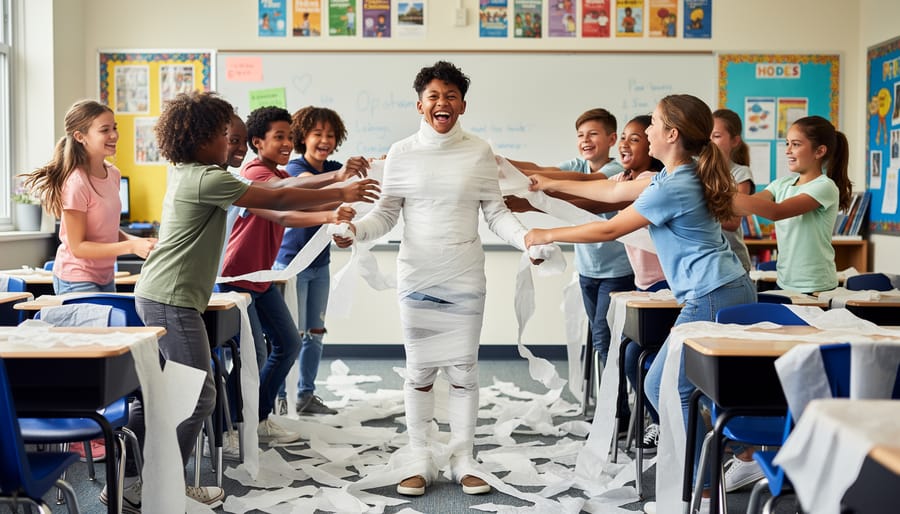
The Mummy Wrap Race gets students moving and laughing within seconds of setup. You’ll need rolls of toilet paper or white streamers, that’s it. Divide your class into teams of 3-4 students. Each team picks one person to be the “mummy” while the others become “wrappers.”
When you say “go,” the wrappers race to cover their mummy from shoulders to ankles with toilet paper or streamers. The first team to completely wrap their mummy wins. Set a timer for 3-5 minutes to keep the energy high and prevent the game from dragging.
This game works brilliantly for quick energy release because students are constantly moving, strategizing, and collaborating. The physical activity helps refocus restless classes, and the silly nature of wrapping someone in toilet paper eliminates self-consciousness.
For younger students (K-2), simplify by having them wrap just the arms and legs. Older students (grades 3-6) can handle full-body wrapping and even add challenges like requiring teams to leave the mummy’s face visible or creating the neatest wrap. If space is tight, run multiple rounds with fewer teams competing at once, or have teams work in designated corners of your classroom.
The cleanup is part of the fun, students can carefully unwrap their mummy and toss the paper in recycling bins. Total game time from setup to cleanup: under 10 minutes.
2. Pumpkin Bowling, Active and Adaptable
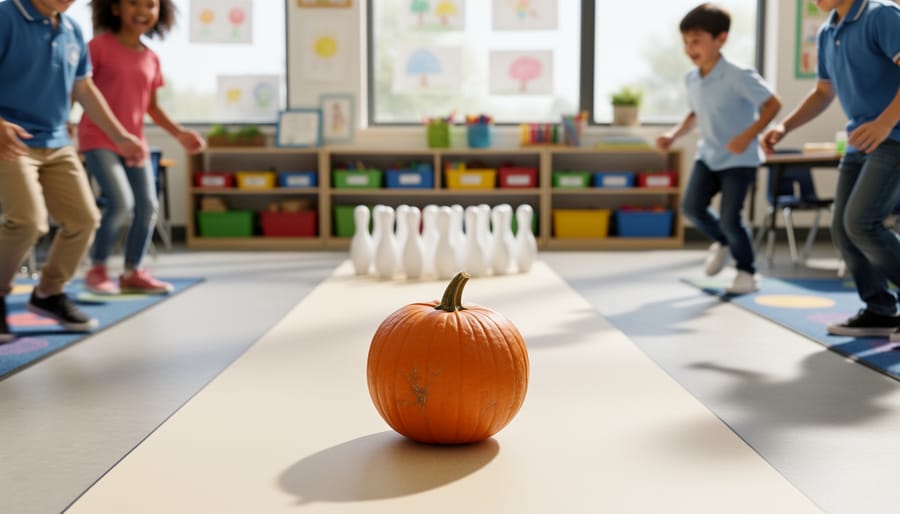
Grab a small pumpkin (real or foam) and ten plastic bottles or paper cups, and you’ve got yourself a bowling alley right in your classroom. Set up the “pins” in a triangle formation at one end of an open space, between desks, in a hallway corner, or against a back wall works perfectly. Students take turns rolling the pumpkin to knock down as many pins as possible.
For tight spaces, use six pins instead of ten and shorten the rolling distance. If you’ve got room, create multiple lanes so more students can play simultaneously. Foam pumpkins roll straighter than real ones and won’t bruise, but real pumpkins add authentic Halloween flair (just avoid the giant ones).
Turn it into a math activity by having students add their scores after each round or calculate class averages. Younger students can practice counting knocked-down pins, while older ones track cumulative scores across multiple frames. You can also assign different point values to certain pins, make the center pin worth five points instead of one.
Each student gets two rolls per turn, just like real bowling. Keep rounds moving by limiting teams to three or four players. If a student knocks down all pins on the first roll, celebrate with a quick “Strike!” cheer and reset immediately.
The physical activity breaks up sitting time, the math integration sneaks in learning, and setup takes less than three minutes.
3. Halloween Bingo, Instant Engagement
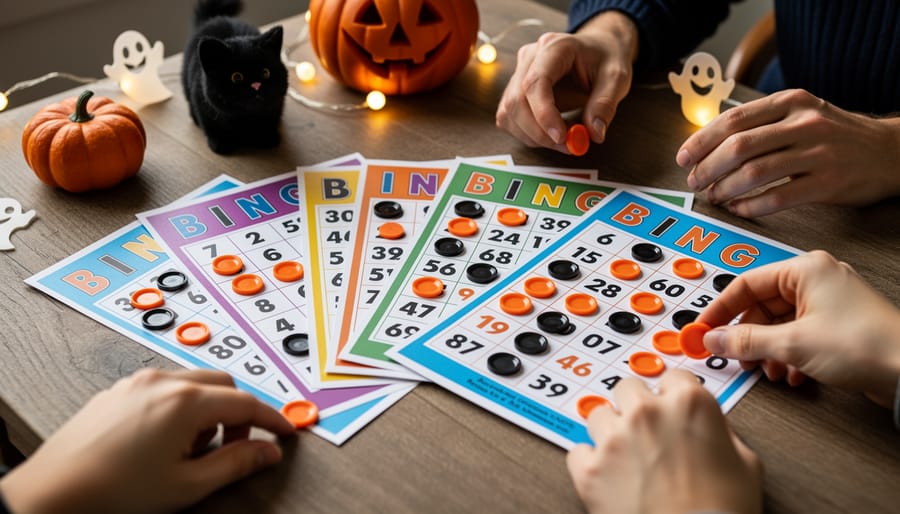
Halloween Bingo delivers everything teachers love: instant engagement, zero noise level, and sneaky learning opportunities wrapped in festive fun. You can set this up in under five minutes and play it with any grade level.
The basic setup is simple. Create or download a 5×5 bingo card filled with Halloween images, pumpkins, ghosts, witches, bats, candy corn, haunted houses, black cats, spiders, and full moons work perfectly. Print enough for your class, call out items randomly, and let students mark their cards with counters, crayons, or small Halloween candies. First to get five in a row wins.
What makes this game brilliant is its flexibility. Turn it into a math review by putting addition problems in the squares instead of pictures, calling out answers while students find the matching equation. Use sight words for early readers, vocabulary terms for older students, or Spanish Halloween words for language practice. You can customize every square to fit whatever you’re teaching that week.
The quiet factor is gold during Halloween parties when energy runs high. Students stay focused and seated while still feeling the festive excitement. Play multiple rounds with different winning patterns, four corners, blackout, or an X shape, to extend engagement without repeating the same game.
Free templates flood the internet, but making your own takes minutes with a word processor table. Either way, you’ve got a flexible, reusable game that works for early finishers, whole-class celebrations, or those tricky last fifteen minutes before dismissal.
4. Freeze Dance with Spooky Music, Brain Break Gold
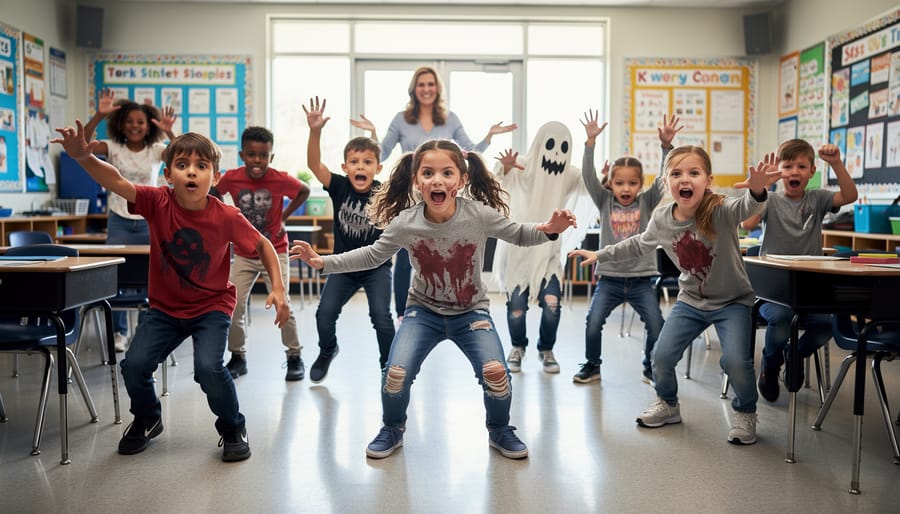
Freeze dance requires zero prep, just cue up Halloween music and let students move. When the music stops, everyone freezes in place. Students who keep moving sit out for that round, then jump back in when the next song starts. It’s perfect for releasing energy during transitions or refocusing restless learners before diving back into academics.
The beauty of freeze dance lies in its adaptability. With younger students, play upbeat tracks like “Monster Mash” or “Five Little Pumpkins” and keep rounds short. For older grades, try “Thriller” or “Ghostbusters” and add challenge by requiring specific freeze poses, zombie stance, witch flying on a broomstick, or mummy arms crossed. You can also call out body parts between rounds: “Dance only with your arms!” or “Move just your legs!”
This game works across all grade levels because the rules stay simple while the execution scales up. Kindergarteners love the freedom to wiggle and stop, while fifth graders enjoy showing off creative freeze poses and competing for the longest hold. No equipment means you can launch it anytime, between subjects, after lunch, or when you notice focus slipping.
Keep your phone or laptop handy with a Halloween playlist ready to go. Three to five minutes resets attention spans without eating up valuable class time.
5. Pumpkin Pass (Hot Potato Style), Quick Circle Game
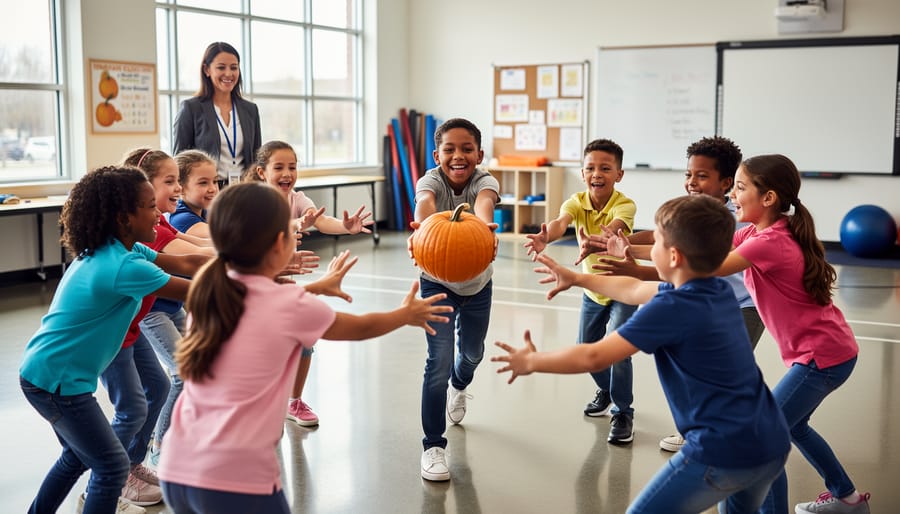
Pass a mini pumpkin (real or foam) around the circle while Halloween music plays. When you stop the music, whoever’s holding the pumpkin performs a quick silly action, make a monster face, do a witch cackle, strike a zombie pose, then sits down. Continue until one student remains.
This game needs zero prep beyond picking a playlist and grabbing a small object. It works beautifully for transition times when you need five minutes of structured fun, and kids get invested immediately because everyone participates until they’re out.
For large classes, keep eliminated students engaged by making them judges who vote on the best silly actions, or have them become your music controllers who decide when to pause. You can also run two simultaneous circles with different pumpkins to keep wait times short.
Turn it into a content review tool by letting students earn their way back in: anyone holding the pumpkin when music stops can answer a review question (math fact, vocabulary word, spelling challenge) to stay in the game. Wrong answer means they perform the silly action and sit out. This variation adds academic value without feeling like a worksheet.
The music choice matters, upbeat songs like “Monster Mash” or “Spooky Scary Skeletons” set the right energy. Vary your pause timing to keep kids guessing; don’t fall into a predictable rhythm. Quick rounds (three to four minutes) maintain excitement without dragging.
6. Halloween Charades, No-Prep Acting Fun
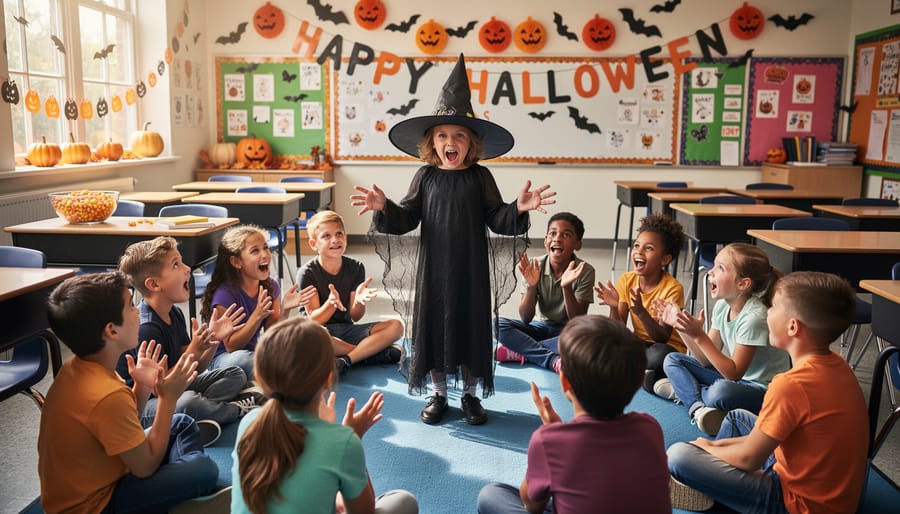
Halloween charades needs zero materials and works with any age group. Students take turns acting out Halloween-themed words or phrases while their classmates guess. One kid silently mimes “carving a pumpkin” or “trick-or-treating,” and the rest shout out answers. First correct guess wins a point, or you can play just for fun without keeping score.
Create your word list in two minutes. Jot down 10-15 Halloween actions on index cards or just call them out as you go. For younger students, stick with simple single words: ghost, witch, spider, bat, candy. Elementary and middle schoolers handle full phrases like “bobbing for apples,” “decorating a haunted house,” or “running from a zombie.” Older students enjoy creative challenges like “vampire looking for garlic-free pizza” or acting out specific Halloween movie scenes.
Turn it into a learning tool by using subject vocabulary. Language arts teachers can assign Halloween verbs (haunting, creeping, cackling). Spanish classes work with “el fantasma” or “la bruja.” Science teachers throw in “bat using echolocation” or “spider spinning a web.” The content stays sneaky educational while feeling like pure play.
Play it whole-class with volunteers acting for everyone, or split into small teams where each group sends one actor up at a time. Team format keeps more kids engaged and adds friendly competition. Set a 60-second timer per word to maintain energy and move through multiple rounds quickly.
7. Pumpkin Tic-Tac-Toe Relay, Active Strategy Game
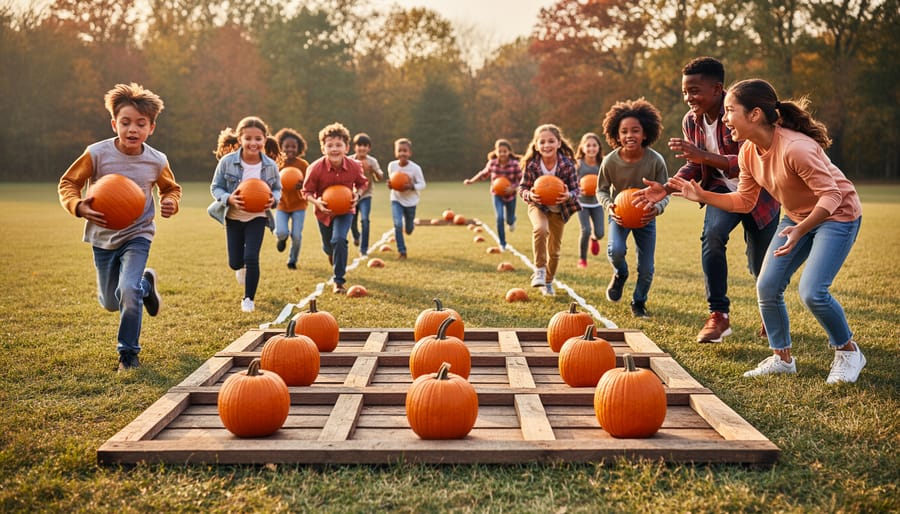
Pumpkin Tic-Tac-Toe Relay turns the classic strategy game into an active team competition that gets students moving and thinking. Create a large tic-tac-toe grid on your classroom floor using masking tape, each square should be big enough for a marker to sit inside clearly. Make your grid about 6-8 feet total so students have room to move around it comfortably.
Divide your class into two teams and give each team their markers: nine small pumpkins, orange beanbags, or even paper plates work perfectly. Teams line up at opposite ends of the room. When you say “go,” the first player from each team runs to the grid, places one marker in any square, then races back to tag the next teammate. Play continues with students taking turns placing markers, trying to get three in a row while blocking the other team.
The strategy element keeps this interesting, students must think about placement, not just speed. For added educational value, require players to answer a quick review question (math fact, vocabulary word, or content-related prompt) before placing their marker. This slows the pace slightly but adds meaningful learning without killing the energy.
If the grid fills with no winner, remove all markers and start fresh, this keeps the game moving and gives more students turns. The relay format means everyone participates actively rather than waiting, and the combination of running and strategy makes it engaging for a wide age range.
8. Spider Web Toss, Simple Skill-Builder
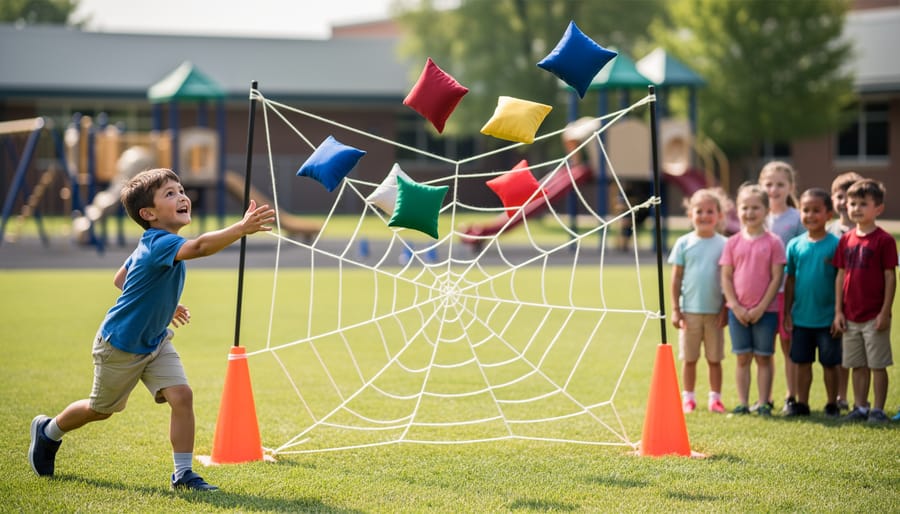
Spider Web Toss turns a simple target game into Halloween-themed fun with almost no preparation. Stretch yarn or string across a doorway or between two chairs to create a web pattern, leaving several open spaces of different sizes. For a simpler version, prop up a hula hoop or two and call those your spider web openings.
Give students soft yarn balls, beanbags, or even crumpled paper “spiders” to toss through the openings. Assign point values based on difficulty, smaller holes earn more points, larger ones fewer. You can run this as individual practice, partner turns, or team competition depending on your class size and time.
The beauty of Spider Web Toss is built-in differentiation. Younger students stand closer and aim for bigger openings. Older kids step back farther or target the trickiest gaps. Students with developing motor skills get extra attempts or bonus points for effort.
Set up takes under five minutes, which makes this perfect for quick brain breaks between lessons or as a station during your Halloween party rotation. Run three-minute rounds to keep energy high and lines moving. If space is tight, tape a web pattern on the wall and have students toss at floor targets instead.
Keep a scorecard posted or let students track their own points. Some teachers skip scoring entirely and focus on the challenge of landing three tosses in a row. Either way, kids get movement, focus practice, and a dose of spooky excitement.
Quick Tips for Running Halloween Games Smoothly
The secret to successful Halloween games isn’t the activity itself, it’s how you manage the energy and keep things moving. A few simple strategies can transform potential chaos into smooth, joyful fun.
Start by establishing clear rules before anyone moves. Demonstrate the game yourself or have two students model it while everyone watches. When kids understand expectations upfront, you’ll spend less time redirecting and more time enjoying their excitement. Use a consistent stop signal, whether it’s a bell, raised hand, or lights off, so you can regain attention quickly between rounds.
Assign two or three responsible students as game helpers before you begin. They can distribute materials, reset equipment between rounds, and keep score. This delegation saves you precious time and gives students ownership of the activity. If you’re running relay-style games, have helpers stand at key spots to reinforce rules and keep things fair.
Keep individual game sessions short, five to ten minutes is the sweet spot. Shorter rounds maintain high energy and excitement without letting restlessness creep in. You can always play a second round or switch to another game if you have extra time. Always have a backup option ready in case a game finishes faster than expected or doesn’t land well with your particular group.
Finally, position games strategically in your day. Use them as brain breaks between challenging lessons, rewards for meeting classroom goals, or transition activities before lunch or dismissal. When games serve a purpose beyond just fun, they become valuable classroom management tools that students look forward to earning.
Making the Most of Your Halloween Classroom Celebration
Halloween games don’t need to be elaborate to make an impact. The eight activities outlined here prove that five minutes of prep and minimal supplies can create the kind of classroom memories students talk about all year. When you choose games that match your space, time constraints, and student energy levels, you’re not just filling time, you’re building classroom community in a way that feels effortless.
These games work because they’re flexible. Turn Mummy Wrap into a vocabulary review. Use Halloween Bingo to practice math facts. Add movement to Freeze Dance when your class needs to refocus. The beauty of simple activities is that you can shape them to fit what your students need right now, not what some complex lesson plan demands.
Don’t wait for the perfect moment or the ideal supplies. Grab whatever you have, toilet paper, a pumpkin, some music, and dive in. Your enthusiasm matters more than flawless execution. Students remember the teacher who stopped to celebrate with them, who made room for joy alongside the curriculum. That’s the real magic of these quick classroom games.
Common Questions About Halloween Classroom Games
How long should each game last?
Keep individual games short, between 5 and 10 minutes works best for maintaining energy and attention. This timing allows you to rotate through multiple activities or use a single game as a quick brain break without eating into valuable instructional time.
What if I have limited classroom space?
Choose games that work in tight quarters, like Halloween Bingo, Freeze Dance, or Charades. You can also move desks to the perimeter for five minutes to create a playing area, then quickly reset, students actually enjoy helping with the transformation.
How do I adapt these games for older students?
Add competitive elements like timed rounds or point systems, incorporate content review questions between turns, or let students lead and create their own variations. Older kids also appreciate when you acknowledge the silly factor upfront and frame it as a fun tradition rather than a little-kid activity.
Can these games work in a virtual classroom?
Several adapt well to online learning: Halloween Bingo works perfectly using digital boards or screen sharing, Freeze Dance translates easily with students dancing on camera, and Charades becomes a fun guessing game with one student acting while others type answers in the chat.
These answers reflect real classroom experiences where timing, space, and student engagement all matter. The key is choosing games that match your specific situation rather than forcing an activity that doesn’t fit your classroom’s rhythm or constraints.