

Your ELA Unit Plan Template Just Got a Whole Lot Easier
Planning engaging ELA units shouldn’t consume your weekends or leave you scrambling for materials. A solid template transforms your curriculum planning from overwhelming to organized, giving you a clear roadmap while leaving room for those spontaneous teaching moments that make your classroom special.
The right ELA unit plan template keeps your instruction standards-aligned without boxing you into rigid lesson structures. You’ll map out essential reading, writing, speaking, and listening skills while building in flexibility for differentiation and student interests. Think of it as your teaching GPS—it shows the destination and suggests the route, but you control when to take scenic detours.
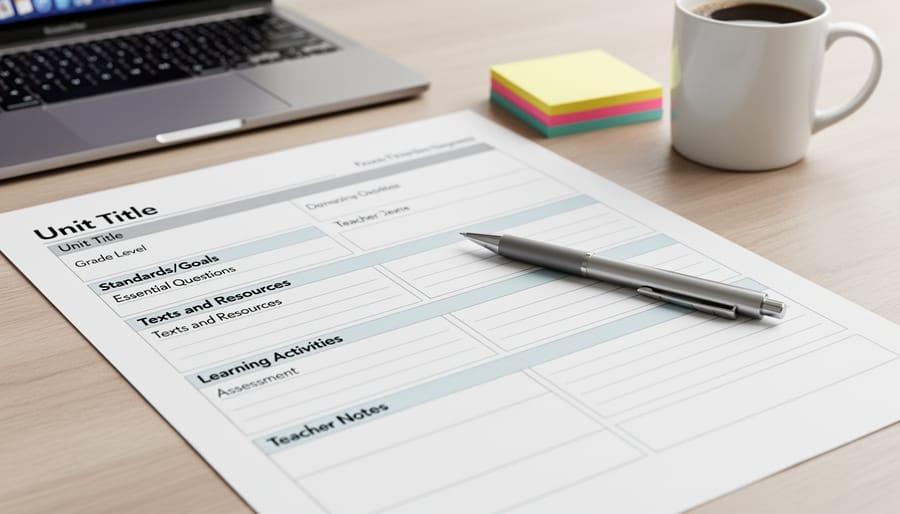
What makes a template truly work? It balances comprehensive planning with quick customization. You need sections for learning objectives, assessment strategies, daily activities, and resource lists—all organized so you can adapt units across grade levels and texts. The best templates also help you integrate interactive elements that boost engagement, turning standard lessons into memorable learning experiences.
When your planning structure handles the heavy lifting, you free up energy for what matters most: connecting with students and bringing literature to life in your classroom.
What Makes an ELA Unit Plan Template Actually Work
Standards Alignment That Makes Sense
Let’s face it—standards can feel overwhelming. Your ELA unit plan template should make them manageable, not add to your stress! The best templates include a clear standards section where you can quickly list relevant Common Core or state standards without drowning in code numbers.
Look for templates that let you add 3-5 key standards per unit. This sweet spot keeps you focused without getting lost in the weeds. You don’t need to list every single standard variation—just the main ones driving your instruction.
Here’s a game-changer: choose templates with space to connect each standard directly to specific activities. When you can see at a glance that your vocabulary game addresses L.4.5 and your discussion questions hit RL.4.1, you’ll feel more confident and organized. This approach also helps with standards alignment across grade levels, making transitions smoother for your students.
Pro tip: Customize the standards section for your state if you’re not using Common Core. Most templates are flexible enough to swap in your specific requirements. Keep standards visible but simple—you’re planning engaging lessons, not writing a dissertation!
Room to Customize for Your Classroom
Here’s the thing about teaching – no two classrooms are exactly alike! That’s why the best ELA unit plan templates give you plenty of wiggle room to make them your own. Look for templates that let you adjust activities, swap out texts, and modify assessments based on what your students actually need.
Think of your template as a strong foundation, not a rigid script. Maybe your third period needs more scaffolding while your fifth period is ready for advanced challenges. A flexible template lets you adapt on the fly without rebuilding everything from scratch. You can adjust time frames, differentiate assignments, or add review games when students need extra practice.
The beauty of customizable templates is that they support curriculum consistency across your grade level while honoring your unique teaching style. Want to incorporate more collaborative learning? Go for it! Prefer daily exit tickets over weekly quizzes? Make that swap!
The key is finding templates with clear structures but flexible components. This way, you’re saving precious planning time while still creating lessons that feel authentically yours and genuinely engaging for your students.
The Key Sections Your ELA Unit Plan Template Needs
Unit Overview and Essential Questions
Start by identifying the central theme or big idea that ties your entire unit together. What do you want students to understand by the end? This overview section is your chance to paint the big picture before diving into daily lessons.
Your unit overview should include a brief description of what students will explore, any anchor texts or key materials, and the approximate duration. Keep it simple and clear so anyone reading your plan instantly gets it.
Next, craft those essential questions. These are the juicy, thought-provoking questions that drive student inquiry throughout the unit. Think open-ended questions without simple right or wrong answers, like “How do authors use voice to persuade readers?” or “What makes a story memorable?” These questions should spark curiosity and encourage deeper thinking.
Don’t forget your overarching goals. What skills will students develop? Reading comprehension? Writing techniques? Critical thinking? List three to five major objectives that connect to your standards but remain flexible enough to customize based on your students’ needs. This big-picture view keeps you focused and makes assessment planning much easier down the road.
Reading, Writing, and Language Skills Integration
The magic happens when your ELA unit plan template brings reading, writing, speaking, and language skills together naturally. Think of your template as a roadmap for cohesive learning progression where each skill reinforces the others.
Design your template with dedicated sections that prompt you to connect skills authentically. For example, if students read an article about climate change, they might write persuasive letters, discuss evidence in small groups, and analyze vocabulary in context. This integration feels organic, not forced.
Include flexible planning boxes where you can note how activities hit multiple standards simultaneously. A single well-designed lesson can address reading comprehension, grammar application, and speaking skills all at once. Your template should make these connections visible and easy to plan, helping you maximize instructional time while creating richer learning experiences for your students.
Assessment and Progress Monitoring
Your ELA unit plan template should include built-in spots for tracking how your students are actually doing! Think of this section as your roadmap for knowing what’s working and what needs tweaking.
Start with formative assessments—those quick check-ins that happen while you’re teaching. Include space for exit tickets, class discussions, or fun observation notes. These informal snapshots help you adjust your teaching on the fly.
Then plan your summative assessments—the bigger picture stuff like end-of-unit projects, essays, or presentations. Your template should have clear rubrics ready to go, making grading way less stressful!
Here’s the best part: build in flexibility! Leave room to note individual student growth and celebrate those breakthrough moments. You might discover that some students shine during creative projects while others excel in written work. Having this all organized in one template means you can spot patterns, share progress with parents, and genuinely see how far your students have come. Plus, when it’s time for report cards or parent-teacher conferences, you’ll have everything at your fingertips!
Differentiation and Support Strategies
A great ELA unit plan template should give you dedicated space to think about all your learners. Look for templates with clear sections where you can jot down modifications for students who need extra support, like sentence starters, graphic organizers, or additional reading time. Equally important is room to plan extensions for students who are ready for more challenge, such as independent research projects or creative writing tasks that go deeper.
The best templates make differentiation planning easy, not overwhelming. Instead of having to create separate documents, you can keep everything in one place. Include spots for noting scaffold strategies, vocabulary supports, and alternative assessments. This is where customization really shines! You might add a column for technology tools that help visual learners or another for collaborative game-based activities that reinforce skills in engaging ways.
Remember, planning for diverse learners doesn’t mean creating entirely different lessons. It means having thoughtful options ready to go, making your teaching more responsive and your students more successful.
How to Use Your Template Without the Headache

Start with Your Standards and Work Backward
Here’s the secret to creating a unit plan that actually works: start at the finish line! The backward design approach flips traditional planning on its head, and it’s a game-changer for filling out your ELA template.
Begin by identifying your standards and learning goals. What should students know by the end of this unit? Write these down first in your template. Next, jump straight to assessments. How will you measure whether students actually met those goals? Design your final assessment before planning a single lesson.
Once you’ve nailed down where you’re going and how you’ll know you’ve arrived, the path becomes crystal clear. Now you can work backward to fill in the daily activities, texts, and practice opportunities that will get students ready for that final assessment.
This approach saves you from the common planning trap of creating fun activities that don’t actually build toward your goals. Every lesson becomes purposeful, and your template transforms from a paperwork burden into a roadmap for success.
Build in Your Favorite Interactive Activities
Your ELA unit plan template shouldn’t just be about worksheets and assessments. The magic happens when you weave in interactive activities that get students excited about learning! Think of your template as a framework that leaves room for those game-changing moments that make concepts stick.
Reserve dedicated spots in your template for review games and hands-on activities. Maybe it’s a vocabulary showdown on Fridays or a grammar challenge before assessments. The key is planning these engaging elements ahead of time rather than scrambling to add them last minute.
Consider building in flexible activity slots throughout your unit. These can be quick energizers between lessons or more elaborate collaborative projects. When students know something fun is coming, they stay motivated through the trickier content.
The beauty of templates is that once you’ve identified what works, you can replicate it across units. Did your students love that character analysis game? Add a similar activity slot to your next unit template. Build a collection of go-to interactive strategies that fit naturally into your planning structure.
Don’t forget to include notes in your template about materials needed and time requirements for each activity. This saves you from those panicky moments wondering if you have enough supplies or time to pull off that interactive lesson you planned.
Remember, interactive doesn’t mean complicated. Sometimes the simplest games create the biggest learning breakthroughs. Your template should support both quick-fire review activities and deeper collaborative experiences, giving you options for every teaching moment.
Making Your Unit Plans Come Alive in the Classroom

From Template to Team-Building Activities
Your ELA unit plan template isn’t just about worksheets and reading assignments. It’s the perfect framework for weaving in team-building activities that make learning stick while creating a positive classroom vibe.
Think about incorporating collaborative games during your literature units. When students work together on vocabulary charades or character analysis team challenges, they’re building both ELA skills and social connections. Your template can include dedicated slots for these interactive moments, maybe every Friday or as transition activities between reading sessions.
Consider adding partner reading exercises where students take turns and discuss comprehension questions together. You could also plan small group debates, story-building circles, or peer editing sessions right into your unit schedule. These activities transform your classroom into a community of learners who support each other.
The beauty of planning these activities within your template is that you’re not scrambling last-minute for engagement strategies. You’re intentionally designing opportunities for students to learn from and with each other. Plus, when students associate ELA with fun, collaborative experiences rather than solo work, their enthusiasm for reading and writing naturally grows. Your template becomes a roadmap for both academic success and meaningful classroom relationships.
Quick Review Games That Fit Your Unit Flow
Keep your students engaged and reinforce key concepts by weaving review games throughout your unit plan. Instead of saving all the fun for the end, sprinkle quick game breaks after introducing challenging concepts or before assessments. These mini-reviews help students retain information while breaking up instruction.
Try placing a vocabulary matching game midway through your unit to solidify new terms. Use a quick trivia-style review before moving into deeper analysis activities. End each week with a competitive team game that covers everything learned so far.
The beauty of customizable review games is that you control the content. Simply plug in your vocabulary words, comprehension questions, or literary devices into a template and you’re ready to go. This takes minutes but gives students valuable practice in a format they actually enjoy. Plus, you can reuse and adapt the same game templates across different units, saving even more planning time while keeping learning fresh and interactive.
Here’s the exciting truth: a solid ELA unit plan template isn’t about boxing you in. It’s about giving you freedom. When you’ve got the structure handled—your standards mapped, your assessments planned, your learning targets clear—you create space for the magic to happen. That’s where creativity lives. That’s where those spontaneous discussions flourish and student engagement soars.
Think of your template as the foundation of a house. You need it sturdy and well-designed, but once it’s there, you get to decorate, rearrange, and make it uniquely yours. Add that classroom game your students will love. Pivot when a teachable moment appears. Customize activities based on what you’re seeing in real-time.
Yes, using templates takes practice. Your first few units might feel a bit clunky as you figure out what works for your teaching style. That’s completely normal. Each time you plan, you’ll get faster and more confident. You’ll discover shortcuts. You’ll build a collection of go-to strategies.
So grab that template and start planning. Your future self—and your students—will thank you for the intentional, engaging learning experiences you’re about to create.