
Your Classroom Playground Can Teach Inclusion Better Than Any Textbook
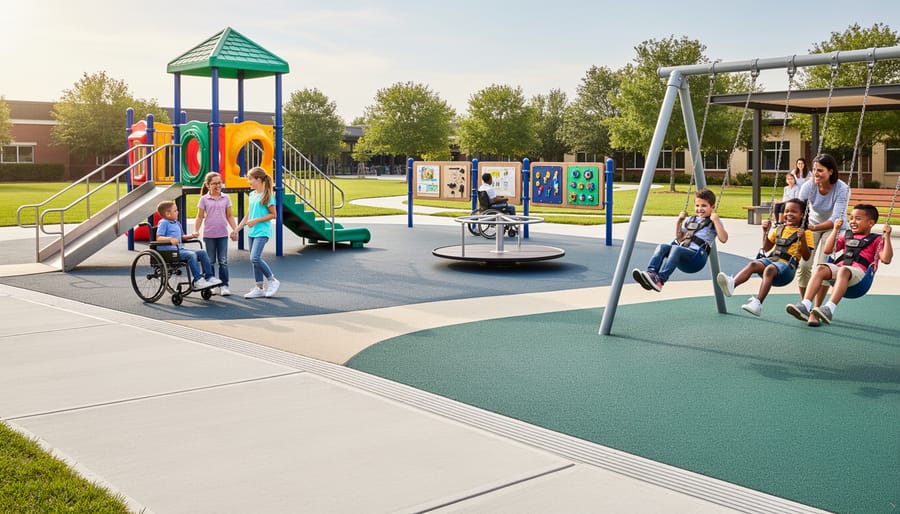
Design playground spaces where every child can explore, connect, and thrive by incorporating multiple sensory experiences at varying intensity levels. Install quiet zones with enclosed spaces alongside active areas featuring swings and climbers, allowing children to self-regulate based on their sensory needs. Choose equipment with varied textures, colors, and movement options—think smooth ramps alongside tactile panels, gentle swaying pods near dynamic spinners—so children with different sensory processing abilities can all find their comfort zone.
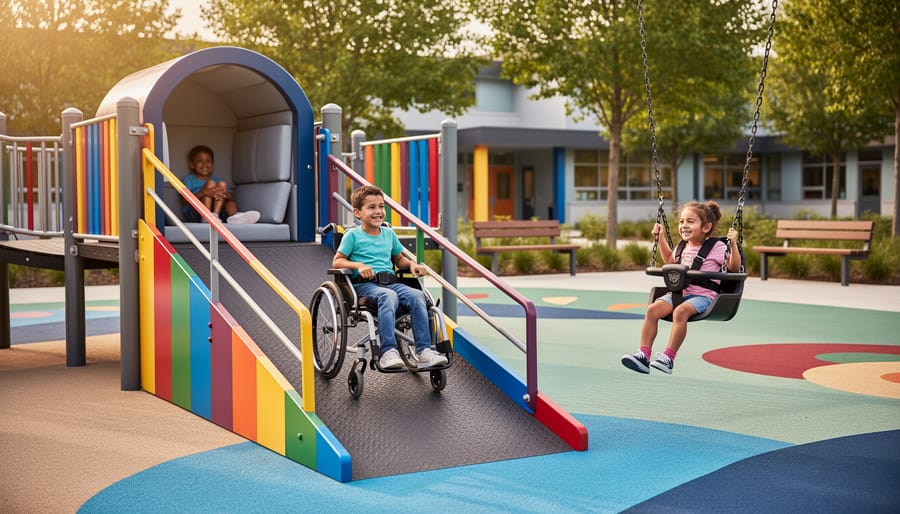
Create accessible pathways wide enough for wheelchairs andwalkers, using rubberized surfaces that reduce trip hazards while providing cushioning for falls. Position equipment at ground level or with transfer platforms, ensuring children with mobility differences can access the same play opportunities as their peers without feeling segregated.
Include visual supports like picture schedules and color-coded zones to help children with autism or communication differences navigate the space independently. Add shaded areas and adjustable features that accommodate children who experience sensory overload, giving them control over their play environment.
These outdoor design principles translate directly into your classroom. Consider creating learning stations with varied sensory input—a cozy reading corner with soft lighting, a standing desk option for kinesthetic learners, and fidget tools at quiet workspaces. When you advocate for inclusive playgrounds at your school, you’re championing the same principles that make your classroom welcoming: choice, accessibility, and recognition that every child learns and plays differently. Start by observing which students seek out or avoid certain playground areas, then use those insights to inform both outdoor improvement proposals and indoor environment adjustments.
Why Sensory-Friendly Playgrounds Matter for Your Students
You see it every day in your classroom—some students thrive in bustling group activities while others need quiet corners to recharge. The same principles apply to playground environments, and understanding inclusive playground design can transform how you support all your learners during outdoor time.
Sensory-friendly playgrounds directly impact your students’ ability to learn, engage, and develop crucial social skills. When playgrounds include varied sensory zones—quiet spaces, tactile experiences, and movement options—they create opportunities for every child to participate at their comfort level. This matters because outdoor play isn’t just recess; it’s where students practice cooperation, build physical confidence, and reset their minds for afternoon learning.
For your students with autism, predictable playground layouts with clear pathways reduce anxiety and encourage exploration. Kids with ADHD benefit from equipment that channels their energy productively—think climbing structures and spinning elements that provide the movement input their bodies crave. Students with sensory processing disorders need options to either seek or avoid sensory input, which is why the best playgrounds include both active zones and calmer retreat areas.
You probably already create sensory-friendly experiences in your classroom, and these outdoor spaces extend that same thoughtful approach. When students with physical disabilities can access equipment alongside their peers—whether through ramps, transfer platforms, or ground-level activities—everyone benefits from the inclusive environment.
The connection to your classroom is clear: students who feel successful and included on the playground return to learning more regulated, confident, and ready to engage. They’ve practiced taking turns, navigating challenges, and managing their sensory needs in a supportive environment. That’s not just good playground design—that’s laying the foundation for better learning outcomes across your entire school day.
The Core Elements of Sensory-Friendly Playground Design
Quiet Zones and Calming Spaces
Every student needs a break sometimes, and that’s where quiet zones become absolute game-changers on your playground! These designated calming spaces give children the perfect opportunity to step away, regroup, and self-regulate when things feel overwhelming.
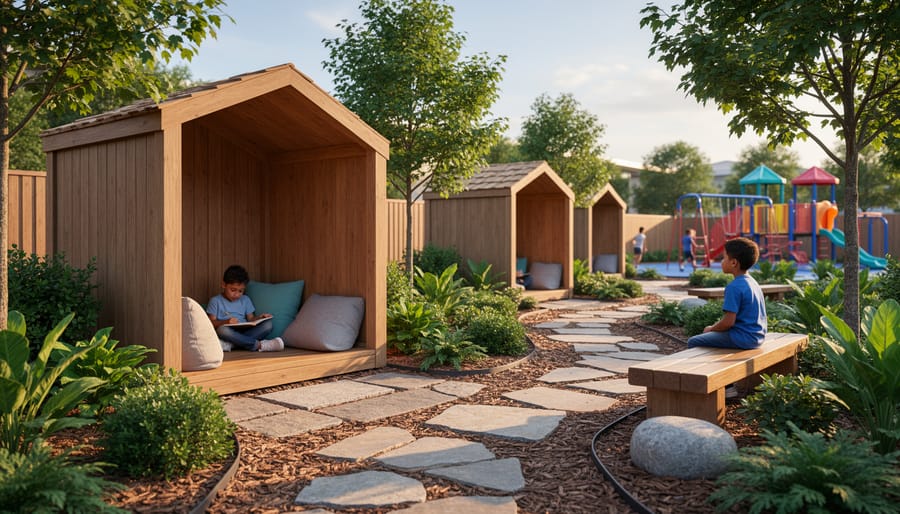
Think of these areas as peaceful retreats featuring shaded structures like gazebos or covered benches that protect kids from sensory overload caused by bright sunlight. Enclosed pods or cozy nooks with partial walls create that wonderful sense of security without complete isolation, so supervisors can still keep watchful eyes on students.
Nature elements work wonders here too! Incorporate soft grass patches, smooth rocks for sitting, or even small gardens where children can ground themselves. Some schools add wind chimes that produce gentle sounds or textured walls for tactile exploration. These features help students transition back to active play when they’re ready.
The beauty of quiet zones is their flexibility. You can customize them based on your students’ specific needs, adding elements like reading benches, sensory bottles, or simple visual boundaries using planters or low fencing. When you provide these calming options, you’re teaching valuable life skills about recognizing emotions and taking healthy breaks, all while ensuring every child has access to playground time that works for them!
Varied Sensory Experiences
Creating sensory-rich playground spaces means offering equipment that engages multiple senses and movement systems. Think beyond traditional swings and slides! Variety is the key to inclusion.
Start with tactile experiences through textured surfaces. Rubber mats with raised patterns, smooth wooden pathways, and bumpy stone areas let children explore different sensations underfoot. Musical elements like outdoor chimes, drums, and xylophones invite creative expression while providing auditory feedback.
For vestibular input (balance and spatial awareness), incorporate diverse swinging options. Platform swings, bucket swings, and tire swings each offer unique movement patterns. Spinning equipment like sit-and-spin platforms or merry-go-rounds challenge balance in different ways.
Climbing structures support proprioceptive development (body awareness) through varied challenges. Low climbing walls, rope nets, and graduated stepping stones let kids of all abilities test their strength and coordination at their own pace.
The beauty of these features? They customize the play experience for every child. Some students crave intense sensory input while others prefer gentle exploration. When playgrounds offer choices, every child finds their comfort zone and can gradually expand their sensory tolerance. This mirrors the way you differentiate learning in your classroom, meeting students exactly where they are!
Accessible Pathways and Universal Design
Creating pathways that welcome every child transforms a playground from exclusive to extraordinary! Wide, smooth pathways measuring at least 60 inches across ensure wheelchair users can navigate easily alongside friends. These routes should connect all play areas without dead ends, making exploration exciting for everyone.
Ramps with gentle slopes (ideally 1:12 ratio) replace traditional stairs, opening up elevated play structures to students with mobility devices. Add transfer platforms at various heights, and you’ve created stepping stones that allow children to move from wheelchairs onto play equipment independently. These platforms work like classroom learning stations—offering multiple entry points to the same fun destination!
Ground-level play panels and interactive features mean students can participate without transfers at all. Think musical instruments, tactile games, and sensory walls positioned at accessible heights. This mirrors universal design principles you already use in your classroom—multiple means of engagement benefit everyone!
Non-slip surfaces with high color contrast help students with visual impairments navigate confidently, while rest areas along pathways provide needed breaks for children with limited stamina. When pathways welcome all learners, playgrounds become outdoor classrooms where inclusion happens naturally through thoughtful design.
Visual and Auditory Considerations
Creating sensory-friendly playgrounds means thinking carefully about what children see and hear during play. These thoughtful design choices make outdoor spaces welcoming for everyone, especially students with sensory sensitivities or processing differences.
Start with color choices that support all learners. High-contrast colors help students with visual processing differences navigate play equipment safely. Consider using muted, natural tones for larger surfaces to prevent visual overstimulation, while reserving brighter colors for important features like handrails or boundaries. This approach creates visual clarity without overwhelming sensitive eyes.
Signage deserves special attention too! Clear, simple pictograms alongside text help non-readers and students with reading challenges understand playground rules and find their way around. Place signs at consistent heights and locations so children know where to look for information.
Noise management might seem tricky outdoors, but smart design makes a difference. Position quieter activities like reading nooks or sensory gardens away from high-energy zones. Natural barriers like shrubs or berms can buffer sound beautifully while adding visual interest. Consider incorporating soft-surface materials that absorb rather than amplify sound.
Visual clarity extends beyond colors to include predictable pathways and open sightlines. When students can easily see where paths lead and understand the playground layout, they feel more confident exploring. These same principles apply wonderfully to classroom organization, helping you create learning spaces where every student can focus and thrive. Small adjustments make big differences in supporting diverse sensory needs.
Bringing Inclusive Play Concepts Into Your Classroom
Creating Sensory Zones in Your Classroom
Bringing inclusive playground concepts indoors is easier than you might think! Start by creating distinct sensory zones that give every student a space where they feel comfortable and engaged.
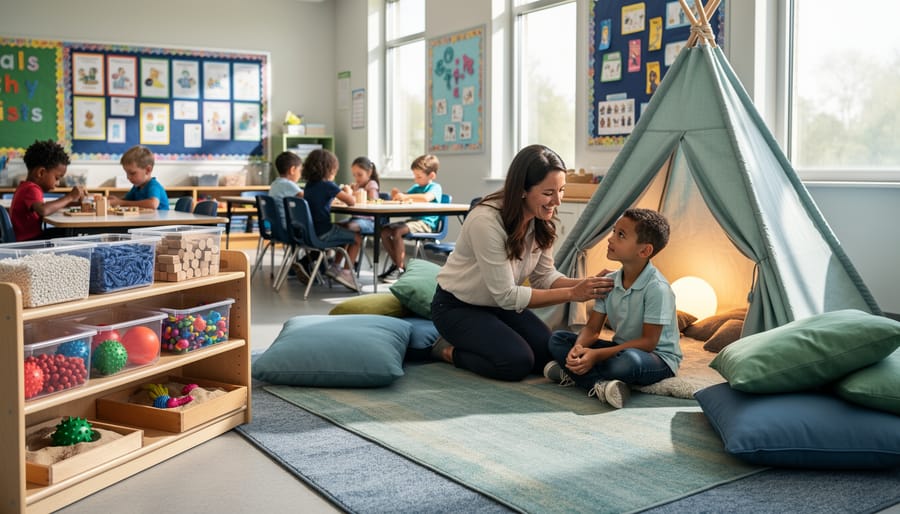
Set up a quiet corner with soft cushions, fidget tools, and noise-canceling headphones. This becomes your calm-down zone where students can regulate their emotions, just like a peaceful garden area on an inclusive playground. Add soft lighting or a small tent to make it extra cozy.
Designate a movement area where kids can wiggle, stretch, and release energy throughout the day. Think yoga mats, balance boards, or a small stepping stone path. This mirrors those awesome sensory walkways you see in modern playgrounds and helps students who need to move while learning.
Create sensory stations around your classroom with different textures, manipulatives, and hands-on materials. Rotate items weekly to keep things fresh and exciting! Consider adding a tactile wall with various fabrics, a sand tray for tracing letters, or bins with different materials for exploration.
The beauty of sensory zones is customization. Observe what your students need most and adjust accordingly. Some classes might benefit from more movement options, while others thrive with additional quiet spaces. You know your students best, so trust your instincts and create zones that truly serve them!
Using Games to Promote Inclusive Play Thinking
Games are powerful tools for bringing inclusive playground concepts right into your classroom! Just as sensory-friendly playgrounds offer multiple ways to play, your classroom games can accommodate different learning styles and sensory needs.
Start by choosing review games that allow for flexible participation. Some students might prefer verbal responses, while others thrive with written answers or visual cues. Digital platforms let you adjust sound levels, visual complexity, and time limits to match individual comfort levels. Consider offering quiet zones where students can participate without overwhelming sensory input, similar to calmer areas on inclusive playgrounds.
Customization is key! Before launching any game, survey your students about their preferences. Do they need extra processing time? Would they prefer working solo, in pairs, or in teams? Can you offer noise-canceling headphones for students sensitive to sound? These simple adjustments make everyone feel valued.
Try incorporating movement options that mirror playground variety. While some students might enjoy standing or using fidget tools during games, others prefer seated activities. The beauty of inclusive classroom activities is that they celebrate different participation styles.
Remember, the goal is creating joyful learning experiences where every student can shine. When you design games with flexibility and choice built in, you’re building an inclusive classroom culture that mirrors the best principles of accessible playground design.
Teaching Students About Inclusion Through Play
Bring inclusive playground concepts into your classroom with engaging activities that build genuine understanding! Start by having students experience different sensory perspectives through simple simulations. Try blindfolding volunteers to navigate an obstacle course, or have everyone wear noise-canceling headphones during a group activity. These hands-on experiences naturally spark meaningful conversations about accessibility.
Create a classroom design challenge where students reimagine your outdoor play area using sensory-friendly principles. Provide materials like cardboard, fabric swatches, and drawing supplies so they can prototype quiet zones, textured pathways, or adjustable equipment. This taps into play-based learning approaches while developing empathy.
Host empathy-building discussions where students share their own sensory preferences. Some love loud recess games while others need quieter spaces—acknowledging these differences validates every learner’s needs. You can customize these activities for any grade level, adjusting complexity while maintaining the core message of inclusion.
Celebrate student insights by displaying their inclusive playground designs around your classroom or presenting them to school administrators. When kids see their ideas valued, they become passionate advocates for accessibility!
How to Advocate for Better Playground Spaces at Your School
You have more power than you might think when it comes to transforming your school’s playground into a truly inclusive space! Whether you’re passionate about sensory-friendly design or you’ve noticed students who struggle to participate fully during recess, your voice can spark meaningful change.
Start by building your case with observations and data. Document what you see during outdoor time: Which students aren’t engaging? What equipment gets used most? Are there sensory overload triggers like harsh sunlight or loud areas without quiet alternatives? Take photos and gather informal feedback from students and colleagues. This real-world evidence makes your advocacy much stronger than general requests.
When approaching administrators, focus on benefits they care about. Inclusive playgrounds reduce behavioral issues, increase physical activity for all students, and demonstrate the school’s commitment to accessibility. Frame improvements as investments in student wellbeing and learning outcomes. You might say: “Research shows that sensory-rich play spaces help students regulate emotions and return to class more focused.” Connect outdoor inclusive play strategies to the school’s broader educational mission.
Partner with your special education team early in the process. They bring expertise on accessibility requirements and can identify specific student needs. Occupational therapists often have valuable insights about sensory equipment and movement opportunities that benefit everyone, not just students with identified challenges.
Don’t overlook your PTA as powerful allies! Parent groups frequently fundraise for playground improvements and appreciate concrete project ideas. Prepare a simple presentation showing inclusive design elements with estimated costs. Many PTAs are thrilled to champion projects that visibly benefit the entire school community.
Explore grant opportunities together with your administration. Organizations like KaBOOM!, the National Education Association Foundation, and local community foundations often fund inclusive playground projects. State departments of education sometimes offer accessibility improvement grants too. Offer to help research and even draft applications, which shows initiative while lightening the administrative load.
Remember, change doesn’t happen overnight. Start small if needed. Even adding a quiet zone with sensory-friendly seating or creating a buddy bench can make a difference while you work toward larger improvements. Your persistence and passion for inclusive spaces will inspire others to join your mission!
You’re in a powerful position to make real change happen! As a teacher, you see firsthand how inclusive design impacts your students every single day. Whether you’re advocating for sensory-friendly playground equipment at your school or rearranging your classroom to accommodate different learning needs, your voice matters tremendously.
The best part? You don’t need to overhaul everything at once. Start small and watch the ripple effects unfold. Maybe you begin by creating a quiet corner in your classroom this week, or perhaps you join the next facilities planning meeting to share what you’ve learned about inclusive design principles. Each small step creates momentum.
Remember, inclusive design isn’t just about helping students with specific needs—it benefits everyone. When you champion spaces that reduce sensory overload, offer varied seating options, and provide multiple ways to engage, you’re creating environments where all learners can thrive.
So take that first step today. Talk to your administrators about playground improvements. Reorganize one area of your classroom with accessibility in mind. Share these ideas with colleagues. Your enthusiasm and commitment can spark transformation that extends far beyond your own classroom walls. Every student deserves spaces where they feel welcome, capable, and ready to learn—and you have the power to help make that happen.