
Why Your Students See ‘English’ and ‘Language Arts’ as Two Different Classes (And What You Should Actually Call It)
Stop second-guessing yourself when parents ask why the syllabus says “Language Arts” but the textbook says “English”—they’re essentially the same subject with different labels. The terminology shift happened gradually as education experts recognized that teaching reading, writing, speaking, and listening together creates stronger communicators than isolated grammar lessons. Language Arts became the preferred umbrella term in elementary settings, while English stuck around in middle and high schools, though you’ll find both used interchangeably across all grades today.
For your 3rd-5th grade classroom, think of it this way: English traditionally emphasized literature analysis and grammar rules, while Language Arts takes a broader, more integrated approach that weaves together reading comprehension, creative writing, vocabulary building, oral presentations, and yes, grammar too. The name matters less than what you’re actually teaching—helping students become confident readers, clear writers, and effective communicators through engaging, hands-on activities. Most curriculum standards now use “ELA” (English Language Arts) as a compromise term that honors both traditions while keeping the focus where it belongs: on building essential communication skills your students will use every single day.
What’s Really Behind the Name Change?

The Old ‘English Class’ Model
For years, the term “English class” was the go-to name for the subject where students explored literature, learned grammar rules, and practiced their writing skills. You probably remember it from your own school days! Teachers would guide students through classic novels, diagram sentences on the board, and assign essays about summer vacation or important historical figures.
While this traditional approach covered essential skills, the name “English” started to feel a bit narrow. After all, the class wasn’t just about the English language itself. It encompassed so much more: creative storytelling, critical thinking about what we read, public speaking, listening skills, and even visual literacy as media became more important in our daily lives.
The single word “English” didn’t quite capture the rich, multifaceted learning happening in these classrooms. Teachers were doing amazing work helping students become confident communicators in multiple ways, but the course title didn’t reflect that broader mission. This realization sparked a shift in how educators thought about and named this essential subject, leading to the more comprehensive term we often use today.
Why ‘Language Arts’ Became the Go-To Term
So why did “Language Arts” become the preferred term in elementary classrooms? It’s all about giving credit where credit is due! The shift happened because educators realized that successful communication involves way more than just reading books and writing essays.
Think of Language Arts as an umbrella term that celebrates all the ways we use language. It includes reading (decoding and comprehension), writing (from creative stories to informative paragraphs), speaking (class discussions and presentations), and listening (following directions and understanding others). These four skills work together like teammates, each one supporting and strengthening the others.
When your students practice a read-aloud, they’re using reading, speaking, and listening skills simultaneously. When they write a response to a story, they’re combining reading and writing. See how interconnected it all is?
The term “Language Arts” reflects this beautiful integration. It acknowledges that strong communicators need practice in all four areas, not just traditional reading and writing. This holistic approach makes lesson planning more dynamic and exciting for both you and your students. You can customize activities that naturally blend these skills, creating richer learning experiences that prepare kids for real-world communication. Plus, it gives you the flexibility to design engaging, interactive lessons that keep everyone motivated and participating.
What ELA Actually Means for Your 3rd-5th Graders
Reading and Literature
This is where ELA really comes alive in grades 3-5! Reading and literature go beyond simply decoding words. Your students are now diving into reading comprehension and fluency, making deeper connections with texts, and starting to analyze what they read.
In these grades, students explore different genres like fiction, poetry, and informational texts. They learn to identify main ideas, make inferences, and understand character development. Literary analysis begins simply—discussing why a character made certain choices or what the author’s message might be.
The beauty of ELA is that it lets you customize activities to match your students’ interests. Whether they’re reading chapter books, discussing story elements, or connecting texts to their own lives, you’re building critical thinking skills. These reading experiences create a foundation for all their future learning, making literature exploration one of the most rewarding parts of your teaching day.
Writing and Composition
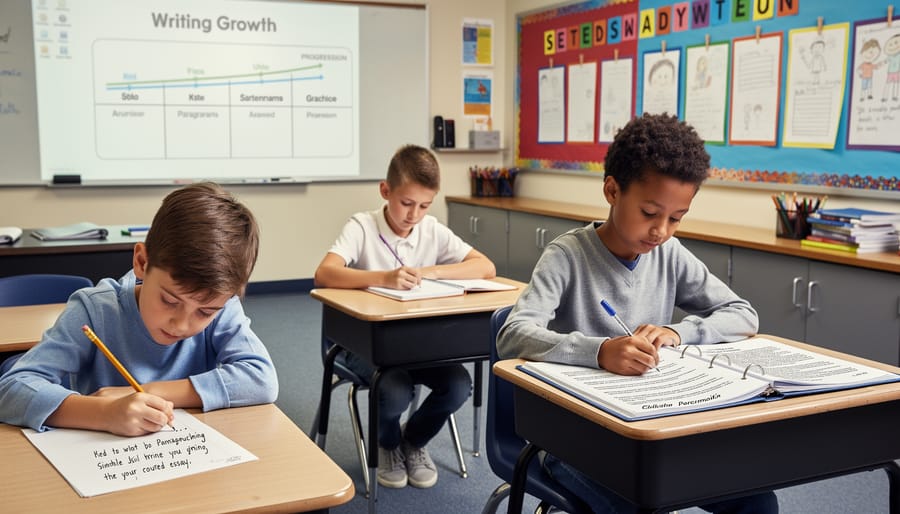
This is where students really start flexing their communication muscles! Writing and composition in Language Arts helps your 3rd-5th graders progress from crafting solid paragraphs to creating full multi-paragraph essays. You’ll guide them through the entire writing process—brainstorming ideas, drafting, revising, and editing their work until it shines.
Your students will explore different writing styles like narratives, opinion pieces, and informative texts. They’ll learn how to organize their thoughts with clear topic sentences, supporting details, and strong conclusions. The beauty of this approach is that you can customize lessons based on where each student is in their writing journey. Some might need extra support with sentence structure, while others are ready to tackle more complex compositions. The key is making writing feel less like a chore and more like an exciting way to share their unique voices and ideas with the world!

Speaking and Listening
Here’s the thing many teachers forget: speaking and listening skills are just as important as reading and writing, yet they often take a backseat in our busy classrooms. In Language Arts, these communication skills get their moment to shine through presentations, class discussions, and collaborative activities.
Think about it—your students need to express ideas clearly during show-and-tell, listen actively during group projects, and participate respectfully in classroom debates. These are real-world skills that matter beyond test scores.
You can make speaking and listening fun by incorporating dramatic readings, partner discussions, or student-led presentations. The key is creating a safe space where every voice matters. Try rotating discussion roles so quieter students get practice leading conversations while talkative ones learn to listen.
Remember, active listening isn’t just sitting quietly—it’s about asking follow-up questions, making eye connections, and responding thoughtfully. When you intentionally build these skills into your Language Arts block, you’re preparing students for confident communication in every aspect of their lives.
Language Conventions
This is where the nuts and bolts of communication come together! In grades 3-5, students are building essential skills that make their writing and speaking crystal clear. Grammar instruction moves from basic sentence structure to complex sentences, proper verb tenses, and subject-verb agreement. Your students are also expanding their vocabulary daily, learning context clues, prefixes, suffixes, and how to use precise words that make their writing pop.
Spelling patterns become more sophisticated during these years. Students master common patterns, irregular words, and subject-specific terminology. Mechanics like capitalization, punctuation, and formatting get refined too. Think of these conventions as the toolkit students need for every reading and writing activity you plan.
The exciting part? These skills aren’t taught in isolation anymore. Whether you call your class English or Language Arts, you’re weaving these conventions into authentic reading and writing experiences. Students learn commas through their own story writing, practice vocabulary in book discussions, and apply grammar rules in real contexts. This integrated approach helps concepts stick and gives students confidence as communicators.
Which Term Should You Actually Use in Your Classroom?
What Your State Standards Say
Here’s the easiest way to find out what terminology your state prefers: head straight to your state’s Department of Education website! Most states clearly label their curriculum documents, and you’ll quickly see whether they use “English Language Arts,” “Language Arts,” or simply “English.”
Want a shortcut? Check out how your state standards are officially titled in your curriculum guides or report cards. The terminology used there is your go-to reference for consistency.
Why does consistency matter? Using the same language as your state standards helps you communicate more clearly with parents, align your lesson plans with official requirements, and ensure you’re covering all the right bases. Plus, when you’re searching for resources or professional development opportunities, using your state’s preferred term will lead you to exactly what you need.
The good news? Regardless of what your state calls it, you’re teaching the same essential skills—reading, writing, speaking, listening, and language. Focus on bringing those skills to life through engaging, interactive activities that get your students excited about learning!
Making It Clear for Students and Parents
The best way to clear up confusion? Be upfront and friendly about it! When introducing the subject to students, you might say something like, “In our Language Arts class, we’re learning everything about English—reading stories, writing our own ideas, and becoming better communicators!” This shows they’re learning the same valuable skills, just under a slightly different name.
For parents, try a quick note home or mention it during back-to-school night. Keep it simple: “You might see ‘Language Arts’ or ‘ELA’ on our schedule and materials. This is what many of us grew up calling ‘English class’—we’re covering reading, writing, speaking, listening, and grammar, all rolled into one exciting subject!”
Consider creating a fun classroom poster that breaks down what Language Arts includes. Make it visual and colorful, showing reading books, writing stories, giving presentations, and listening to others. Students love seeing the big picture of what they’re learning.
When talking with colleagues or administrators, use whichever term your district prefers in official documents, but don’t stress about switching between them in casual conversation. The important part is that everyone understands you’re teaching essential communication skills that help students express themselves and understand the world around them.
Making ELA Fun and Engaging for Elementary Students
Review Games That Cover All Four ELA Components
Ready to bring all four ELA components together in one exciting activity? Interactive games are perfect for reinforcing reading, writing, speaking, and listening skills simultaneously!
Think about a game like “Story Chain,” where students read a prompt, write their own creative continuation, speak their ideas aloud to teammates, and listen carefully to build on each other’s contributions. You’re hitting all four components without it feeling like separate lessons.
Review games work especially well because they naturally encourage communication. Students read questions together, discuss possible answers (speaking and listening), and often write responses on whiteboards or digital devices. The competitive element keeps energy high while the collaborative aspect ensures everyone participates.
The beauty of game-based learning is the customization factor. You can adapt any review game to emphasize whichever ELA component needs extra attention that week. Maybe your students need more practice with listening skills? Create a game where clues are read aloud only once. Working on writing? Add a written explanation requirement before teams can submit answers.
When students are engaged and having fun, they don’t realize they’re practicing multiple skills at once. That’s the magic of combining all four ELA components through interactive classroom activities!
Customizing Activities for Different ELA Skills
The beauty of language arts instruction is that one activity can target multiple skills with simple tweaks! When planning games and review activities for your grades 3-5 classroom, think about how you can adapt them to focus on different ELA components.
For reading comprehension, turn any game into a passage-based challenge. Students answer questions about a short text before earning their turn. Grammar games work wonderfully when you customize question cards around specific standards like subject-verb agreement or comma usage that your students need extra practice with.
Writing skills shine when you incorporate quick-write rounds. Have students craft descriptive sentences, practice dialogue punctuation, or revise weak sentences before moving forward in the game. Speaking and listening standards come alive when you add presentation elements or partner discussions to your activities.
The key is matching your current teaching focus with the game format. Teaching figurative language this week? Swap out vocabulary cards for simile and metaphor examples. Working on main idea? Use summary questions instead. This customization keeps your review sessions aligned with standards while maintaining the fun, engaging atmosphere that helps concepts stick. Plus, students stay motivated because the familiar game format feels comfortable even as the content challenges them!
Here’s the truth: whether you call it Language Arts or English in your classroom doesn’t matter nearly as much as what you’re actually teaching. The label on your lesson plans isn’t what transforms students into confident readers, creative writers, and effective communicators. What matters is embracing the beautiful, messy, interconnected nature of language learning.
Think of it this way—reading comprehension improves when students write about what they’ve read. Writing skills flourish when students study how other authors craft their sentences. Speaking and listening become more powerful when connected to meaningful texts and authentic purposes. These skills don’t live in separate boxes, and your instruction shouldn’t either.
So rather than worrying about which term appears on your door or in your communications home, focus your energy on creating those rich, integrated experiences where students see language as a living, breathing tool they can wield. Make it exciting by letting students create their own stories, debate ideas from their reading, and present their learning in creative ways.
The beauty of modern language arts instruction is the flexibility it gives you to customize learning for your unique group of students. Some days you’ll dive deep into a novel study. Other days you’ll focus on grammar through mentor sentences. Every activity, regardless of what you call the subject, builds toward the same goal: helping students become powerful communicators.
Call it what feels right for your school community, teach it with enthusiasm and purpose, and watch your students thrive. That’s what really counts.