
Why Your Review Games Fall Flat (And How Standards Alignment Fixes Everything)
Map your state standards to specific, measurable learning objectives before creating any lesson or assessment. Start by identifying the exact standard code and unpacking what students must know and do, then write objectives using action verbs like “analyze,” “compare,” or “create” that match the standard’s cognitive level.
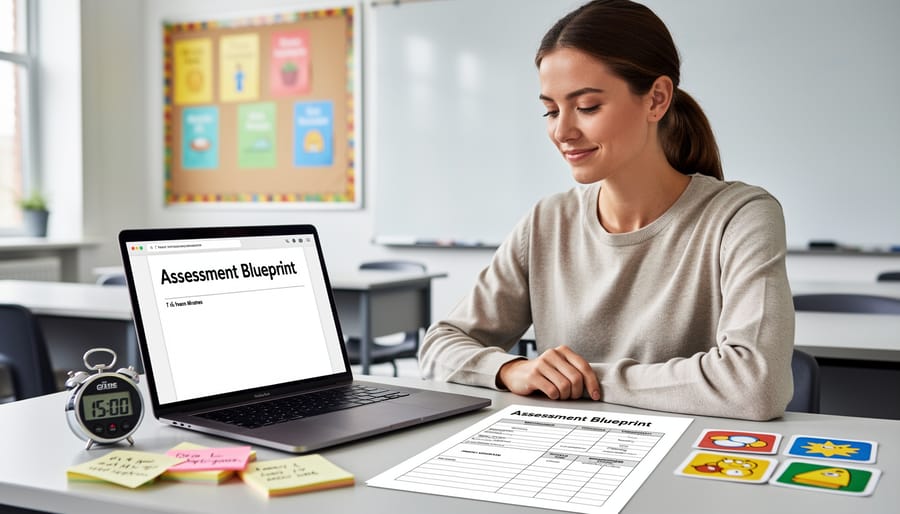
Build your assessment blueprint by creating a simple spreadsheet with three columns: standard code, learning objective, and assessment method. This visual alignment tool instantly shows you whether your tests, quizzes, and classroom activities actually measure what you’re teaching, making administrator reviews and parent conferences much easier.
Transform alignment checks into engaging learning experiences by incorporating standards-aligned review games that reinforce specific objectives while keeping students motivated. Tag each game question with its corresponding standard so you can track which objectives need more practice and which students have mastered the content.
Create reusable templates for common standards in your grade level or subject area. Once you’ve aligned a standard with well-crafted objectives, save that template for future lessons and share it with colleagues. This collaboration saves everyone time while ensuring consistency across classrooms and preventing the frustration of reinventing the wheel every unit.
What Standards Alignment Actually Means for Your Classroom
Let’s make this simple: aligning standards and learning objectives just means making sure what you’re teaching matches what students are supposed to learn according to your district or state guidelines. Think of it as connecting the dots between official expectations and your daily classroom activities.
Here’s a real-world example. Your state standard might say “students will analyze character development in literary texts.” Your learning objective for the day becomes “students will identify three ways the main character changes throughout Chapter 5.” See the connection? The objective is specific and measurable, while the standard is broader.
Why does this matter for assessments and review games? Because when you create standards-aligned materials, you’re building a clear pathway from what you teach to how you assess student understanding. If your standard focuses on multiplication fluency, your review game questions should test that skill, not just basic addition.
The beauty of this alignment is that it protects your instructional time. When an administrator asks why students are playing a game during class, you can confidently explain exactly which standard you’re addressing and how the game measures student progress toward that goal.
Think of standards as your destination and learning objectives as your GPS directions. Standards tell you where to go, and objectives break down the turn-by-turn route. Your assessments, including fun review games, are checkpoints along the way that confirm students are actually making progress. When everything aligns, you’re not just keeping students engaged; you’re strategically moving them toward mastery while having documentation to prove it.

The Assessment Blueprint: Your Game-Changer for Review Games
What Goes Into an Assessment Blueprint
Think of an assessment blueprint as your teaching roadmap – it’s where all the pieces come together to create meaningful evaluations. At its heart, you’ve got four essential components that make everything click.
First up are your standards – those official benchmarks that guide what students should know and be able to do. Next, you’ve got learning objectives, which are your personalized translations of those standards into specific, measurable classroom goals. Together, these two create the foundation for solid assessment planning.
The third piece is cognitive levels, and this is where things get exciting! You’ll want to map out whether you’re asking students to recall information, apply concepts, analyze situations, or create something new. Think of it as making sure you’re not just testing memory – you’re checking the full range of thinking skills.
Finally, there’s question distribution, which is basically deciding how many questions address each objective and cognitive level. This ensures you’re giving appropriate weight to the most important concepts while still covering everything students need to know.
The beauty of this system? You can customize it to fit your unique classroom needs. Whether you’re planning a quick review game or a comprehensive unit test, these four components keep your assessments focused, fair, and aligned with what truly matters for student learning.
Creating Your First Blueprint in 15 Minutes
Ready to create your blueprint? Let’s walk through this together! You’ll be amazed at how quickly you can set up a solid foundation for your review game.
Start by grabbing a piece of paper or opening a simple document. At the top, write down your main learning objective for the upcoming unit or lesson. Keep it specific and actionable. For example, instead of “Students will understand fractions,” try “Students will be able to compare and order fractions with different denominators.”
Next, pull up your state or district standards. Don’t panic! You’re just looking for the one or two standards that directly connect to your learning objective. Write down the standard code and a quick phrase to remind yourself what it covers. This step literally takes two minutes once you know where to find your standards.
Now comes the fun part. List out 3-5 key concepts or skills students need to master to achieve that objective. Think of these as the building blocks. For our fraction example, you might include: identifying equivalent fractions, finding common denominators, and using visual models to compare fractions.
Here’s your quick customization moment. Decide how you want to assess each concept. Will students solve problems? Match examples? Explain their thinking? Jot down one assessment type next to each concept.
Finally, assign a rough percentage or number of questions to each concept based on its importance. If comparing fractions is your main focus, maybe that gets 40 percent of your review game questions, while the other concepts split the remaining 60 percent.
That’s it! You’ve just created a simple blueprint that ensures your review game actually measures what matters. Now you’re ready to build something engaging that truly supports student learning.
Item Mapping: Making Sure Every Question Counts
How to Map Questions to Standards
Ready to connect your game questions to standards? It’s easier than you think! Let’s walk through a simple process that’ll have you creating perfectly aligned activities in no time.
Start by identifying your specific learning objective. For example, if you’re teaching third-grade math, your standard might be “Students will multiply one-digit whole numbers by multiples of 10.” Write this down where you can see it clearly.
Next, craft questions that directly assess this skill. Here’s the magic part: each question should require students to demonstrate the exact knowledge stated in your standard. For our multiplication example, a great question might be “What is 7 × 30?” Notice how it matches perfectly with what students need to know?
Think about different question formats to keep things exciting. Multiple choice works wonderfully for quick checks, but don’t forget about true/false statements or fill-in-the-blank options. Mix them up to maintain engagement while staying laser-focused on your objective.
Here’s a pro tip: create a simple chart with two columns. In the left column, list your standards. In the right column, write corresponding questions. This visual mapping makes it super easy to spot any gaps and ensures every question has a purpose.
Remember, customization is your friend here! Adapt questions to match your students’ interests. Teaching fractions? Use pizza slices or video game scores as context. When students connect with the content, they’re more likely to demonstrate true mastery of your standards.
Balancing Fun and Rigor in Your Questions
Here’s the good news: aligning to standards doesn’t mean your game questions have to be boring! You can absolutely create review games that students love while still hitting those important learning objectives at the appropriate depth.
Start by checking the cognitive level required by your standard. If it asks students to “analyze” or “evaluate,” your game questions need to go beyond simple recall. Instead of asking “What is photosynthesis?” try “Why would a plant struggle to survive without access to sunlight?” This keeps the game engaging while assessing higher-order thinking.
Mix up your question formats to maintain energy in the room. Use multiple choice for quick-fire rounds, but throw in short answer questions when you need students to explain their reasoning. You can even include scenario-based questions that feel like puzzles to solve, making rigorous content feel like a challenge rather than a chore.
Keep your language student-friendly, even when the content is complex. Standards often use formal academic language, but your game questions should speak directly to your students’ level. If you’re teaching middle schoolers about ecosystems, you don’t need to mirror the technical wording of the standard verbatim.
The sweet spot is creating questions that make students think critically while still moving at a game’s natural pace. When you customize questions to match both your standards and your students’ interests, you’ll see engagement soar without sacrificing academic rigor. Remember, the best game questions challenge students in ways that feel rewarding, not overwhelming.
Putting It All Together: From Blueprint to Game Day

Quick Customization Tips for Standards-Aligned Games
Ready to turn your assessment blueprint into an engaging game? Here are some quick customization tips that’ll make standards alignment a breeze!
Start by matching your questions directly to specific standards from your blueprint. If your blueprint shows that 40% of your assessment focuses on multiplication fluency, make sure roughly 40% of your game questions target that skill. This keeps your review proportional to what students will actually encounter on the test.
Mix up your difficulty levels strategically. Include easier warm-up questions at the beginning to build confidence, then gradually increase complexity. A good rule of thumb is the 60-30-10 split: 60% medium difficulty, 30% easier foundational questions, and 10% challenge problems. This distribution keeps all learners engaged without frustrating struggling students or boring advanced ones.
Don’t forget to customize the fun elements too! Add team names related to your content, incorporate student interests into question scenarios, or use point bonuses for questions tied to your most critical learning objectives. These small touches boost motivation while keeping the focus squarely on your standards.
Finally, test your game quickly before launching. Play through a few rounds yourself or with a colleague to ensure questions flow smoothly and difficulty feels balanced. You’ll spot any confusing wording or technical hiccups before game day, ensuring your carefully aligned review runs without a hitch!
Keeping Track Without the Headache
Tracking standards doesn’t have to mean drowning in spreadsheets! Keep it simple with a standards checklist right in your game notes. After each review game, jot down which standards you addressed—it takes just 30 seconds but saves you hours during unit planning or evaluation time.
Create a quick reference document with three columns: game date, standards covered, and student performance notes. Many teachers love using a simple Google Doc or even a dedicated section in their planner. Color-coding works wonders too—assign each standard a color and highlight games accordingly.
Here’s the best part: you don’t need to reinvent the wheel every time. Build a master list of your most-used review games and the standards they naturally align with. When you need to cover a specific objective, you’ll know exactly which game to pull out. This system keeps administrators happy while making your life easier—and that’s a win-win worth celebrating!
Here’s the good news: aligning your review games with standards doesn’t mean sacrificing the energy and excitement your students love. In fact, it does the opposite. When you map your game questions to specific learning objectives using a simple blueprint, you’re not just creating fun—you’re creating purposeful, defensible learning experiences that pack a real punch.
Think of it this way: you’re already putting in the effort to create engaging review activities. By adding this straightforward item mapping approach, you’re transforming those games into powerful assessment tools that give you genuine insights into student understanding. Your administrators will appreciate the clear connection to standards, and your students won’t notice any difference except maybe that your questions hit exactly what they need to practice.
You don’t need fancy software or hours of extra planning. Just your blueprint, thoughtful question design, and the same creativity you already bring to your classroom. The result? Review games that are every bit as exciting as before, but now they’re backed by solid educational rationale. You’ve got this, and your students will thank you for keeping learning both rigorous and ridiculously fun.