
Why Your K-2 Students Struggle with Reading (And the Skills That Fix It)
Foundational literacy skills form the building blocks that transform beginning readers into confident, fluent learners. These essential abilities—phonemic awareness, phonics, fluency, vocabulary, and comprehension—work together like puzzle pieces, each one supporting your students’ journey toward reading success. When you understand how these five components connect and reinforce each other, you can create purposeful lessons that meet every learner where they are.
The exciting part? Teaching foundational literacy doesn’t mean endless worksheets or rigid drills. Your K-2 classroom can buzz with energy through interactive games, movement-based activities, and customizable practice that keeps students engaged while building critical skills. Whether you’re helping a kindergartener distinguish between similar sounds or guiding a second grader toward reading fluency, you have countless creative options to make learning stick.
This guide breaks down each foundational literacy component with crystal-clear explanations and practical classroom activities you can implement tomorrow. You’ll discover how to assess where your students are, adapt instruction to different learning styles, and use game-based strategies that turn practice time into the highlight of your literacy block.
What Foundational Literacy Skills Really Mean for K-2
Think of foundational literacy skills as the building blocks your students need before they can truly take off as readers and writers. These are the essential tools that make everything else possible in their literacy journey.
At its heart, foundational literacy is about five key areas working together. First, there’s phonological awareness—helping kids hear and play with the sounds in words, like clapping out syllables or recognizing rhymes. Next comes phonics, where students connect those sounds to actual letters on the page. Print concepts teach them how books work—that we read left to right, top to bottom, and that those squiggles on the page carry meaning.
Don’t forget fluency, which is all about reading smoothly and naturally, not just accurately. When students develop fluency, they can focus on understanding what they’re reading instead of struggling with each word. Finally, vocabulary gives them the word power they need to make sense of texts and express their ideas.
Here’s the exciting part: these skills don’t develop in isolation or in a strict order. Your kindergartner learning letter sounds is simultaneously building vocabulary and understanding print concepts. Your second grader working on fluency is still refining phonics knowledge with more complex words.
The beauty of foundational literacy skills is that they’re wonderfully teachable through engaging, interactive activities. You don’t need fancy programs or overwhelming lesson plans. What you do need is a clear understanding of what each skill looks like in action and creative ways to practice them. When students are having fun while learning these basics, they’re building confidence alongside competence—and that’s when the magic happens in your classroom.
The Five Core Skills Every Early Reader Needs
Phonemic Awareness: Hearing the Sounds
Phonemic awareness is all about hearing and playing with the individual sounds in words—before students even see letters! It’s purely auditory, which makes it perfect for quick, no-prep activities. Think of it as training your students’ ears to catch those tiny sound units that make up words.
Here are some activities you can try today: Start with sound isolation games where students identify the first, middle, or last sound in simple words like “cat” or “sun.” Try sound blending by saying individual sounds slowly (/c/ /a/ /t/) and having students blend them together. Sound segmentation works the opposite way—say “dog” and have students clap out each sound they hear. For added fun, use rhyming challenges or silly sound substitution games where changing one sound creates a new word, like turning “bat” into “cat.”
These quick exercises build the foundation for everything else in reading, so squeeze them into transitions, morning meetings, or brain breaks throughout your day!
Phonics: Connecting Letters to Sounds
Once students can hear individual sounds, phonics connects those sounds to written letters—and this is where reading really takes off! Phonics instruction shows children that letters and letter combinations represent specific sounds, giving them the tools to decode unfamiliar words independently.
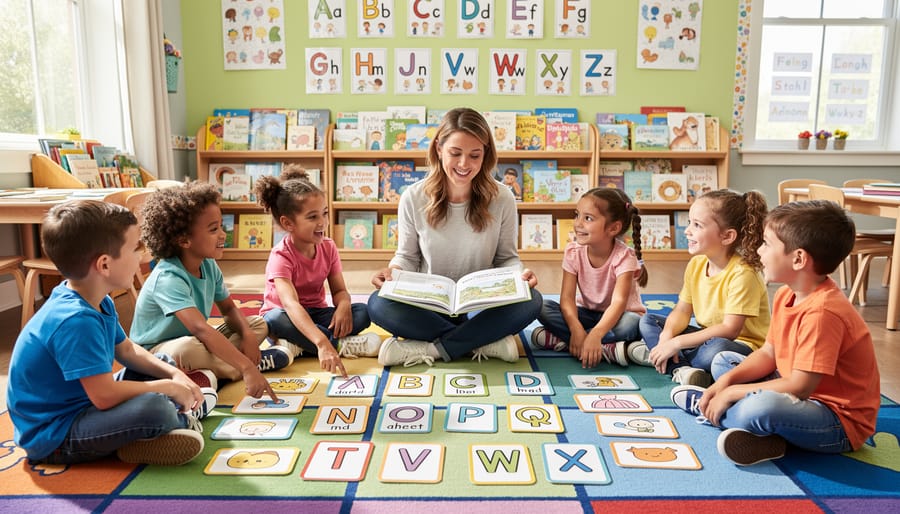
Start with simple letter-sound relationships using multisensory approaches. Have students trace letters in sand while saying the sound, or use letter cards paired with picture cues. Introduce consonant-vowel-consonant words like “cat” and “sit” early, allowing students to blend sounds together smoothly.
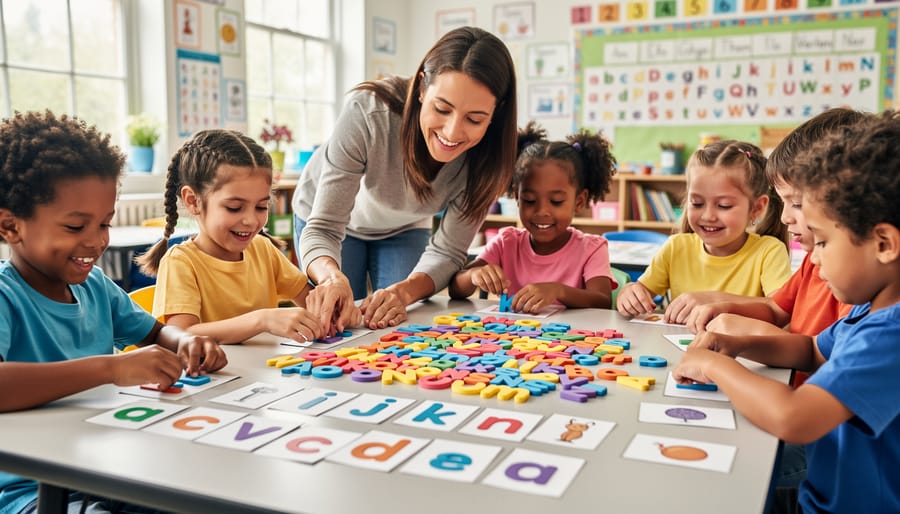
Make phonics stick by incorporating games and movement. Try sound sorting activities where students categorize objects by their beginning sounds, or create a classroom “word building station” with magnetic letters. The key is providing lots of practice in fun, low-pressure ways that build confidence.
Remember to teach phonics patterns systematically—starting with single consonants and short vowels before moving to blends, digraphs, and more complex patterns. When students can customize their learning pace and see their progress through engaging activities, they stay motivated and develop stronger decoding skills that support lifelong reading success.
Fluency: Reading with Confidence
Fluency is where all the pieces come together! When students read fluently, they’re not just identifying words—they’re reading smoothly, with appropriate speed and expression. Think of fluency as the bridge between decoding and understanding. Without it, students spend so much mental energy figuring out words that comprehension suffers.
Here’s what makes fluency so powerful: students need to read with accuracy, speed, and prosody (that natural rhythm and expression). When kids read a sentence in a choppy, word-by-word manner, they often miss the meaning. But when they read smoothly, they can focus on what the text actually says!
Building fluency takes practice in a supportive environment. Repeated reading activities work wonders—having students reread familiar texts builds confidence and automaticity. Partner reading, echo reading, and reader’s theater are fantastic classroom strategies that make practice feel like play rather than work. The goal is to help students move beyond laborious decoding to confident, expressive reading that sets them up for deeper comprehension and a genuine love of reading.
Vocabulary: Building Word Power
Building rich vocabulary in K-2 classrooms doesn’t require fancy programs—just intentional, playful strategies! Start by introducing 3-5 new words weekly through read-alouds, choosing terms students can use across contexts. Create word walls at student eye level, adding pictures and simple definitions they help create.
Make vocabulary stick through multiple exposures. Play word hunt games where students find their vocabulary words during center time, or act out action words during transitions. Use the words yourself throughout the day—”Let’s observe the weather” instead of just “look at.”
Turn word learning into celebration! Host vocabulary parades where students wear word badges, or play quick matching games before dismissal. Encourage students to catch you or classmates using target words, creating excitement around language. Remember, young learners need to hear, see, say, and play with words at least 10-12 times before truly owning them. Keep it fun, visual, and connected to their world!
Comprehension: Understanding What They Read
Comprehension is where all the reading pieces come together! Even young readers can develop understanding skills before they’re fluent decoders. Start by having students predict what a story might be about based on the cover or pictures. During read-alouds, pause to ask simple questions: “What do you think will happen next?” or “How does this character feel?”
Encourage students to retell stories in their own words using picture cues or story props. This helps them organize information and remember key details. Make connections explicit by asking, “Does this remind you of anything?” Young readers learn that reading isn’t just about saying words correctly—it’s about making meaning.
Create opportunities for students to act out stories or draw what happened in beginning, middle, and end sequences. Use graphic organizers with pictures to help them visualize story elements. When students see themselves as meaning-makers rather than just word-callers, their motivation and confidence soar! Remember, comprehension skills grow stronger when reading feels purposeful and fun.
Making Phonics Fun: Game-Based Learning That Works
Let’s be honest—worksheets have their place, but nothing beats the energy and excitement that games bring to your literacy lessons! When students are having fun, they’re more engaged, more motivated, and more likely to retain what they’re learning. The best part? You don’t need fancy equipment or hours of prep time to make phonics practice enjoyable.
Game-based learning transforms foundational literacy skills from abstract concepts into hands-on experiences. Think about it: when kids play a word-building race, they’re not just practicing phonics—they’re actively problem-solving, collaborating with peers, and building confidence with every correct answer. The immediate feedback that games provide helps students recognize their progress in real-time, which is incredibly powerful for young learners.
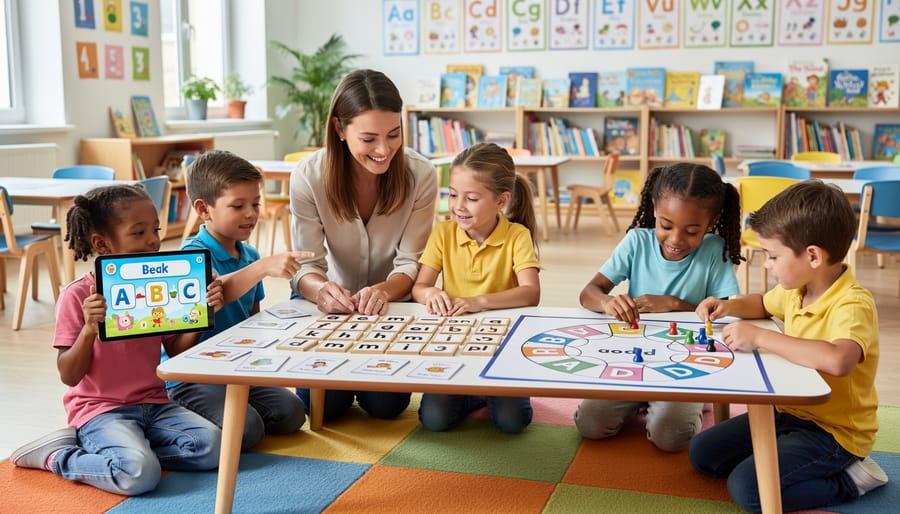
Here are some practical strategies to get you started. Sound matching games work wonderfully for phonemic awareness—students can race to find picture cards that start with the same sound, or play “sound detective” to identify mystery phonemes. For phonics instruction, try letter tile games where students build words by combining different letter patterns. You can easily adapt the difficulty by changing which letter combinations are available.
Sight word practice becomes instantly more engaging with movement-based games. Set up a sight word scavenger hunt around your classroom, or create a “word hop” where students jump to different words as you call them out. These activities get kids moving while reinforcing essential vocabulary.
The real game-changer is using customizable templates that let you tailor activities to your students’ specific needs. Maybe your class is struggling with particular vowel sounds this week—create a focused game targeting just those sounds. Next week, when they’ve mastered those, swap in new content without reinventing the wheel. This flexibility means you can continuously meet students where they are while keeping the fun factor high.
Digital game templates offer even more possibilities. Students can practice independently or in small groups, and you can track their progress to identify who needs additional support. Plus, the interactive nature of digital games provides instant feedback and keeps students motivated through points, levels, or friendly competition.
Remember, the goal is making practice feel less like work and more like play. When you incorporate games regularly into your literacy instruction, you’re not just teaching skills—you’re building enthusiasm for reading that will last far beyond your classroom.
Red Flags: When Students Need Extra Support
Noticing early when students need extra support can make all the difference in their literacy journey. Here are some key signs to watch for in your classroom.
If a student consistently struggles to recognize letter names or sounds by mid-kindergarten, this signals a need for additional practice. Similarly, watch for children who have difficulty hearing rhymes or can’t break simple words into syllables, as these phonological awareness challenges can impact reading development.
Students who guess at words based on pictures rather than sounding them out, or those who frequently lose their place while reading, may need more foundational support. Difficulty remembering high-frequency words despite repeated exposure is another indicator worth noting.
Pay attention to reading behaviors too. Does the student avoid reading activities or show signs of frustration when asked to read aloud? These emotional responses often point to underlying skill gaps that need addressing.
The good news is that early intervention works wonders! When you spot these red flags, it’s time to provide targeted support through small group instruction, one-on-one practice, or engaging activities that build specific skills. Interactive games and customized practice sessions can make remediation feel fun rather than remedial.
Remember, every student learns at their own pace. These red flags aren’t labels but simply helpful indicators that guide you toward providing the right support at the right time. With patience, targeted practice, and motivating activities, students can build the confidence and skills they need to become successful readers.
Quick Wins: Daily Activities That Build Strong Readers
You don’t need elaborate lesson plans to make a big difference in your students’ literacy development. These quick, 5-10 minute activities fit perfectly into transition times, morning routines, or those few minutes before dismissal.
Start your day with Sound of the Day. Choose one phoneme and challenge students to find it in words around the classroom. Write student names on the board and circle the target sound. This simple activity sharpens phonemic awareness while building community.
Turn waiting time into learning with Rhyme Time Response. Say a word and have students give a thumbs up if they can think of a rhyme. Call on a few volunteers to share. It’s amazing how this quick exercise strengthens sound recognition and gets everyone engaged.
For sight word practice, try Speed Read Challenge. Flash five high-frequency words for three seconds each. Students read them chorally, then you mix up the order and repeat. The game-like pace keeps energy high and builds automaticity.
Letter Formation Races work wonders during brain breaks. Call out a letter and have students write it in the air, on their palm, or on a mini whiteboard. Race to see who can form it correctly first. This reinforces letter knowledge through movement and fun competition.
Create a Print Walk routine where students spot environmental print around the room. Point to labels, posters, or word walls and have students read them together. This connects literacy to their everyday world.
Review games add an extra layer of excitement to these activities. Transform any of these quick wins into team challenges where groups earn points for correct responses. The competitive element motivates students while you’re reinforcing essential skills in bite-sized, manageable chunks that fit seamlessly into your existing schedule.
Here’s the great news: foundational literacy skills are absolutely teachable, and every student can develop them with the right support and practice. You don’t need fancy programs or expensive materials to make a real difference in your classroom. The strategies we’ve shared, from phonemic awareness games to vocabulary building activities, are designed to fit seamlessly into your daily routine while keeping students engaged and excited about learning.
Remember, these five foundational skills work together like building blocks. When you strengthen one area, you’re naturally supporting the others too. The interactive games and customizable activities you implement today are creating confident, capable readers for tomorrow.
Start small if you need to. Pick one strategy that resonates with you and try it this week. Notice how your students respond, adjust the activities to fit their needs, and celebrate every success along the way. Your enthusiasm and commitment to these foundational skills truly shape your students’ entire academic journey. You’ve got this, and your students are lucky to have a teacher who’s invested in giving them the strongest literacy foundation possible. Now go make reading fun and watch your classroom transform.