
Why Your Classroom Games Fall Flat (And How Debrief Templates Fix It)
Transform your classroom games from fun activities into powerful learning experiences by pairing them with structured debrief sessions. The Thoughtful Classroom Teacher Effectiveness Framework gives you a research-backed approach to maximize student growth through intentional reflection, ensuring every game reinforces core skills and concepts.
Start by identifying specific learning objectives before introducing any game. Ask yourself: What academic or social-emotional skill should students strengthen through this activity? This clarity helps you design targeted reflection questions that connect play to curriculum standards.
Build reflection into your game routine using templated debrief questions that students can answer in just 5-10 minutes. Create a simple framework that asks students to describe what happened, analyze their strategies, and apply insights to future learning. Customize these templates based on grade level and subject area so they feel natural, not forced.
Leverage the four cornerstone components of effective teaching—clarity, challenge, culture, and captivation—as your debrief anchors. When students reflect on how they collaborated, problem-solved, or persevered during gameplay, they’re developing metacognitive skills that transfer across all learning contexts.
Save precious planning time by creating reusable reflection templates you can adapt for different games and subjects. Focus on open-ended prompts that encourage critical thinking rather than simple recall, and watch as your students begin making meaningful connections between classroom activities and real-world applications. This intentional approach transforms every game into a documented learning opportunity that demonstrates measurable academic growth.
What Makes a Classroom Game Actually Effective?
Here’s the thing about classroom games: students love them, but that excitement doesn’t always translate into lasting learning. You’ve probably experienced this yourself. Your class had an absolute blast playing a review game on Friday, but come Monday’s quiz, it’s like they never encountered the material at all.
This is the classic engagement versus retention gap, and it’s where many well-intentioned games fall short.
The Thoughtful Classroom framework helps us understand why this happens. Games alone create what researchers call “active experiencing,” but without intentional reflection, that experience just floats away like confetti after a party. Students remember the fun, the competition, maybe who won, but the actual content? Not so much.
Here’s the game-changer: the magic doesn’t happen during the game itself. It happens afterward, in the debrief.
Think of it this way. The game is like taking students on a field trip through the content. They’re moving, experiencing, and engaging with concepts in action. But without stopping to process what they saw and learned, they’re just tourists snapping photos without really understanding where they’ve been.
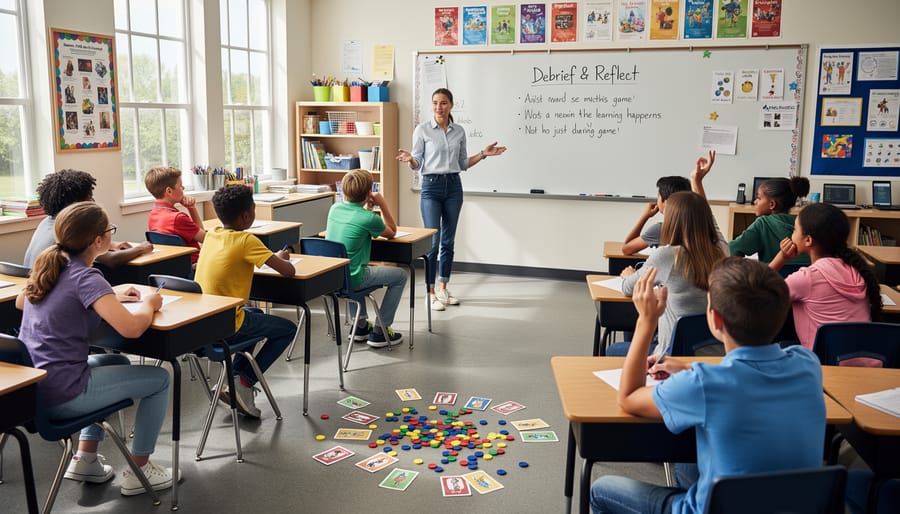
The debrief is where you guide students to connect their gaming experience to the learning objectives. It’s where they articulate what strategies worked, identify patterns they noticed, and cement the knowledge they gained. This structured reflection transforms a fun activity into a powerful learning tool that sticks.
When you pair engaging differentiated game strategies with purposeful reflection time, you’re not just entertaining your students. You’re creating meaningful learning experiences that actually move the needle on understanding and retention.
The Thoughtful Classroom Framework: Your Game-Changing Secret
The Three Pillars That Transform Game Time into Learning Time
Think of game-based learning like a three-legged stool. Remove one leg, and the whole thing topples. The Thoughtful Classroom framework gives us those three essential supports that turn fun into genuine learning.
First up is engagement—the game itself. This is what gets students excited and willing to participate. Whether it’s a review game, a simulation, or a competitive challenge, the activity needs to capture attention and keep energy high. But here’s the thing: engagement alone isn’t enough. A room full of excited students doesn’t automatically equal learning.
That’s where cognitive challenge comes in. This is the meaty content hidden inside the game. Are students actually wrestling with grade-level concepts? Are they making decisions, solving problems, or applying knowledge in new ways? The best classroom games sneak rigorous thinking into the fun, making students work their brains without realizing how hard they’re working.
Finally, we have reflection—the debrief that happens after the game ends. This is where the magic really happens. Without structured reflection, students might remember the fun but forget the learning. By tracking student engagement during debriefs and asking targeted questions, you help students cement their understanding and connect game experiences to real learning objectives.
When all three pillars work together, you create powerful learning moments that stick with students long after the game ends.
Building Your Debrief & Reflection Toolkit
Quick-Fire Debrief Questions (5 Minutes or Less)
Time is precious, and your debrief doesn’t need to be long to be effective! These quick-fire questions get straight to the heart of learning in five minutes or less. Start with strategy-focused prompts like “What strategy helped your team succeed?” or “If we played again, what would you change?” These help students identify winning approaches while reinforcing critical thinking.
Next, tap into their aha moments with questions like “What concept surprised you today?” or “What was trickier than you expected?” These reveal misconceptions and solidify understanding. For collaborative games, try “How did your team work together?” or “What role did you play in your group’s success?” to highlight teamwork skills.
Keep a few adaptable templates on hand that work for any game. Consider questions like “What’s one thing you’ll remember from today?” or “How does this connect to what we learned yesterday?” You can even let students choose their favorite question from a posted list, giving them ownership of their reflection.
The beauty of quick-fire questions? They’re customizable, repeatable, and perfect for those last few minutes before the bell rings. Your students get meaningful closure, and you gain valuable insight into their learning journey.
The ‘3-2-1’ Reflection Template
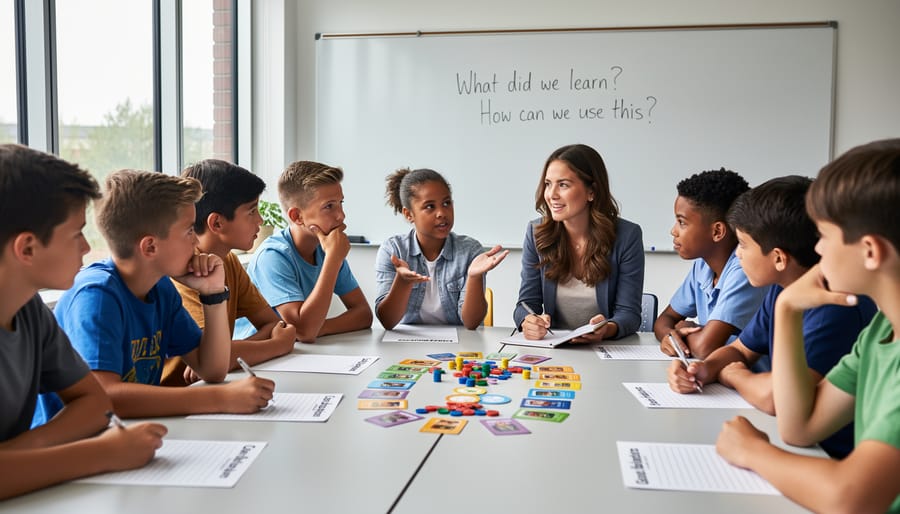
This framework is a classroom favorite for good reason—it’s simple, effective, and gets students thinking! Here’s how it works: students identify 3 things they learned, 2 things they found interesting or surprising, and 1 question they still have. The beauty of this template is its flexibility across any game or subject area.
Want to customize it? Try adapting the prompts to match your specific learning goals. For math games, change it to “3 strategies I used, 2 mistakes that taught me something, 1 concept I want to practice more.” After a history simulation game, use “3 historical facts I discovered, 2 connections to today’s world, 1 person’s perspective I’d like to understand better.”
The magic happens when you make it subject-specific! Science teachers might use “3 observations, 2 patterns, 1 hypothesis,” while language arts classes could reflect on “3 vocabulary words, 2 character traits, 1 plot question.” You can even involve students in creating their own 3-2-1 variations—talk about ownership of learning!
Keep the template visible on an anchor chart or digital slide so students can reference it quickly after gameplay. This structure takes just five minutes but delivers lasting learning insights.
Team vs. Individual Reflection: When to Use Which
Choosing between team and individual reflection depends on your learning goals and game structure. Use team debriefs when you want students to build collaboration skills, share diverse perspectives, or when the game itself involved group work. These collaborative discussions help students learn from each other’s strategies and develop communication skills. They’re perfect for complex games where multiple approaches led to success, and you want the whole class to benefit from varied insights.
Switch to individual reflection when you need to assess personal understanding, track individual growth, or address differentiated learning objectives. This approach works brilliantly for competitive games where students experienced different outcomes, or when you’re targeting specific skill development that varies by student. Individual reflection also gives quieter students space to process without group pressure.
Here’s a time-saving tip: mix both! Start with two minutes of individual journaling, then move into small group sharing. This combination ensures every voice counts while still building that collaborative energy. You can also customize based on your classroom dynamics—some groups thrive on discussion, while others need quiet processing time first.
Digital and Paper-Based Reflection Options
The beauty of reflection is that it doesn’t have to be complicated or one-size-fits-all! You have the freedom to choose what works best for your classroom setup and your students’ needs.
Going digital? Google Forms are your best friend for quick, organized feedback. Create a simple form with a few reflection questions, share the link after your PowerPoint game, and watch the responses roll in. You can analyze patterns, track progress over time, and even share results with students to celebrate their growth. Exit tickets work wonderfully too, whether you use a digital platform or good old-fashioned paper slips that students hand you on their way out the door.
Prefer paper-based options? Printable templates give you that tangible connection and work perfectly when tech isn’t available. The customization possibilities are endless! Add your school logo, adjust questions to match specific learning objectives, or include fun graphics that match your game theme. Keep a stack of templates ready to go, and you’ll always be prepared for meaningful post-game reflection.
Mix and match based on the day, the activity, or student preferences. Some kids love typing their thoughts, while others prefer writing by hand. Offering both options shows you value different learning styles and keeps reflection fresh and engaging for everyone.
Customizing Debrief Templates for Your Classroom Games
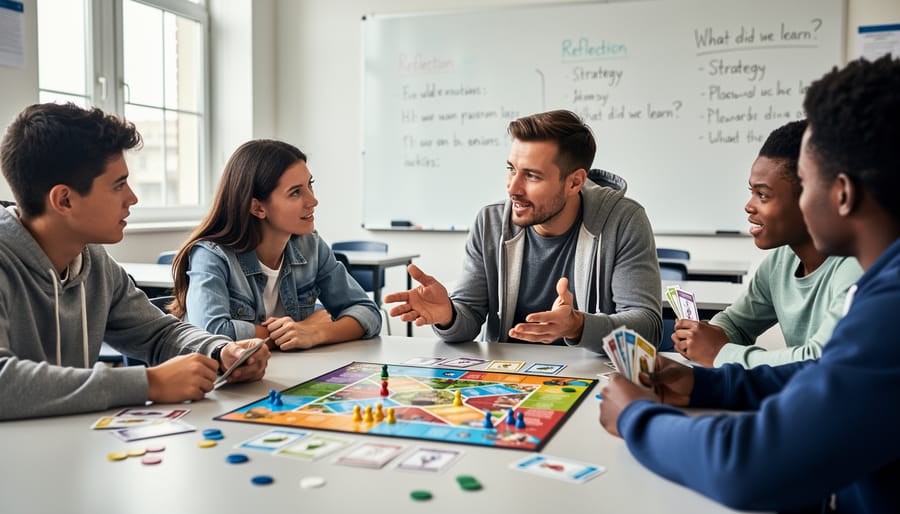
The beauty of debrief templates is that they’re incredibly flexible. Once you understand the basic structure, you can adapt them to fit any game format and subject area you’re teaching.
Start with a simple 3-2-1 reflection template as your foundation. For board games and physical activities, add movement-based questions like “What strategy helped you advance the most spaces?” For card games, focus on decision-making: “Which card played taught you the most about today’s concept?”
PowerPoint review games deserve templates that connect competitive elements to learning. Try questions like “How did working under time pressure affect your recall?” or “What patterns did you notice in the questions you got correct versus incorrect?” These prompts help students move beyond just winning to understanding how they learn.
For different grade levels, adjust the complexity and number of questions. Elementary students do well with three simple prompts using sentence starters. Middle schoolers can handle deeper analysis with four to five questions. High school students benefit from open-ended reflections that connect game experiences to real-world applications.
Subject-specific customization makes templates even more powerful. Math games should include questions about problem-solving strategies and calculation methods. Language arts games work well with prompts about vocabulary retention and comprehension techniques. Science games can explore hypothesis testing and evidence-based thinking that happened during gameplay.
Keep a master template document where you store different versions for quick access. Create one folder for game types and another for subjects. This organization saves precious planning time and ensures you always have the right reflection tool ready.
Remember, you don’t need to reinvent the wheel each time. Pick your favorite three questions, swap out one or two based on the game format, and you’re ready to go. The goal is making reflection routine, not making extra work for yourself.
Making Reflection a Habit (Without Adding Hours to Your Prep)
Let’s be honest—adding one more thing to your already packed teaching schedule sounds about as appealing as lunch duty on pizza day. But here’s the good news: reflection doesn’t have to mean extra work when you build it directly into your game routines.
Start by creating a simple template you can reuse with any game. Think of it as your reflection go-to that works whether you’re reviewing fractions or state capitals. A quick three-question format works wonders: “What strategy helped you most?” “What surprised you?” and “How will you use this learning?” Print it on colorful cardstock, laminate it, and you’ve got a durable tool that lasts all year.
When you customize your classroom games, add a reflection slide right into your PowerPoint. Make it the final screen students see before they pack up. Include prompts, sentence starters, or even emojis to help students express their thinking. The key is making reflection as automatic as distributing game pieces.
Establish class norms early so reflection becomes expected, not optional. Try “No game ends without our two-minute think time” as your classroom motto. Soon, students will automatically anticipate that debrief moment.
Use quick strategies like turn-and-talk partners, exit tickets, or thumbs-up ratings to keep things moving. Not every reflection needs to be elaborate—sometimes a simple “What’s one thing you’ll remember from today’s game?” captures exactly what you need.
The magic happens when reflection becomes part of your routine, not an add-on. Your students will start thinking more deeply without you adding hours to your prep time.
Here’s the truth: effective teaching isn’t just about making class fun. It’s about intentional design that transforms engaging activities into powerful learning experiences. Those classroom games you already love? They have incredible potential, but without structured reflection, students might remember the excitement without retaining the lesson.
The good news is that adding a thoughtful debrief doesn’t require overhauling your entire teaching approach. Start small. Choose one debrief template from this framework and try it with your next classroom game. Watch what happens when you pause for just five minutes to guide students through reflection questions. You’ll notice the difference in their ability to articulate what they learned, connect concepts, and apply knowledge later.
Remember, those small reflection moments create big learning gains. When students actively process their experiences, they move from surface-level engagement to deep understanding. That’s where the magic happens, and that’s what transforms you from a good teacher into a truly effective one.
Ready to elevate your classroom games? Pick one template, give it a try, and watch your students’ learning soar. You’ve got this!