Why Student Educational Games Transform Your Classroom (And How to Choose the Right Ones)
Student educational games transform abstract concepts into hands-on learning experiences that stick. They boost engagement, reinforce skills through repetition without monotony, and give you immediate feedback on what students have mastered and where they still need support.
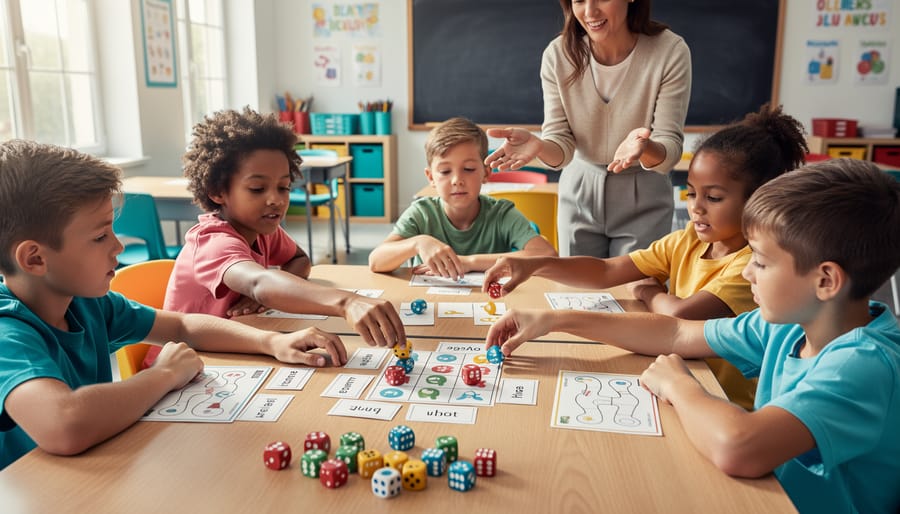
The best educational games share three core features: clear learning objectives tied to your curriculum, mechanics that require students to apply knowledge rather than guess, and built-in adaptability so every learner finds the right challenge level. You don’t need fancy technology or a big budget. Simple word races can build vocabulary as effectively as digital apps, and quick math challenges using nothing but dice can sharpen number sense in minutes.
The real power comes from choosing games that match your specific teaching goals and then customizing them to fit your classroom. Maybe you need a five-minute warm-up to review yesterday’s lesson, or perhaps you want a full-period activity that lets students collaborate on problem-solving. Either way, you’re in control of the content, the pacing, and how you assess what students learn.
The key is finding games you can actually use tomorrow without spending hours on prep. This guide will walk you through selecting effective educational games, adapting them to your students’ needs, and implementing them smoothly so you spend less time planning and more time watching learning happen.
What Makes a Student Educational Game Actually Work
Not all games labeled “educational” actually teach. The difference between a game that works and one that wastes class time comes down to how well it balances entertainment with real learning goals.
The best student educational games have clear objectives that align with what you’re teaching. Before you introduce any game, you should be able to answer: What specific skill or concept will students practice? If the learning target is fuzzy, the game is probably just filler. Look for games where the fun mechanic and the learning are inseparable. In a great vocabulary game, for example, students can’t win without actually using the words correctly.
Age-appropriateness matters more than you might think. A game that’s too childish kills engagement with older students, while overly complex rules frustrate younger ones. The sweet spot is a game that feels just challenging enough without requiring a 15-minute explanation. If you spend more time explaining rules than actually playing, the game structure is too complicated for your classroom.
Implementation ease determines whether you’ll actually use the game more than once. Games requiring elaborate setup, special materials you don’t have, or significant advance prep usually get abandoned after the first attempt. The most effective educational games work with basic supplies you already have, adapt quickly to different class sizes, and let you customize content in minutes rather than hours.
Measurable outcomes separate educational games from pure entertainment. You should be able to observe what students know by watching them play. Whether through verbal responses, written answers, or demonstrated skills, the game should make learning visible. This built-in assessment quality means you’re not just keeping students busy; you’re gathering real data about their understanding while they’re having fun.
The Real Benefits Teachers See in Their Classrooms

Engagement That Actually Lasts
Games flip the script on review sessions that typically drain energy by the minute. When you announce a quiz-style game instead of worksheet practice, students who were slumping suddenly sit up straighter. That shift happens because games create stakes that matter to kids, friendly competition, team pride, or simply the chance to show what they know in a format that doesn’t feel like a test.
The attention holds because games build in natural checkpoints. Each round or question creates a mini-goal, giving students repeated bursts of accomplishment rather than one distant finish line. Research confirms what teachers observe daily: game-based learning improves outcomes precisely because this structure keeps brains actively processing rather than passively receiving. Even reluctant participants watch their classmates’ turns, waiting for their chance to contribute, a stark contrast to traditional review where many students mentally check out after answering once.
Building a Collaborative Classroom Culture
Educational games naturally break down the social barriers that can make some students feel isolated in traditional classroom settings. When you’re playing trivia in teams or racing to solve problems together, quieter students often find their voice because the game structure gives them a lower-stakes way to contribute. That shy kid who rarely raises her hand? She’s suddenly calling out answers and high-fiving teammates.
The beauty here is how games redistribute social capital in your classroom. Students who typically dominate discussions learn to listen and collaborate, while those who struggle academically might shine at strategy or encouraging teammates. You’ll notice students who usually work alone start seeking out partners for the next game day.
Team-based games especially create organic peer teaching moments. When partners need to agree on an answer, they naturally explain their thinking to each other, often more effectively than you could from the front of the room. This peer-to-peer learning sticks because it happens in their language, at their pace, without the pressure of teacher evaluation.
Types of Student Educational Games That Fit Any Lesson
Review Games for Test Prep and Reinforcement

When test day approaches, review games become your secret weapon for turning anxious cramming into confident preparation. Jeopardy-style formats work beautifully across subjects, create categories aligned with test topics and let teams compete to answer questions at varying difficulty levels. Quiz bowl games get every student involved through buzzers or hand signals, transforming passive review into active recall practice. For math and vocabulary, relay races where teams solve problems in sequence create movement and urgency that cement concepts. Digital platforms like Kahoot or Quizizz offer instant feedback and automatic scoring, perfect when you’re short on prep time. The key with review games that work is matching the format to your content, factual recall suits rapid-fire competition, while concept application needs games with discussion time built in. Rotate formats throughout your review unit so students stay engaged without the novelty wearing off before test day arrives.
Icebreakers and Team-Building Games
Games that break down social barriers work best when students don’t realize they’re opening up. At the start of the year or after long breaks, students often need a gentle push to reconnect with classmates they might not know well.
Two Truths and a Lie works wonders for building connections while practicing critical thinking. Students share three statements about themselves, and classmates guess which one is false. You’ll be surprised how much students reveal about their interests and backgrounds through this simple format.
For building collaboration skills, try Human Bingo with facts about your students. Create bingo cards with statements like “has traveled to another country” or “speaks two languages,” and students mingle to find classmates who match each square. The movement and conversation break down cliques naturally.
Would You Rather questions adapted to your subject area combine community building with content review. Math students might choose between solving equations or word problems, while literature classes could pick between reading genres. These choices spark discussions that reveal personalities while keeping academic focus.
The key is choosing games where participation feels safe and no one ends up singled out or embarrassed.
Subject-Specific Game Adaptations
The best student educational games flex to fit whatever you’re teaching. For math, swap numbers into any quiz-style format, fractions in a relay race, multiplication in a matching game, or word problems in a team challenge. Language arts thrives on vocabulary hunts, grammar races where students identify parts of speech, or storytelling games where teams build narratives together. Science adapts beautifully to classification games (sort organisms, label diagrams, match terms to definitions) or hypothesis challenges where students predict outcomes before revealing answers. Social studies works well with timeline ordering, map challenges, or connecting historical figures to events. The trick is to make games educational by switching the content while keeping the game structure intact. Once you find a format students love, you can reuse it across units by simply changing the question set, a Monday math game becomes Thursday’s history review with zero new rules to teach.
How to Choose Games That Match Your Teaching Style
The best educational games aren’t necessarily the most elaborate ones, they’re the ones that feel natural in your classroom. Start by thinking about how you already run your lessons, because a game that works seamlessly for one teacher might create chaos for another.
Consider your classroom management sweet spot first. If you thrive on structured routines with clear transitions, look for games with simple rules and predictable formats that students can follow independently once you’ve explained them. Games like relay races or board competitions work well here. If you’re comfortable with controlled chaos and can redirect energy quickly, more dynamic games with movement and multiple activities happening simultaneously might suit you better.
Your tech comfort level matters too. Don’t force yourself into digital platforms if you’d rather focus on teaching than troubleshooting login issues. Plenty of paper-based games deliver the same learning punch without the technical overhead. That said, if technology already flows naturally in your classroom, game apps and interactive displays can save you prep time while offering built-in tracking features.
Here’s a practical way to narrow down your choices:
- Identify your specific lesson objective, what exact skill or knowledge should students practice?
- Decide whether you need individual accountability or team collaboration for this content.
- Assess how much time you can dedicate, including setup and cleanup.
- Consider your current energy level and classroom mood, some days call for calm, focused games while others need movement.
- Pick two or three game options that meet these criteria and test the simplest one first.
Think about your students’ dynamics too. A competitive game might energize one class but create tension in another where relationships are still developing. Some groups need clear winners and scoring systems to stay motivated, while others respond better to collaborative challenges where everyone works toward a shared goal.
Match the game’s complexity to your available mental bandwidth. On days when you’re juggling parent conferences or upcoming deadlines, choose games you’ve used before or ones with minimal materials. Save the new experimental formats for weeks when you have energy to adapt on the fly.
Making Games Work With Minimal Prep Time
You don’t need hours of prep to make games work in your classroom. The secret is creating reusable systems that let you swap content without rebuilding the entire activity each time.
Start by building a game template library. Pick three or four game formats you’re comfortable with, maybe a Jeopardy-style review, a scavenger hunt, and a team competition. Create blank templates in Google Slides or PowerPoint where you can simply drop in new questions each week. Once the structure exists, updating content takes minutes instead of starting from scratch every time.
Keep question banks organized by unit in a simple document or spreadsheet. When you teach a topic, jot down five to ten potential review questions right then, while the material is fresh. This running list becomes your game content source. Before a review session, copy questions into your template and you’re ready to go.
Use student-created content to cut your workload. Have students submit three questions about the current chapter as exit tickets or homework. Review submissions for accuracy, then plug the best ones directly into your next game. Students love seeing their questions featured, and you’ve crowdsourced most of your prep.
Digital platforms with pre-built games can save enormous time, but don’t overlook simple analog options. A basic whiteboard relay race requires zero setup beyond writing problems on the board. Flashcards you already own become instant game components for around-the-room scavenger hunts or matching challenges.
The real time-saver is repetition. Once students know how a game works, you skip the lengthy rule explanations. Apply those game design secrets to a few reliable formats, then rotate the content rather than inventing new games constantly.
What to Do When Games Don’t Go as Planned
Even the best-planned games hit snags. The key is having quick fixes ready so you can keep the momentum going without derailing your lesson.
When participation feels lopsided, assign rotating roles before the game starts. Designate question readers, scorekeepers, or team spokespersons to give quieter students structured ways to contribute. For overly dominant players, try using a “no repeat” rule where students can’t answer consecutive questions until everyone on their team has had a turn.
Technical problems demand simple solutions. If your digital game won’t load, switch to a paper version of the same content. Keep a set of dry-erase boards or index cards handy as universal game materials that work without technology. When a game runs too short, have extension questions prepared or invite students to create their own questions for a bonus round.
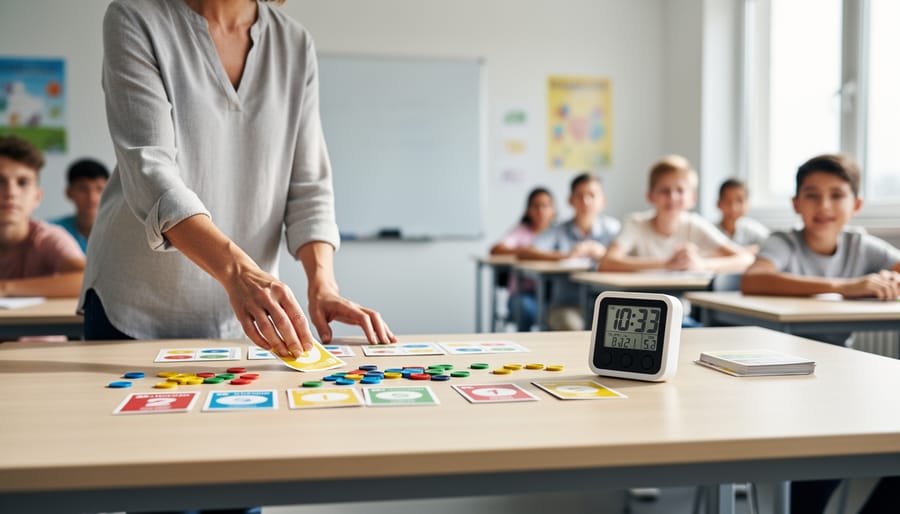
For games that drag on, set a timer from the start and announce you’ll play until the buzzer regardless of the score. This prevents the “just one more question” creep that eats into your next activity. If competition gets too heated, pause and remind students that the goal is learning together, not winning at all costs. Sometimes switching from elimination-style games to point-based formats where everyone keeps playing reduces the intensity.
The best troubleshooting happens before problems arise. Do a quick practice round with simple questions so students understand the mechanics before the real content begins.
Student educational games aren’t just for Fridays or the last week before break. They’re practical tools that make your everyday teaching more effective. When you see students who normally zone out suddenly leaning forward during a review game, or struggling learners finally grasping concepts they’ve been avoiding, you’ll understand why these games deserve a regular spot in your lesson plans.
Start with one game format that feels manageable. Maybe it’s a simple quiz-style game for vocabulary review, or a team challenge you can set up in five minutes. Try it once, see what works, tweak what doesn’t, and build from there. Your game toolkit will grow naturally as you discover which formats your students respond to best.
The truth is, making learning fun isn’t frivolous. It’s strategic. Students remember what engages them, and they show up ready to participate when they know your classroom includes moments of joy alongside hard work. Every time you turn a lesson into a game, you’re not just covering content, you’re building positive associations with learning that extend far beyond your classroom walls.