
Why Early Math Skills Matter More Than You Think (And How to Teach Them)
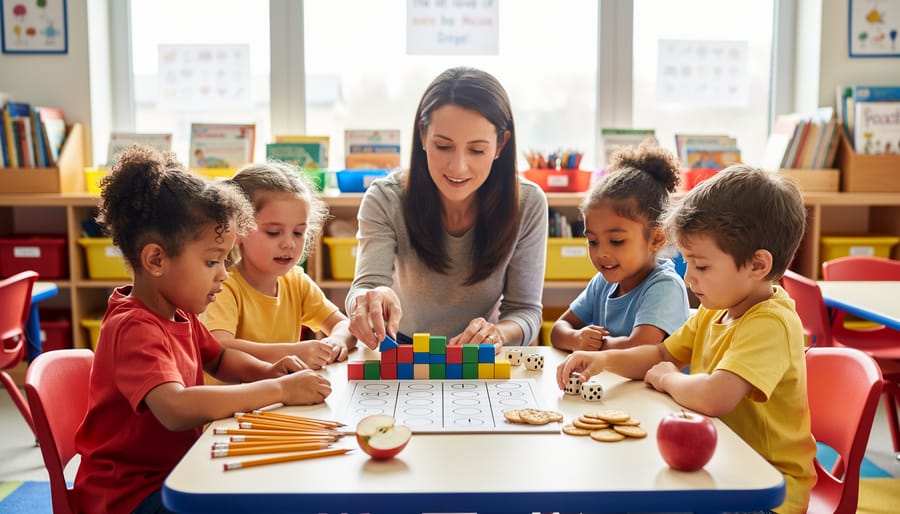
Build number sense from day one by having students count real objects daily—blocks, pencils, snacks—then progress to comparing quantities using “more than” and “less than” language naturally during classroom routines. Transform math centers into game stations where students roll dice, move game pieces, and collect points, making abstract concepts like addition and subtraction feel as natural as playtime. Connect mathematical thinking to literacy by recognizing that early math development parallels K-2 reading skills—both require consistent practice, pattern recognition, and building from concrete examples to abstract understanding.
Early mathematics in kindergarten through second grade sets the foundation for every mathematical concept your students will encounter in their academic careers. The key lies not in worksheets or rote memorization, but in creating environments where mathematical thinking happens organically through play, conversation, and hands-on exploration. Your K-2 classroom becomes a math laboratory when you weave numbers, shapes, and problem-solving into everything from morning routines to transition activities.
The beautiful truth about teaching early mathematics is that young learners are naturally mathematical thinkers—they sort, categorize, compare, and build patterns instinctively. Your role isn’t to force math into their world but to highlight the mathematics already happening around them and give them tools to explore these concepts deeper. Games provide the perfect vehicle for this exploration, turning practice into engagement and repetition into excitement.
What Early Mathematics Really Means for Young Learners
Early mathematics in kindergarten through second grade isn’t about memorizing multiplication tables or solving complex equations. Instead, it’s about building the essential thinking skills that help young learners see themselves as mathematicians from day one. When we talk about early math, we’re really talking about laying a strong math foundation that will support everything your students learn in the years ahead.
So what does early mathematics actually include? Think of five core areas that work together like building blocks. First, there’s number sense, which means understanding what numbers represent and how they relate to each other. Your students are developing this when they count objects, compare quantities, or recognize that seven is more than five. Then we have patterns, where children learn to recognize, predict, and create sequences that help them understand order and relationships.
Measurement comes next, introducing concepts like longer and shorter, heavier and lighter, and the idea that we can compare and quantify the world around us. Geometry isn’t just about naming shapes. It’s about helping kids understand spatial relationships, recognize attributes, and see how shapes make up their environment. Finally, data skills teach young learners to collect, organize, and interpret information, starting with simple graphs and picture charts.
Why are these K-2 years so critical? Because this is when children form their mathematical identity. Students who experience success and engagement during these early years develop confidence that carries them through more challenging math later. When learning feels playful and accessible, you’re not just teaching content. You’re showing your students that math makes sense, that they can figure things out, and that mathematical thinking is something they can actually enjoy.
Building Blocks: The Five Essential Early Math Skills
Number Sense and Counting
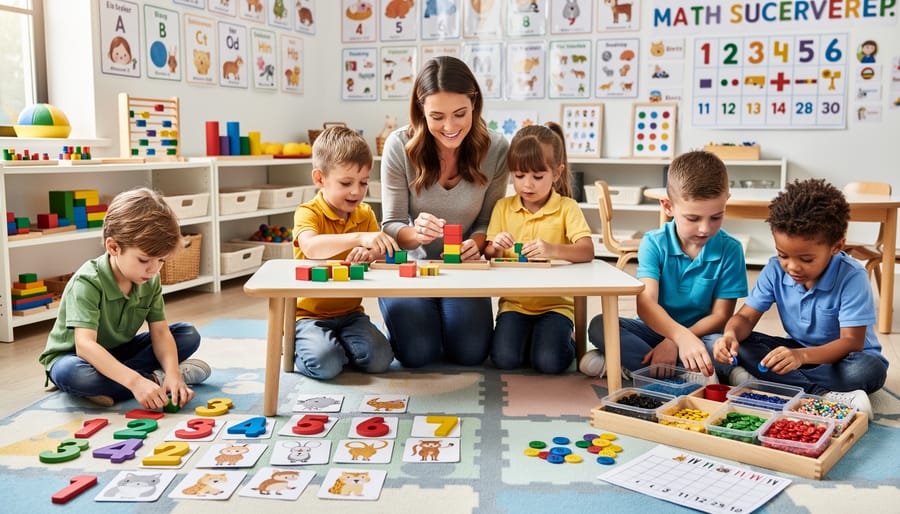
Number sense is where the magic begins! This foundational skill helps young learners understand that numbers represent actual quantities in the real world. Start by giving students hands-on experiences with counting objects like blocks, buttons, or snacks. One-to-one correspondence is key here—each object gets one number as they count. Make it fun by having students touch each item as they say the number aloud.
Try mixing up your counting strategies to keep things fresh. Count forwards, backwards, skip count by twos, or start from different numbers. Create opportunities for students to compare quantities using language like “more,” “less,” and “equal.” The beauty of building number sense is that you can customize activities based on what excites your students. Use their favorite toys, seasonal items, or even movements like jumps and claps. When students see math as playful exploration rather than memorization, they develop confidence and genuine understanding that will support all future math learning.
Basic Operations and Problem-Solving
Here’s where the magic really happens! Addition and subtraction come alive when students can see, touch, and manipulate real objects. Start with concrete materials like counting bears, blocks, or even snacks. Let kids physically combine groups to discover addition or remove items to explore subtraction. The key is making it hands-on and playful.
Try story problems that connect to their world: “If you have 3 toy cars and your friend gives you 2 more, how many do you have?” Encourage students to act out these scenarios or draw pictures before writing number sentences. This builds that crucial bridge between real-life situations and abstract math symbols.
Games are your secret weapon here! Create customizable activities where students roll dice and add the numbers, or use card games where they subtract to reach zero. The beauty is tailoring difficulty levels to match each learner’s needs. Celebrate every breakthrough, no matter how small, and watch your young mathematicians gain confidence as they solve problems independently.
Patterns and Relationships
Pattern work is where math gets really exciting! When your students recognize, create, and extend patterns, they’re building the thinking skills needed for algebra down the road. Start simple with AB patterns using colors, shapes, or movements—red block, blue block, red block—and watch their faces light up when they predict what comes next.
Make it interactive by having kids create human patterns in the classroom. One child stands, the next sits, the next stands—let them be the pattern! Once they master simple patterns, level up to ABC or AAB patterns. The beauty here is total customization. Use whatever materials you have on hand: blocks, stickers, sounds, or even snack items during math time.
Patterns aren’t just about objects either. Explore number patterns like counting by twos or finding patterns in the calendar. This builds number sense while developing logical reasoning. The key is keeping it playful and letting students discover patterns in their world, making them feel like math detectives uncovering secret codes.
Shapes, Spatial Awareness, and Measurement
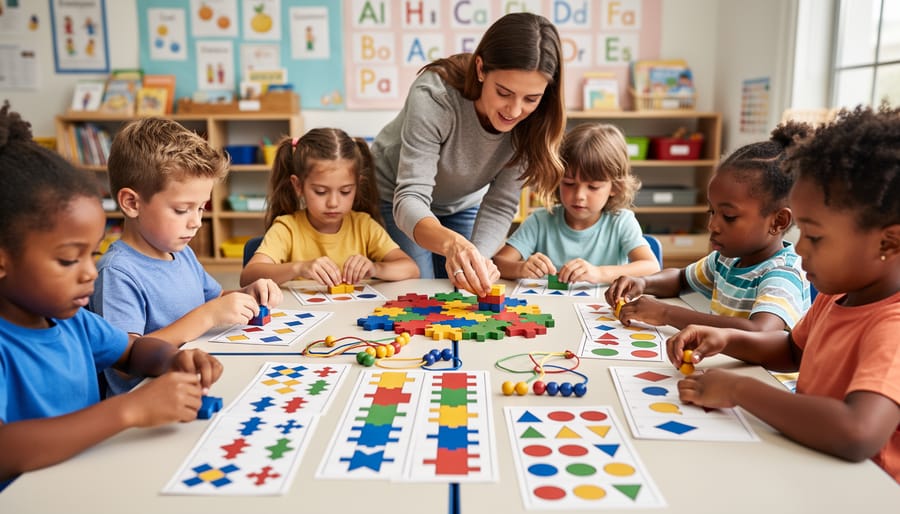
Young learners discover geometry naturally through play and exploration. Introduce basic shapes like circles, squares, triangles, and rectangles using hands-on manipulatives they can touch, stack, and sort. Try shape hunts around the classroom where students identify real-world examples, making connections between abstract concepts and their environment.
Spatial awareness develops when kids arrange blocks, follow directional instructions, and create patterns. Simple activities like building towers or placing objects over, under, and beside others build critical thinking skills.
For measurement, start with non-standard units like paper clips or blocks before introducing rulers. Have students measure classroom objects, compare lengths, and estimate sizes. This hands-on approach makes abstract concepts concrete and memorable.
Create customizable sorting stations where students group shapes by attributes or arrange objects from shortest to tallest. These engaging activities build foundational geometry skills while keeping learning fun and interactive for every student in your classroom.
Early Data Collection and Sorting
Data collection and sorting activities help young learners organize information and recognize patterns in fun, hands-on ways. Start with simple activities like sorting classroom objects by color, size, or shape. Use everyday items such as blocks, buttons, or crayons to make the experience tangible and engaging.
Introduce basic graphing by having students vote on their favorite snack or color, then create a picture graph using sticky notes or drawings. This visual representation makes abstract concepts concrete and exciting for young minds.
Try categorization games where students group items that belong together, like animals versus plants or things that are hot versus cold. These activities build critical thinking skills while keeping the learning playful and interactive.
The best part? You can customize these activities to match any theme or topic you’re teaching. Use seasonal items during holidays or connect sorting activities to your current science or social studies unit. Keep it simple, make it visual, and watch your students develop essential math skills through exploration and discovery.
Making Math Fun: Game-Based Learning Strategies
Board and Card Games for Number Fluency
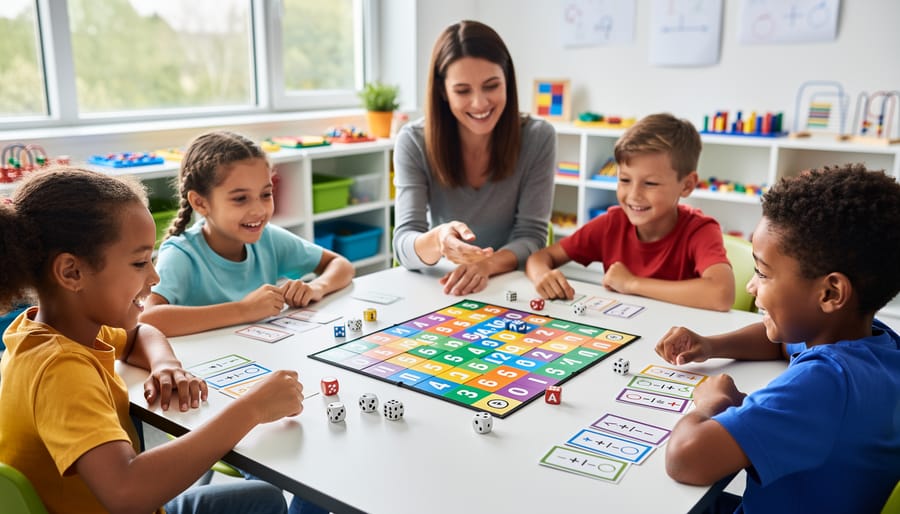
Board and card games are fantastic tools for building number fluency in your K-2 classroom! These hands-on activities naturally encourage counting practice while students engage in strategic thinking without even realizing they’re learning.
Classic games like dominoes help students recognize number patterns and practice addition through matching dots. Simple dice games turn counting into an exciting challenge, and playing cards become powerful tools for comparing numbers and building addition facts. You can easily customize these games to match your students’ skill levels by adjusting the number range or adding multiplication elements for advanced learners.
What makes these games truly special is how they promote peer learning. Students explain their thinking to classmates, count together, and celebrate each other’s progress. The competitive element keeps energy high while the repetitive nature builds automaticity with number facts.
Try creating a game rotation station in your classroom where students can choose from various options during math centers. Keep games quick, around 10-15 minutes, so everyone stays engaged. Remember, the goal isn’t just winning but building confidence with numbers through playful repetition. Your students will ask to play these games again and again, making math practice feel like pure fun!
Digital Review Games That Work
Digital review games bring energy and excitement to math practice while reinforcing essential early numeracy skills. PowerPoint-based game templates offer a perfect solution for busy teachers who want engaging game-based review activities without spending hours creating materials from scratch.
These customizable templates let you plug in your own math problems, whether you’re reviewing number recognition, basic addition facts, or shape identification. Popular formats like Jeopardy-style games, spinning wheels, and team competitions keep students motivated and participating. The beauty of these games is their flexibility—adjust difficulty levels, change questions on the fly, and reuse templates throughout the year with fresh content.
Built-in features like timers, point trackers, and animated elements add excitement without requiring technical expertise. Students stay focused because the game format transforms routine practice into something they actually look forward to. Plus, the whole-class participation format means everyone gets involved, making review time both productive and fun. Your students won’t even realize they’re building crucial math skills while they play.
Puzzles and Brainteasers for Problem-Solving
Puzzles and brainteasers are fantastic tools for building those essential problem-solving muscles in your K-2 classroom! Visual puzzles like pattern completion, shape sorting, and simple tangrams help young learners see math as an exciting challenge rather than just memorization. Try introducing picture-based logic puzzles where students figure out missing numbers in sequences or identify which shape comes next in a pattern.
The beauty of these activities is their flexibility. You can easily adjust difficulty levels to match your students’ abilities, making them perfect for differentiated instruction. Start with concrete, colorful puzzles and gradually increase complexity as confidence grows. Consider creating puzzle stations where students work in pairs, encouraging mathematical conversations and collaborative thinking. Even five minutes of daily brainteaser time can significantly boost critical thinking skills while keeping the energy fun and engaging. Remember, the goal is to make problem-solving feel like play, building a strong foundation for more complex mathematical reasoning down the road.
Creating a Math-Rich Classroom Environment
Transforming your classroom into a space where math naturally happens all day long doesn’t require a complete overhaul. With a few strategic additions and thoughtful routines, you can create an engaging learning environment where young learners see numbers and patterns everywhere they look.
Start with your morning routine. A daily calendar time becomes so much richer when you ask students to count the days of school, identify patterns in dates, and predict what day of the week next Friday will be. Add a weather chart where kids can graph daily temperatures or track sunny versus rainy days. These quick activities weave math into the fabric of your day without feeling like formal instruction.
Stock your classroom with manipulatives that students can access independently. Keep counters, linking cubes, pattern blocks, and number lines visible and within reach. When these tools are readily available, children naturally incorporate them into their play and problem-solving. Label shelves with quantities so putting away materials becomes a counting exercise.
Create dedicated math spaces around the room. Set up a measurement station with rulers, measuring tapes, and scales alongside objects to measure. Design a pattern corner with colorful materials for creating and extending sequences. Even your dramatic play area can include a pretend store with play money and a cash register for real-world math practice.
Visual aids make abstract concepts concrete. Display a hundreds chart at student eye level, hang number lines above your whiteboard, and create anchor charts showing different ways to represent numbers. Shape posters, addition and subtraction strategy charts, and visual references for comparing quantities help students independently access mathematical thinking throughout their day.
The key is making math visible, accessible, and inviting. When mathematical tools and concepts surround your students naturally, they begin to see math as something that belongs everywhere, not just during math time.
Common Challenges (And How to Overcome Them)
Teaching early math comes with its share of hurdles, but the good news is that every challenge has a solution that can transform your classroom experience.
One of the biggest obstacles? Mixed ability levels. In any K-2 classroom, you’ll likely have students who count confidently to 100 sitting alongside those still mastering numbers to 10. The key is differentiation without separation. Create learning stations with activities at varying difficulty levels, allowing students to work at their own pace while still participating in the same overall lesson. Offer extension challenges for quick finishers and provide manipulatives and visual supports for those who need extra help.
Math anxiety starts early, and even young learners can develop negative feelings about numbers. Combat this by celebrating mistakes as learning opportunities and emphasizing effort over perfection. Keep the atmosphere light and playful. When students view math as a game rather than a test, their confidence soars. Use encouraging language like “Let’s figure this out together” instead of focusing on right or wrong answers.
Keeping everyone engaged during whole-group instruction can feel like herding cats. The solution? Movement and interaction. Incorporate physical activities like number line hopscotch, counting jumps, or shape hunts around the classroom. Use turn-and-talk partners so every student gets to share their thinking, not just the hand-raisers.
Finally, time constraints make it tempting to rush through concepts. Resist this urge. It’s better to deeply explore fewer concepts than to superficially cover many. Build in review time through quick daily warm-ups and spiral practice that revisits previous skills. Remember, early math is about building a strong foundation, not racing to the finish line.
Here’s the truth: early mathematics doesn’t have to be intimidating for you or your students. If you’re feeling overwhelmed about where to begin, remember that small steps make the biggest difference. Start with one simple game-based activity this week, whether it’s a number recognition challenge or a quick skip-counting exercise. Your students will respond to your enthusiasm, and you’ll quickly see how naturally they absorb concepts when they’re having fun.
The beauty of game-based approaches is that they meet students where they are. You can customize activities based on your classroom’s unique needs, adjusting difficulty levels and themes to keep everyone engaged. Some students might need extra practice with basic counting while others are ready for simple addition, and games let you differentiate effortlessly.
Think about the long-term impact you’re creating. When students associate math with enjoyment rather than stress in these early grades, you’re building confident problem-solvers who approach challenges with curiosity instead of anxiety. That positive foundation carries them through their entire academic journey. So take a deep breath, embrace the playful side of teaching math, and watch your young learners thrive.