Why Culturally Responsive Teaching Isn’t Just Theory—It’s Your Classroom’s Missing Piece
Culturally responsive teaching is both a theoretical framework and a highly practical approach you can implement in your classroom starting tomorrow. At its core, it’s grounded in research about how students learn best when their cultural backgrounds, experiences, and identities are reflected and valued in the learning environment. But here’s the exciting part: this isn’t just an abstract concept gathering dust in academic journals.
You can weave culturally responsive practices into your daily lessons through simple adjustments to your existing activities. Think about the games and interactive tools you already use—these become powerful vehicles for inclusivity when you customize them to reflect your students’ diverse backgrounds. Incorporate names, stories, and examples from various cultures into your review games. Invite students to share their traditions and perspectives during class discussions. Design collaborative activities that celebrate different communication styles and ways of knowing.
The beauty of culturally responsive teaching lies in its flexibility. You don’t need to overhaul your entire curriculum or master complicated theories. Start small by getting to know your students’ cultural identities, then gradually adapt your teaching methods and classroom materials to honor their experiences. This practical, student-centered approach transforms theory into daily action that makes every learner feel seen, valued, and capable of success.
What Culturally Responsive Teaching Really Means (Beyond the Buzzwords)
The Three Core Pillars Every Teacher Should Know
Think of culturally responsive teaching as a three-legged stool. Remove one leg, and everything wobbles! These three pillars work together to create meaningful learning experiences for every student in your classroom.
The first pillar, academic success, means holding high expectations while providing the right support. Instead of watering down content, you’re meeting students where they are and building bridges to success. Picture this: when teaching fractions, you might connect the concept to cultural foods students actually eat at home, like cutting samosas or dividing plantains. Suddenly, math becomes relatable and achievable!
Next up is cultural competence, which helps students appreciate their own backgrounds while respecting others. This goes beyond celebrating heritage months. Try incorporating diverse perspectives into your everyday lessons and classroom games. When playing review games, include questions that reference different cultural contributions to science, literature, or history. You’re showing students that their identities matter in the learning space.
The third pillar, critical consciousness, empowers students to think deeply about the world around them. This doesn’t mean getting political—it means helping kids ask thoughtful questions and recognize different viewpoints. During group discussions or interactive activities, encourage students to consider: Who’s missing from this story? What other perspectives exist? You’re building future problem-solvers who understand complexity.
Here’s the exciting part: these pillars aren’t separate teaching strategies you add on. They’re woven into everything you already do, making your existing lessons richer and more engaging for everyone!
Theory vs. Practice: Where Culturally Responsive Teaching Actually Lives
Why This Matters for Your Classroom Games
Here’s the thing: understanding that culturally responsive teaching is both a theory and a practical framework changes everything about how you design classroom activities. When you’re creating review games, team challenges, or interactive learning experiences, you’re not just checking boxes for inclusivity. You’re actively building an environment where every student sees themselves reflected in the learning process.
Think about your next quiz game or team competition. Instead of using generic examples that only resonate with some students, you can customize questions and scenarios that connect to diverse cultural backgrounds and experiences. This matters because engagement skyrockets when students recognize their own stories and perspectives in the material.
The beauty of game-based learning is that it naturally supports culturally responsive teaching. Games give you flexibility to adapt content, create multiple pathways to success, and celebrate different ways of knowing. You can adjust team formations to honor various collaboration styles, incorporate diverse imagery and references, and design scoring systems that value different types of contributions. This isn’t extra work—it’s smart teaching that makes your existing games more effective for all learners.
Culturally Responsive Inclusive Play Design: Making Every Student Feel Seen
What Makes a Classroom Game Culturally Responsive?
Ready to level up your classroom games with culturally responsive practices? Here’s your go-to checklist for creating inclusive gaming experiences that celebrate every student!
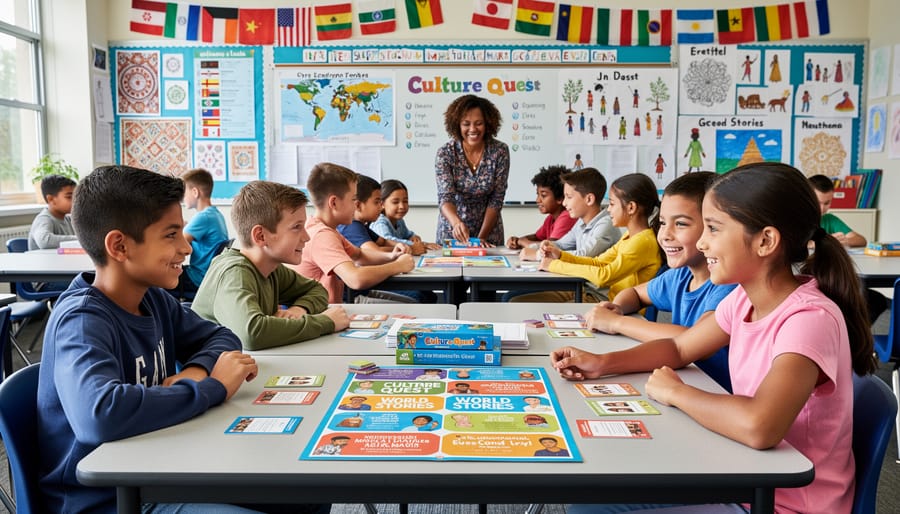
Start with representation in your content. Choose games that feature diverse characters, stories, and scenarios reflecting your students’ backgrounds. Include names, images, and examples from various cultures so every player sees themselves represented. This isn’t just nice to have—it’s essential for engagement and belonging.
Next, build in flexible participation styles. Not everyone shows their knowledge the same way! Design games where students can respond through writing, speaking, drawing, or even movement. Some learners thrive in competitive settings while others prefer collaborative play. Offer both options and watch participation soar.
Diverse question types matter too. Mix factual recall with open-ended questions that invite personal connections and cultural perspectives. Instead of only asking “What is the answer?” try “How does this connect to your experience?” This approach aligns beautifully with UDL principles, creating multiple pathways for student success.
Don’t forget acknowledgment of different cultural perspectives. Build games that recognize there might be multiple valid answers or approaches based on cultural context. Create space for students to share their unique viewpoints without judgment.
Finally, make customization easy! The best culturally responsive games let you swap out content, adjust rules, or modify challenges to fit your specific classroom community. When you can personalize the experience, you’re honoring the beautiful diversity right in front of you.
Remember, culturally responsive gaming isn’t about perfection—it’s about intention and continuous improvement!
Simple Ways to Adapt Your Existing Game Templates
Good news! You don’t need to create entirely new games from scratch to make them culturally responsive. Your existing PowerPoint templates, Jeopardy-style reviews, and classroom activities just need a few thoughtful tweaks. Here’s how to transform what you already have into inclusive learning experiences.
Start by diversifying your examples and questions. Instead of using the same names like “John” and “Mary” throughout, incorporate names from various cultural backgrounds like “Amir,” “Keiko,” “Santiago,” and “Zara.” When creating word problems or scenarios, feature foods, celebrations, and traditions from different cultures. This small change helps all students see themselves reflected in your materials.
Next, offer multiple ways for students to participate. Not everyone thrives in the same environment, so build flexibility into your games. Allow students to answer individually, in pairs, or as teams. Give options to write answers, speak them aloud, or draw responses. Some students might prefer using a whiteboard while others type on devices. This approach respects different learning styles and cultural communication preferences.
Tap into your students’ backgrounds by incorporating their experiences into game content. Survey your class about their interests, family traditions, and cultural celebrations. Use this information to create relevant questions and scenarios. When students encounter content that connects to their lives, engagement skyrockets.
Create culturally relevant questions that go beyond surface-level diversity. Instead of generic trivia, ask questions that encourage students to share their unique perspectives. For geography games, include countries where your students have family connections. In history reviews, highlight contributions from diverse cultures that standard textbooks might overlook.
Remember, making every student feel welcome means continuously adapting your materials. Start with one or two changes per game, then gradually add more inclusive elements. Your students will appreciate seeing their cultures valued in everyday classroom activities, and you’ll create a more engaging learning environment for everyone.
Real Classroom Wins: When Games Meet Cultural Responsiveness
Let’s look at how teachers are bringing culturally responsive principles to life through game-based learning!
Mrs. Rodriguez teaches 4th grade math and noticed her students struggled to connect with word problems about unfamiliar scenarios. She transformed her fraction unit by creating a customizable card game where students could choose problem contexts: tacos and empanadas, dim sum platters, or pizza parties. Suddenly, her English learners were volunteering answers because they saw their family meals reflected in the math. The game mechanics stayed the same, but the cultural windows made all the difference.
In Mr. Thompson’s high school history class, he designed a strategy game about global trade routes. Instead of the typical European-centered narrative, students could play from the perspective of African kingdoms, Asian merchants, or Indigenous nations. Players discovered how different cultures approached commerce, navigation, and diplomacy. The competitive element kept engagement high while expanding everyone’s worldview beyond the textbook.
Elementary teacher Ms. Patel uses play-based assessment through a phonics bingo game she customizes weekly. She includes student names, local landmarks, and culturally diverse vocabulary alongside standard sight words. Kids light up when they spot familiar references, and the game format removes testing anxiety.
Middle school science teacher Coach Williams created a habitat sorting game featuring ecosystems from every continent, highlighting how different cultures have adapted to their environments. Students research and present their assigned region, then the class plays together to review.
The pattern? These teachers didn’t reinvent teaching. They took existing game structures and added cultural mirrors and windows. Small tweaks, big impact. Your turn to try it!
Start Small: Your First Steps Tomorrow
Ready to transform your classroom starting tomorrow? Here’s the exciting part: you don’t need to overhaul everything at once. Small, meaningful changes create powerful impacts for your students.
Start by surveying your students about their interests, family traditions, and favorite activities. Create a simple interest inventory or have students share through drawings or conversations. This information becomes your goldmine for making every lesson more relevant and engaging.
Next, look at the games and activities you’re already using. Take that vocabulary matching game and swap in examples that reflect your students’ cultural backgrounds. Playing a trivia game? Add questions about diverse holidays, cultural contributions, and global traditions. These tiny tweaks make students feel seen and valued.
Build connections by inviting students to share stories from their families during game-based activities. When playing team games, let students teach the class a word in their home language or share a tradition. This transforms participation into celebration.
Create flexible grouping strategies that allow students to collaborate with different classmates. Mix things up regularly so everyone builds relationships across cultural lines while playing and learning together.
Finally, observe and adjust. Notice which students light up during activities and which seem disconnected. Use those observations to refine your approach, always asking yourself: “Whose voices are represented here, and whose might be missing?”
Remember, culturally responsive teaching isn’t about perfection. It’s about showing genuine interest in who your students are and weaving that understanding into everything you do. Start with one small change tomorrow, and watch the magic unfold.
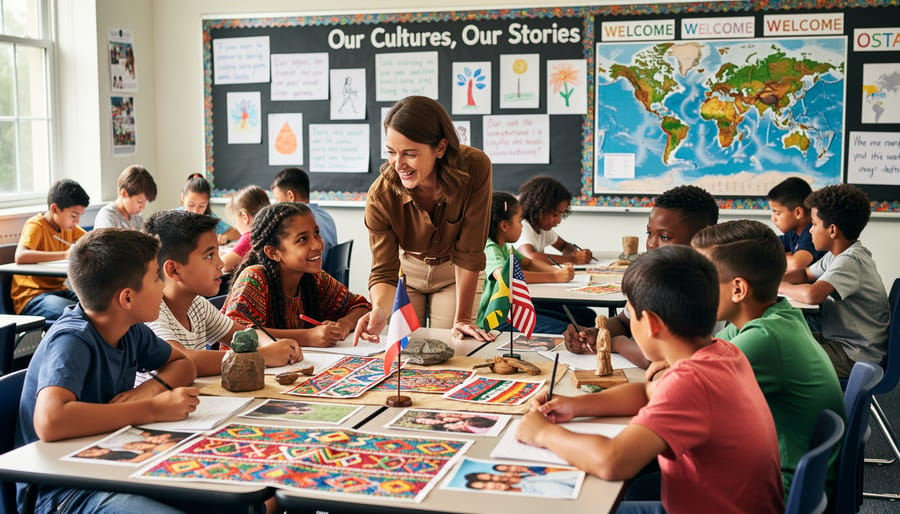
Here’s the exciting takeaway: culturally responsive teaching isn’t just theory sitting in textbooks—it’s a living, breathing approach that transforms your classroom right now. Think of it as your roadmap for creating game-based learning experiences where every student sees themselves reflected and valued. When you weave students’ backgrounds, languages, and experiences into your interactive activities, you’re not dimming the fun factor—you’re amplifying it! Games become more engaging when kids connect personally with the content. The beauty is in the customization: you can adapt any activity to honor diverse perspectives while keeping that energetic, playful atmosphere everyone loves. Start small by incorporating multicultural examples into your next classroom game or letting students share their cultural knowledge during activities. You’ll quickly discover that inclusive teaching doesn’t complicate things—it enriches them. Your students will feel the difference when they’re genuinely seen and celebrated, and that sense of belonging creates the foundation for memorable, joyful learning. So go ahead and make your classroom a place where theory meets practice, and every child thrives through play.