

Turn Any Lesson Into a Game Your Primary 2 Students Will Beg to Play Again
Grab ready-made game templates that work perfectly for your 7-8 year olds without spending hours on prep. Primary 2 students thrive with games that last 10-15 minutes, feature simple rules they can remember after one explanation, and include colorful visuals that hold their attention. Print game boards on cardstock, laminate for durability, and store components in labeled ziplock bags so everything stays organized between uses.
Choose games with built-in learning objectives that match your curriculum, whether you’re reinforcing math facts, building vocabulary, or developing social skills. The sweet spot for this age group combines movement with thinking—dice games for counting practice, matching activities for memory building, and turn-based formats that teach patience and following rules.
Customize any game by swapping out content cards to align with your current unit. Replace number cards with sight words, switch animal images to science vocabulary, or adapt scoring systems to challenge advanced learners while supporting students who need extra time. Keep multiple difficulty levels ready so every child experiences success while being appropriately challenged throughout your lesson.
Why Primary 2 Students Learn Best Through Play
At ages 7-8, Primary 2 students are bundles of energy with curious minds that are constantly exploring the world around them. Their attention spans typically last 15-20 minutes for traditional instruction, but watch them during playtime and you’ll see sustained focus that stretches much longer. That’s the magic of learning through games!
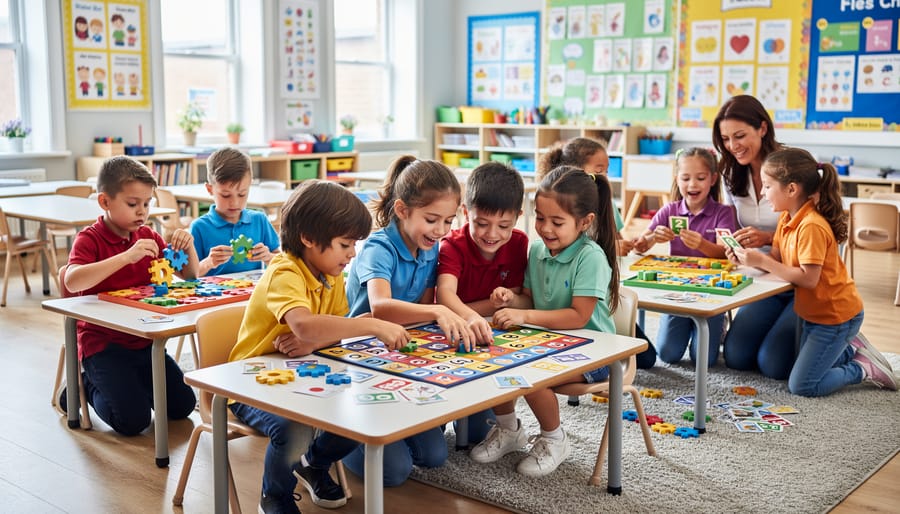
These young learners are at a perfect developmental stage where they’re building foundational skills while still needing plenty of movement and interaction. They learn best by doing rather than just listening, which makes game-based activities absolutely ideal for your classroom. When students manipulate game pieces, roll dice, or move around the room during a learning game, they’re processing information through multiple senses, making those concepts stick.
Games naturally match the enthusiasm Primary 2 students bring to school each day. They love friendly competition, enjoy working with classmates, and thrive on the immediate feedback that games provide. Plus, games create a safe space for practice where mistakes feel less scary and more like part of the fun.
The beauty of incorporating games is that you’re not just keeping students entertained – you’re tapping into how their brains naturally want to learn. When you’re making games work for all learners in your Primary 2 classroom, you’re setting up an environment where academic skills develop alongside social skills, all while students think they’re just having a great time.
What Makes a Great Primary 2 Classroom Game
Simple Rules They Can Remember
At this age, simplicity is your best friend! Primary 2 students thrive when they can grasp the entire game in under two minutes. Think about using mechanics they already know from everyday life. For example, roll a die and move that many spaces, flip a card and match the picture, or spin a spinner and follow the instruction. These familiar actions let kids focus on the learning content rather than struggling with complicated rules.
Choose games with just one or two steps per turn. A math game might be as simple as: draw a card, solve the problem, move forward if correct. That’s it! When you keep rules minimal, you’ll spend less time explaining and managing confusion, and more time on actual learning. Remember, seven and eight-year-olds are still building their ability to hold multiple instructions in their working memory, so one clear objective beats three confusing ones every time.
Visual and Colorful Components
Bright, colorful visuals are absolute game-changers for Primary 2 students! At this age, kids are still developing their reading fluency, so eye-catching pictures provide essential context clues that help them decode instructions and stay engaged. Think bold primary colors, clear illustrations, and simple graphics that instantly communicate what players need to do next.
When you choose or create game components, look for images that support the learning content while adding that wow factor. Picture-based game cards work beautifully because students can participate successfully even if they’re still building confidence with text. The visual elements act as scaffolding, letting every child jump right in without feeling overwhelmed.
The best part? Colorful games naturally motivate young learners and create an inviting classroom atmosphere. You’ll notice students are more eager to participate when materials look fun and approachable, making it easier to meet your learning objectives while keeping energy levels high.
Quick Rounds That Match Their Attention Span
Primary 2 students have vibrant energy but limited attention spans, making 10-15 minute game sessions the sweet spot for maximum engagement. This timing keeps activities feeling fresh and exciting while preventing restlessness or distraction. Structure your games with clear beginnings and endings so students know what to expect.
Break longer learning sessions into multiple mini-games rather than one extended activity. For example, play a quick vocabulary matching game, followed by a short movement break, then another round with different content. This approach maintains enthusiasm and gives you natural checkpoints to assess understanding.
Keep rules simple and jumpstart each game with a brief demonstration. Primary 2 learners thrive when they can dive right in without lengthy explanations. If a game is going really well, you can always run a second round, but stopping while excitement is high leaves students eager to play again tomorrow. This bite-sized approach respects their developmental stage while maximizing learning impact.
Essential Print-and-Play Game Components for Your Toolkit
Game Cards and Question Decks
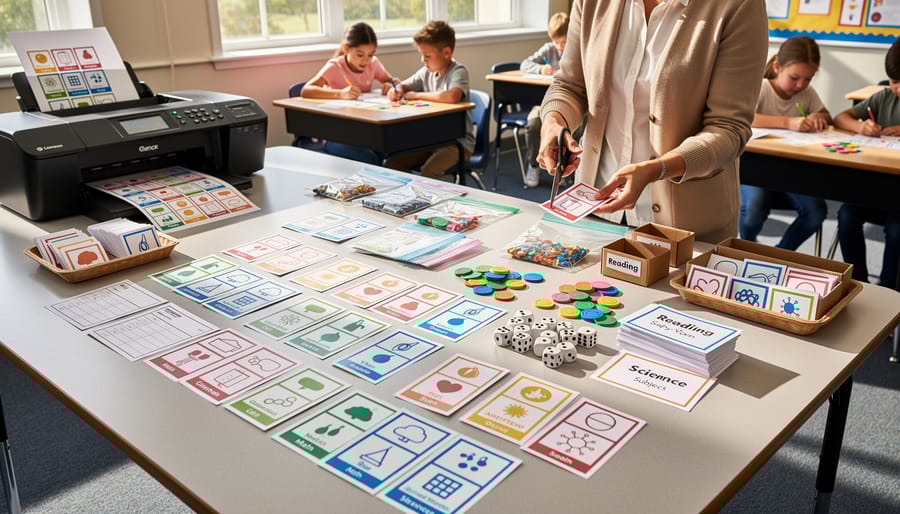
Game cards are absolute game-changers for Primary 2 classrooms! Start by creating themed card sets that match your current lessons. For vocabulary building, print cards with pictures on one side and words on the other. Math fact cards work wonderfully for addition and subtraction practice up to 20, while sight word decks help reinforce reading skills.
Design your cards to be simple and colorful, keeping them roughly the size of playing cards for little hands to manage. Use bright borders to color-code different subjects, making it easy for students to grab the right deck quickly.
Here’s a time-saving tip: laminate your card sets as soon as you print them. This small investment pays off tremendously, as laminated cards withstand enthusiastic seven and eight-year-olds throughout the school year. If a laminator isn’t available, clear packing tape works in a pinch for smaller sets.
Store cards in labeled ziplock bags, small plastic containers, or even decorative tins. This keeps sets organized and makes cleanup a breeze. Better yet, assign a classroom helper to be the “Card Keeper” each week, turning storage into a responsibility they’ll love.
Mix and match cards across different games like Memory, Go Fish, or simple matching activities to maximize their versatility.
Game Boards and Player Mats
Game boards add instant excitement to any lesson! For your Primary 2 classroom, printable board layouts offer fantastic flexibility across subjects. Race-to-the-finish style boards work wonderfully for math facts, spelling practice, or review questions. Students roll dice, answer questions, and move their game pieces toward the goal. The competitive element keeps them motivated while reinforcing learning objectives.
Collection grids are another winning format. Create simple grid layouts where students collect tokens or stickers for correct answers. These work brilliantly for vocabulary building, sight word recognition, or science facts. You can easily adapt the same grid for different topics throughout the week.
Want maximum versatility? Start with a blank board template and customize it for your current unit. Add your own spaces, challenges, and bonus squares using markers or stickers. This approach saves prep time and lets you tailor games to exactly what your students need.
Consider laminating your boards for repeated use. Students can mark progress with dry-erase markers or small manipulatives like buttons or coins. Simple player mats with designated spaces for collecting points or tracking progress help younger learners stay organized during gameplay.
Spinners, Dice Templates, and Randomizers
You don’t need fancy store-bought supplies to create engaging game components for your Primary 2 classroom! Simple print-and-play alternatives work beautifully and give you the flexibility to customize everything for your students’ needs.
Paper spinners are super easy to make. Print circular templates divided into sections, attach them to cardboard backing for durability, and secure with a brass fastener through a paper clip or arrow pointer. You can customize sections with numbers, colors, or even sight words depending on your learning goals.
Printable dice templates are another fantastic option. Download cube nets online, let students decorate them during art time, then fold and glue them together. These work great for math games and give kids ownership over their learning tools.
For digital options, a randomizer wheel displayed on your classroom screen adds excitement while keeping things fair. Students love watching the digital spinner land on their turn or answer choice, and you can adapt it instantly for different activities throughout the day.
Scoring Tokens and Reward Systems
Making progress visible really motivates Primary 2 students! Printable scoring tokens transform your games into exciting adventures where every achievement counts. Try creating colorful star chips that students can collect and stack on their desks, or design simple point tokens featuring friendly animals or shapes that resonate with seven and eight-year-olds.
Team markers work wonderfully for group games. Print different colored tokens for each team, letting students physically move their marker along a progress track. You can even customize tokens to match your current classroom theme, whether that’s space exploration, ocean creatures, or seasonal favorites.
Keep your reward systems simple and immediate. Primary 2 learners thrive when they can see and touch their accomplishments right away. Consider printing double-sided tokens with different point values, or create a collection sheet where students can place their earned stickers or stamps. The tangible nature of these tools makes abstract concepts like scoring concrete and exciting, keeping your young learners engaged throughout the game.
Three Ready-to-Use Primary 2 Game Ideas
Treasure Hunt Review Game
Get ready for an adventure! The Treasure Hunt Review Game transforms any subject review into an exciting quest your Primary 2 students will love. Simply create a path of spaces leading to a treasure chest (you can draw this on paper or use a printable board). Place question cards along the route covering topics you want to review—whether it’s spelling words, math facts, or science concepts.
Students roll a die and move their game piece forward, answering a question when they land on a space. Correct answers keep them moving toward the treasure, while incorrect ones mean they stay put for a turn. The beauty of this game is its flexibility—you can adjust difficulty levels and customize questions to match exactly what your class needs to practice.
Keep games short (10-15 minutes) to maintain energy and enthusiasm. Consider offering small rewards like stickers or classroom privileges when students reach the treasure to boost motivation and celebrate their learning progress.
Match and Win Memory Game
Memory games are absolute classroom favorites for Primary 2 students! This simple matching format works brilliantly for reinforcing vocabulary, math facts, or word-picture connections. Print two copies of your chosen content (whether that’s sight words, addition problems and answers, or vocabulary with corresponding images), then cut them into individual cards.
Spread all cards face-down on a table or floor space. Students take turns flipping two cards, trying to find matching pairs. When they make a match, they keep the cards and earn another turn. The competitive element keeps everyone engaged while the repetitive exposure helps cement learning naturally.
The beauty of memory games is how easily you can customize them to any subject area. Create number-numeral matches for math, English-Chinese word pairs for bilingual learners, or shape-name combinations for geometry practice. Start with 12-16 cards for manageable game lengths, and you can always add more pairs as students become confident. This game requires zero prep beyond printing and cutting, making it perfect for busy teaching schedules.
Team Challenge Relay
Get your Primary 2 students moving with this exciting relay game that combines physical activity with learning challenges. Create a set of printable task cards featuring age-appropriate activities like hopping to the board to solve a simple math problem, spelling a word while doing jumping jacks, or arranging picture cards in sequence. Divide your class into small teams of 4-5 students and set up stations around the classroom or outdoor area.
Each team member completes one challenge before tagging the next person to go. The beauty of this game is how easily you can customize the task cards to match whatever you’re teaching that week, whether it’s sight words, number facts, or science concepts. Print the cards on colorful paper and laminate them for durability.
This energetic game is perfect for those moments when your students need to burn off some energy while still staying focused on learning. You can adjust the difficulty and number of challenges based on your available time and space. Most teachers find 15-20 minutes works perfectly for keeping excitement high without overwhelming young learners.
Printing and Prep Tips That Save You Time
Let’s be honest—prep time is precious, and you want to build a game library that lasts without spending your entire weekend at the laminator! Here are some game-changing strategies to streamline your preparation.
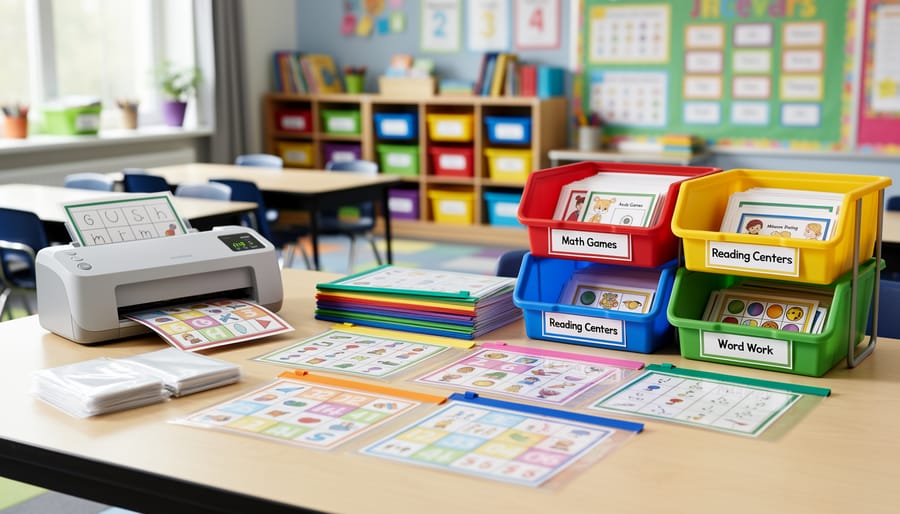
Start with smart paper choices. Standard cardstock works beautifully for game cards and boards, giving you durability without breaking the budget. Print multiple games on a single sheet to maximize paper use. If you’re ready to print classroom games efficiently, consider printing in grayscale first to test gameplay before committing to color versions.
Lamination is your best friend for longevity. Invest in a basic laminator and laminating pouches in bulk—you’ll recoup the cost quickly. Laminate full sheets before cutting out individual pieces to save time. For game boards, laminate both sides for extra sturdiness, or slip them into plastic sleeves as a quick alternative.
Create a simple storage system that keeps games organized and accessible. Use ziplock bags labeled with game names and learning objectives. Store related games together in plastic bins organized by subject or skill level. This makes grabbing the right game during planning a breeze.
Batch your prep sessions. Dedicate one afternoon to printing and laminating multiple games rather than prepping one at a time. You’ll find your rhythm and work much faster.
Finally, consider involving students in preparation when appropriate. Older Primary 2 students can help cut out laminated pieces along straight lines, making them feel invested in classroom materials while giving you an extra hand.
With these time-saving strategies, you’ll build a robust game collection that serves your students year after year without overwhelming your schedule.
You don’t need to overhaul your entire teaching approach overnight. Start small by introducing just one game component this week, whether it’s a simple spinner for math practice or printable reward cards. Once you see how engaged your Primary 2 students become, you’ll naturally want to add more game elements to your toolkit.
The beauty of print-and-play games is that they get easier every time. Build your basic toolkit with a laminator, cardstock, and a few dice, and you’ll be ready to customize games for any lesson with minimal prep time. Print once, laminate, and reuse throughout the year – that’s the kind of smart teaching that saves time while boosting learning.
Remember, those initial minutes spent preparing game components are an investment that pays back tenfold. When you see your seven and eight-year-olds enthusiastically practicing math facts or spelling words through play, you’ll know the effort was worthwhile. Student engagement skyrockets, learning sticks better, and your classroom energy transforms. Your Primary 2 learners deserve that playful learning experience, and you’ve got everything you need to make it happen.