
Transform Your Students’ Memory Skills With These Classroom Recall Exercises
Transform memory recall in your classroom by playing games where students must retrieve previously learned information within time limits—think quiz show formats where speed matters. Students who regularly practice memory retrieval retain information 50% longer than those who simply review notes.
Start each lesson with a quick two-minute challenge where students write down everything they remember from yesterday’s lesson before you review new material. This brain warm-up activates prior knowledge and reveals what actually stuck. You can gamify this with point systems or friendly class competitions.
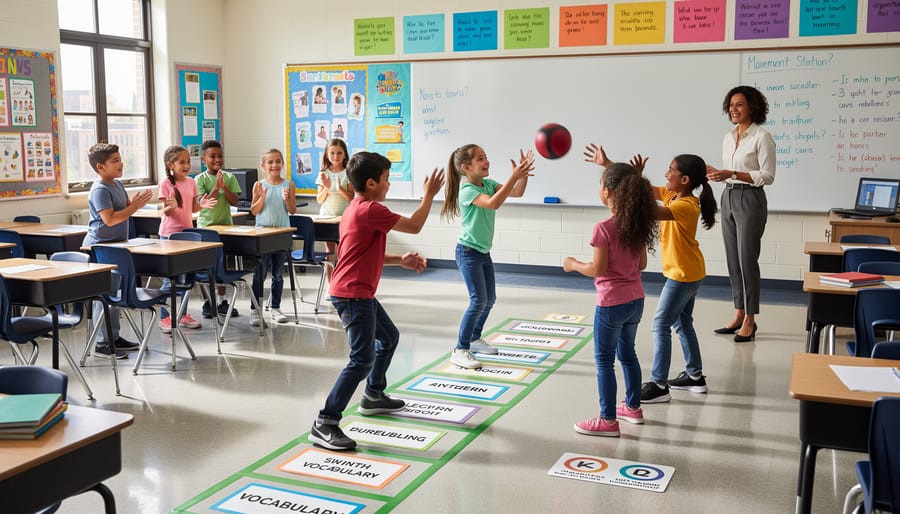
Incorporate movement-based recall activities like Four Corners, where students move to different classroom areas to answer review questions physically. The movement creates stronger memory anchors than sitting still, and the activity takes just five minutes.
Design weekly cumulative review games using content from the past month, not just last week. Spacing out recall practice over time strengthens long-term retention dramatically. Digital game templates make this easy—you simply plug in your questions and students compete in teams.
The beauty of recall exercises is their flexibility. Customize any activity to match your subject, grade level, and available time. Whether you have three minutes or thirty, these memory-boosting strategies help students move information from short-term recall into permanent knowledge they can access during assessments and beyond.
What Makes Recall Memory Different (And Why It Matters)
Here’s the thing about memory: your students might recognize the correct answer when they see it on a multiple-choice test, but can they actually produce that information when there’s a blank page in front of them? That’s the key difference between recognition and recall memory, and it matters more than you might think.
Recognition memory is like having training wheels. When students see answer choices, they’re getting helpful prompts that trigger their memory. It’s easier because the answer is right there somewhere, waiting to be identified. Recall memory, on the other hand, requires students to retrieve information from scratch, without any clues. Think about the difference between a multiple-choice question and an essay prompt. One provides options, the other demands that students dig deep and pull out what they know independently.
Why does this matter for your classroom? Because recall fluency is where real learning lives. When students can freely recall information, they’ve moved beyond surface-level familiarity into genuine understanding. They’ve built the independent thinking skills needed to apply knowledge in new situations, connect concepts across subjects, and actually use what they’ve learned outside your classroom walls.
The best part? You can strengthen recall memory through targeted practice, and that’s exactly what the exercises in this article will help you do. Let’s get your students recalling like champions.
Quick Recall Warm-Ups You Can Use Tomorrow
The Brain Dump Challenge
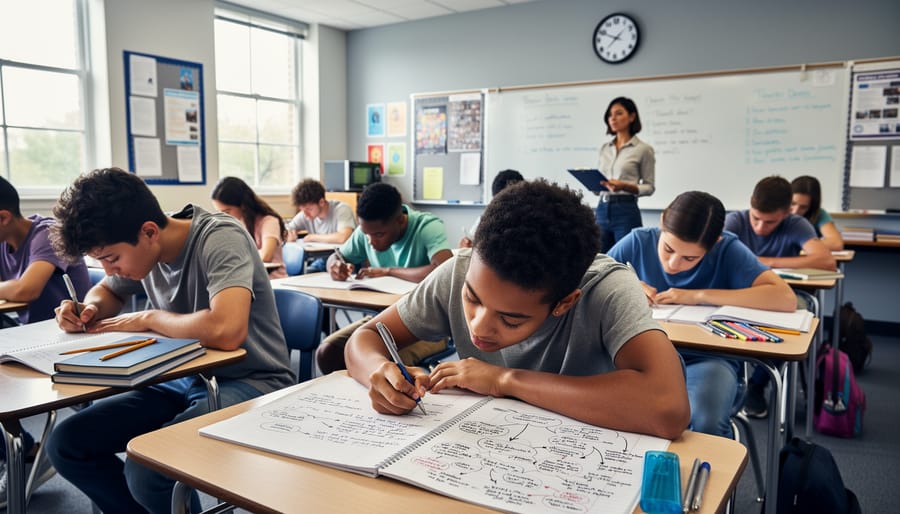
Ready to see what’s really stuck in your students’ minds? The Brain Dump Challenge is a powerful timed activity where students write down everything they remember from yesterday’s lesson without looking at notes or books. Set a timer for 3-5 minutes and let them go wild on paper or digital devices.
This exercise works wonders because it reveals genuine retention and highlights knowledge gaps you can address immediately. Start with shorter 2-minute sessions for younger students and gradually increase the time as they build confidence. To keep things exciting, try themed brain dumps like “List all the vocabulary words we learned” or “Draw and label the water cycle from memory.”
Make it even more engaging by pairing students afterward to compare their brain dumps and fill in each other’s missing pieces. You can customize the challenge for any subject, from math formulas to historical events to science concepts. The best part? Students love the race-against-the-clock energy, and you’ll get instant feedback on what needs reinforcement in your next lesson.
Rapid-Fire Retrieval Rounds
Turn your classroom into a game show with rapid-fire question rounds that get students buzzing with energy! These fast-paced sessions work brilliantly for reviewing vocabulary, facts, or concepts your class has recently learned.
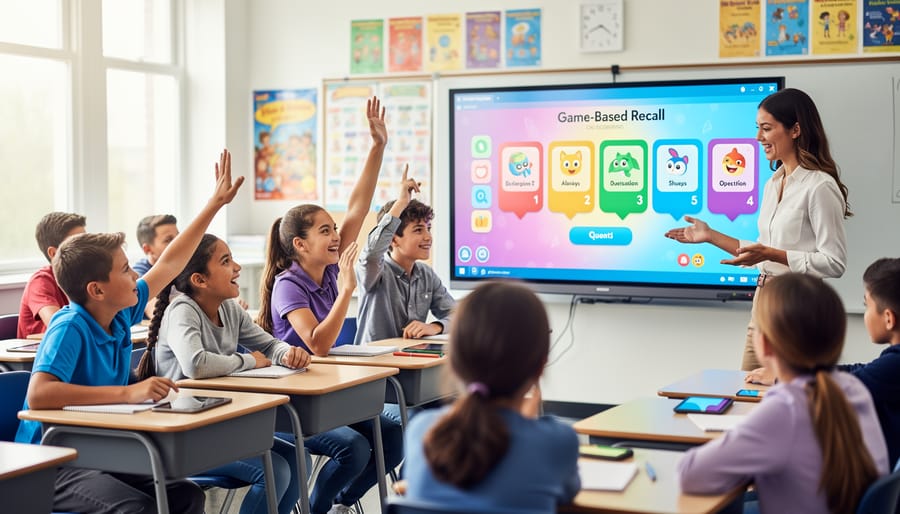
Set up a simple PowerPoint template with point values and categories, just like the popular quiz shows students love watching. Divide your class into teams and fire away with quick questions that require one or two-word answers. The beauty of this format is that students must retrieve information quickly, strengthening those neural pathways each time they recall facts successfully.
You can customize these rounds to fit any subject or grade level. Use them as energizing warm-ups on Monday mornings or as end-of-unit reviews. Add sound effects and countdown timers to amp up the excitement even more. Students stay engaged because they’re competing in a friendly way while building their recall muscles. Best part? Once you create your template, you can reuse it all year long by simply swapping out the questions.
Memory Chain Activities
Memory chain activities turn recall practice into a collaborative adventure! Start with a simple category like “things in our classroom” or “countries we’ve studied.” The first student names one item, the second repeats it and adds another, and the third recalls both before adding their own. Keep going until the chain breaks!
You can customize this exercise endlessly. Try themed chains related to your current unit—character names from a novel, steps in a science experiment, or historical dates. For younger students, use visual chains where they point to objects around the room. Advanced learners love challenge chains where each addition must follow specific rules.
The beauty of memory chains is how they naturally differentiate. Struggling students benefit from hearing repeated information, while confident learners can tackle longer sequences. Plus, everyone stays engaged because they’re listening carefully to remember what comes next. Make it even more exciting by timing your class or creating friendly competitions between groups. This activity builds both individual recall skills and teamwork simultaneously!
Game-Based Recall Builders That Get Students Moving
Around-the-Room Review Stations
Transform your classroom into a dynamic learning environment by setting up review stations around the room! Create four to six stations, each focusing on different units or topics you’ve covered. Students rotate in small groups, spending about five minutes at each station answering recall questions.
Here’s what makes this exercise shine: you can customize each station with different question formats. Try multiple choice at one station, short answer at another, and visual identification at a third. Mix it up to keep students engaged and challenged!
To implement this smoothly, prepare station cards ahead of time with 5-7 questions each. Use timers to signal rotations, and consider playing upbeat music during transitions to maintain energy. Students can record their answers on individual worksheets or collaborate as teams.
This active approach gets students moving while reinforcing key concepts from throughout the year. Plus, you can easily adapt stations for any subject or grade level, making it perfect for end-of-unit reviews or test preparation!
Memory Match Tournaments
Turn classic memory card games into powerful recall exercises that your students will ask to play again and again! Memory match tournaments work beautifully because they combine visual recognition with content review in a competitive format that keeps everyone engaged.
Start by creating pairs of matching cards with vocabulary words and definitions, math problems and solutions, historical dates and events, or any content you’re covering. Display the cards face-down on your PowerPoint slides, and let students take turns clicking to reveal two cards at a time, searching for matches. When they find a pair, they score points and get another turn.
The tournament aspect adds extra excitement. Divide your class into teams and track points throughout the week, crowning champions on Friday. You can customize the difficulty by adjusting the number of cards or creating themed rounds based on recent lessons.
What makes this exercise especially effective for recall is the repetition factor. Students see the same information multiple times as different players reveal cards, reinforcing memory without feeling like drill work. Plus, the game naturally creates anticipation and focus as students watch their classmates play and mentally track card positions.
Consider adding bonus rounds where students must explain the connection between matched pairs for extra points, deepening their understanding while celebrating their success.
Team Recall Relay Races
Ready to bring some friendly competition to your classroom? Team recall relay races transform memory practice into an exciting challenge that gets everyone energized and engaged!
Here’s how it works: Divide your class into teams and present information they need to remember—vocabulary words, historical facts, math formulas, or story details. After a study period, teams line up relay-style. Call out a question, and the first person from each team races to write the answer on the board or share it aloud. Correct answers earn points, and the next team member takes their turn.
You can customize these races endlessly! Try picture recall where teams remember images in sequence, or category relays where each player must recall items from specific groups. Mix in movement by having students run to different stations or complete a physical task before answering.
The beauty of relay races is how they combine physical activity with mental exercise, making recall practice feel less like work and more like play. Plus, the team element encourages peer support and celebrates collective success, creating a positive learning environment where everyone contributes to victory.
Building Long-Term Recall Fluency With Spaced Practice
The 1-3-7 Recall Schedule
Here’s a game-changer for making recall stick: the 1-3-7 schedule! This simple timing framework helps students retain information by revisiting material at scientifically-backed intervals.
Here’s how it works: After introducing new content, have students recall it after 1 day, then 3 days later, and finally after 7 days. These specific intervals align perfectly with how our brains consolidate memories, similar to the three-step learning model that builds independent thinking.
Try this in your classroom by scheduling quick review activities on these key days. On day 1, use a simple exit ticket asking students to list three things they remember. Day 3 works great for a fast-paced quiz game using your PowerPoint templates. By day 7, challenge them with application questions that require deeper recall.
You can customize this schedule based on your content difficulty. For complex topics, try 1-2-5 intervals. For basic facts, stretch it to 1-4-10. The key is consistency and spacing those review moments strategically throughout your unit.
Weekly Memory Checkpoint Games
Make Fridays extra exciting by turning recall practice into game day! PowerPoint game templates are perfect for creating weekly memory checkpoint games that feel more like fun competitions than assessments.
Start by downloading editable game templates like Jeopardy-style quiz shows, Family Feud formats, or interactive trivia games. Customize the questions to review everything your class learned that week—vocabulary terms, math concepts, historical facts, or science processes. The beauty of these templates is how easy they are to personalize for any subject or grade level.
Divide your class into teams and let the friendly competition begin! Students naturally become more engaged when points are on the line, and they’ll work together to recall information from the week. You’ll love how these games provide instant feedback about what students remember and what might need reinforcement.
Pro tip: Save each week’s game file so you can bring them back for end-of-unit reviews or test prep sessions. Students get a kick out of revisiting previous challenges and showing how much more they’ve learned.
The consistent Friday routine helps students stay motivated throughout the week, knowing they’ll need to remember key concepts for game day. Plus, you can rotate team captains or add silly prizes to keep the energy high and the learning memorable.
Customizing Recall Exercises for Different Grade Levels
The best part about recall memory exercises? They’re super flexible and work beautifully across all grade levels! You just need to adjust the complexity and presentation to match your students’ abilities.
For elementary students, keep it visual and playful. Use bright colors, simple categories, and shorter lists. Instead of remembering 15 vocabulary words, start with 5-7 items. Picture-based recall games work wonderfully—think showing images of animals, then having students recall which ones they saw. Movement-based activities are golden at this age. Try “Simon Says” variations where students must remember and repeat increasingly complex sequences of actions.
Middle schoolers thrive when you add a competitive or collaborative twist. Increase your list lengths to 10-12 items and introduce abstract concepts alongside concrete ones. This age group loves team challenges, so consider relay-style recall games where each team member contributes one remembered item. You can also start incorporating subject-specific content like historical dates, scientific terms, or mathematical formulas into your exercises.
High school students appreciate relevance and challenge. Push those lists to 15-20 items and connect exercises directly to curriculum content they’re studying. They can handle more sophisticated strategies like creating memory palaces or using advanced mnemonic devices. Give them opportunities to create their own recall challenges for classmates—this metacognitive approach deepens their learning while keeping engagement high.
Quick modification tip: Any recall exercise becomes more challenging by adding time limits, requiring specific order recall instead of random order, or combining multiple categories simultaneously. Start simple and gradually increase difficulty based on your students’ success rates. When 80% of your class masters an exercise, it’s time to level up!
Making Recall Practice Feel Like Play, Not Work
Let’s be honest—the word “exercise” doesn’t exactly spark joy in most students! But recall practice doesn’t have to feel like a mental workout. With a few playful tweaks, you can transform memory drills into activities your students actually look forward to.
Start by adding simple sound effects. A quick buzzer noise for incorrect answers or a triumphant chime for correct ones instantly creates game-show energy. Most classroom devices can play sounds with a single click, making this an easy win.
Scoreboards work wonders too! Whether you’re tracking individual points or team scores, watching numbers climb creates natural motivation. Students love seeing their progress displayed on screen, and friendly competition emerges organically without you having to push it.
Speaking of competition, keep it lighthearted. Frame recall challenges as “memory missions” or “brain battles” where everyone’s improving together. Celebrate creative answers and unexpected connections just as much as correct responses.
Here’s the best part—you don’t need to build all these elements from scratch. PowerPoint templates designed for educational games come preloaded with scoreboards, timers, sound effects, and eye-catching animations. You simply drop in your content and press play. This means you get all the engagement-boosting features without spending hours creating them yourself.
The key is variety. Rotate between different game formats, switch up team configurations, and occasionally throw in surprise bonus rounds. When recall practice feels fresh and unpredictable, students stop seeing it as work and start experiencing it as play—which is exactly when the real learning happens.
Ready to transform your classroom with recall memory exercises? The best part is you don’t need to overhaul your entire teaching approach overnight. Start small by choosing just one or two exercises that resonate with you and fit naturally into your schedule. Maybe it’s a quick Brain Dump at the start of class or a simple Quiz-Quiz-Trade activity during transitions.
Remember, consistency beats perfection every time. It’s better to use one recall exercise regularly than to try five different techniques sporadically. Your students will benefit more from repeated practice than from variety without follow-through.
These exercises do more than boost test scores. They help students become independent thinkers who can retrieve and apply knowledge confidently. You’re building learning skills that extend far beyond your classroom walls.
Customize these activities to match your teaching style and your students’ needs. Add movement, incorporate friendly competition, or keep things low-key. The flexibility is yours.
Start tomorrow with one exercise. Watch how your students respond. Adjust as needed. Before you know it, recall practice will become a natural, valued part of your classroom routine, and you’ll see the difference in student retention and confidence.