Transform Your Social Studies Lessons Into Adventures Kids Actually Remember
Teaching elementary social studies in grades 3-5 requires balancing essential content coverage with methods that actually make the material stick in young minds. Transform dense curriculum standards into memorable learning experiences by weaving geography, history, civics, and economics into interactive activities that students genuinely enjoy. Use review games at the end of each unit to reinforce key concepts—when kids compete in teams to identify map features or sequence historical events, they’re reviewing without realizing it’s review. Customize these games to target exactly what your specific standards require, whether that’s state symbols, branch of government functions, or economic vocabulary. Break larger topics like westward expansion or community helpers into bite-sized chunks, then spiral back through previous content regularly so knowledge builds rather than fades. The secret to successful social studies instruction isn’t just covering material; it’s creating enough repetition and engagement that third through fifth graders can recall and apply what they’ve learned weeks or months later. When you combine solid curriculum planning with game-based review, you’ll watch comprehension scores climb while actually spending less time on tedious worksheet reviews.
What Makes Social Studies Stick in Grades 3-5
The Third Through Fifth Grade Brain
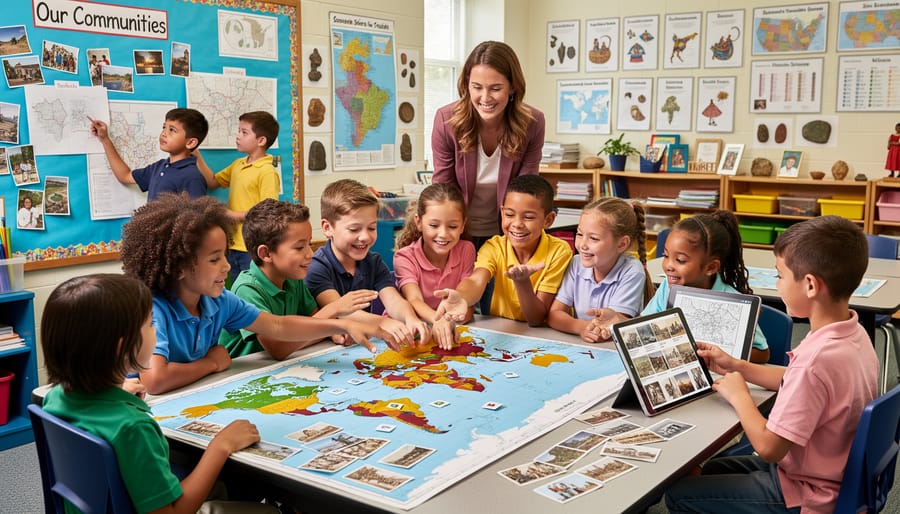
Third through fifth graders experience a cognitive leap that transforms how they learn social studies. Their brains are now wired for more complex thinking, abstract concepts, and understanding cause and effect. These students can connect historical events, compare different cultures, and analyze why communities function the way they do.
But here’s the exciting part: this is also the age when students thrive on social interaction and friendly competition. Their developing brains crave engagement with peers, which makes collaborative activities incredibly powerful for retention. They’re moving beyond simple memorization and need hands-on learning experiences that let them apply knowledge in meaningful ways.
This developmental stage is perfect for game-based learning in social studies. Students at this age love challenges, enjoy showing what they know, and learn best when they’re actively participating rather than passively listening. They’re also building critical social skills, so activities that require teamwork and communication support both academic and personal growth. When you tap into their natural competitiveness and social nature, you create an environment where social studies content truly sticks.
Why Review Games Work Better Than Worksheets
When students play review games, their brains work harder to recall information compared to simply reading through worksheets. This active retrieval process strengthens memory pathways, making content stick long after the game ends. Think about it: would your students remember the three branches of government better by filling in blanks or by competing in a fast-paced team challenge?
Games create emotional connections to learning. The excitement, friendly competition, and immediate feedback trigger engagement that worksheets simply can’t match. Just like science standards for grades 3-5 become memorable through hands-on activities, social studies concepts transform from abstract facts into lived experiences through gameplay.
The best part? You can customize review games to target exactly what your students need to practice. Whether it’s state capitals, historical timelines, or map skills, games let you repeat content in fresh ways without the groans that accompany another worksheet. Students get multiple exposures to material while having fun, leading to deeper understanding and better test performance.
Core Curriculum Areas That Come Alive With Games
Geography and Map Skills
Geography and map skills come alive when students compete to name state capitals or identify landforms through interactive games. Create a state capitals quiz show where teams buzz in to answer, earning points for correct responses. This format naturally builds excitement while reinforcing essential geographic knowledge.
For landforms and regions, try a digital scavenger hunt where students identify mountains, plains, rivers, and deserts on maps within a time limit. You can customize difficulty by adjusting the number of features or adding physical versus political map challenges.
Map reading skills improve dramatically with coordinate grid games. Students navigate treasure maps using latitude and longitude clues, or race to locate cities using directional instructions. These activities transform abstract concepts into hands-on adventures that stick with learners.
The beauty of game-based geography review is customization. Struggling students benefit from extra practice identifying their home state and neighboring areas, while advanced learners tackle world geography challenges. Rotate through different game formats weekly to maintain high engagement and prevent review fatigue. Whether practicing compass rose directions or memorizing regional characteristics, games provide the repetition students need without the boredom of traditional worksheets.
American History and Historical Figures
Bringing American history to life for elementary students works beautifully through interactive games and team challenges. When students compete to match presidents with their accomplishments or race to arrange historical events in chronological order, those facts stick much better than traditional worksheets.
Try creating timeline races where teams arrange cards showing major events like the American Revolution, westward expansion, and the Civil Rights Movement. Students love the hands-on movement and naturally start discussing why events happened in certain sequences. You can customize these activities to match your specific grade level standards, focusing on fewer events for younger students and adding complexity for fifth graders.
Historical figure review games transform memorization into excitement. Set up a game show format where teams answer questions about George Washington, Harriet Tubman, Benjamin Franklin, and other key figures. Include visual clues like portraits or famous quotes to help visual learners make connections.
Consider matching games where students pair inventions with inventors or contributions with historical figures. These work perfectly as station activities or whole-class competitions. The beauty is you can adapt any template to focus on exactly what your curriculum requires, whether that’s colonial America, the founding fathers, or influential Americans from diverse backgrounds. Team competition naturally encourages peer teaching, helping struggling students learn from classmates in a supportive environment.
Government and Civics Basics
Government and civics can feel like heavy topics for younger students, but breaking them down into bite-sized pieces makes all the difference! Start with the three branches of government by creating memorable connections. Students love learning that the legislative branch makes laws, the executive branch enforces them, and the judicial branch interprets them when you turn it into a sorting game or relay race format.
Community roles hit closer to home and help students see civics in action. Explore how mayors, firefighters, police officers, and teachers contribute to their neighborhoods. Interactive review games work wonderfully here because students can match community helpers to their responsibilities or identify services each role provides.
Citizenship concepts become meaningful when students recognize their own responsibilities. Focus on being a good citizen through respecting rules, helping others, and participating in community activities. Turn abstract ideas into concrete examples they encounter daily at school and home.
The key is making these concepts stick through repetition with variety. Mix up your review formats so students encounter the same information through different lenses. Question-and-answer games, matching activities, and scenario-based challenges all reinforce government and civics basics while keeping engagement high. When students actively participate in reviewing content, they develop deeper understanding and remember information far beyond test day.
Culture and Communities
Bringing cultures and communities to life doesn’t have to mean endless worksheets! Your students are naturally curious about the world around them, and interactive activities make learning about different traditions and community roles absolutely engaging.
Try transforming cultural studies into game-show style competitions where teams answer questions about holidays, customs, and traditions from around the world. Students love the friendly competition while absorbing important information about diversity and respect. You can easily customize questions to match whatever cultures you’re currently studying, whether that’s local communities or countries across the globe.
Community helpers come alive through matching games and role-play scenarios. Create review activities where students connect helpers with their tools, responsibilities, and community impact. This approach works beautifully because kids already know these helpers from their daily lives, making the learning feel relevant and meaningful.
For global awareness topics, interactive maps and virtual scavenger hunts help students explore geography, landmarks, and cultural practices. The beauty of game-based review is that you can adjust difficulty levels instantly. Third graders might identify continents and basic cultural practices, while fifth graders dive deeper into comparing governmental systems or economic activities across regions.
The key is keeping activities short, focused, and fun while reinforcing the essential concepts your curriculum requires!
Economics for Elementary Learners
Transform economics from abstract concepts into hands-on learning adventures! Third through fifth graders grasp goods versus services through role-play activities, like setting up classroom stores where students become buyers and sellers. Make supply and demand tangible by simulating product shortages or abundance with simple trading games. Interactive game templates let students practice identifying needs versus wants, understanding scarcity, and exploring how communities depend on each other economically. Customize review games to reinforce vocabulary like producer, consumer, and opportunity cost. When students compete in teams to match economic terms or solve real-world scenarios, these foundational concepts become memorable and meaningful, preparing them for more complex financial literacy ahead.
Quick Setup Review Games That Save Your Sanity
Five-Minute Game Prep Strategies
You don’t need hours to prep engaging social studies games! With PowerPoint templates, you can create exciting game-based review activities in just five minutes.
Start by opening your chosen game template and identifying the editable text boxes. Simply click and type your social studies questions directly into the slides. Focus on content your students just learned, like state capitals, map skills, or community helpers. No fancy formatting needed—just straightforward questions and answers work perfectly!
Here’s the fastest approach: Keep one browser tab open with your curriculum guide or textbook and another with your game template. Copy key terms, dates, or concepts straight from your materials and paste them into the game slides. This eliminates the guesswork and ensures you’re reviewing exactly what students need to master.
Save your customized template with a clear file name like “Regions Review Game” so you can reuse it next year. The best part? Once you’ve created a few games, you’ll have a ready-to-go library of review activities that take zero prep time on busy mornings!
Building Your Game Template Library
The secret to game-based learning success? Build yourself a go-to collection of game formats that you can reuse across different social studies units throughout the year. Think of it as creating your own educational toolkit that saves you time while keeping students excited about learning.
Start by identifying 3-5 game formats that resonate with your students. Maybe it’s Jeopardy-style review games, board game races, or interactive quizzes. The beauty of PowerPoint game templates is that you create the structure once, then simply swap out content for each new unit.
For example, your map skills game template from September can become a colonial America game in November by changing the questions and images. Same engaging format, fresh content. Students love the familiar game mechanics while learning completely new material.
Store your templates in a dedicated folder with clear labels like “Game Template – Jeopardy” or “Game Template – Board Race.” Add quick notes about which units worked best with each format. This system turns game creation from a time-consuming project into a simple content update that takes just minutes before each unit.
When to Use Games for Maximum Impact
Timing is everything when it comes to review games! Use them on Fridays to wrap up the week’s learning in a fun way that keeps students engaged until the final bell. They’re perfect right before assessments to help kids consolidate information and build confidence. Deploy games at the end of units to reinforce key concepts and ensure content sticks. When you notice students struggling with particular topics, games provide an excellent reteaching opportunity without feeling like extra work. The interactive format helps struggling learners grasp difficult concepts through repetition and engagement, making review feel less like studying and more like playing.
Managing the Chaos: Game Day Classroom Tips
Setting Up Teams That Work
Creating balanced teams makes all the difference in your social studies review games. Mix students with different skill levels rather than grouping all your strongest students together. This approach ensures everyone contributes and learns from each other.
Try assigning roles within each team based on student strengths. One student might be the researcher who looks up dates, while another serves as the recorder. Rotate these roles regularly so everyone gets different experiences.
Keep teams small, typically three to four students, to maximize participation. Larger groups often leave some students disengaged while others dominate. Smaller teams mean every voice matters.
Switch up your groupings frequently to prevent cliques and build classroom community. Use random selection methods like drawing names or counting off to keep things fresh and fair. Students often surprise you when paired with new teammates, discovering hidden knowledge and building confidence through varied interactions.
Scoreboard Strategies That Keep Everyone Motivated
Keeping the energy high while protecting everyone’s confidence is essential! Start by celebrating progress, not just points. Adjust point values so harder questions earn bonus points, giving struggling teams extra opportunities to catch up. Consider using team badges or achievement unlocks for specific accomplishments like “Geography Guru” or “Timeline Master” alongside traditional scoring.
Try equalizing strategies like allowing teams to “bank” points from previous rounds or offering strategic power-ups that let lower-scoring teams double their next correct answer. You can also create multiple scoring categories, so every team wins something, whether it’s “Fastest Response,” “Most Improved,” or “Creative Thinking Champion.”
Remember, the goal is engagement with your social studies content, not cutthroat competition. Rotate team members regularly so success spreads around. Display scores visually with colorful charts rather than harsh numerical rankings. Most importantly, emphasize that review games help everyone learn together. When students feel motivated rather than defeated, they’ll eagerly participate and retain that important curriculum content.
Sound Effects and Engagement Boosters
Sound effects can transform your social studies reviews from quiet quizzes into exciting game shows! Use celebratory sounds sparingly—think victory chimes for correct answers or gentle buzzer sounds for wrong ones. Keep volume levels classroom-appropriate and test sounds beforehand to avoid startling students. Visual elements like colorful timers, point counters, or animated transitions add excitement without overwhelming learners. Consider letting students help choose sound effects to boost their investment in the activity. The key is balance: enough pizzazz to energize without creating distractions. Remember, these elements should enhance learning, not overshadow your social studies content!
Beyond Review: Using Games for Assessment and Team Building
Spotting Knowledge Gaps During Gameplay
Games give you instant insight into what your students actually understand—and what they don’t! As you watch students play, notice which questions cause hesitation or incorrect answers. These patterns reveal exactly where you need to circle back.
Pay attention when multiple students struggle with the same concept, like the difference between rural and urban communities or the branches of government. That’s your cue to revisit that topic with a different approach. Maybe they need more visual examples or a hands-on activity to cement the idea.
Use game results as a formative assessment tool—they show you what’s working without the pressure of a formal test. The beauty is that students don’t realize they’re being assessed; they’re just having fun competing!
Keep quick notes during gameplay about recurring trouble spots. Then customize your next game to focus specifically on those gaps. This targeted review approach ensures every student masters the content before moving forward.
Building Classroom Community Through Social Studies Games
Social studies games do more than reinforce content—they bring your classroom together! Team-based activities naturally encourage collaboration, communication, and mutual support among students. When kids work together to answer questions about state capitals or historical events, they’re building friendships while learning.
Games create those positive vibes that make students actually excited about social studies. Instead of groaning at another worksheet, they’ll be asking when the next game day is scheduled! You can customize teams to pair students who might not usually interact, helping break down social barriers and create an inclusive environment.
The friendly competition aspect motivates even reluctant learners to participate. When everyone’s cheering each other on and celebrating correct answers together, learning becomes a shared experience rather than an isolated task. These positive associations with social studies content stick with students long after the game ends, making future lessons more approachable and enjoyable for everyone.
Transforming your social studies instruction doesn’t require a complete teaching overhaul. With ready-made game templates at your fingertips, you can instantly breathe new energy into any lesson with minimal prep time. The best part? You don’t need to dive in all at once. Start small by choosing just one game format that feels comfortable, whether it’s a quick review game or an end-of-unit activity. Test it with one topic, see how your students respond, and build from there. Remember, every time you make learning fun and interactive, you’re creating memories that stick with students long after they leave your classroom. Those engaging moments transform facts into lasting knowledge and help students genuinely connect with the world around them. You’ve got this!