

Transform Your Review Sessions Into Games Students Actually Want to Play
Transform your lessons into engaging experiences by building a question bank that powers interactive classroom games. Start by creating 10-15 questions in a simple spreadsheet with columns for questions, answer options, and correct answers—this single bank becomes the foundation for multiple game formats like quiz shows, team competitions, and individual challenges.
Use game templates to instantly convert your questions into different activities throughout the week. Monday’s vocabulary review becomes a fast-paced buzzer game, while Friday’s test prep transforms into a collaborative team challenge, all using the same content you prepared once.
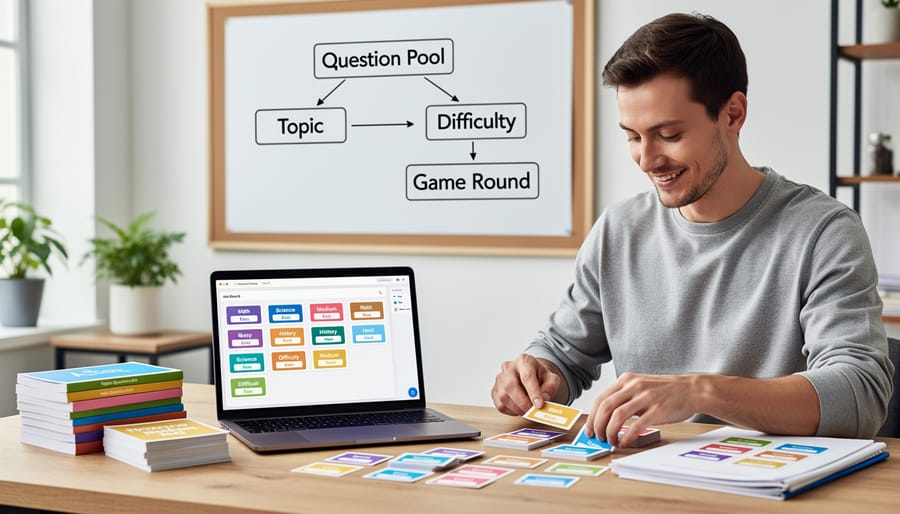
Customize your question banks by difficulty level, topic, or student need. Create separate banks for vocabulary, math facts, reading comprehension, and test review, then mix and match based on your lesson objectives. Add visual elements, real-world scenarios, or student-relevant examples to make questions more relatable and memorable.
The beauty of this approach lies in its flexibility—spend 20 minutes building a quality question bank, then reuse it across multiple class periods, grade levels, or even school years with quick modifications.
What Makes Question Banks Different from Regular Quiz Questions
Think of question banks as your personal treasure chest of ready-to-use questions. Instead of scrambling to write new quiz questions every time you want to review a topic, you build a collection once and pull from it whenever needed.
Here’s what makes them special: regular quiz questions exist in isolation. You create them for one specific test or activity, use them, and that’s it. Question banks flip this approach completely. They’re organized libraries where you categorize questions by topic, difficulty level, or learning objective. Need five questions about photosynthesis for today’s warm-up? They’re already there. Want to create a quick review game covering multiple concepts? Just select questions from different categories.
The time-saving benefits are huge. Picture preparing for a unit review. Without a question bank, you’d spend 30-45 minutes writing questions from scratch. With a well-organized bank, you’re selecting and customizing questions in under 10 minutes. That’s time back in your day for what really matters.
Consistency is another game-changer. When you build your question bank thoughtfully, you ensure that questions align with your learning objectives every single time. No more worrying whether today’s quiz accurately reflects what students need to know. Your questions maintain the same quality and standards because you’ve crafted and refined them intentionally.
Plus, question banks grow with you. Each time you create a great question, add it to your collection. Over months and years, you build an incredible resource that makes lesson planning easier and review sessions more effective. It’s like investing in your future teaching self.

Prompt Generators: Your Secret Weapon for Spontaneous Learning
Picture this: You’ve found the perfect classroom game, and your students absolutely love it. But by the third time playing, they’ve memorized the questions and the excitement starts to fade. That’s where prompt generators become your secret weapon.
Think of prompt generators as your on-demand content creators. These clever tools automatically generate fresh discussion starters, critical thinking questions, or game prompts whenever you need them. Instead of manually writing dozens of questions or using the same set repeatedly, you can generate new content instantly with just a few clicks.
The magic happens in the unpredictability. When students don’t know what question is coming next, they stay engaged and alert. Each game session feels brand new, even if you’re playing the same format. This spontaneity is especially valuable for games you want to use weekly or across multiple units.
Here’s how to put prompt generators to work in your classroom. Start by setting your parameters, like grade level, subject area, or specific topics you’re covering. The generator then creates questions tailored to your needs. Want vocabulary practice for your science unit? Check. Need math word problems at varying difficulty levels? Done. Looking for creative writing prompts? You’ve got them.
The customization options make these tools incredibly versatile. You can adjust complexity, question types, and even tone to match your classroom vibe. Some generators let you exclude certain topics or emphasize specific skills, giving you control while saving preparation time.
Best of all, prompt generators keep your favorite games fresh throughout the entire school year. Your students stay excited, engaged, and ready to learn because they never quite know what’s coming next.
Building Your First Question Bank (Without Spending Your Whole Weekend)
Start Small and Build as You Go
Here’s the good news: you don’t need hundreds of questions ready to go before you can start using your interactive classroom tool. In fact, starting small is actually the smarter approach!
Begin with just 20-30 questions per topic. This gives you enough variety to run engaging games without overwhelming yourself during setup. Think of it as building your teaching toolkit one manageable piece at a time.
As you create those initial questions, organize them in a way that makes sense for your teaching style. You might sort by difficulty level, grouping easier warm-up questions separately from challenge questions. Or arrange them by standard if you’re tracking specific learning objectives. The key is choosing a system you’ll actually stick with.
Here’s where the magic happens: make it a habit to add questions after finishing each unit. Just taught fractions? Spend ten minutes creating 5-10 new questions while the material is fresh in your mind. Your students just wrapped up their solar system unit? Add those questions to your science bank right away.
This approach keeps your question collection growing naturally alongside your curriculum. Before you know it, you’ll have a robust library without ever feeling like you tackled a massive project. Plus, questions you write immediately after teaching tend to target exactly what students found tricky or interesting.
Remember, every question you add is one more tool in your arsenal for future review sessions, test prep, or those spontaneous Friday game days your students will love!
Where to Source Quality Questions Fast
Good news—you don’t need to start from scratch! There are tons of ready-made resources just waiting to be transformed into interactive classroom experiences. Let’s explore where you can find quality questions fast.
Your textbook is a goldmine. Most chapters end with review questions or practice problems that are already aligned with what students are learning. Simply pull those questions and drop them into your game template. Bonus: students won’t feel like they’re just doing textbook work when it’s part of a fun competition!
Past assessments are another perfect source. Grab questions from last year’s quizzes, unit tests, or even standardized practice materials. These questions are already vetted and grade-appropriate. Just remember to mix up the difficulty levels so every student has a chance to contribute during gameplay.
Don’t overlook curriculum standards and learning objectives. Many states and districts provide sample questions or assessment banks aligned to specific standards. These are especially helpful when you need to target particular skills or concepts quickly.
Here’s a creative twist: let students generate questions! After teaching a lesson, have students submit their own questions about the material. This not only gives you fresh content but also helps students process what they’ve learned. You might be surprised at how challenging and creative their questions can be.
When adapting existing materials, keep these tips in mind: shorten lengthy questions for faster gameplay, convert multiple-choice questions into true-false for quick rounds, and adjust vocabulary to match your students’ reading levels. The goal is making questions work for your interactive format, not perfection. Quick adaptations mean you can get games running in minutes, keeping your prep time manageable and your enthusiasm high!
Matching Question Banks to Your Favorite Game Templates
Quick-Fire Games Need Short-Answer Questions
When you’re running Jeopardy-style games, quiz bowls, or speed rounds, timing is everything! These fast-paced formats work best with questions that have clear, quick answers. Think one-word responses, numbers, dates, or short phrases rather than lengthy explanations.
Focus on recall-based questions that test knowledge without requiring complex reasoning. For example, “What’s the capital of France?” beats “Explain why Paris became France’s capital.” This keeps the energy high and gives more students chances to participate.
Mix up your difficulty levels to keep everyone engaged. Include some easy warm-up questions alongside tougher challenges so students of all abilities can contribute. You can also color-code your question bank by difficulty to quickly grab the right mix.
Pro tip: Test your questions beforehand to make sure they’re truly quick-fire friendly. If you find yourself pausing to think about acceptable answer variations, simplify the question or tighten the expected response. Your goal is lightning-fast fun that keeps the whole class on their toes and ready to buzz in!
Team Games Work Great with Discussion Prompts
Team-based games really shine when you use open-ended discussion prompts that spark conversation and collaboration. Instead of simple right-or-wrong questions, try prompts like “What strategies could we use to…” or “How would you explain…” that encourage teams to brainstorm together.
Here’s how to make it work: Assign teams and display a thought-provoking prompt on screen. Give groups 2-3 minutes to discuss and build their response together. Each team then shares their answer, and here’s the fun part—you can award points not just for correct answers, but for creative thinking, thorough explanations, or unique perspectives.
This approach works beautifully for review games where deeper understanding matters more than memorization. Students learn from each other’s reasoning, and quieter learners often contribute more in small group settings.
Mix discussion prompts with quick-answer questions to keep the energy high. You might start with a few rapid-fire questions to build excitement, then slow things down with a meaty discussion prompt that requires teamwork. This variety keeps everyone engaged and lets different types of learners shine. Plus, you can customize point values to emphasize the skills you want students to practice most.

Point-Based Competitions Love Tiered Difficulty
Point-based games bring exciting strategic elements to your classroom! Assign different point values to questions based on difficulty—perhaps 100 points for basic recall, 200 for application questions, and 300 for complex analysis. This approach works wonderfully for mixed-ability classrooms because students can choose questions matching their confidence level. Advanced learners might tackle high-point challenges, while others build confidence with lower-point questions. You can even let teams strategize which questions to attempt first, adding a game-show atmosphere to review sessions. The beauty of tiered difficulty is that everyone participates meaningfully—some students shine by answering many easier questions, while others go for those big-point wins. Customize your point values to match your learning objectives and watch engagement soar!
Simple Customization Tricks That Make Every Game Feel Brand New
The best part about using game templates with question banks? You don’t need to create something new from scratch every single time! With a few simple tweaks, you can make the same game feel completely different and keep your students engaged week after week.
Start by rotating your question types to match what you’re teaching. Maybe Monday’s review game uses multiple-choice questions, Wednesday features true-or-false statements, and Friday challenges students with open-ended prompts. This variation keeps students on their toes and reinforces content in different ways. The same Jeopardy-style template feels like a brand-new experience when you switch from vocabulary definitions to math word problems.
Mix up your difficulty levels based on student progress and energy levels. Use easier questions for warm-up games at the start of class, medium difficulty for mid-unit reviews, and challenging questions when students are ready to show what they’ve mastered. You can even create mixed-difficulty question banks where easier questions are worth fewer points and harder ones offer bonus opportunities.
Don’t forget to refresh your prompts seasonally or thematically. That trivia game template works great with standard curriculum questions in September, holiday-themed content in December, and test prep questions in the spring. Adding timely references keeps everything feeling current and relevant.
Another simple trick is adjusting team sizes and game duration. The same question set plays differently when students work individually versus in pairs or small groups. A 10-minute speed round creates different energy than a 25-minute tournament-style game.
Finally, let students contribute questions to your bank occasionally. When they help create the content, they’re more invested in playing, and you get fresh perspective on what resonates with them. Plus, it’s a sneaky way to assess their understanding while building your question library for future use.
Ready to transform your classroom into an engagement powerhouse? Question banks and prompt generators are your secret weapons for eliminating last-minute prep stress while keeping students excited about learning. The best part? You don’t need to build your entire toolkit overnight. Start with just one game template and a handful of questions, then gradually add more content as you discover what resonates with your students.
Think of it as building your teaching treasure chest, one gem at a time. Create a few questions during your lunch break, save them for later, and watch how easily they slot into different activities throughout the week. As your collection grows, you’ll find yourself spending less time scrambling for materials and more time focusing on what really matters—connecting with your students.
Remember, when learning feels like play, students don’t even realize how much they’re absorbing. Those giggles during a game-based review session? That’s the sound of knowledge sticking. So go ahead, dive in, experiment with different formats, and watch your classroom come alive. You’ve got this, and your students are going to love what you create.