
Transform Your Classroom with the B-Word Game (Students Actually Beg to Play This)
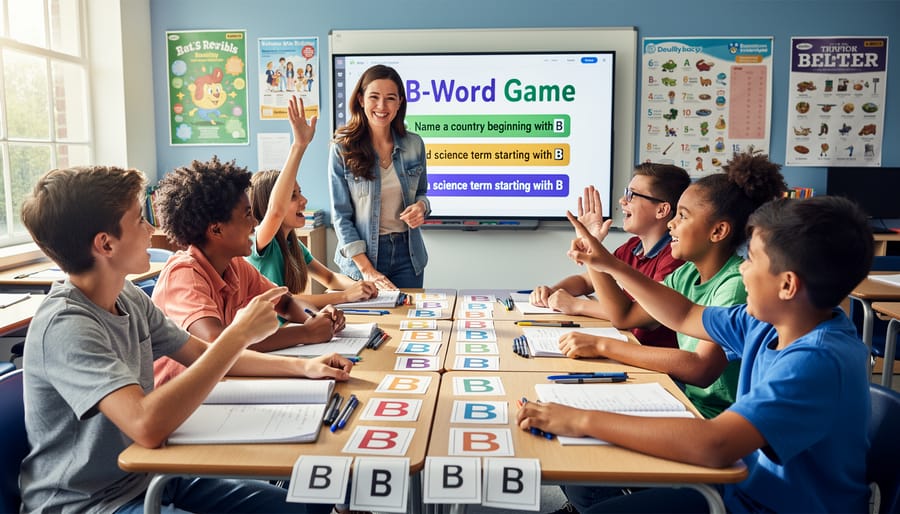
Transform your vocabulary lessons into an exciting guessing game where students race to identify mystery words using only letter clues and strategic questions. The B-Word Game challenges players to discover a secret word beginning with “B” by asking yes-or-no questions, making it perfect for building critical thinking skills, expanding vocabulary, and energizing your classroom in just 10-15 minutes.
Set up takes seconds: choose a B-word appropriate for your grade level, write it down secretly, and let students take turns asking questions like “Is it an animal?” or “Can you eat it?” As the game leader, you only answer “yes” or “no” until someone correctly guesses the word. This simple format works brilliantly for early finishers, brain breaks, or warm-up activities across all subjects.
The beauty lies in its flexibility. Adapt difficulty by selecting simple words like “banana” for younger students or challenging terms like “biodiversity” for older grades. Customize categories to reinforce current lessons, whether you’re teaching science vocabulary, literary terms, or historical concepts. Students stay engaged because every question brings them closer to solving the puzzle, and the competitive element keeps energy high without requiring any special materials or prep time.
What Is the B-Word Game?
The B-Word Game is an interactive review activity that turns test prep into an exciting challenge your students will actually look forward to. Here’s the simple but brilliant concept: you display a review question on the screen, and students race to answer it. The catch? There’s a forbidden word (the B-Word) they absolutely cannot say when giving their response.
For example, if you’re reviewing state capitals and ask “What’s the capital of Texas?”, you might make “Austin” the forbidden word. Students must describe or define the answer without saying it directly, like “It’s the city known for live music and weird culture.” This twist transforms straightforward recall into creative thinking and deeper understanding.
The forbidden word mechanic is what makes this game so engaging. Instead of just blurting out memorized answers, students must really understand the content to explain it differently. It creates moments of hilarious near-misses, builds vocabulary skills, and keeps everyone on their toes. Plus, watching classmates try to talk around obvious answers generates genuine laughter and energy.
You can play it as a whole class activity, in teams, or even as a quick warm-up. The beauty is its flexibility. Any subject works: vocabulary terms in English, elements in science, historical figures in social studies, or formulas in math. The game adapts to whatever content you’re reviewing, making it a go-to tool you’ll use again and again throughout the year.
Why Teachers Love This Game (And Students Do Too)
Boosts Active Listening Skills
The B-word game transforms your students into focused detectives, eagerly listening for that one forbidden letter. Unlike traditional vocabulary review games where students might zone out during others’ turns, this game keeps everyone engaged because mistakes can happen at any moment.
Students quickly learn that passive listening isn’t enough. They need to concentrate on every syllable their classmates speak, processing words rapidly to identify B-sounds. This active engagement strengthens their auditory processing skills naturally, without feeling like extra work.
The game’s peer-monitoring aspect is particularly powerful. When students catch their own mistakes, it demonstrates self-awareness and careful listening to their own speech. When they catch others’ errors, it shows they’re fully tuned in to classroom conversations. You’ll notice students leaning forward, eyes brightening when they hear that telltale B-sound. It’s practice that feels like play, making listening skills development almost effortless.
Works for Any Subject or Grade Level
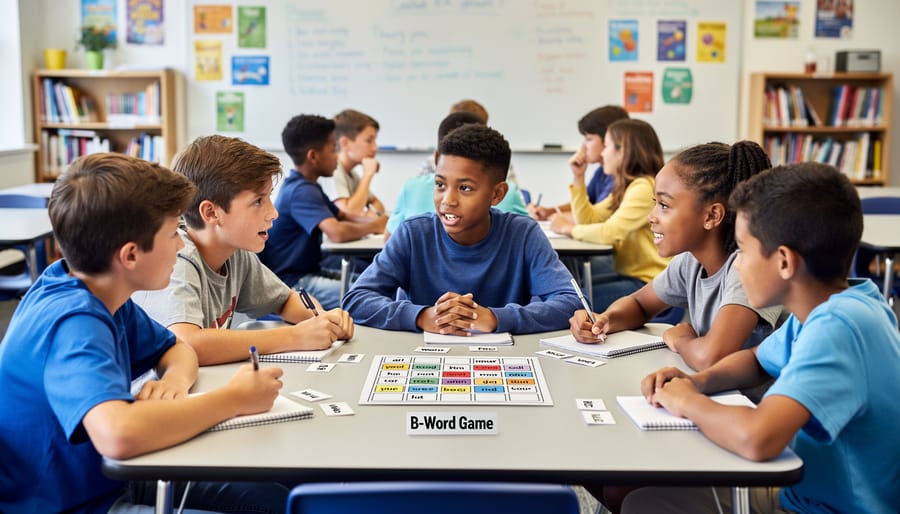
The beauty of the B-word game is its incredible flexibility across subjects and age groups. For elementary classrooms, use simple vocabulary words or basic math facts. Your second graders can practice spelling words while your fifth graders tackle more complex content like state capitals or multiplication facts.
Middle school teachers love adapting this game for science terminology, historical dates, or foreign language vocabulary. The competitive element keeps students motivated while reviewing content that might otherwise feel tedious. High school educators find success using it for SAT prep words, chemistry elements, or literary terms.
Subject area examples show just how versatile this game can be. English teachers use character names from novels, math teachers incorporate geometry terms, and social studies classes practice geographic locations. Science classes can review lab equipment or classification systems. The customization options make it one of the most popular team-based review games available.
Simply adjust the complexity of your word list to match your students’ level. The game mechanics stay the same whether you’re teaching kindergarten sight words or AP Biology concepts, making it a go-to strategy for any classroom.

How to Set Up Your B-Word Game in Minutes
Choosing Your Forbidden Words
The secret to a successful b-word game lies in choosing forbidden words that genuinely challenge your students while keeping the fun factor high. Start by pulling key vocabulary directly from your current lesson. Teaching fractions? Ban words like “half,” “quarter,” or “denominator.” Studying the solar system? Try eliminating “planet,” “orbit,” or “sun.”
Match difficulty to your students’ age and abilities. Younger learners do well with 3-5 common words, while older students can handle 8-10 more sophisticated terms. Mix obvious choices with sneaky ones that students might not expect. The best forbidden words appear naturally in conversation, making students think creatively about alternatives.
Consider banning pronouns or connector words like “and” or “because” to really amp up the challenge. You can also tie forbidden words to specific subjects or upcoming tests for built-in review. The key is creating that perfect balance where students feel challenged but not frustrated, keeping everyone engaged and laughing throughout the game.
Creating Teams and Rules
Getting your classroom ready for the b-word game starts with smart team formation! For younger students, aim for groups of 3-4 players to keep everyone engaged and participating. Older students can handle teams of 5-6, which adds more competitive energy to the mix.
Here’s a quick way to divide your class: count off by numbers, use playing cards for random grouping, or let students choose teams (though save this for classes with good dynamics). Mixed-ability grouping works wonderfully because stronger spellers can model strategies while learning from their teammates’ creative thinking.
Now for the rules—keep them simple and visible! Display these basics on your board:
One person describes the word without saying it or any part of it
No rhyming words allowed
Team members can guess as many times as needed within the time limit
If someone says the forbidden word, skip to the next card
Set a timer for 60-90 seconds per round, and rotate the describer after each turn so everyone gets a chance.
Pro tip: Do a practice round first! This helps students understand the flow before competition begins. You can also customize rules based on your class needs—maybe allow one “pass” per round or add bonus points for particularly creative descriptions. The beauty of this game is its flexibility to match your teaching style!
Game Variations to Keep Things Fresh
One of the best things about the B-word game is how easily you can adapt it to fit your classroom needs! Here are some exciting variations to keep your students engaged and challenged.
Try a timed version where students have just 30 seconds to come up with their B-word. This adds an element of pressure and excitement that keeps everyone on their toes. For younger learners, extend the time to reduce stress while still maintaining momentum.
Switch up the letter focus by creating an A-word game, C-word game, or working through the entire alphabet over several weeks. This approach works wonderfully with classroom word games and helps students expand their vocabulary across all letter sounds.
Subject-specific variations add another layer of learning. Challenge students to think of B-words related to your current unit, like science terms (bacteria, biosphere), math concepts (bisect, base), or historical figures (Benjamin Franklin, Betsy Ross). This reinforces content knowledge while playing.
Team mode transforms the game into a collaborative activity. Divide the class into groups and have teams work together to generate B-words. Award points for unique answers that no other team suggests, encouraging creative thinking.
For advanced students, try compound word challenges where both words must start with B (baseball, butterfly) or require students to use their B-word in a complete sentence before earning points.
The reverse variation lets students give clues while others guess the B-word, turning it into a vocabulary-building exercise. You can even create themed rounds focusing on nouns, verbs, or adjectives to target specific grammar skills.
Using PowerPoint Templates to Level Up Your B-Word Game
Ready to take your B-Word Game to the next level? PowerPoint templates are absolute game-changers for busy teachers who want maximum engagement with minimal prep time. These digital tools transform a simple word game into an interactive classroom experience that students absolutely love.
What makes templates so fantastic? They come loaded with features that would take hours to create from scratch. Think animated scoreboards that update with a single click, built-in timers that keep the pace exciting, and sound effects that celebrate correct answers. No more juggling stopwatches or manually tracking points on the board while trying to facilitate the game.
The customization options are where the magic really happens. You can personalize word lists to match your current curriculum, adjust difficulty levels for different grade levels, and even change color schemes to match your classroom theme or seasonal celebrations. Want to focus on science vocabulary this week and switch to math terms next week? Just swap out the word list in minutes.
The best part? Instant downloads mean you can go from searching for resources to playing the game in the same class period. Download the template, add your word list if needed, project it on your screen, and you’re ready to play. Many templates are editable, so you can reuse them throughout the year with fresh content.
These digital tools eliminate the setup stress and let you focus on what matters most: engaging with your students and watching their vocabulary skills soar through exciting, interactive gameplay.
Pro Tips for Maximum Engagement
Keep the energy high by setting a brisk pace and celebrating correct answers with enthusiasm. If students struggle with a category, don’t hesitate to offer gentle hints or switch to an easier theme mid-game. The goal is success, not frustration!
Managing mixed-ability classrooms? Try pairing stronger students with those who need support, or allow brief think-pair-share moments before answers. This keeps everyone engaged without putting individuals on the spot.
When technical hiccups happen, have a backup plan ready. Print a simple list of categories you can call out, or keep a few word cards handy. Low-tech solutions work just as well when screens fail!
To maintain momentum, limit rounds to 5-7 categories for younger students and 8-10 for older ones. Watch for fatigue and end on a high note rather than pushing through until interest wanes.
Customize categories based on current lessons to maximize learning value. Reviewing vocabulary before a test? Perfect! Use those exact words as your categories. The more relevant to your curriculum, the more engaged your students will be.
Ready to transform your classroom with the B-Word Game? You’ve got everything you need to get started right now. This game requires minimal prep, costs nothing, and delivers instant results. Your students will be more engaged, more energized, and actually excited about reviewing content. The beauty of the B-Word Game lies in its simplicity and flexibility. Whether you teach kindergarten or high school, you can adapt it to fit your needs perfectly.
Don’t wait for the perfect moment. Try it tomorrow with your next vocabulary list or unit review. You’ll immediately notice the difference in classroom energy and student participation. Making review sessions engaging doesn’t have to be complicated or time-consuming.
Want to make implementation even easier? Explore our customizable game templates designed specifically for busy teachers like you. They’re ready to use and fully adaptable to any subject or grade level.