
Transform Your Classroom Reviews with Formative Assessment Technology That Actually Works
Check student understanding in real-time by embedding quick digital polls, exit tickets, or quick quizzes into your lessons—no more waiting until test day to discover learning gaps. Transform your smartphone or classroom devices into powerful feedback tools that show you instantly which concepts are clicking and which need another approach.
Replace traditional worksheets with interactive game-based activities that gather the same assessment data while keeping students engaged and motivated. Digital formative assessments eliminate the guesswork from your teaching decisions by providing immediate visual data on who’s mastering content and who needs additional support.
Customize assessment questions to match your exact learning objectives, then watch participation soar as students view these check-ins as fun challenges rather than intimidating tests. The beauty of formative assessment technology lies in its flexibility—you can adjust your instruction on the spot based on live results, making every minute of class time more effective.
Modern formative tools integrate seamlessly into your existing lesson plans without requiring extensive tech training or complicated setup processes. Your students get instant feedback on their progress, building confidence and ownership over their learning journey, while you gain actionable insights that directly inform tomorrow’s instruction.
What Makes Formative Assessment Technology Different from Traditional Tests
Think about the last time you gave a traditional test in your classroom. Students worked quietly, you collected the papers, graded them that evening (or maybe over the weekend), and returned them days later. By then, you’d already moved on to the next unit. Sound familiar?
That’s summative assessment in action. It happens at the end of learning to measure what students have mastered. It’s like checking the final score after the game is over. Valuable? Absolutely. But it doesn’t help students improve during the learning process itself.
Formative assessment works completely differently. It happens while learning is still in progress, giving you snapshots of understanding throughout your lessons. Think of it as checking in during practice rather than waiting for the big game. When a student struggles with a concept on Tuesday, you know about it on Tuesday, not Friday.
Here’s where technology becomes your best teaching partner. Digital formative assessment tools create an immediate feedback loop that traditional paper-and-pencil methods simply can’t match. Students answer questions through interactive platforms, and boom! You instantly see who gets it and who needs more support. No waiting, no late-night grading marathons.
This real-time insight through learning analytics lets you adjust your instruction on the spot. Notice half the class missed a question about fractions? Pause and reteach before moving forward. See that everyone nailed the vocabulary? Skip ahead to more challenging content.
The best part? Students receive instant feedback too, which keeps them engaged and motivated. They know immediately whether they’re on track, turning assessment from a dreaded event into an ongoing conversation about learning.
Why Your Students Need Real-Time Feedback (And How Tech Delivers It)
Think about the last time you tried learning something new without knowing if you were on the right track. Frustrating, right? Your students feel the same way when they have to wait days for graded assignments to discover they’ve been practicing concepts incorrectly.
Real-time feedback changes everything. When students receive instant responses to their answers, they can immediately adjust their thinking and reinforce correct understanding. It’s like having a helpful guide constantly checking in, rather than discovering you’ve been walking the wrong path for miles.
Here’s what makes immediate feedback so powerful in your classroom. First, it keeps engagement levels high. Students stay motivated when they see their progress in the moment, not weeks later when they’ve already moved on mentally. That instant gratification taps into what naturally drives learners forward.
Second, it transforms mistakes into learning opportunities right away. Instead of practicing errors repeatedly, students catch misconceptions before they become ingrained habits. This early intervention saves you countless hours of reteaching later.
Technology delivers this feedback seamlessly through formative assessment tools. Digital platforms can instantly analyze responses, highlight areas needing attention, and celebrate wins. You’ll spot knowledge gaps across your entire class within minutes, not after collecting and grading stacks of papers.
The beauty of tech-enabled feedback is its connection to personalized learning. Different students need different support, and instant feedback helps you customize your approach on the fly. Notice three students struggling with fractions during a quick digital check-in? Pull them for a small group while others continue independently.
Your classroom becomes more responsive and dynamic when feedback flows continuously. Students develop ownership over their learning because they’re not passive recipients waiting for grades. They’re active participants adjusting their strategies in real time, building confidence with every correct answer and learning from every mistake immediately.

Game-Based Assessment: Making Formative Checks Feel Fun
PowerPoint Games as Formative Assessment Tools
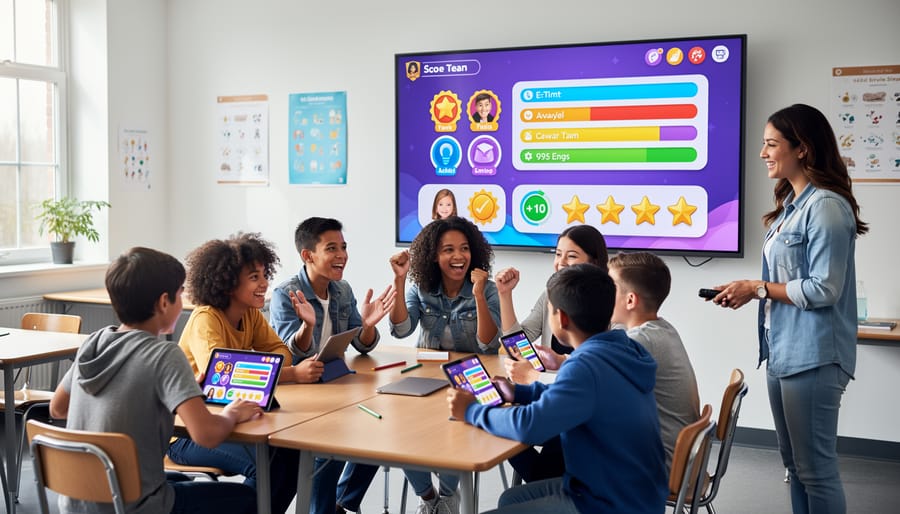
PowerPoint games bring an exciting twist to formative assessment by transforming routine check-ins into interactive experiences your students will actually look forward to. These customizable templates work like digital game shows right in your classroom, letting you gauge understanding while keeping energy levels high.
The beauty of PowerPoint game templates lies in their flexibility. You can easily adapt popular formats like Jeopardy, Family Feud, or Who Wants to Be a Millionaire to match any subject or lesson. Simply plug in your questions, adjust the difficulty levels, and you’re ready to assess student comprehension in real-time. The game-based learning approach naturally motivates students to participate, even those who typically hesitate to raise their hands.
What makes these tools particularly powerful for formative assessment is the immediate feedback loop they create. As teams or individuals answer questions, you quickly identify which concepts students have mastered and which need more attention. This instant insight allows you to adjust your teaching on the spot, whether that means slowing down to re-explain a tricky concept or moving forward with confidence.
The competitive element adds another layer of engagement without creating stress. Students focus on demonstrating their knowledge rather than worrying about grades. You can customize point values, team sizes, and question formats to match your classroom dynamics perfectly.
Best of all, once you’ve created a template, you can reuse and modify it throughout the year. Change the questions, swap the theme, and you’ve got a fresh assessment tool ready to go. This efficiency makes PowerPoint games a sustainable solution for regular formative assessment that doesn’t drain your planning time.
The Power of Customization for Every Subject and Grade
One of the most exciting aspects of formative assessment technology is its incredible flexibility. Unlike traditional one-size-fits-all quizzes, modern game-based assessment tools let you tailor every question, activity, and challenge to match exactly what your students are learning right now.
Whether you’re teaching fractions to third graders or analyzing Shakespeare with high schoolers, you can customize assessments to align perfectly with your curriculum. Want to check if students understand photosynthesis before moving on? Create a quick matching game with vocabulary terms. Need to gauge comprehension of historical events? Design a timeline challenge that makes sequencing fun. The beauty is that you’re in complete control of the content, difficulty level, and format.
Subject-specific customization becomes especially powerful when you consider the diverse needs in your classroom. You can adjust question complexity for different learning levels, add visual supports for students who need them, or incorporate movement-based responses for kinesthetic learners. Math teachers can include relevant formulas and diagrams, while language arts teachers can embed text passages directly into questions.
The process is surprisingly simple too. Most platforms provide templates you can modify in minutes, not hours. Change the questions, swap out images, adjust point values, or set time limits that work for your pacing. You don’t need technical expertise to make these tools work for your specific classroom situation.
This customization extends beyond individual lessons as well. You can create assessment libraries organized by unit, standard, or skill level, building a personalized resource bank that grows with you throughout the school year. Save time by adapting previous assessments rather than starting from scratch, or share your creations with grade-level teammates to maintain consistency across classrooms.
The result? Formative assessments that truly reflect what you’re teaching and what your students need to demonstrate, all wrapped in an engaging game format that keeps everyone motivated.
Practical Ways to Use Assessment Technology in Your Classroom Tomorrow
Quick Pulse Checks During Lessons
The beauty of game-based formative assessment tools is how seamlessly they fit into your existing lesson plans. Think of them as quick temperature checks that keep you connected to what students actually understand, right in the moment.
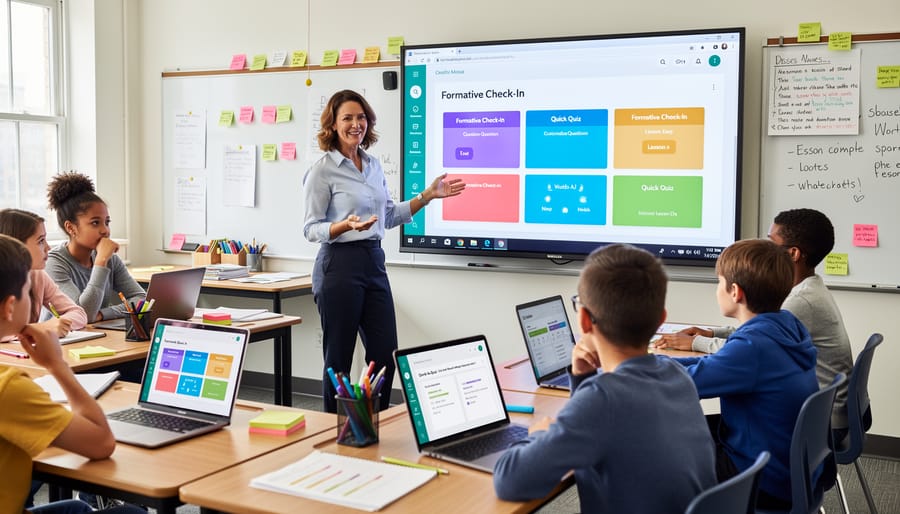
Here’s the simple approach: Set aside just 5 minutes at natural transition points in your lesson. Maybe it’s after introducing a new concept or before moving to independent practice. Launch a quick quiz game or interactive poll that students can join instantly from their devices. The key is choosing tools with simple join codes so students can hop in without fumbling through logins or complicated setup.
During these pulse checks, you’ll see real-time results that tell you exactly who’s getting it and who needs more support. The game format keeps the energy high, so it feels like a fun break rather than a test. Students stay engaged because there’s a competitive element, and you get the feedback you need to adjust your teaching on the spot.
The best part? You can customize these quick checks to match whatever you’re teaching that day. Create questions that target specific learning objectives, and you’ll gather meaningful data without losing precious instructional time. These mini-assessments become natural checkpoints that guide your next steps while keeping students motivated and involved.
End-of-Week Review Sessions That Students Actually Enjoy
Friday afternoon reviews don’t have to feel like a chore anymore! Turn those end-of-week wrap-ups into energetic team competitions that’ll have your students racing to participate. Using game-based assessment templates, you can transform review time into an experience students genuinely look forward to.
Set up quick team challenges where groups compete to answer questions covering the week’s content. The best part? These digital game templates let you customize everything. Drop in your own questions, adjust difficulty levels, and even add images or videos that match exactly what you taught. Students see their team scores update in real-time, which creates that exciting competitive energy that keeps everyone engaged.
The beauty of these game formats is they give you instant insight into which concepts clicked and which need more attention next week. While students are having fun competing, you’re gathering valuable data about their understanding. No more hoping they studied or wondering if they’re getting it.
Try rotating game formats each week – maybe a quiz show style one Friday, then a race-to-the-finish format the next. This variety keeps the excitement fresh and gives different learning styles their moment to shine. Plus, you can reuse and remix your question sets, saving precious planning time.
Building Classroom Community Through Team-Based Assessment
Formative assessment games naturally bring students together in exciting ways! When you turn quiz reviews into team competitions or collaborative challenges, students start communicating strategies, explaining concepts to each other, and celebrating collective wins. This peer-to-peer interaction builds confidence and creates a supportive learning environment where mistakes become learning opportunities rather than sources of anxiety.
Team-based games also help you spot which groups need extra support while tracking student progress in real time. Students learn valuable social skills like active listening and respectful disagreement as they work toward common goals. The best part? You can customize teams based on skill levels, interests, or learning styles, ensuring every student contributes meaningfully. This approach transforms assessment from an individual pressure point into a community-building experience that strengthens relationships and makes learning genuinely enjoyable for everyone involved.
Getting Started: What to Look for in Formative Assessment Tools
Ready to find the perfect formative assessment tool for your classroom? Let’s make this super simple! Think of choosing assessment technology like shopping for the perfect pair of shoes – they need to fit just right and feel comfortable from day one.
First up, ease of use is everything. You want a tool that you can figure out in minutes, not hours. If it takes longer than your lunch break to learn, keep looking! The best platforms let you jump right in and create your first assessment before your next class period. Your students should be able to navigate it independently too, without needing a tech tutorial every time.
Customization is your secret weapon. Look for tools that let you tailor questions, add images, adjust difficulty levels, and match content to exactly what you’re teaching. Generic templates are fine, but the magic happens when you can personalize assessments to fit your unique classroom needs and teaching style.
Engagement features make all the difference between students groaning and students cheering. Does the tool include game elements, fun visuals, or interactive components? Can students see their progress? These features transform assessment from “ugh, another quiz” into “can we do this again?”
Finally, check for instant feedback capabilities. The whole point of formative assessment is making quick instructional decisions. You need real-time data displays, easy-to-read reports, and simple ways to identify which students need extra support right away.
Remember, the best tool is one you’ll actually use consistently. Start with free trials, test different options with your students, and choose what feels natural for your teaching style!
Ready to transform your classroom? Embracing formative assessment technology isn’t just about keeping up with trends – it’s about unlocking your students’ full potential while making your teaching life easier. These digital tools give you instant insights into what’s clicking and what needs a little more attention, all while keeping your students engaged and excited to learn.
The best part? You don’t need to be a tech wizard to get started. Many formative assessment tools are designed with busy teachers in mind, offering simple setup and customizable options that fit your unique teaching style. Whether you’re checking understanding after a mini-lesson or reviewing for a big test, these interactive solutions meet your students where they are.
Imagine a classroom where every student participates, where you can quickly spot misconceptions, and where assessment feels more like play than pressure. That’s the power of formative assessment technology. So take that first step today – pick one tool, try it with one lesson, and watch how it energizes your classroom. Your students will thank you, and you’ll wonder how you ever taught without it.