Transform Your Classroom Into an Adventure: Why Escape Room Kits Build Stronger Student Teams
Transform your classroom into a collaborative powerhouse by choosing escape room kits that target specific team-building skills like communication, problem-solving under pressure, and shared decision-making. Look for kits with puzzles that require multiple students to contribute their unique strengths simultaneously—not just take turns—so quieter students naturally find their voice while leaders learn to listen.
Set clear expectations before starting: explain that success depends on everyone sharing ideas, asking questions, and building on each other’s thinking. This simple framing shifts the activity from entertainment to intentional skill development. Choose kits that match your students’ current collaboration level, then gradually increase complexity as their teamwork improves.
The real magic happens in your debrief. Immediately after solving (or attempting) the escape room, guide students through reflective questions: What communication strategies worked? When did you feel most heard? What would you do differently next time? This 10-minute conversation cements the collaborative lessons and helps students transfer these skills to everyday classroom work.
Escape room kits offer the perfect balance of high engagement and genuine skill-building—your students will be so absorbed in cracking codes and solving mysteries that they won’t realize they’re practicing the exact collaborative behaviors you’ve been teaching all year.
What Makes Escape Room Kits Perfect for Classroom Team Building
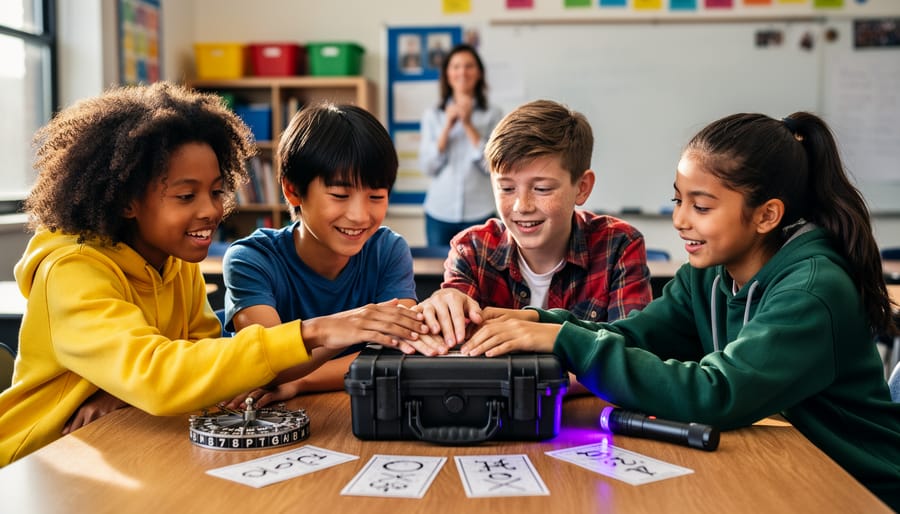
Escape room kits bring all the excitement of a real escape room right into your classroom, without the hefty price tag or field trip logistics. Think of them as ready-to-use puzzle collections where students work together to solve challenges, crack codes, and unlock mysteries within a set time limit. Unlike traditional team-building activities that might feel forced or disconnected from learning, escape rooms naturally encourage students to collaborate because they genuinely need each other’s strengths to succeed.
What sets escape room kits apart from other gamified learning activities is their built-in need for teamwork. Students can’t simply divide and conquer. They must communicate clearly, share discoveries, and combine their ideas to progress. One student might excel at pattern recognition while another notices details others miss. This authentic collaboration happens organically because the puzzles require it.
These kits transform your classroom into an engaging adventure zone where learning feels like play. The best part? They’re incredibly customizable. You can adapt the difficulty level, incorporate your current curriculum topics, or tailor challenges to specific team-building goals you have in mind. Whether you’re addressing communication gaps, building trust among new classmates, or simply wanting to energize your group, escape room kits offer flexible frameworks you can adjust.
The time pressure element adds healthy excitement without overwhelming stress. Students experience that productive rush of working together toward a common goal, celebrating small victories along the way. This creates memorable bonding moments that translate into stronger classroom relationships long after the game ends. Your students won’t even realize they’re practicing essential collaboration skills because they’re too busy having fun solving the mystery together.
The Team-Building Skills Your Students Actually Develop
Communication and Active Listening
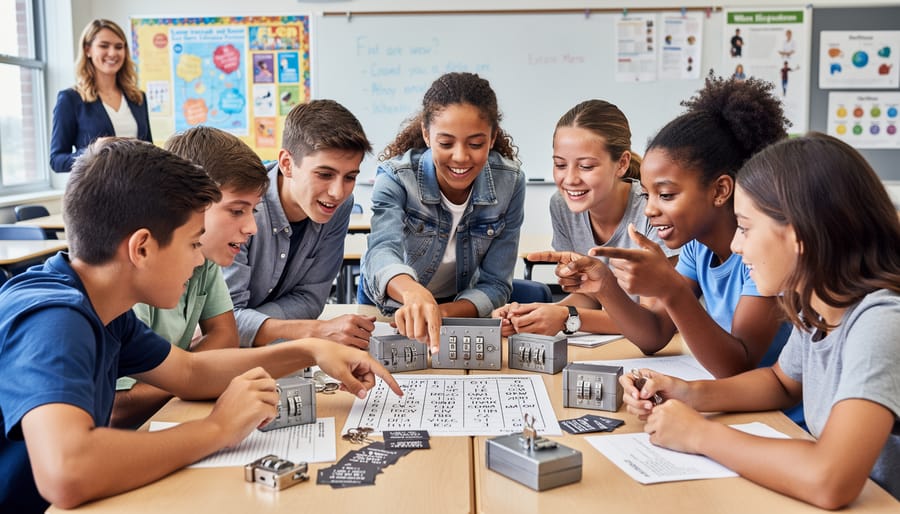
Escape rooms create the perfect environment for students to practice real communication skills! When puzzles require multiple clues scattered among team members, students quickly realize they need to speak up and share what they’ve discovered. There’s no room for staying quiet when your teammate has half the answer and you have the other half.
The magic happens when students learn to truly listen. Instead of just waiting for their turn to talk, they tune in to what others are saying because that information might be the missing piece they need. Watch as shy students gain confidence sharing their ideas and typically dominant personalities learn to pause and value everyone’s input.
You’ll notice students naturally developing phrases like “What did you find?” and “Let me explain what I’m thinking.” These verbal check-ins become automatic, building communication habits that transfer beautifully to everyday classroom collaboration. The time pressure adds urgency without stress, making efficient communication feel exciting rather than forced. Your students won’t even realize they’re practicing essential life skills while they’re having so much fun cracking codes together!
Problem-Solving as a Group
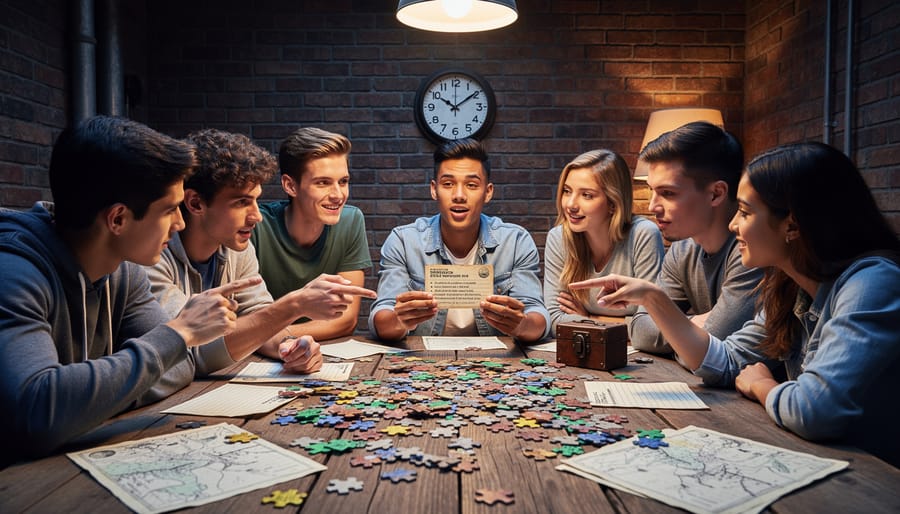
Escape rooms naturally shift students from “me” thinking to “we” thinking. When faced with multi-layered puzzles, students quickly realize one person can’t crack every code or spot every clue. This creates organic moments where they learn to pool their strengths instead of competing.
Watch what happens: the detail-oriented student notices patterns, the creative thinker suggests unexpected solutions, and the organizer keeps everyone focused. Students discover that collaboration isn’t just nice to have, it’s essential for success. They practice asking for help, sharing discoveries, and building on each other’s ideas without prompting from you.
The time pressure adds another layer. Students must decide together which puzzles to tackle first, delegate tasks based on who’s best suited, and regroup when stuck. These real-time decisions mirror workplace challenges they’ll face later.
Best part? The format feels like play, so students practice teamwork without the resistance that sometimes comes with traditional group projects. They’re too engaged in escaping to worry about who’s contributing more.
Recognizing and Using Each Other’s Strengths
Here’s what makes escape rooms so powerful for team building: they naturally create opportunities for every student to contribute their unique talents. One student might excel at logic puzzles while another has a knack for finding hidden clues. Some students shine with word riddles, while others are visual thinkers who spot patterns instantly. When you include variety in your puzzles—mix math problems with creative challenges, add tactile elements alongside written clues, and incorporate both individual tasks and group challenges—you’ll see quieter students step up when their strength appears, and traditionally confident students learn to appreciate their classmates’ abilities. This natural rotation of leadership builds genuine respect among teammates. Students quickly realize that everyone’s contribution matters equally, and success depends on recognizing and utilizing each person’s strengths. The best part? These insights stick with students long after the escape room ends, creating a more collaborative classroom environment overall.
How to Set Up Your First Classroom Escape Room for Team Building
Creating Balanced Teams
The secret to a successful escape room experience lies in thoughtful team composition. Mix students with different strengths and learning styles so everyone brings something valuable to the table. Aim for groups of 4-6 students—small enough for everyone to contribute, but large enough to tackle multiple puzzle elements simultaneously.
Try pairing strong readers with visual thinkers, or logical problem-solvers with creative minds. This diversity ensures students learn from each other while building collaborative skills. Use a randomizer wheel for fair grouping, or intentionally create teams based on complementary abilities.
Consider assigning rotating roles like timekeeper, clue reader, or materials manager to keep everyone engaged. Avoid putting close friends together if they tend to work in pairs and exclude others. The goal is to push students slightly outside their comfort zones while maintaining a supportive environment where every voice matters and contributions are valued equally.
Setting Team Expectations
Before diving into your escape room adventure, take a few minutes to set the stage for meaningful collaboration. Explain to your students that this isn’t just about racing to finish first—it’s about working together as a team. Share specific goals like active listening, sharing ideas respectfully, and making sure everyone contributes.
Consider creating a simple team contract together. Ask students what good teamwork looks like and write down their ideas. This ownership helps them buy into the collaborative spirit from the start.
Assign roles if needed: a timekeeper, a materials manager, a recorder, and a communicator. Rotating these roles throughout the activity keeps everyone engaged and valued.
Remind students that getting stuck is part of the learning process. Encourage them to ask each other questions, build on classmates’ suggestions, and celebrate small wins together. Frame mistakes as stepping stones, not setbacks.
Finally, let them know you’ll be reflecting together afterward about what teamwork strategies worked best. This forward-thinking approach transforms your escape room from simple entertainment into a powerful team-building experience with lasting impact.
Your Role as the Facilitator
Your primary job is to observe, encourage, and ask guiding questions rather than solve puzzles for your students. Resist the urge to jump in with answers when teams get stuck. Instead, circulate around the room and ask questions like “What strategies have you tried?” or “Has everyone had a chance to share their ideas?” This approach keeps ownership with the students while supporting their problem-solving process.
Watch for students who aren’t participating and gently draw them in by highlighting their strengths. You might say, “Maya, you’re great with patterns—what do you notice here?” Celebrate collaboration when you see it happening naturally, reinforcing those positive team behaviors.
If a group is genuinely stuck, offer hints that point them in the right direction without revealing solutions. Your role is to create a safe space where students feel comfortable making mistakes and learning from each other throughout the experience.
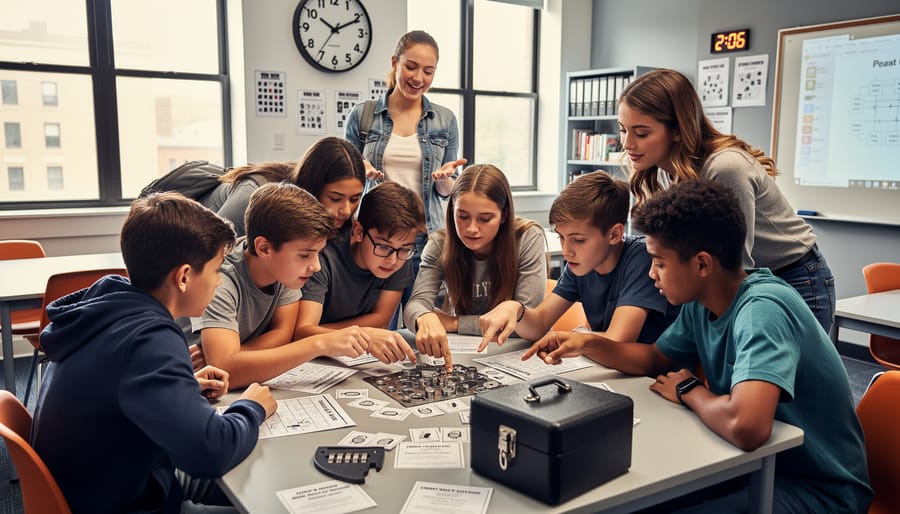
Customizing Your Escape Room Kit for Maximum Team Impact
The beauty of escape room kits is that they’re not one-size-fits-all! With a few simple tweaks, you can transform a basic kit into a powerful tool that addresses your classroom’s unique needs.
Start by identifying your team-building goals. Do you need students to practice active listening? Try removing visual clues and making puzzles audio-based. Want to encourage leadership rotation? Assign different students as “team captain” for each puzzle. Need to build trust between specific groups? Strategically place students together and design challenges that require their combined strengths.
Consider your classroom dynamics when customizing. If you have students who tend to dominate discussions, create puzzles where everyone must contribute a piece of information to solve the challenge. For quieter students, include tasks that value observation and written responses alongside verbal ones. This approach supports making activities work for all learners while strengthening team bonds.
Don’t hesitate to modify difficulty levels either. Add extra hints for younger students or struggling groups, or increase complexity by introducing red herrings and multi-step puzzles for advanced learners. You can also adjust time limits to match your students’ pace, creating appropriate challenge without frustration.
Personal touches make the biggest impact. Incorporate inside jokes, reference recent classroom events, or connect puzzles to your current curriculum. When students see familiar content woven into the experience, engagement skyrockets!
Finally, consider adding role cards that assign specific responsibilities like timekeeper, materials manager, or encourager. This ensures participation from everyone and helps students discover their natural team contributions. Remember, the goal is creating meaningful collaboration, so customize freely until the activity truly serves your students.
Beyond the First Escape: Building on Team Success
The Power of the Post-Game Debrief
The real magic happens after your students escape! Set aside 10-15 minutes for a meaningful debrief that transforms fun into lasting learning. This reflection time helps students recognize their collaborative growth and understand what made their teamwork click.
Start with open-ended questions that spark genuine conversation: “What was our team’s biggest challenge, and how did we overcome it?” or “Can you share a moment when someone’s unique skill really helped us?” These prompts encourage students to identify specific teamwork strategies they used.
Try the “rose, bud, thorn” approach where students share something that worked well (rose), an area for growth (thorn), and something they’re excited to try next time (bud). You can also use a simple thumbs-up chart where teams rate their communication, problem-solving, and support for each other.
Don’t forget to celebrate the quiet wins too! Ask, “Who helped the team in an unexpected way?” This highlights different leadership styles and contributions that might have gone unnoticed during the excitement.
Connect their discoveries back to everyday classroom collaboration. When students see how listening, sharing ideas, and supporting each other led to success in the escape room, they’ll carry those skills into group projects and daily interactions.
Carrying Team Skills Forward
The magic of escape rooms doesn’t have to end when the final puzzle is solved! You can keep those collaborative skills alive by weaving references back into your everyday classroom activities.
Create a shared language around teamwork by celebrating moments when students demonstrate escape room skills. When you notice someone actively listening or sharing ideas, call it out: “Great communication, just like in our escape room!” This positive reinforcement helps students recognize and repeat these behaviors.
During group projects or review games, remind students of strategies that worked well during the escape room. You might say, “Remember how your team divided tasks? Try that approach here!” These quick connections help students transfer skills across different contexts.
Consider establishing team roles based on what you observed during the escape room. If certain students excelled as puzzle-solvers or time-keepers, rotate these responsibilities during regular activities to build confidence and develop new strengths.
Keep a classroom poster highlighting your escape room teamwork successes. Add photos or student quotes about what they learned. This visual reminder reinforces that collaboration isn’t just for special activities—it’s an everyday superpower that makes learning more effective and enjoyable for everyone.
When to Use Escape Room Kits for Team Building
Timing is everything when it comes to maximizing the team-building benefits of escape room activities in your classroom. These engaging challenges work wonderfully at specific moments throughout the school year when students need that extra boost of collaboration and connection.
The beginning of the year is perfect for breaking the ice and helping students learn to work together. An escape room kit sets a fun, collaborative tone from day one and helps you quickly identify natural team dynamics and potential challenges. You’ll see who takes the lead, who needs encouragement, and how your class communicates under pressure.
Mid-year slumps are another ideal time to reintroduce these activities. When students hit that winter energy dip or seem disconnected, an escape room challenge refreshes their enthusiasm and reminds them why teamwork matters. It’s a welcome break from routine that still delivers valuable learning outcomes.
Consider using escape room kits before major group projects. Running a quick team-building activity beforehand helps students practice the collaboration skills they’ll need for success. They’ll enter their projects with fresh communication strategies and a renewed commitment to working together.
End-of-unit reviews also benefit from the escape room format. Transform content review into an exciting collaborative challenge where students must work together to demonstrate their learning. It’s assessment and team building rolled into one motivating experience.
Finally, pull out an escape room kit whenever you notice team dynamics struggling. If groups are experiencing conflicts or students seem isolated, these activities provide a reset button that gets everyone working toward a common goal again.
Escape room kits offer something truly special for your classroom: a chance to build authentic teamwork skills while your students are completely engaged and having fun. Unlike forced team-building exercises that feel awkward or artificial, escape rooms naturally encourage communication, creative problem-solving, and genuine collaboration. Students work together because they want to, not because they have to.
The best part? The impact doesn’t end when the timer stops. The connections students form and the collaborative habits they develop during these activities carry over into everyday classroom life. You’ll notice students listening more carefully to each other’s ideas, supporting struggling classmates, and tackling challenges with renewed confidence.
Ready to give it a try? Start small with a simple kit and watch what happens. You can always customize future activities based on what you observe. Remember, you don’t need to be an escape room expert to create meaningful team-building experiences. The kits do most of the heavy lifting, while you get to witness those magical moments when your students truly work as a team. Your classroom culture will thank you for it.