Track Student Engagement During Game Debriefs (And Actually Know What’s Working)
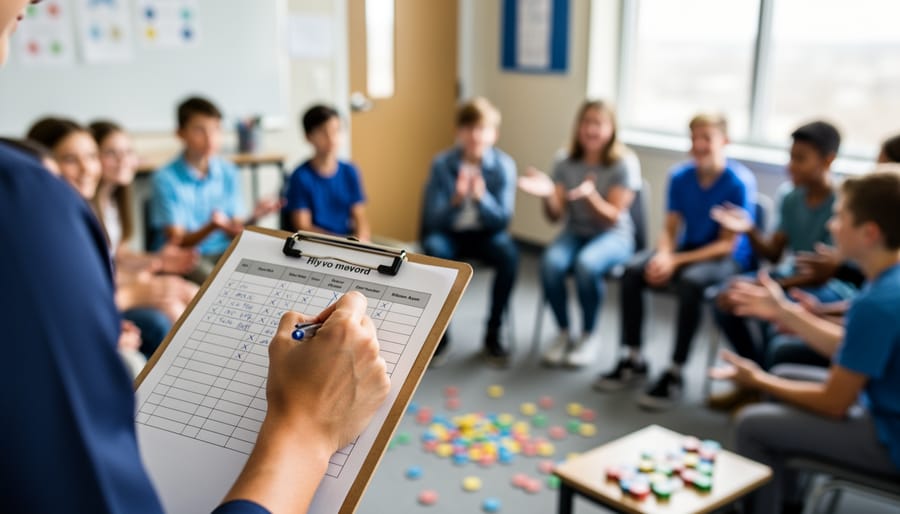
Track which students actively participate by creating a simple seating chart and using tick marks or symbols each time someone contributes—you’ll quickly spot patterns of who’s engaged and who’s fading into the background. Focus your observations on three key behaviors: verbal participation (sharing ideas, asking questions), physical engagement (body language, eye contact with peers), and task completion (following game rules, contributing to team goals). Set a timer for brief 2-3 minute observation windows during different game phases rather than trying to watch everything at once, which prevents you from getting overwhelmed while still capturing meaningful data. Create a quick reference sheet listing specific engagement indicators before the game starts, like “uses strategy vocabulary,” “helps teammates,” or “stays on task without redirection,” so you’re measuring concrete actions instead of vague impressions. This focused approach transforms your post-game reflections from “I think it went well” to “Here’s exactly what worked and what needs adjustment,” giving you the confidence to refine your activities and prove their educational value to students, parents, and administrators.
Why You Need an Observation Tool for Game Debriefs
You just wrapped up an amazing classroom game. The energy was fantastic, students were laughing, and everyone seemed engaged. But here’s the million-dollar question: did they actually learn anything?
This is the gap many teachers face with game-based learning activities. We know games are fun. We can feel the excitement in the room. But when it comes to proving learning happened or identifying which students need extra support, we’re often left relying on our gut feelings.
That’s exactly where observation tools come in to save the day.
Think about it: without a structured way to track what’s happening during your game, you’re essentially flying blind. Sure, Maya seemed super engaged, but did she answer questions correctly or just cheer loudly? Was Jamal really struggling with the content, or was he just having an off day?
An observation tool transforms those subjective impressions into concrete data you can actually use. Instead of wondering if your game worked, you’ll know precisely who participated, who grasped the concepts, and who needs another look at the material.
The best part? You don’t need fancy technology or complicated systems. A simple observation checklist lets you capture real-time information while the game unfolds. Later, during your debrief, this data becomes gold. You can celebrate successes with specific examples, identify learning gaps immediately, and adjust your teaching on the spot.
Without this structured approach, those valuable teaching moments slip away the second the game ends. With an observation tool, you’re turning fun into measurable learning outcomes that actually stick.

What Makes a Good Student Engagement Observation Tool
Observable Behaviors That Actually Matter
During your game debriefs, focus on these key behaviors that reveal genuine engagement and learning. These observable actions give you real data about whether your game is hitting the mark.
Start with verbal participation. Are students sharing ideas freely? Listen for the depth of their responses. Surface-level answers like “it was fun” tell you less than explanations of strategies they tried or connections they made to your lesson content.
Body language speaks volumes too. Notice whether students lean in during discussions or check out mentally. Are their eyes tracking the speaker? Do they nod along or look confused? These physical cues help you spot who’s truly engaged versus who’s just going through the motions.
Peer interaction patterns matter immensely for making games work for all learners. Watch for students building on each other’s ideas, offering encouragement, or collaborating to solve problems. Red flags include the same voices dominating every conversation or certain students being talked over consistently.
Question quality reveals thinking depth. Students asking “why did that happen?” or “what if we tried this instead?” demonstrate higher-level processing than those asking only procedural questions about game rules.
Track who volunteers first versus who needs wait time. Notice whether quieter students eventually contribute when given space. These patterns help you customize future games to maximize participation across your entire class, not just your most vocal learners.
Simple Tracking Methods You Can Use On the Fly
The best observation tools are the ones you’ll actually use! During game debriefs, you need tracking methods that work in real-time without pulling your attention away from students. Let’s explore three super-simple approaches that fit seamlessly into your teaching flow.
Tally marks are your best friend here. Create a quick chart with student names or group numbers down the left side. As students participate, make a quick mark next to their name. You can use different symbols too—a check for answering questions, a star for helping teammates, or a triangle for asking thoughtful questions. This visual snapshot takes seconds and reveals participation patterns instantly.
Participation grids offer another fantastic option. Draw a simple seating chart or group layout on paper or a tablet. During the debrief, place dots, marks, or initials wherever meaningful contributions happen. You’ll quickly spot which areas of your classroom are buzzing with engagement and which students might need encouragement.
Quick sticky note observations work wonders when you want to capture specific moments. Keep a pad handy and jot brief notes about standout interactions, creative problem-solving, or areas where students struggled. These nuggets become gold when planning your next activity.
The key is choosing one method and sticking with it. Start small—track just participation frequency for one game. Once it becomes second nature, you can customize and add layers. Remember, imperfect data is better than no data when understanding what resonates with your students!
How to Use Your Observation Tool During Game Debriefs
Before the Game: Set Your Focus
Think of this as your pre-game strategy session! Before diving into observation, take a moment to identify what success looks like for your specific classroom games.
Start by asking yourself: What’s my main learning goal today? If you’re reinforcing vocabulary, you’ll want to track different indicators than if you’re building collaboration skills. Maybe you’re focused on content mastery, or perhaps social-emotional growth is your priority. Your learning objective becomes your north star.
Next, pick just two or three engagement indicators to watch. Trying to track everything at once is like juggling while teaching—it’s exhausting! Choose indicators that directly connect to your goals. For vocabulary games, listen for students using target words. For collaboration-focused activities, watch for turn-taking and peer support.
Keep it simple and realistic. You’re the facilitator, not a courtroom stenographer! Select indicators you can actually observe while keeping the game flowing smoothly. Remember, quality beats quantity every time. A few meaningful observations will give you far more actionable insights than a cluttered checklist that leaves you feeling overwhelmed.
During the Debrief: Watch and Record
Observing student engagement during a game debrief doesn’t mean you need to step back and take formal notes like a researcher. You’re still the facilitator, but with a few smart strategies, you can capture valuable insights without missing a beat.
Position yourself strategically in the room where you can see most students’ faces and body language. Standing near the back or side often works better than staying front and center. This gives you a wider view of who’s leaning in, who’s checking out, and who’s itching to contribute.
Try the sampling approach if you’re working with larger groups. Pick 5-6 students representing different ability levels and engagement patterns. Watch these students more closely throughout the debrief. Rotate your sample group each time you facilitate a game so you build a complete picture over several sessions.
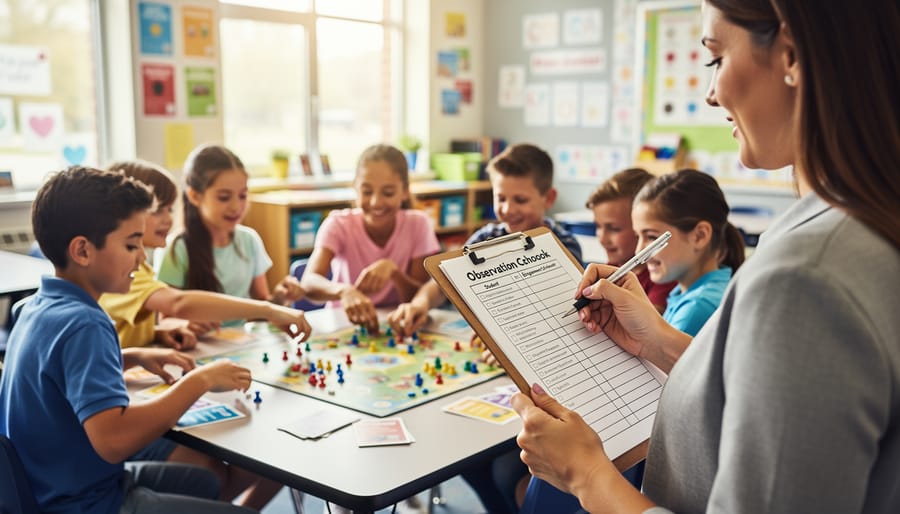
Keep your recording method super simple. A clipboard with a quick checklist or a class roster works perfectly. Use tally marks, symbols, or a basic rating scale. Some teachers love using plus signs for strong contributions, checkmarks for participation, and question marks when students seem confused. Others prefer numbers from 1 to 3. Whatever system clicks for you, stick with it.
Your phone can be your secret weapon too. Snap a quick photo of the room during peak discussion moments to review later, or record a short voice memo immediately after class while observations are fresh. The key is capturing enough detail to inform your teaching without letting documentation steal your attention from facilitating meaningful conversation.
After the Game: Make Sense of What You Saw
Good news: you don’t need hours to make sense of your observations! Set aside just 10-15 minutes after class to review your notes while everything’s still fresh in your mind.
Start by looking for patterns. Circle or highlight recurring behaviors you noticed. Did certain students consistently raise their hands during specific game phases? Were there moments when the whole class seemed confused or completely absorbed? These patterns tell you more than individual incidents.
Create a simple action list based on what you saw. If you noticed some students dominating while others stayed silent, jot down “try assigning roles next time.” Observed confusion during instructions? Note “add a practice round before starting.”
Don’t aim for perfection here. Even identifying one or two clear patterns from each observation session is fantastic progress! You’re building a picture over time, not expecting breakthrough insights from a single game.
Consider keeping a quick digital or physical folder where you collect these observations. After three or four sessions, you’ll start seeing bigger trends that help you customize games to match your students’ needs. That’s when the real magic happens, and your classroom activities become truly engaging for everyone.
Pairing Your Observation Tool with Reflection Templates
Here’s the magic combo: when you combine what you observe during gameplay with what students share in their reflections, you get the complete story of engagement and learning. Think of it like putting together a puzzle—your observation notes provide one set of pieces, while student reflections fill in the gaps you couldn’t see from your vantage point.
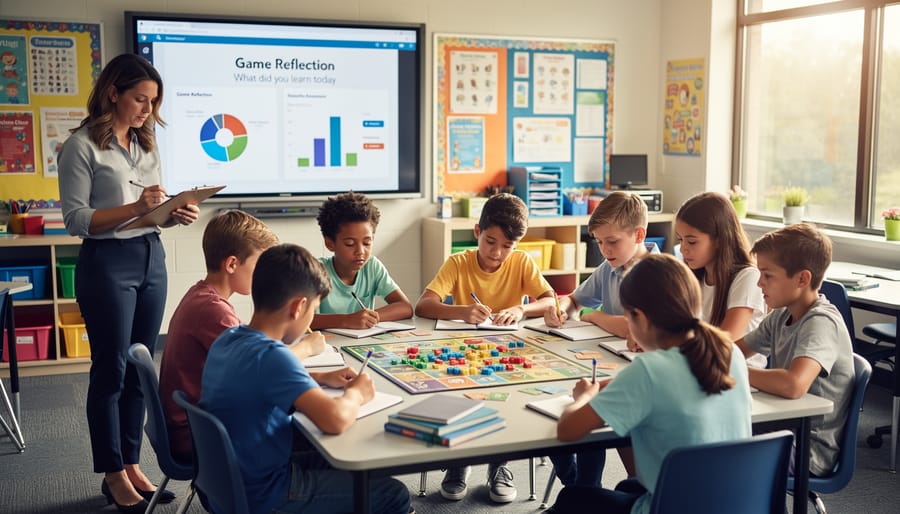
Start by using your observation tool during the game to track visible engagement behaviors. Notice who’s participating, how groups are collaborating, and where energy levels shift. Jot down quick notes about patterns you see. Then, immediately after the game, hand out reflection templates. A 3-2-1 reflection template works wonderfully because it’s quick and reveals student thinking without overwhelming them with questions.
Here’s where the power really shows up: compare your observations with student responses. Did you notice a student sitting quietly? Their reflection might reveal they were deeply engaged in strategic thinking. Spotted a group that seemed off-task? Their written reflections could uncover confusion about the rules or content. This cross-referencing helps you distinguish between genuine disengagement and different engagement styles.
Make this pairing routine by creating a simple system. Keep your observation notes on one side of your desk and collect reflection templates on the other. During your planning period or after school, spend just five minutes looking for connections. Circle patterns, note surprises, and identify students who need follow-up.
The best part? Students benefit too. When you share insights from both sources during your next class, they see that you’re truly paying attention to their experience. This validation increases future engagement because they know their voice matters. Plus, you’ll make more informed decisions about which games to repeat, modify, or retire from your classroom toolkit.
Common Pitfalls (And How to Avoid Them)
Let’s be honest—observing student engagement during an active game can feel like trying to count butterflies in a windstorm! Here are the most common challenges teachers face, plus simple fixes to keep you on track.
Challenge number one: You’re so busy facilitating the game that you forget to observe. Solution? Set a timer on your phone for quick 2-minute observation bursts. During these mini-breaks, step back and just watch. You don’t need to observe constantly—strategic snapshots work wonderfully.
Another biggie: Trying to track too many things at once. When you’re juggling participation levels, body language, verbal contributions, and collaboration quality all together, you’ll end up overwhelmed with scattered notes. Pick just two or three focus areas per game session. Rotate your focus each time you play.
Here’s a sneaky one: Focusing only on your vocal students while quiet participants fly under the radar. Combat this by creating a simple class roster checklist. Glance at it periodically to ensure you’re noticing everyone, not just the enthusiastic hand-raisers.
Finally, many teachers collect observation data but never actually use it. Avoid this by scheduling just five minutes after each game to jot down one or two actionable insights. What worked? What needs tweaking? This quick reflection transforms your observations from busy work into genuine teaching gold.
Remember, observation tools should simplify your life, not complicate it. Start small, customize what works for your classroom, and celebrate the insights you gain along the way!
Here’s the great news: observation tools don’t have to be complicated to make a real difference. By simply tracking what you see during game-based activities, you’re transforming those fun moments into genuine learning experiences with data to back them up. Your games become more than entertainment—they become powerful teaching tools you can actually measure and improve.
Start small and keep it simple. Pick just one or two things to observe during your next classroom game. Maybe it’s student participation rates or how well they explain their thinking. Jot down quick notes or use a simple checklist. As you get comfortable, you can customize your approach and add more detail.
The habit of observation changes everything. You’ll spot patterns you never noticed before, celebrate real growth with concrete evidence, and make smarter decisions about which games truly work for your students. Give it a try—your future self will thank you!