These Educational Computer Games Shaped How We Teach Today
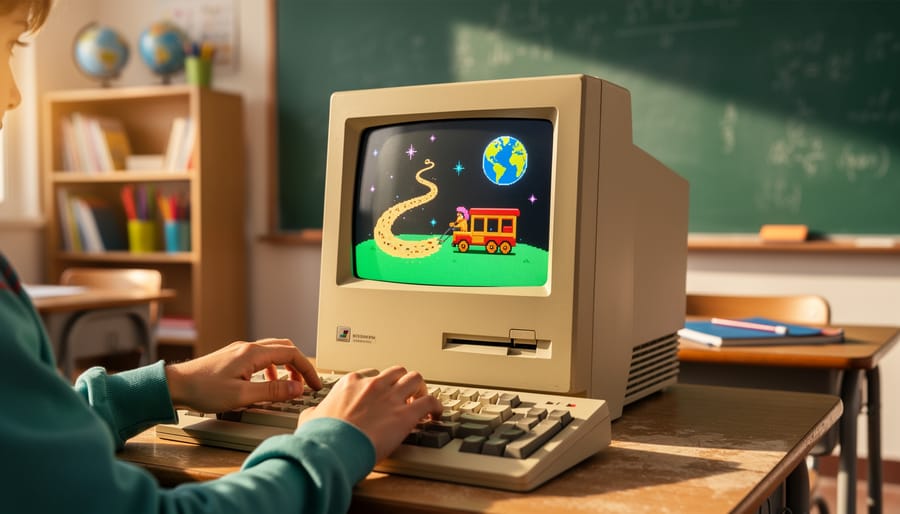
Remember the thrill of launching Oregon Trail and actually wanting to learn about westward expansion? Those pixelated adventures weren’t just entertaining—they were masterclasses in educational design that today’s teachers can learn from and adapt.
The 90s gave us educational games that made kids beg for more math practice and voluntarily explore historical events. Math Blaster turned arithmetic drills into space missions. Where in the World is Carmen Sandiego transformed geography into detective work. Reader Rabbit made phonics feel like play. These games succeeded because they disguised learning as adventure, offered immediate feedback, and let students progress at their own pace.
The magic ingredient? These games made failure safe and success rewarding. Students could retry challenges without embarrassment, experiment with different strategies, and celebrate small wins. They provided the personalized learning experience we’re all chasing today, just with chunkier graphics.
You don’t need expensive software to recreate this engagement. The principles that made 90s educational games work—clear goals, instant feedback, progressive difficulty, and intrinsic motivation—translate beautifully into modern classroom activities. By understanding what made Number Munchers and Mavis Beacon captivating, you can design learning experiences that spark the same enthusiasm in your students today.
Why 90s Educational Games Changed Everything
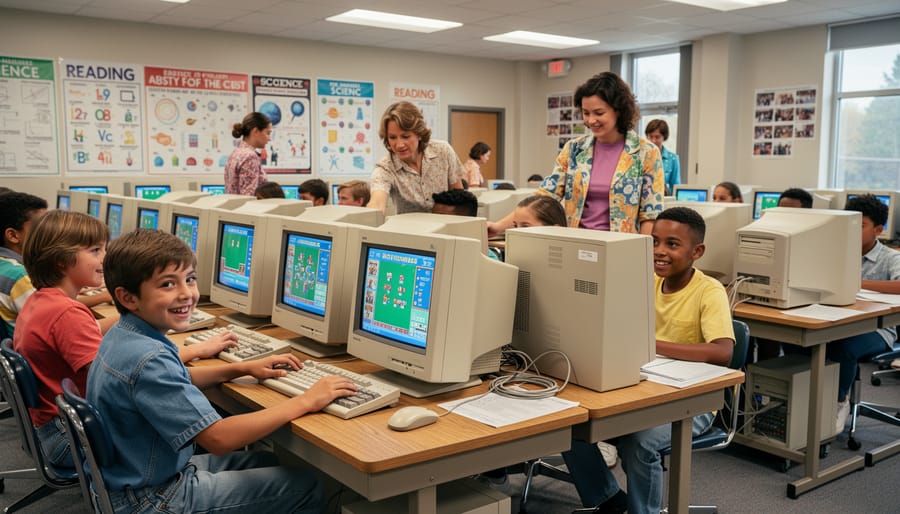
The 1990s marked a pivotal moment in education when colorful floppy disks began transforming how students learned. Before this digital revolution, classroom learning largely meant textbooks, worksheets, and chalkboards. Then came educational games that turned abstract concepts into interactive adventures, and everything changed.
What made these games so revolutionary? They understood something fundamental about learning: engagement drives retention. Instead of passively reading about fractions, students could run a pizza parlor in Math Blaster. Geography wasn’t just memorizing capitals anymore—it became a thrilling chase across the globe with Carmen Sandiego. These games transformed “I have to learn this” into “I want to play this,” and the learning happened naturally along the way.
The secret sauce was immediate feedback. When students made mistakes in these games, they didn’t receive red marks or failing grades. Instead, they got another chance to try, experiment, and discover the right answer through exploration. This built confidence and resilience, teaching kids that mistakes were simply part of the learning process.
These games also pioneered personalized learning before it became a buzzword. Students could progress at their own pace, repeat challenging levels without judgment, and advance when ready. This self-directed approach gave learners control over their educational journey.
Perhaps most importantly, 90s educational games proved that learning could be genuinely fun. They laid the foundation for today’s educational technology by demonstrating that when you combine clear learning objectives with engaging gameplay and instant feedback, students don’t just learn—they thrive. This legacy continues inspiring modern classroom tools that blend entertainment with education, proving that the best learning happens when students are having too much fun to notice they’re studying.
The Classics That Defined Educational Gaming
Math Blaster and the Art of Drill Practice
Math Blaster transformed the dreaded drill-and-kill worksheet into an exciting space adventure that students actually wanted to play. Instead of filling out endless rows of multiplication problems, kids became intergalactic heroes solving math equations to defeat aliens and save the universe. The genius was in how it disguised repetitive practice as gameplay.
What made Math Blaster so effective was its immediate feedback system. When students answered correctly, they zapped the alien and progressed through levels. Wrong answers meant trying again right away, without the embarrassment of a red X on a graded paper. This instant response helped students learn from mistakes in real-time, building confidence as they improved.
The game’s customization options let teachers target specific skills, whether students needed work on addition, subtraction, multiplication, or division. You could adjust difficulty levels to challenge advanced learners or provide extra support for struggling students. This personalized approach meant every child could work at their own pace while staying engaged.
The lesson for today’s classroom? Wrapping practice in a motivating context and providing immediate feedback turns routine exercises into opportunities for genuine engagement and skill mastery.
The Oregon Trail’s Unexpected Teaching Power
Remember when dysentery was the most feared word in your classroom? The Oregon Trail became a cultural phenomenon not just because it was fun, but because it sneakily taught essential life skills while students thought they were just playing a game.
What made this game brilliant was its unexpected teaching power. Sure, students learned about westward expansion and historical events, but the real magic happened through gameplay mechanics. Every decision mattered. Should you ford the river or pay for a ferry? How much food do you buy before leaving Independence? These choices taught consequence-based thinking in ways worksheets never could.
The game naturally developed resource management skills as students balanced limited supplies against uncertain journeys. They learned to plan ahead, adapt when things went wrong, and make tough decisions with incomplete information. When their virtual family members got sick or their wagon broke down, they experienced resilience firsthand, understanding that setbacks were part of the journey, not the end of it.
This combination of historical context with practical decision-making created engagement that stuck with students long after class ended. The best part? You can harness this same principle today by incorporating choice-driven scenarios into your lessons, letting students experience consequences in safe, educational environments.
Where in the World is Carmen Sandiego
Remember racing across continents to catch that sneaky thief in her iconic red trench coat? Carmen Sandiego transformed geography lessons into thrilling detective adventures that kept students hooked for hours. Instead of memorizing capitals from a textbook, your students became globe-trotting investigators, piecing together clues about world cultures, landmarks, and geographical features.
What made this game brilliantly educational was how it wove learning seamlessly into gameplay. Students absorbed facts about countries, currencies, and cultural traditions without realizing they were studying. Each case required careful reading of witness descriptions and almanac research, building critical thinking and information literacy skills naturally.
The genius was in the motivation. Kids wanted to crack the case and rise through the ranks from rookie detective to master sleuth. That sense of progression and achievement kept them coming back, exploring new countries with genuine curiosity.
You can recreate this detective-style engagement in your classroom today. Design mystery games where students solve problems by researching real information. Consider creating customizable quiz games with geographical clues that build on each other, letting students experience that same investigative thrill. The key is making learning feel like an adventure rather than an assignment, just like Carmen taught us.
Reader Rabbit and Early Literacy Success
Reader Rabbit captured the hearts of countless early learners by transforming reading fundamentals into delightful adventures. The series excelled at breaking down essential literacy skills into bite-sized, achievable tasks that built confidence with every click. Young students practiced letter recognition, phonics, and sight words through engaging activities that felt like play rather than drill-and-practice exercises.
What made Reader Rabbit particularly effective was its adaptive progression system. The games adjusted difficulty based on individual performance, ensuring students remained challenged without feeling overwhelmed. This personalized approach kept motivation high and frustration low, a balance every educator strives to achieve.
The colorful characters and rewarding feedback systems created an encouraging learning environment where mistakes became learning opportunities. Students could repeat activities without penalty, building mastery at their own pace. This gentle scaffolding approach helped establish crucial reading foundations while fostering a genuine love for learning. Today’s teachers can apply these same principles by creating customizable activities that adapt to student needs, celebrate small victories, and make literacy practice an adventure worth taking.
Zoombinis and Problem-Solving Skills
Remember those adorable little blue creatures on an epic journey? Zoombinis wasn’t just entertaining—it was a masterclass in problem-solving disguised as an adventure game. Each puzzle required students to observe patterns, test hypotheses, and adjust strategies based on feedback. The game brilliantly scaffolded challenges, starting simple and gradually increasing complexity as players succeeded.
What made Zoombinis special was how it taught perseverance through failure. When a pizza topping combination didn’t work or a path choice led to trouble, students learned to analyze what went wrong and try again. This trial-and-error approach built resilience alongside logic skills.
You can recreate this engaging problem-solving environment in your classroom today. Design sequential challenges where students must use deductive reasoning to advance. Create customizable activities that adjust difficulty based on student progress, just like Zoombinis did. The key is making problem-solving feel like an exciting mission rather than a worksheet. When students are invested in helping characters succeed, they naturally develop the critical thinking skills that will serve them across all subjects.
What These Games Got Right (That We Still Use Today)
Instant Feedback Kept Kids Engaged
Remember the thrill of watching that cartoon character cheer when you answered correctly, or hearing that satisfying “ding” after solving a math problem? That instant feedback was pure magic! Unlike traditional worksheets where students waited days for graded papers, 90s educational games responded immediately to every click and keystroke.
This immediate response system did something remarkable—it kept kids motivated to keep trying. When students made mistakes, games offered gentle corrections and chances to retry without embarrassment. When they succeeded, colorful animations and sound effects celebrated their achievement right away. This created a powerful learning loop where students stayed engaged because they always knew how they were doing.
Today’s teachers can harness this same principle to increase student engagement in their classrooms. Whether you’re using digital tools or customizable game templates, building in immediate feedback helps maintain momentum and keeps students excited about learning. The key is making responses quick, clear, and encouraging—just like those beloved 90s games did!
Customization Made Learning Personal
One of the most brilliant features of 90s educational games was their ability to meet students right where they were. Remember how programs like Math Blaster and Reader Rabbit automatically adjusted their difficulty? This wasn’t just a nice bonus—it was revolutionary for classroom teaching.
These games assessed student performance in real-time and shifted challenges accordingly. Struggling with multiplication? The game would offer more practice at that level before moving forward. Breezing through spelling words? Time for harder vocabulary! This adaptive approach meant every student got a personalized learning experience without you having to create separate lesson plans for different ability levels.
The beauty of this customization was that it kept all your students engaged simultaneously. No one felt left behind or bored because the game matched their pace. Students could retry levels without embarrassment, building confidence through repeated practice tailored to their needs. This same principle applies beautifully to today’s classroom tools—look for resources that let you adjust difficulty settings or create multiple versions for different learners. When students feel challenged but capable, that’s when real learning magic happens.
Fun Disguised the Learning
Remember those moments when students groaned at math worksheets but begged for just five more minutes of Math Blaster? That’s the magic these 90s games captured perfectly. They wrapped multiplication drills in alien-zapping missions and turned spelling practice into dungeon adventures. Students weren’t studying—they were saving the world, one correct answer at a time.
The secret was narrative context. Rather than drilling vocab words in isolation, games like Reader Rabbit placed them within treasure hunts and mystery-solving scenarios. Kids remembered information better because it connected to stories and challenges they actually cared about.
This approach dramatically reduced that classic “Do we have to?” resistance. When learning feels like playing, motivation skyrockets. The educational content became the tool students needed to progress through exciting levels, not a chore to endure.
You can recreate this effect in your classroom today. Think about how to frame your lessons as missions or challenges. Even simple games with clear goals and fun rewards can transform reluctant learners into eager participants who don’t even realize how much they’re absorbing.
Bringing That 90s Magic into Your Modern Classroom
Create That Game Show Energy
Remember those satisfying “ding ding ding” sounds when you answered correctly in Math Blaster? That instant feedback was pure magic! You can bring that same electric energy into your classroom today.
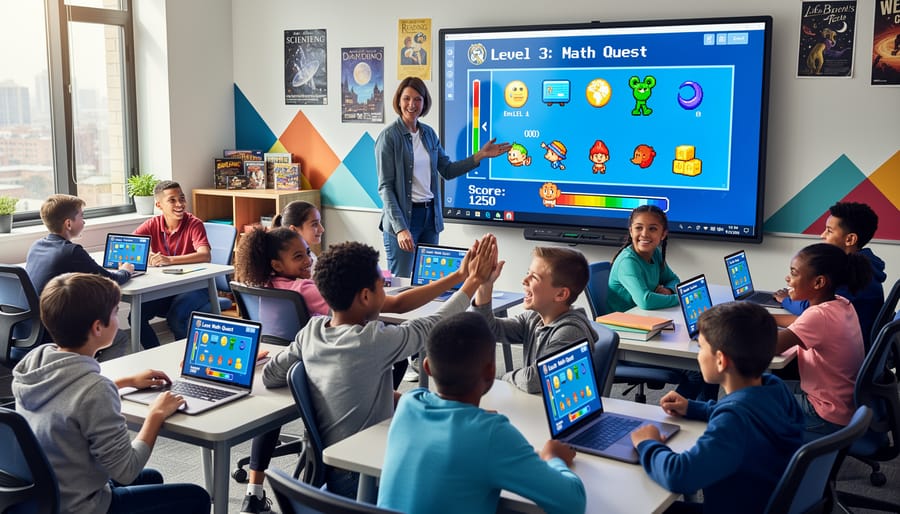
Start with a simple scoreboard displayed on your screen. Whether you’re using a whiteboard or projector, keeping score visible creates instant investment. Students suddenly care about every question because they can see their progress in real time.
Sound effects are your secret weapon. Find a collection of fun audio clips – victory fanfares, game show buzzers, or cheerful chimes. Play them when students earn points or complete challenges. The audio feedback creates that dopamine hit that kept us glued to those 90s games.
Try adding a timer to activities. Nothing gets hearts racing like a countdown clock! Just keep the pressure friendly, not stressful. The goal is excitement, not anxiety.
Consider team-based competition too. Groups competing for points often encourage peer support and collaboration. Students naturally coach each other, creating that cooperative learning environment.
The beauty of game show energy is its flexibility. Customize the difficulty, adjust the scoring system, or change the theme to match your lesson. These simple elements transform ordinary review sessions into memorable learning experiences your students will actually look forward to.
Make Review Feel Like Play
Remember how 90s games like Math Blaster turned drills into adventures? You can capture that same magic during test prep! The secret is transforming routine review into exciting game experiences your students will actually look forward to.
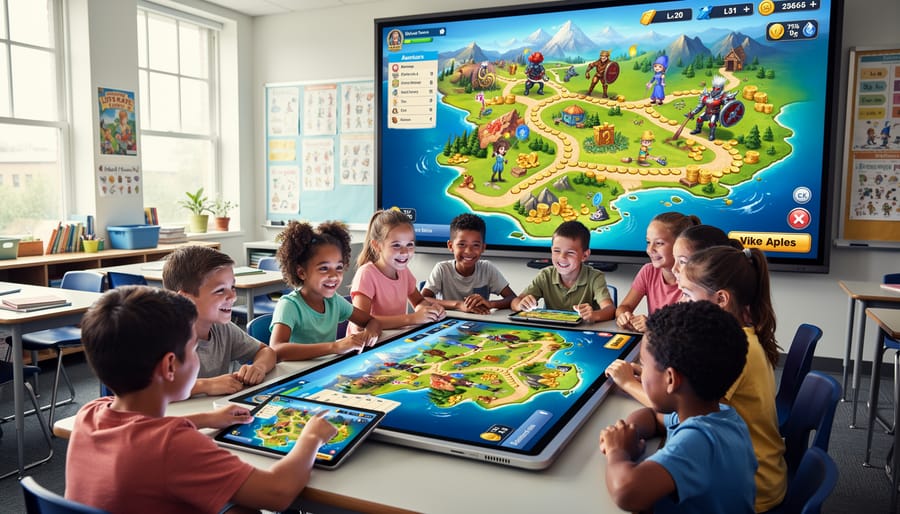
Start with customizable PowerPoint templates that let you plug in your own content. Think quiz shows, board game formats, or challenge rounds where teams compete for points. These game-based learning ideas work beautifully because you control the questions while the game structure handles the fun.
Try themes that resonate with your class. Space missions for science review? Mystery solving for reading comprehension? The possibilities are endless when you customize templates to match your content and your students’ interests.
The best part? Setup takes minutes, not hours. Drop your review questions into pre-made slides, adjust point values, and you’re ready to play. Students stay engaged because they’re competing, collaborating, and experiencing that same rush of excitement they felt playing educational games decades ago. Test prep stops feeling like a chore and becomes the highlight of the week.
Quick Setup, Maximum Impact
Good news: you don’t need a computer lab or hours of prep time to bring that 90s game magic into your classroom! Start small by dedicating just 15 minutes of class time to game-based activities. Choose tools that work on devices you already have, whether that’s a single classroom computer projected on the board or student tablets.
The beauty of modern digital templates is their plug-and-play simplicity. Many customizable game templates let you add your own content in minutes, so you can create a vocabulary review game during your planning period and use it that same afternoon. Focus on games that multiple students can play together or take turns with, maximizing engagement even with limited tech.
Begin with one game format your students love, then expand gradually. Maybe start with a quiz-show style game on Fridays as a weekly ritual. Once that’s running smoothly, introduce a new format. This approach prevents overwhelm while building your confidence and your game library.
Remember, the goal isn’t perfection. Even a simple matching game projected on your board while students call out answers captures that interactive spirit that made 90s educational games so effective. Start where you are, use what you have, and watch the engagement soar!
The colorful worlds of Oregon Trail, Math Blaster, and Where in the World is Carmen Sandiego? weren’t just memorable—they were genuinely effective learning tools. These 90s classics succeeded because they disguised skill-building as adventure, gave students control over their learning journey, and made practice feel rewarding rather than repetitive.
You don’t need vintage software to capture that same magic in your classroom today. The principles that made those games work—immediate feedback, clear goals, engaging narratives, and opportunities for choice—are just as powerful now as they were then. The difference is that you have even more flexibility to customize experiences for your specific students and learning objectives.
Think about incorporating game-based elements into your lessons, whether through digital platforms or simple templates you can adapt. Let students explore concepts through trial and error. Create scenarios where their decisions matter. Celebrate progress with visible rewards and leveling systems.
The legacy of 90s educational games reminds us that learning doesn’t have to feel like work. When you embrace playful approaches that respect student agency and make practice enjoyable, you’re not just following a trend—you’re tapping into decades of proven results. Your students deserve that same spark of excitement those pixelated adventures once provided.