
Standards Alignment Just Got Easier: Your Classroom Review Game Strategy
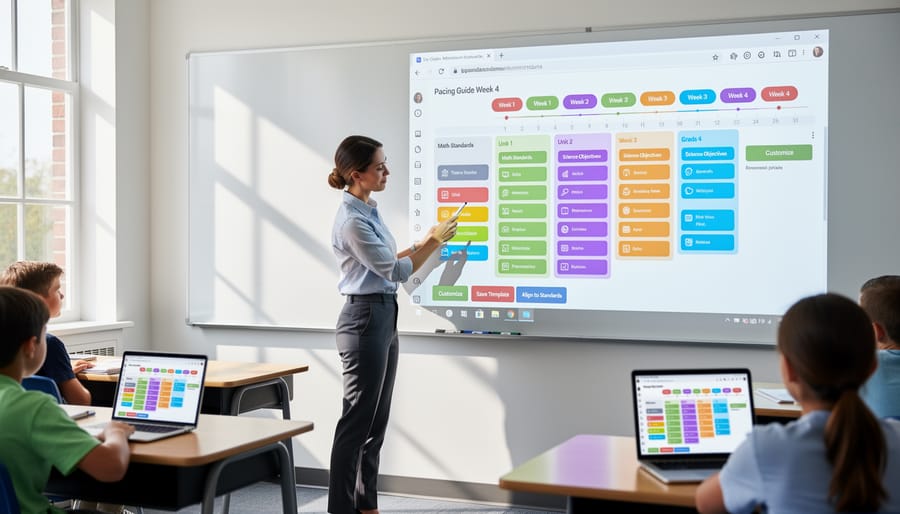
Map every review activity directly to specific state or Common Core standards before adding it to your pacing guide. Create a simple spreadsheet with columns for your standard codes, the skills they target, and which review games support each one—this visual connection helps you spot gaps and avoid redundancy in your curriculum planning.
Build flexibility into your standards timeline by categorizing review games as either “essential” or “supplemental” for each unit. Essential games reinforce the foundational standards students must master before moving forward, while supplemental activities provide enrichment when your class moves faster than planned or targeted practice when they need extra time.
Customize game templates to address multiple standards simultaneously by layering questions that spiral back to previous units while introducing new concepts. A single game can review last month’s multiplication standards while previewing this week’s fraction vocabulary, maximizing your instructional minutes without sacrificing alignment.
Audit your existing pacing guide quarterly and flag standards that consistently get rushed or skipped. These are prime opportunities to integrate quick, engaging review games that keep students on track without derailing your schedule. When standards alignment becomes part of your game selection process rather than an afterthought, you’ll spend less time worrying about coverage and more time celebrating student growth.
What Standards Alignment Really Means for Your Daily Lessons
Let’s cut through the confusion: standards alignment simply means making sure what you teach matches what your students are supposed to learn according to your district or state requirements. That’s it! No mystery, no overwhelming complexity.
Think of it this way. When you plan a lesson on fractions, standards alignment means you’re teaching the specific fraction skills your third graders need to master this year, not just any random fraction activity you found online. It’s about being intentional with your teaching time.
Here’s why this matters for your daily classroom life. When your lessons align with standards, you’re building learning that connects. Students aren’t getting random bits of information that don’t fit together. Instead, they’re developing skills that stack on each other, creating solid understanding that prepares them for next year. This is especially important for curriculum alignment across grade levels.
The practical benefit? You’ll spend less time reteaching because you’ve covered what students actually need. Your review games become more effective because they reinforce the right skills. And when assessment time rolls around, your students are prepared because you’ve been teaching what they’ll be tested on all along.
Standards alignment isn’t about limiting your creativity. It’s about focusing your energy where it counts most, ensuring every activity, including those fun review games, moves your students forward.

The Disconnect Between Pacing Guides and Engaging Review
Let’s be honest about something that probably frustrates you regularly: your pacing guide tells you exactly what standards to cover and when to cover them, but it offers zero help when it comes to making review engaging or fun. You’re left staring at a calendar that says “Week 14: Review fractions” with absolutely no guidance on how to do that in a way that doesn’t involve another worksheet.
This is the real disconnect. Pacing guides are fantastic for keeping your curriculum on track and ensuring you hit all the required standards before testing season arrives. But they’re essentially a roadmap without any suggestions for making the journey enjoyable. They don’t tell you how to create meaningful review activities that actually align with those standards while keeping students motivated and engaged.
You end up in this tricky spot where you know what you need to teach, you know when it needs to happen, but you’re left scrambling to find or create activities that check all the boxes: standards-aligned, grade-appropriate, engaging, and realistic for your available time. Traditional review methods like flashcards or practice packets might technically cover the content, but they rarely generate the enthusiasm you need to make learning stick.
The challenge becomes even tougher when you’re trying to differentiate for different learning levels while still maintaining that standards alignment your administrators expect to see in your lesson plans.
How Review Games Fit Into Your Scope-and-Sequence
Before a New Unit (Pre-Assessment)
Starting a new unit? Games are perfect for finding out what students already know! Use pre-assessment games to activate prior knowledge and identify learning gaps before diving into new standards. This helps you customize upcoming lessons to meet students right where they are. Create quick, low-stakes review games covering prerequisite skills—students stay engaged while you gather valuable data about their readiness. The best part? You can tailor questions to match your specific standards and adjust difficulty based on results, ensuring every student gets the support they need from day one.
During Instruction (Formative Check-Ins)
Quick game-based check-ins are perfect for spotting who’s mastering your current standards and who needs extra support. During a unit, use short 5-10 minute review games to gauge student understanding in real time. Customize questions to target the specific standards you’re actively teaching, making each game a mini-assessment that reveals learning gaps immediately. This approach keeps students engaged while giving you valuable data to adjust your instruction on the fly. You can even create different question sets for various skill levels, ensuring every learner gets appropriately challenged. These informal assessments take the pressure off while helping you stay responsive to your class’s needs and maintain alignment with your pacing guide.
After Teaching (Standards Mastery)
This is your chance to see how well students have mastered the standards before the big test! Use review games as a comprehensive check-in to identify any gaps and celebrate successes. Choose game templates that cover all the key concepts from your unit, and customize questions to mirror the types of problems students will see on their assessment. This isn’t just fun practice—it’s strategic preparation that shows you exactly where students stand. You’ll spot patterns in their responses, see which standards need a quick reteach, and give students confidence going into test day. The best part? Students stay engaged and motivated while you gather valuable data about their readiness. It’s assessment prep that actually feels like a reward, not a chore.
Making Your Review Games Standards-Aligned in Minutes
Match Questions to Specific Standards
Here’s the secret to making review games truly standards-aligned: pull your questions directly from the language in your standards and learning objectives. Think of your standards document as your question-writing guide!
Start by identifying the specific verbs in your standards—words like “identify,” “compare,” “analyze,” or “explain.” These action words tell you exactly what students need to demonstrate. Then, craft questions that mirror that language. For example, if your standard says students will “compare fractions with unlike denominators,” your game question might ask: “Compare 2/3 and 3/4. Which is greater?”
This approach ensures every question serves a clear purpose tied to what students actually need to master. Plus, it makes documentation easy—you can show administrators exactly how your review activities support required learning goals.
Pro tip: Keep a standards reference sheet handy when creating your games. Copy and paste key phrases directly into your question bank. This saves time and guarantees alignment every single time you customize a review activity!
Adjust Difficulty Based on Your Timeline
Your pacing guide tells you where students should be at any given point in the year, so use it to guide your game complexity! Early in a unit? Keep review games simple with basic recall questions to build confidence and assess prior knowledge. As you progress through your timeline, gradually increase difficulty by adding multi-step problems or deeper thinking questions that match your current instructional focus.
The best part? You can easily adjust on the fly. If you’re ahead of schedule, challenge students with preview questions from upcoming standards. Running behind? Scale back to reinforcement activities that solidify foundational skills before moving forward. This flexibility means your review games always match exactly where your students are in their learning journey, making every game session purposeful and perfectly timed to support your curriculum goals.
Tag Your Games for Easy Tracking
Stay organized and save yourself time by creating a simple tagging system for your review games. Try adding labels like the specific standard code, unit number, or quarter to each game title or description. For example, you might name a game “Fractions Review – 4.NF.A.1 – Q2” so you can instantly identify it months later. Consider keeping a simple spreadsheet or digital folder system where you track which games align with which standards and when you used them. This makes it super easy to pull up the perfect review game when you’re planning next semester or sharing resources with colleagues. You can even color-code games by subject or mark your favorites for quick access. A few minutes of organization now means less scrambling later when you need that perfect standards-aligned activity for your pacing guide.
Quick Wins: Review Game Templates That Work Best for Standards Practice
Ready to jumpstart your standards-based review? Some game formats naturally lend themselves to practicing specific skills and standards across different content areas. Let’s explore the templates that work best so you can get your review games up and running quickly.
For mastering vocabulary and key terms across any subject, quiz-style games with multiple-choice or true-false questions are your go-to option. These work beautifully for science vocabulary, math definitions, social studies concepts, or language arts terminology. The quick-fire format keeps energy high while reinforcing those essential building blocks your standards require.
Need to practice procedural standards like multi-step math problems or grammar rules? Sequential question formats shine here. You can build questions that progressively increase in difficulty, mirroring the cognitive progression outlined in your standards. Students get immediate feedback on each step, which helps identify exactly where misunderstandings occur.
Matching games are fantastic for making connections between concepts, particularly for younger learners or when introducing new units. Think matching vocabulary to definitions, historical figures to their contributions, or fractions to their visual representations. These templates make abstract standards feel concrete and manageable.
For comprehensive review covering multiple standards at once, game-show style templates create excitement around mixed-topic practice. You can customize categories to align with your unit’s standards, allowing students to choose their challenge level while you ensure complete coverage.
The beauty of these templates is their flexibility. Start with a pre-made format and customize the content to match your exact standards and student needs. You can adjust difficulty, add visual supports, or incorporate real-world examples that resonate with your learners. This customization means the same template works whether you’re teaching third-grade fractions or high school biology.

Staying Flexible When Your Pacing Guide Changes
Let’s be honest—pacing guides have a habit of shifting just when you think you’ve got everything mapped out! A snow day here, an assembly there, or a sudden curriculum adjustment can throw your carefully planned review sessions off track. The good news? When your review activities are built on customizable templates, you can adapt quickly without starting from scratch.
Keep a flexible mindset by building a bank of review games that can stretch or shrink as needed. If you suddenly need to move faster, combine two related standards into one game session. Running ahead of schedule? Add deeper question sets or extension activities to your existing games. The key is having templates ready to go that you can adjust in minutes, not hours.
Consider creating “emergency backup” review games for your most critical standards—the ones that absolutely must be covered regardless of schedule changes. This way, even when things get hectic, you’ll have engaging, standards-aligned activities ready to deploy at a moment’s notice.
Standards alignment doesn’t have to feel like a chore. With the right approach and tools, it can actually become a natural part of your planning process that makes your teaching more focused and effective. The best part? Your students won’t even realize they’re hitting those benchmarks because they’ll be too busy having fun during review games.
Remember, engaging review activities and standards-aligned instruction aren’t opposites—they’re perfect partners. When you customize games to match your pacing guide and learning objectives, you’re creating meaningful practice that sticks. Your students get the repetition they need without the worksheet fatigue, and you get the confidence that comes from knowing every activity supports your curriculum goals.
Start small if you need to. Pick one upcoming standard, choose a game template that fits, and customize it to match your content. You’ll quickly see how manageable and even enjoyable this process becomes. Standards alignment isn’t about rigid boxes—it’s about making those requirements work for your classroom in ways that energize both you and your students. You’ve got this!