
Standards-Aligned Materials That Actually Make Lesson Planning Easier
Standards-aligned instructional materials take the guesswork out of lesson planning by connecting your daily activities directly to learning objectives. Think of them as your roadmap—they ensure every classroom moment moves students toward mastery of grade-level expectations while saving you precious planning time.
Choose materials that clearly state which standards each activity addresses, making documentation effortless during evaluations. Look for resources offering built-in differentiation options so you can meet diverse learner needs without creating multiple lesson versions from scratch. Prioritize templates and tools that let you customize content while maintaining alignment—your fifth graders need different examples than your second graders, even when targeting similar skills.
The beauty of truly aligned materials is their flexibility. You’re not locked into rigid scripts but empowered with structured frameworks that adapt to your teaching style and students’ interests. Whether you’re planning literacy centers, math rotations, or science investigations, strong standards-aligned resources include assessment checkpoints that show you exactly where students stand.
When materials connect standards to engaging, interactive activities, compliance becomes creativity. You’ll spend less time wondering “Does this count?” and more time watching students master essential skills through meaningful learning experiences.
What Standards-Aligned Instructional Materials Really Mean (in Plain English)
Let’s cut through the confusion and talk about what standards-aligned really means for your everyday teaching life.
Think of educational standards as your destination on a road trip. Standards-aligned instructional materials are simply the reliable GPS that helps you get there without taking unnecessary detours. They’re designed to match what students are expected to learn at each grade level, based on your state or national standards.
Here’s the thing: truly aligned materials aren’t just loosely connected to standards. They directly teach the specific skills and concepts your students need to master. For example, if a third-grade standard says students should “multiply one-digit whole numbers by multiples of 10,” then aligned materials give students actual practice doing exactly that, not just general multiplication review.
What makes materials genuinely standards-aligned? They hit these key points:
They focus on grade-appropriate content without jumping ahead or staying too basic. The activities and lessons target the depth of knowledge required by the standards, not just surface-level understanding. You’ll see clear connections showing which specific standards each lesson addresses. And most importantly, they include assessments that actually measure whether students achieved what the standards require.
The best part? You shouldn’t need a decoder ring to figure out the alignment. Quality materials make it obvious which standards you’re teaching, saving you from hours of cross-referencing documents. When materials are truly aligned, you can trust that the time you spend teaching translates directly into the learning outcomes your students need to reach. It’s about working smarter, not harder, while ensuring every student gets what they need to succeed.
Why Templates Are Your Secret Weapon for Standards Alignment
Think of templates as your teaching superpower! When you’re juggling lesson planning, grading, and everything else on your plate, templates become the trusty sidekick that keeps everything running smoothly.
Here’s the thing: templates give you a consistent framework that already has standards alignment built right in. Instead of starting from scratch every single time you plan a lesson, you’re working with a proven structure that keeps those learning objectives front and center. It’s like having a reliable recipe that always turns out great, with room to add your own special ingredients.
The time-saving magic is real. Once you’ve got a solid template in your toolkit, you can focus your energy on the creative stuff—like how to make that math concept click for your students or which interactive activity will get everyone excited about the lesson. You’re not wrestling with formatting or wondering if you’ve covered all the necessary standards checkboxes.
Templates also make customization so much easier. You can adjust activities, swap out examples, and tailor content to your students’ needs while maintaining that crucial standards alignment. Think of it as having training wheels that you can remove whenever you want, but they’re there to keep you steady and on track.
Plus, when you find templates that work, you can build your own library of go-to resources. That’s efficiency that compounds over time, giving you more moments to actually connect with your students.
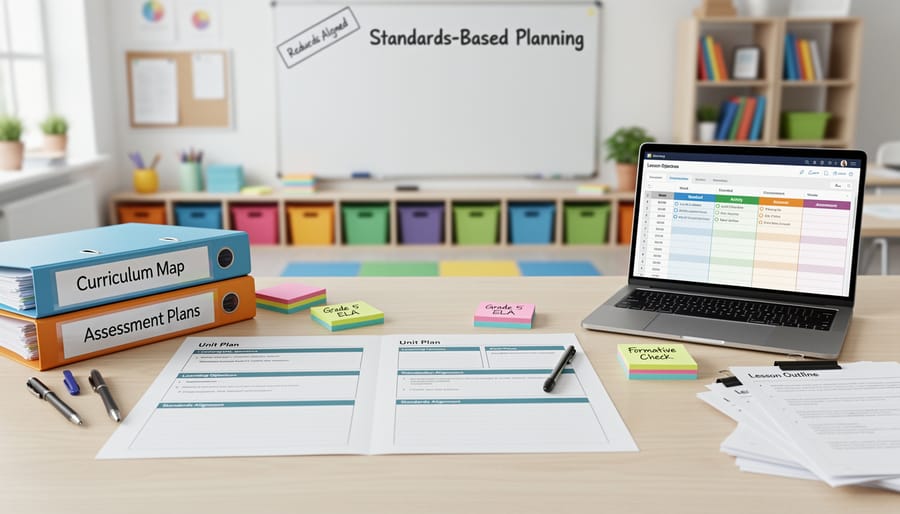
What to Look For in Standards-Aligned Unit Templates
Built-In Standards Tracking
The best part about quality standards-aligned templates? They do the tracking work for you! Look for templates with built-in fields where you can quickly note which standards each activity addresses. This might be a simple dropdown menu, a checkbox list, or a dedicated standards box right in your lesson plan.
When standards tracking is already part of your template structure, you’ll naturally document alignment as you plan rather than scrambling to fill out compliance forms later. Many teachers find that templates with auto-populated standards lists (organized by grade level or subject) save tons of time. You simply click the relevant codes, and you’re done!
This built-in approach means no duplicate paperwork and no separate tracking spreadsheets. Everything stays in one place, making it super easy to review your coverage at a glance. Plus, when administrators ask about standards alignment, you’ll have clear documentation ready to go. The key is choosing templates that make standards tracking feel like a helpful planning tool, not an extra chore tacked onto your already busy day.
Flexibility for Your Teaching Style
Every classroom is unique, and your teaching style deserves materials that adapt to you, not the other way around. That’s why customizable templates are game-changers for busy educators. Unlike rigid, one-size-fits-all formats that force you into someone else’s teaching method, flexible templates let you make adjustments that fit your students’ needs and your personal approach.
Think about it: you know your learners best. Maybe you need extra visual supports for some students, or perhaps you want to add collaborative activities that align with your classroom culture. Customizable standards-aligned materials give you that freedom while keeping you connected to important learning goals. You can adjust pacing, swap out examples that resonate with your students, and modify activities without starting from scratch.
The beauty is that you’re still meeting those essential standards, but you’re doing it your way. This flexibility saves time and reduces stress because you’re working with a solid foundation that bends to your creative vision rather than boxing you in.
Clear Learning Progression Maps
Your templates should map out exactly how skills develop over time, giving you a clear roadmap of what comes next. Look for materials that show you how a concept introduced in Unit 1 builds into more complex applications by Unit 4. This learning progression should be visible at a glance, so you’re never left wondering if students have the foundation they need.
The best templates include visual pathways or charts showing skill connections across lessons. You’ll spot prerequisite skills, see upcoming challenges, and understand why each activity matters in the bigger picture. This transparency helps you customize pacing for your unique classroom while maintaining alignment. When you can clearly see the journey from basic to advanced, planning becomes less guesswork and more strategic teaching.
Essential Components of Standards-Aligned Lesson Plan Templates
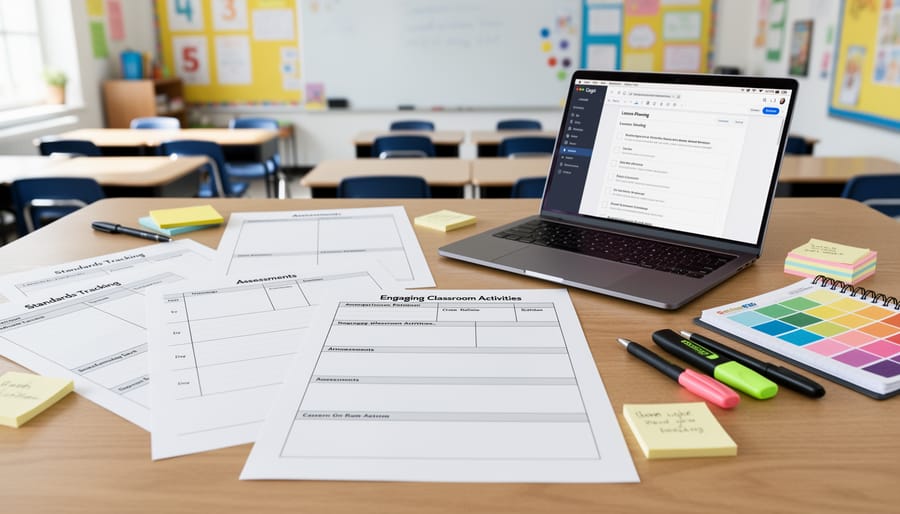
Learning Objectives That Connect to Standards
Your learning objectives are the bridge between what you’re teaching and the standards you need to meet. Think of them as your lesson’s GPS—they tell students exactly where they’re headed!
Start by pulling out the specific standard code and writing it right at the top of your objective section. For example, “CCSS.MATH.3.OA.A.1” should be visible so you (and anyone reviewing your plans) can instantly see the connection.
Next, transform that standard’s language into student-friendly objectives. Instead of copying the formal standard word-for-word, rephrase it: “Students will be able to solve multiplication problems using arrays” sounds much friendlier than dense standards language.
Here’s a time-saving tip: create a simple template where the standard number, learning objective, and success criteria all live together in one spot. This keeps everything organized and makes it super easy to show alignment during planning meetings or evaluations.
Remember, clear objectives help you customize activities that truly match what students need to learn. When your objectives directly reflect the standards, choosing appropriate interactive tools and assessments becomes a breeze!
Assessment Built Right In
Here’s the great news: the best standards-aligned templates already have assessment built right in! You shouldn’t need to add extra pages or create separate documents to track how your students are doing.
Look for templates that include dedicated spots for both quick checks during your lesson (think exit tickets or thumbs-up moments) and bigger assessments at the end of a unit. This saves you tons of time because your assessment planning happens right alongside your instruction planning.
The magic happens when these assessment sections connect directly to your standards. You’ll see exactly which standards you’re measuring and when, making it super easy to adjust your teaching on the fly. Plus, having everything in one place means no more hunting through multiple files when it’s time to report on student progress.
Choose templates that let you customize your assessment methods too. Maybe you prefer observation checklists, or perhaps your students shine with project-based assessments. The right template adapts to your style while keeping you organized and standards-focused.
Room for Interactive Activities
The best templates give you flexibility to build in review games, quick challenges, and interactive activities while keeping standards front and center. Think of your template as having built-in “fun zones” where you can drop in a quick Kahoot, a turn-and-talk activity, or a hands-on challenge that directly connects to your learning objectives.
Look for templates with designated spaces for engagement strategies. Maybe it’s a box labeled “Check for Understanding” where you can jot down a quick game idea, or a section called “Practice Activity” that reminds you to make it interactive. The key is that these aren’t just random fun breaks—they’re purposeful activities tied directly to your standards.
Your template should make it easy to note which standard each activity addresses. When you plan a review game, you want to quickly see how it reinforces specific skills. This keeps your lessons balanced between engaging and educationally sound. You’re not sacrificing rigor for fun—you’re making standards stick through memorable, interactive experiences that students actually enjoy.
Making Standards-Aligned Materials Work With Your Classroom Games
Here’s the exciting part: your favorite classroom games and interactive activities don’t just add fun to your lessons—they can actually strengthen standards alignment when used strategically. The key is choosing customizable templates that let you plug in standards-based content while keeping students engaged.
Start by identifying which standards you’re targeting for the week or unit. Then, select game templates that match your learning objectives. Need to review vocabulary? A Jeopardy-style game works perfectly. Working on problem-solving skills? Try a scavenger hunt or escape room format. The beauty of customizable templates is that you control the content, ensuring every question and activity directly connects to your standards.
When planning your classroom review game strategy, think about how games fit into your instructional flow. Use them as formative assessments to check understanding, as review sessions before summative tests, or as engaging ways to introduce new concepts. Games aren’t just rewards for finishing work—they’re powerful learning tools when aligned to standards.
Make customization your best friend. Don’t settle for pre-made content that almost fits your needs. Take those extra few minutes to adapt questions, examples, and challenges to match exactly what your students are learning. This ensures rigor while maintaining the engagement factor.
Create a game bank organized by standard. When you customize a template for a specific standard, save it for future use. You’ll build a collection of ready-to-go activities that make planning faster over time. Label each game clearly with the standard codes it addresses.
Remember, engagement and rigor aren’t opposites—they’re partners. Students learn best when they’re actively involved and appropriately challenged. Standards-aligned games give you both, creating memorable learning experiences that stick with students long after the game ends. Plus, when administrators or parents ask about standards coverage, you’ll have concrete examples of how you’re meeting them through dynamic instruction.

Time-Saving Tips for Using Templates Effectively
Ready to save time while keeping your lessons standards-aligned? Let’s dive into some practical strategies that’ll help you work smarter, not harder!
Start by creating a master template library. Organize your go-to templates by subject and grade level in one easy-to-find folder. This way, you won’t waste precious time searching through files every time you need to plan a lesson. Think of it as your personal teaching toolkit, always ready when inspiration strikes!
Here’s a game-changer: pre-fill the standards codes you use most frequently. Since many standards repeat across units, having those codes already embedded saves you from typing them over and over. Just swap out the activities and content while keeping the framework intact.
Batch your planning sessions to maximize efficiency. Set aside one dedicated block of time to customize multiple templates at once. You’ll find yourself in a productive groove, and the process becomes much quicker when you’re focused on similar tasks together.
Don’t reinvent the wheel every time! When you create a particularly effective lesson using a template, save it as a new version. You can reuse and adapt it for different units or grade levels with minimal adjustments. Small tweaks beat starting from scratch every single time.
Collaborate with your teaching team to share customized templates. Someone else might have already created exactly what you need, or you can divide and conquer by each tackling different units. Teamwork makes the dream work, and it cuts your planning time significantly!
Finally, remember that good enough is sometimes perfect. Not every lesson requires extensive customization. Sometimes a quick plug-and-play approach with minor adjustments is all you need to deliver quality, standards-aligned instruction that engages your students effectively.
Here’s the exciting truth: the right standards-aligned materials don’t add to your plate—they actually make your life easier! When you choose templates and tools that match your teaching style, you’re not just checking boxes. You’re creating a framework that helps you plan smarter, not harder.
Think of standards-aligned materials as your teaching partners. They give you the structure to hit those important benchmarks while leaving plenty of room for the creativity and flexibility that makes your classroom uniquely yours. The best part? You can customize these resources to fit your students’ needs and your personal approach to learning.
Remember, meeting standards and keeping students engaged aren’t competing goals—they work together beautifully when you have the right tools in your corner. Your students benefit from the clear learning pathways that aligned materials provide, while you get the satisfaction of watching them master essential skills through activities that genuinely excite them.
So go ahead and explore the options available to you. Find templates that feel intuitive, materials that spark joy in your planning process, and resources that celebrate both standards achievement and student enthusiasm. You’ve got this!