

How PA’s Standards-Aligned System Transforms Your Assessment Planning (Without the Headache)
Align every assessment question to specific Pennsylvania standards by creating a detailed item map that connects each test item to its corresponding SAS code. Start by downloading the current PA Academic Standards for your subject and grade level, then build a simple spreadsheet that lists every standard you’ll assess throughout the year. Create assessment blueprints before writing any test questions—these blueprints serve as your roadmap, showing exactly how many items address each standard and at what depth of knowledge level.
Map each question to one primary standard, even when multiple standards could apply, to maintain clarity in your data tracking and avoid double-counting student mastery. Use the SAS portal’s eligible content documents to ensure your questions match the complexity and format students will encounter on state assessments. Customize your blueprints by marking standards as priority, supporting, or additional based on your curriculum pacing, which helps you focus classroom time where it matters most.
Build quarterly checkpoints into your assessment calendar where you review coverage across all standards, catching gaps before they become problems. This systematic approach transforms overwhelming standards documents into manageable, actionable assessment plans that actually improve student learning while meeting state requirements.
What Makes Pennsylvania’s Standards-Aligned System Different
If you’ve ever felt overwhelmed trying to connect state standards to your daily lessons and assessments, you’re not alone! Pennsylvania’s Standards Aligned System (PA SAS) was designed with you in mind—it’s a comprehensive framework that brings everything together in one teacher-friendly place.
Think of PA SAS as your educational toolkit that connects the dots between what students need to learn, how you teach it, and how you assess their understanding. Unlike scattered resources that leave you hunting across multiple websites, this system integrates standards, instructional materials, and assessment tools into a cohesive framework.
Here’s what makes it special: PA SAS goes beyond just listing standards. It provides clear, detailed descriptions of what students should know and be able to do at each grade level. You’ll find sample assessments, instructional resources, and professional development materials all aligned to these expectations. This means less time searching and more time teaching!
The system organizes content around key components that support your planning process. You can explore Academic Standards that define learning goals, Assessment Anchors that clarify what’s tested, and Eligible Content statements that break down specific skills. These elements work together to help you create meaningful assessments that truly measure student learning.
What teachers love most is the practical application. The framework helps you develop standards alignment strategies that work in real classrooms. Whether you’re creating unit tests, designing formative assessments, or planning engaging review activities, PA SAS provides the structure and guidance to ensure everything connects back to state expectations.
The beauty of this system? It’s customizable to your teaching style while maintaining alignment with Pennsylvania’s requirements. You stay focused on what matters most—helping your students succeed.

Understanding Assessment Blueprints in the PA System
What Goes Into a Standards-Aligned Blueprint
Think of your assessment blueprint as a roadmap that guides you from standards to student success. Just like you wouldn’t plan a road trip without checking your route, you shouldn’t create assessments without mapping out the essentials first.
The foundation starts with standards coverage. Your blueprint identifies exactly which PA standards each assessment item addresses, ensuring you’re not accidentally over-testing one standard while completely missing another. This prevents the curriculum alignment challenges that can leave gaps in student learning.
Next comes depth of knowledge levels, often called DOK. These levels range from basic recall to complex strategic thinking. Your blueprint balances different DOK levels so students demonstrate both foundational understanding and higher-order thinking skills. A great assessment doesn’t just ask students to memorize facts but also challenges them to apply and analyze what they’ve learned.
Finally, item distribution brings everything together. This shows how many questions target each standard and at what difficulty level. You might include five questions on reading comprehension but ensure they span different DOK levels rather than all testing simple recall.
The beauty of a well-crafted blueprint is its flexibility. You can customize it to match your classroom needs while staying true to state requirements. It becomes your personal teaching tool that saves time and reduces stress during assessment season.
Why Blueprints Save You Time (and Sanity)
Let’s be honest: creating assessments can feel overwhelming. You’re juggling content standards, student needs, and the pressure to make sure your tests actually measure what students know. That’s where blueprints become your best friend.
Think of a blueprint as your assessment roadmap. Instead of sitting down with a blank document wondering “What should I include?” you’ve already mapped out exactly which standards you’re testing and how many questions each one needs. No more second-guessing whether you’ve covered everything or accidentally overloading your test with questions about one topic while barely touching another.
Here’s the real magic: blueprints dramatically reduce your planning time. When you know your blueprint calls for three questions on standard CC.1.2.5.A and two on CC.1.2.5.B, you’re not starting from scratch each time. You can even reuse and adapt blueprints from previous units, tweaking them as needed. This means less time stressing over test creation and more time for the fun stuff, like planning engaging review activities.
Blueprints also boost your test validity. When your assessment aligns directly with what you taught and what PA standards require, you’re measuring actual learning, not random recall. Students perform better because they know what to expect, and you get clearer data about where they truly need support.
Plus, if anyone ever questions your assessment choices (hello, parent conferences or administrative reviews), your blueprint provides instant documentation. You can confidently show exactly how your test aligns with state standards and your instructional goals. That peace of mind? Absolutely priceless.
The bottom line: blueprints transform assessment creation from a dreaded chore into a manageable, even streamlined process.
Item Mapping Made Simple
The Basics of Mapping Items to Standards
Ready to match your assessment questions to PA standards? It’s easier than you think, and once you get the hang of it, this process will become second nature—just like your morning coffee routine!
Start by pulling up the PA Standards Aligned System (SAS) portal and locate the specific standards for your grade level and subject area. Each standard has a unique code—for example, CC.1.2.3.A for third-grade reading informational text. Keep this resource bookmarked because you’ll reference it often during unit planning and assessment creation.
Now, grab one of your assessment questions. Let’s say you’re asking students to identify the main idea of a passage. Read through the standard’s description carefully. Does your question require students to demonstrate the exact skill described? If your question asks students to determine the main idea and explain how key details support it, you’ve found your match with CC.1.2.3.A!
Here’s a simple three-step process:
First, identify what skill or knowledge your question is actually assessing. Don’t just look at the topic—focus on what students must do.
Second, search the standards for matching action words. Words like “analyze,” “compare,” “evaluate,” or “identify” are your clues.
Third, verify the content alignment. Your question about fractions shouldn’t be mapped to a geometry standard, even if both are math!
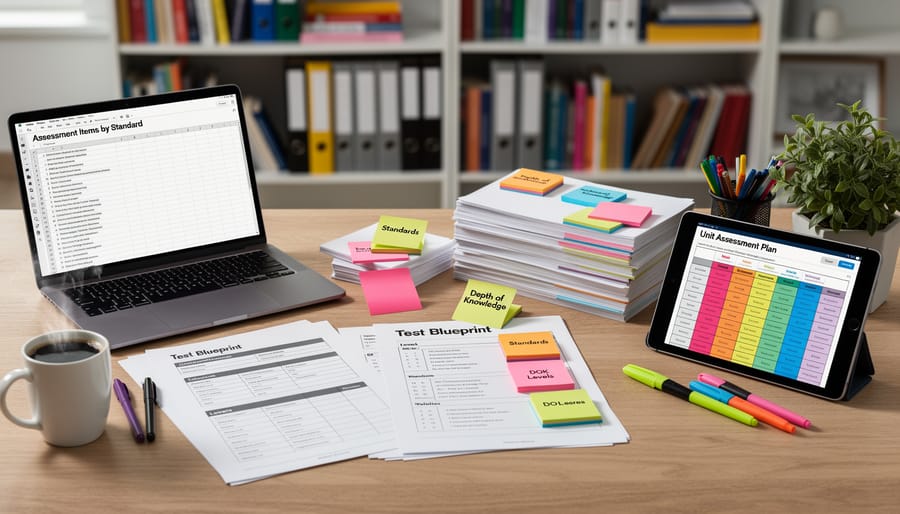
Pro tip: Create a simple spreadsheet with columns for question number, the question itself, and the standard code. This becomes your blueprint and makes future assessments much faster to create. You’ll thank yourself later when it’s time to review or revise your assessments!
Common Mapping Mistakes to Avoid
Even experienced educators can stumble when mapping assessment items to PA standards. Let’s tackle the most common slip-ups so you can create bulletproof alignment from the start.
The biggest mistake? Stretching standards too thin. It’s tempting to check off multiple standards for a single question, but ask yourself honestly: does this item truly assess both standards equally, or are you trying to make your life easier? When you force-fit alignment, you end up with weak data that doesn’t tell you what students actually know. Stick to the primary standard each item genuinely measures.
Another pitfall is forgetting about depth of knowledge levels. You might align a question to the right standard but miss the mark on cognitive complexity. If your standard requires students to analyze information, a simple recall question won’t cut it, even if it relates to the same content. Match both the content and the thinking level your standards demand.
Watch out for surface-level connections too. Just because a question mentions a topic from your standard doesn’t mean it’s truly aligned. For example, a standard about comparing ecosystems isn’t met by simply asking students to list types of habitats. Dig deeper to ensure the skill or concept being assessed matches what the standard actually requires.
Finally, don’t skip the documentation step. You might know why a question aligns with a specific standard, but if you haven’t recorded your reasoning clearly, you’ll struggle during review time or when sharing your blueprint with colleagues. Brief notes about alignment decisions save you headaches later and make adjustments much easier.
Remember, quality alignment beats quantity every time. Take the extra minute to verify each mapping decision, and your assessments will deliver the meaningful insights you need.
Bringing It All Together in Your Classroom
Now that you understand the blueprint framework and item mapping process, let’s talk about making this work in your day-to-day teaching. The good news? You don’t need to overhaul everything at once.
Start small by choosing one upcoming assessment and creating a simple blueprint for it. Use a basic chart or spreadsheet to map out which standards you’re testing and how many questions each one gets. Keep it visible on your desk as you write test items, checking off each standard as you go. This visual reference keeps you on track and prevents that last-minute panic about coverage.
Here’s where the fun begins: transform your mapped standards into engaging practice activities. Classroom review games are perfect for this because you can customize questions to match your exact blueprint. Students get targeted practice on the standards you’re assessing, and you get immediate feedback on where they’re struggling.
Make blueprints work for you by creating templates you can reuse. Design one master blueprint per grading period, then adapt it for different assessments. Share these with colleagues teaching the same grade level to save everyone time and ensure consistency across classrooms.
During test prep, let students see your blueprint. Show them which standards carry more weight and where to focus their study time. This transparency helps them prepare strategically rather than trying to review everything equally.
Between assessments, use quick checks aligned to your blueprint standards. Pop quizzes, exit tickets, or interactive review sessions can pinpoint gaps before the big test. Adjust your instruction based on what these checkpoints reveal.
Remember, the goal isn’t perfection on your first try. Each assessment you blueprint gets easier and faster. Soon, standards alignment becomes second nature, and you’ll wonder how you ever taught without this roadmap guiding your way.

You’ve got this! Creating standards-aligned assessments might feel overwhelming at first, but remember that the PA Standards-Aligned System is designed to support you, not add more to your plate. When you pair this structured framework with engaging classroom tools like review games, you’re building a powerful approach that helps students truly master the standards while keeping learning fun and interactive.
Start small and give yourself grace. Pick one upcoming assessment and try mapping just a few items to the standards. Use those fun review games to reinforce the concepts before test day. As you gain confidence, you’ll find your rhythm and discover what works best for your students.
The beauty of this approach is its flexibility. You can customize everything to fit your teaching style and your students’ needs. Whether you’re creating quick formative checks or comprehensive unit tests, the combination of thoughtful planning and engaging practice activities sets everyone up for success. Your students will appreciate the clarity, and you’ll appreciate having a roadmap that makes assessment planning feel less like guesswork and more like a strategic, achievable process.