
Your Students Already Know How to Read—Here’s How to Teach Them to Read Critically
Transform your students’ test performance by gamifying critical reading practice with timed comprehension challenges that mirror actual test conditions. Create annotation scavenger hunts where students identify thesis statements, supporting evidence, and logical fallacies in sample passages, earning points for each correctly marked element. Design argument-building tournaments using customizable game templates where students construct written responses to prompts, then peer-review each other’s work using provided rubrics—this builds both analytical reading and persuasive writing skills simultaneously.
Incorporate daily “evidence detective” activities where students race to find textual support for given claims, strengthening their ability to connect ideas across complex passages. Use progression-based challenges that start with sentence-level analysis and gradually increase to multi-paragraph synthesis tasks, ensuring students build confidence before tackling full-length assessments. Mix in collaborative writing relays where teams construct essays paragraph by paragraph, reinforcing structural understanding while maintaining engagement through friendly competition.
The key to developing test-ready students lies in consistent, low-stakes practice that feels less like drill work and more like classroom fun. By embedding test skills into interactive games, you’ll see improved retention, reduced test anxiety, and students who actually look forward to challenging reading and writing tasks.
What Makes Critical Reading Different from Regular Reading?
Regular reading is about understanding what’s on the page—following the story, grasping the main ideas, and remembering key details. It’s the foundation, but critical reading takes things several steps further. When your students engage in critical reading, they’re not just absorbing information; they’re actively questioning it, analyzing it, and evaluating its worth.
Think of it this way: regular reading asks “What does this say?” while critical reading asks “Why does this matter? Is this credible? What’s missing?” Your students become detectives rather than spectators, developing essential critical thinking skills that extend far beyond the classroom.
Critical reading involves several key components. First, students learn to identify the author’s argument and the evidence supporting it. They ask whether that evidence is strong, relevant, and sufficient. Second, they spot bias—recognizing when an author has a particular agenda or perspective that colors their presentation. Third, they make inferences by reading between the lines to understand implied meanings. Finally, they evaluate the overall credibility of the source and its conclusions.
This is what makes test-readiness so challenging. Standardized assessments don’t just check if students understood the passage—they measure whether students can analyze arguments, recognize faulty reasoning, and draw logical conclusions. Building these skills requires consistent practice and engaging activities that make the thinking process visible and, dare we say it, even enjoyable for your learners.

Why Traditional Study Methods Fall Short
We’ve all seen it happen: students dutifully highlight their textbooks in rainbow colors, reread passages multiple times, and still struggle when test day arrives. Here’s the thing—passive reading and highlighting create the illusion of learning without building the deep understanding critical thinking tests demand.
Think of your brain like a muscle. Just reading information is like watching someone else lift weights. You might understand the concept, but you haven’t actually strengthened anything. Real learning happens through active engagement—when students question, analyze, synthesize, and apply what they’re reading.
Research shows that interactive practice creates stronger neural pathways than passive review. When students actively wrestle with texts, make predictions, debate interpretations, and construct written responses, they’re building cognitive skills that stick around long after the test.
This is where game-based learning becomes your secret weapon. Games naturally require active participation and decision-making. They turn critical reading and writing practice into an engaging challenge rather than a chore. Plus, the immediate feedback and repeated practice opportunities help students retain skills far better than traditional study methods. When learning feels like play, students practice more willingly and more often—exactly what builds test-readiness.
Building Critical Reading Skills Through Classroom Games
Question the Author Games
Turn your classroom into a detective agency where students compete to uncover what authors are really up to! This game format transforms critical analysis into an exciting challenge that gets everyone involved.
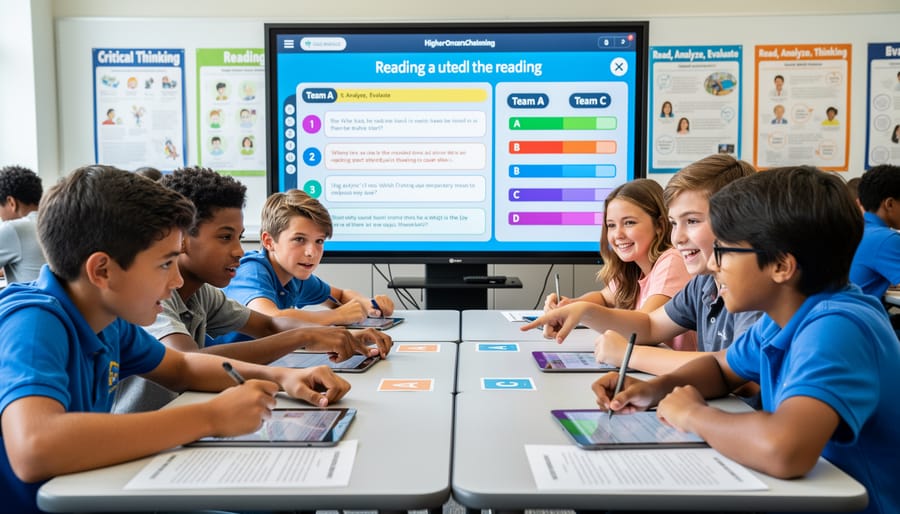
Here’s how to set it up: Divide your class into teams and present short text passages—articles, advertisements, opinion pieces, or excerpts work perfectly. Teams race to identify the author’s purpose, spot any bias, and call out persuasive techniques being used. Award points for each correct identification, with bonus points for explaining how they figured it out.
The beauty of this approach is the customization factor. You can adjust difficulty levels based on your students’ abilities, focus on specific skills they need to practice, and even let students suggest texts to analyze. Use ready-made game templates that let you plug in your own passages and create answer keys in minutes rather than hours.
Make it more engaging by adding a buzzer round where teams compete to be first to identify a particularly tricky persuasive technique, or create themed competitions around current events or topics you’re studying. The competitive element motivates even reluctant readers to dig deeper into the text, building those essential critical thinking muscles without feeling like traditional test prep.
Evidence Detective Challenges
Turn your classroom into a detective agency where students compete to uncover the best textual evidence! Evidence Detective Challenges work beautifully as team-based games where groups race against each other to find strong proof supporting specific claims. You can present a debatable statement and watch as teams dive into passages, searching for the most convincing examples to back their position.
The magic happens when you add scoreboards to track progress. Students become incredibly motivated when they see their points climbing as they locate precise quotes and relevant details. This competitive element encourages thoroughness—suddenly, students aren’t just finding any evidence, they’re hunting for the strongest, most specific support possible.
Customize these challenges to match your curriculum perfectly. Whether you’re working with fiction analysis, informational texts, or argumentative passages, you can adjust difficulty levels and time limits to fit your students’ needs. The scoreboard feature keeps energy high and shows students that careful reading pays off. Teams learn to distinguish between weak and strong evidence while building critical reading stamina. Best of all, the friendly competition transforms what could be tedious practice into an exciting classroom event that students actually request to play again.
Inference Showdown Activities
Turn inference practice into an exciting competition with game-based activities that challenge students to read between the lines. Create team-based challenges where students earn points for identifying character motivations, predicting outcomes, or drawing conclusions from textual evidence. Try a “Clue Hunter” game where teams race to find evidence supporting specific inferences, or set up stations with different text passages requiring varying inference skills.
To differentiate difficulty levels, adjust the complexity of your source texts and the type of inferences required. Beginners can start with picture books or short passages requiring simple cause-and-effect connections. Intermediate students tackle character analysis and theme identification. Advanced learners work with complex texts requiring multiple-step reasoning and synthesis of information across sources.
Customize your games by creating different point values for varying inference types. Award bonus points when students can cite specific textual evidence or make connections to other readings. Use timer elements to add excitement, but allow extended time for students who need additional processing. The key is making every student feel successful while pushing their critical thinking boundaries. These competitive formats naturally motivate students to practice skills they’ll need for any assessment.
Argument Analysis Tournaments
Turn argument analysis into a thrilling competition that keeps students on their toes! Set up tournament-style games where students race to identify logical fallacies like ad hominem attacks, false dichotomies, or slippery slope arguments. The competitive element naturally boosts engagement while building critical thinking muscles.
Here’s how to maximize the excitement: Use timers to create productive pressure. Give students 30-45 seconds to spot the fallacy in each argument. The ticking clock adds just enough urgency to keep everyone focused without causing anxiety. Add celebratory sound effects when students nail a tricky fallacy or successfully evaluate a counterargument. These audio cues provide instant feedback and make learning feel like play.
Customize your tournaments by difficulty level. Start beginners with obvious fallacies in everyday arguments, then graduate advanced students to complex political or scientific debates. Include rounds where students assess argument strength by identifying supporting evidence, evaluating source credibility, and weighing counterarguments.
The beauty of this approach? Students practice essential test skills while completely absorbed in friendly competition. They’re analyzing, evaluating, and thinking critically without realizing they’re preparing for assessments. Mix individual challenges with team formats to accommodate different learning preferences and build collaborative skills alongside analytical ones.
Strengthening Critical Writing Skills Through Interactive Practice

Thesis Statement Challenges
Turn thesis statement practice into an exciting competition with quick-fire challenges that keep students on their toes! Create timed rounds where students craft thesis statements for various prompts, then swap papers for peer evaluation. Set up a simple point system: award points for clarity, arguability, and specificity. Students love the immediate feedback and friendly competition.
Make it collaborative by pairing students to debate whether sample thesis statements are strong or weak. They’ll earn points by identifying problems and suggesting improvements. You can customize difficulty levels by adjusting time limits or prompt complexity to match your students’ abilities.
The magic happens when students become thesis evaluators themselves. They develop critical eyes for spotting vague language or missing arguments. Try rotating partners each round so everyone experiences different writing styles and feedback approaches. Add bonus points for constructive criticism that helps classmates improve. This peer review process builds confidence while reinforcing what makes thesis statements effective, preparing students for any writing assessment they’ll face.
Evidence Integration Races
Turn citation practice into an exciting challenge with Evidence Integration Races! Set a timer and have students work in pairs to incorporate provided quotes into their argument paragraphs as smoothly as possible. You can customize the difficulty by choosing quotes that are easy, moderate, or challenging to weave in naturally.
Here’s how it works: Give each team the same thesis statement and three relevant quotes. Teams race to create a cohesive paragraph that integrates all citations with proper signal phrases and transitions. When time’s up, pairs swap papers for collaborative editing, offering constructive feedback on flow and citation formatting.
The competitive element keeps energy high, while the peer review component builds teamwork and teaches students to evaluate evidence integration critically. Vary the activity by using different citation styles (MLA, APA) or by requiring teams to integrate counterarguments with rebuttals. Students love the fast pace, and you’ll see immediate improvement in how confidently they handle source material in their own writing.
Counterargument Construction Games
Turn learning to address opposing viewpoints into an exciting challenge with counterargument games that make critical thinking feel like competition! These activities help students develop the essential skill of anticipating what critics might say and preparing thoughtful responses.
Try “Argument Tennis,” where students volley claims and counterclaims back and forth in pairs. Student A makes a statement, Student B offers a counterargument, and Student A must respond with evidence or reasoning. This rapid-fire exchange builds quick thinking and helps students see multiple perspectives on any topic.
Another favorite is “Devil’s Advocate Relay,” a team-based game where groups must defend a position, then immediately switch to argue against it. This exercise teaches students that understanding opposing viewpoints actually strengthens their own arguments.
Create customizable versions using digital game templates where students earn points for identifying potential objections to their thesis statements. Add a timer element to increase engagement and simulate test-day pressure in a low-stakes environment.
The beauty of these games is their flexibility. Adapt difficulty levels for different grade ranges and customize topics to match your current curriculum. Students practice test-ready skills while having fun, making them more confident when facing argumentative writing assessments.
Creating a Test-Ready Mindset in Your Classroom
The secret to test-ready students isn’t more drilling—it’s building familiarity and confidence through engaging practice. When students regularly interact with different question types in low-pressure, game-based settings, tests become less intimidating and more manageable.
Start by incorporating quick review games into your weekly routine. Even 10-minute sessions help students recognize patterns in critical reading questions and writing prompts. This consistent exposure transforms unfamiliar test formats into recognizable challenges they’ve already tackled.
Reducing test anxiety happens naturally when practice feels like play rather than pressure. Use customizable game templates to match your current curriculum topics, making review sessions feel relevant and achievable. Students develop a “been there, done that” attitude toward test questions.
Celebrate small wins along the way. Track improvement through game scores and highlight growth in specific skills like identifying main ideas or analyzing author’s purpose. This positive reinforcement builds the confidence students need when facing actual assessments.
The goal is creating classroom moments where students think, “I’ve seen this before” during tests. That recognition alone reduces stress and helps them approach challenging questions with problem-solving mindsets rather than panic. Regular, enjoyable practice makes test day just another opportunity to demonstrate what they already know.
Quick Customization Tips for Maximum Impact
Ready-made PowerPoint game templates are total time-savers, and customizing them for critical reading and writing practice is easier than you might think! Start by adding your chosen text passages directly into the game slides. Keep passages at an appropriate reading level for your students—shorter excerpts work best for maintaining engagement during gameplay.
Build your question bank thoughtfully. Mix question types to target different skills: some focused on inference, others on author’s purpose, text structure, or vocabulary in context. For writing components, create prompts that require students to cite evidence or explain their reasoning in short responses. The beauty of templates is that the game mechanics are already built—you just drop in your content.
Adjusting difficulty is simple. For struggling readers, use shorter passages with more explicit questions. For advanced students, incorporate complex texts and questions requiring synthesis across multiple sources. You can even create different game versions for differentiated instruction without rebuilding from scratch.
Here’s a fun twist: invite students to contribute! Have them write questions based on classroom readings or create writing prompts for peers. This student-generated content adds ownership to the learning experience and gives you fresh material for future games.
The real magic? What might take hours to create from scratch becomes a 15-minute customization task. You’re spending less time on prep and more time actually teaching those critical skills your students need to master.
Transform your test prep from tedious to thrilling by embracing game-based learning. You don’t need to overhaul your entire curriculum overnight. Start with one game template that fits your schedule and watch student engagement soar. As you see the difference in their enthusiasm and confidence, you’ll naturally find ways to weave more interactive activities into your lessons. The beauty of these customizable tools is they grow with you and adapt to your unique classroom needs. Remember, when you prepare students for critical reading and writing tests through games, you’re not just helping them pass an exam. You’re equipping them with essential thinking skills they’ll use throughout their academic journey and beyond. Your students deserve learning experiences that make them feel capable and excited about challenges ahead.