
Why Your Students Struggle to Stay Focused (And How Metacognition Skills Fix It)
Teach your students to pause and ask “What strategy am I using right now?” during any classroom activity to activate their internal thinking monitor. This simple question transforms passive learners into active problem-solvers who recognize their own thought processes.
Build self-regulation skills by creating a classroom “strategy wall” where students post the different approaches they tried during problem-solving activities. When learners see multiple pathways to success displayed visually, they develop flexibility in their thinking and learn to adjust their approach when something isn’t working.
Transform your review games into metacognitive powerhouses by adding a reflection round after each question. Before revealing the answer, ask students to rate their confidence level and explain their reasoning process. This two-minute addition helps them recognize patterns in their thinking and identify when they’re guessing versus truly understanding.
Use “think-aloud” modeling during lessons where you verbalize your own decision-making process. When students hear you say “I’m not sure about this answer, so I’m going back to reread the question,” they learn that monitoring and adjusting their thinking is what good learners do. These skills aren’t mysterious talents some students have and others don’t—they’re teachable habits that every learner can develop with consistent practice and the right scaffolding.
What Metacognition and Self-Regulation Actually Mean (In Plain English)
Let’s cut through the educational buzzwords! Metacognition is simply thinking about your thinking. It’s that moment when a student stops mid-problem and says, “Wait, I don’t understand this part” or “I should probably reread that paragraph.” Self-regulation is the next step—actually doing something about it, like choosing a different strategy or asking for help.
Think of metacognition as your brain’s internal coach, while self-regulation is following that coach’s advice. When students develop these skills alongside critical thinking skills, they become independent learners who can tackle challenges without constant teacher guidance.
Here’s what this looks like in real classrooms: A third-grader realizes she’s rushing through math problems and decides to slow down. A high schooler notices he always forgets vocabulary terms and creates flashcards before the next quiz. A middle schooler recognizes she learns better with diagrams than text, so she starts drawing concept maps.
These aren’t students who were born naturally organized or motivated—they’ve learned to recognize their own patterns, strengths, and struggles. The exciting part? You can teach these skills directly through everyday activities, and they’ll transfer to every subject your students encounter. It’s about building awareness first, then giving students practical tools to manage their own learning journey.
Why These Skills Matter More Than You Think
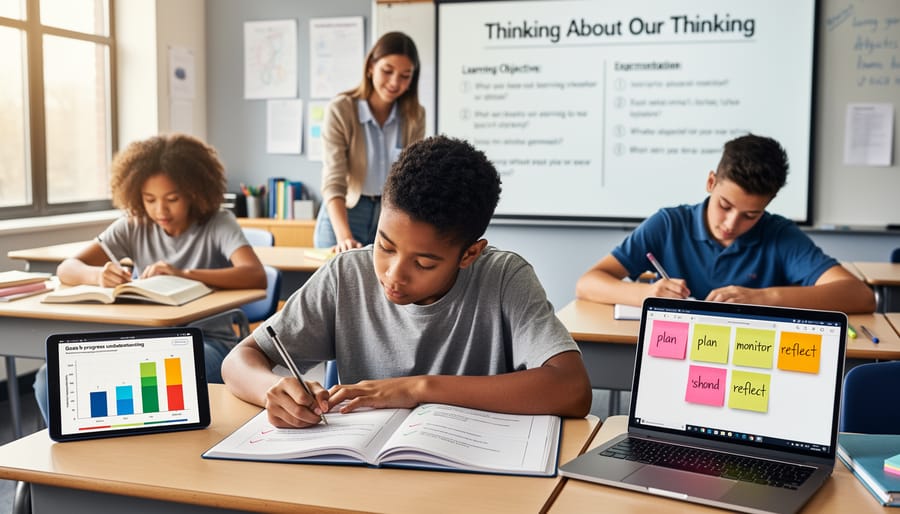
You might be wondering if teaching metacognition is worth the time when you’ve already got a packed curriculum. Here’s the good news: these skills directly impact the outcomes you’re working so hard to achieve every day.
When students develop strong metacognition and self-regulation, test scores naturally improve. Why? Because they’re not just memorizing—they’re understanding how they learn best and catching their own mistakes before submitting answers. They become independent thinkers who can tackle problems without constant teacher guidance.
Classroom management gets easier too. Students who can regulate their emotions and monitor their behavior create a calmer learning environment. They’re less impulsive, more focused, and better at resolving conflicts independently. That means fewer disruptions and more actual teaching time.
Perhaps most importantly, these skills reduce your workload over time. When students can plan their own learning, identify what they don’t understand, and seek help appropriately, you’re not constantly putting out fires or re-explaining concepts. You get to facilitate deeper learning instead of managing every detail.
The best part? You don’t need to completely overhaul your teaching. Metacognition and self-regulation can be woven into activities you’re already doing, like review games and group work. Small, consistent practice builds these skills naturally, creating a classroom where students take ownership of their learning—and you get to enjoy teaching again.
The Building Blocks: What Students Need to Master
Self-Awareness Skills
Self-awareness is the foundation of metacognition. When students understand how they think and learn best, they become more effective learners. Start by having students reflect on what makes certain tasks easy or challenging for them. Simple journaling prompts work wonders: “What strategies helped you today?” or “When did you feel confused, and what did you do about it?”
Encourage students to identify their learning preferences. Do they remember information better through visuals, discussions, or hands-on activities? Create opportunities for them to experiment with different approaches during review games and class activities. When students recognize their strengths, they can leverage them strategically. Understanding weaknesses isn’t about discouragement—it’s about finding solutions and seeking help proactively, which can reduce test anxiety and build confidence. Celebrate self-discovery moments in your classroom to normalize the process of learning about learning.
Planning and Goal-Setting
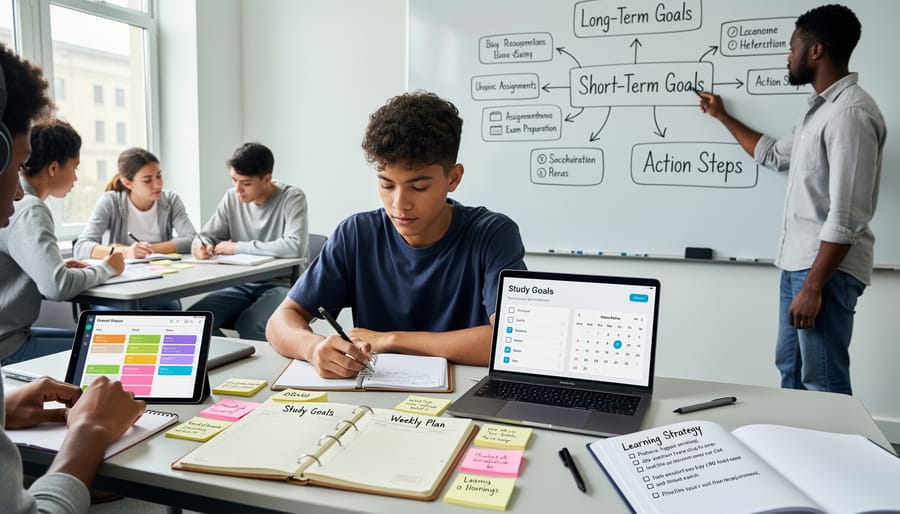
Help your students become strategic thinkers by teaching them to plan before they learn! Start by modeling the process out loud. Before a new unit, show students how you break big topics into smaller chunks and set mini-goals. Make it visual with simple flowcharts or checklists they can customize for their own learning journey.
Try goal-mapping activities where students identify what they need to learn, predict challenges, and brainstorm solutions. Even young learners can create picture-based plans! For older students, introduce backward planning where they start with the end goal and work their way back to today’s first step.
Keep it fun and flexible. Let students choose their own tracking methods, whether that’s colorful charts, digital trackers, or simple journals. The key is making planning feel like a helpful tool, not another chore. Celebrate when students adjust their strategies mid-way because that shows they’re thinking metacognitively about what works best for them. When planning becomes second nature, students take ownership of their learning and build confidence in tackling new challenges independently.
Monitoring and Adjusting
Teaching students to monitor their progress is like giving them an internal GPS for learning! Start by modeling simple check-in questions: “Is this strategy working?” or “Do I need to try something different?” During review games, pause periodically and ask students to rate their confidence levels with a quick thumbs up, sideways, or down. This builds awareness of what they know and what needs more attention.
Encourage students to keep simple learning logs where they track which memory and recall strategies work best for them. When something isn’t clicking, celebrate the pivot! Create a classroom culture where switching strategies is seen as smart, not failing. Use language like “Plan A didn’t work, so let’s try Plan B” to normalize adjustment. You can gamify this by awarding points when students recognize they need help or choose to change their approach, reinforcing that flexible thinking is a superpower worth developing.
Reflection and Evaluation
Help your students build the powerful habit of looking back at their learning! After any activity or assessment, carve out just five minutes for reflection questions like “What strategy helped you most?” or “What would you do differently next time?” Make it fun with quick partner chats, exit tickets, or even digital reflection boards where students share their biggest wins and challenges.
The magic happens when students see patterns in their own learning. Encourage them to keep simple learning logs or use colorful sticky notes to track which study methods actually work for them. You might be amazed at how even younger students can identify that drawing pictures helps them remember vocabulary or that working in quiet spaces improves their focus.
Celebrate growth, not just success! When students share what didn’t work, praise their honesty and problem-solving mindset. This creates a classroom culture where mistakes become valuable learning data rather than failures.
Turn Review Games Into Metacognition Skill Builders
Before the Game: Pre-Planning Prompts
Before diving into any review game, pause for a moment of powerful pre-planning! These quick prompts help students activate their metacognitive skills right from the start.
Try asking: “What strategy will you use today?” This simple question encourages students to think deliberately about their approach rather than jumping in randomly. You might hear responses like “I’ll eliminate wrong answers first” or “I’ll tackle easier questions to build confidence.”
Another great pre-game prompt: “What did you find challenging last time we played? How will you handle it differently today?” This reflection builds self-awareness and helps students learn from past experiences.
For younger learners, use a visual check-in. Display three emoji faces (confident, unsure, nervous) and ask students to point to how they’re feeling. Then prompt: “What can you do to be ready?”
Consider a quick partner share where students tell a neighbor one thing they’ll focus on during the game. This accountability boost keeps thinking intentional.
You can also create a simple checklist students complete before starting: “I reviewed my notes,” “I have a strategy,” “I know what to do if I get stuck.” These pre-game rituals transform gameplay from mere entertainment into purposeful learning experiences where students take charge of their thinking.
During the Game: Reflection Pauses
The magic happens when you hit pause! During gameplay, stop periodically to let students share their thinking processes. Try these quick reflection moments:
Ask students to explain their strategy before making a move. “Why did you choose that answer?” or “What made you think that was correct?” These simple prompts get students verbalizing their thought patterns.
Create “strategy share” breaks every few rounds. Have one student explain their approach while others listen and compare. You might discover that Sarah double-checks her work while Marcus eliminates wrong answers first—both valuable strategies!
Use think-aloud modeling yourself. Play a round and narrate your thinking: “Hmm, I’m not sure about this one, so I’ll use the process of elimination.” Students learn that uncertainty is normal and strategic thinking is key.
Keep these pauses brief—30 seconds to a minute—so the game energy stays high. You can even make it fun by having students give their strategies creative names like “The Double-Checker Method” or “Elimination Station.”
These reflection breaks transform passive playing into active metacognitive practice, helping students recognize what works and why.
After the Game: Debrief for Growth
The real magic happens when students pause to think about what they just experienced! After any review game, dedicate five to ten minutes for reflection. This simple step transforms entertainment into powerful learning.
Start with these game-changing questions to guide your debrief:
What strategies helped you succeed today? This encourages students to identify their thinking processes rather than just celebrating wins.
When did you feel stuck, and how did you work through it? Students learn that struggle is part of growth and begin recognizing their problem-solving approaches.
What would you do differently next time? This forward-thinking question builds self-regulation skills as students plan improvements.
How did working with your team change your thinking? Perfect for collaborative games, this highlights how we learn from others.
Which questions were hardest, and why? Students practice analyzing their own understanding gaps.
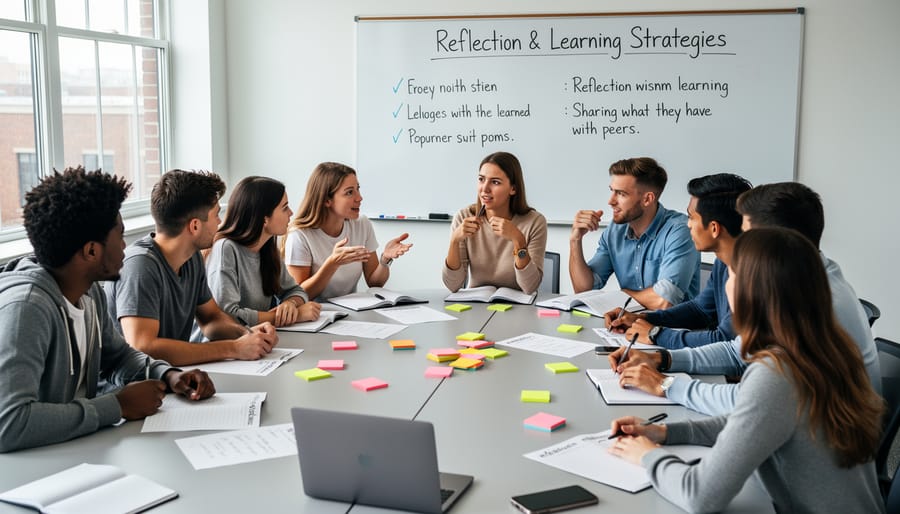
Keep debriefs conversational and supportive. Celebrate creative strategies students share, even if they didn’t lead to points. Consider having students journal responses or discuss in pairs first, then share with the whole class. You can also create a reflection corner in your classroom where students post sticky notes about their learning strategies. The key is consistency. When students know reflection follows every game, they’ll naturally start monitoring their thinking during play, which is exactly the metacognitive awareness we’re building!
Simple Classroom Tweaks That Build These Skills Daily
Good news: you don’t need to overhaul your entire lesson plan to build these essential skills! Small, intentional tweaks to what you’re already doing can make a huge difference in helping students become better thinkers and learners.
Start by adding quick Think-Alouds throughout your day. When you’re solving a math problem or reading a passage, pause and verbalize your thinking process out loud. Say things like, “Hmm, this problem is tricky. Let me reread it and underline the important numbers.” This models the internal dialogue students should be having themselves.
Make Exit Tickets metacognitive by asking reflection questions instead of just content review. Try prompts like “What strategy helped you most today?” or “What will you do differently next time?” These two-minute check-ins build the habit of self-reflection without eating up class time.
Create a Feelings and Focus Check-In at the start or middle of lessons. Ask students to rate their energy level, confidence, or focus on a simple scale. This simple awareness practice helps them recognize when they need to adjust their approach or take a brain break.
Use Error Analysis as a learning tool rather than just marking answers wrong. When reviewing work, ask students to identify where their thinking went off track and what they’d do differently. This transforms mistakes into powerful learning moments.
Finally, incorporate Planning Pause moments before activities. Give students thirty seconds to ask themselves: “What’s my goal? What strategy will I try first? What might be challenging?” This brief planning time activates self-regulation and sets them up for more focused work.
These tweaks take minimal prep time but deliver maximum impact on student thinking skills.
What This Looks Like at Different Grade Levels
The beauty of metacognition is that it grows right alongside your students! Let’s explore how to make it work at every level.
In elementary classrooms, keep it simple and visual. Use think-aloud strategies where you model your own thinking process out loud. “Hmm, I’m not sure about this answer. Let me reread the question.” Provide sentence starters like “I noticed…” or “This reminds me of…” to help younger learners express their thinking. Traffic light self-assessments work wonderfully—students color-code their understanding with green (got it!), yellow (almost there), or red (need help). During review games, pause to ask, “How did you figure that out?” rather than just celebrating correct answers.
Middle school students are ready for more independence. Introduce error analysis where they examine mistakes and identify what went wrong. Have them keep reflection journals after lessons or quizzes, answering questions like “What strategy helped me most?” and “What will I do differently next time?” During game-based reviews, assign team roles that include a “strategy monitor” who helps the group think about their approach before answering.
High schoolers can handle sophisticated metacognitive practices. Teach them to create their own study plans and adjust based on results. Use exam wrappers where students analyze their test performance and set specific goals. Challenge them to explain concepts to peers, which deepens their own understanding. In review activities, encourage students to justify their reasoning and evaluate multiple solution paths.
Remember, the key at every level is making thinking visible and giving students regular opportunities to reflect and adjust!
Here’s the bottom line: metacognition and self-regulation aren’t extras to squeeze in when you have time. They’re fundamental skills that help students become independent learners who can tackle challenges confidently. The good news? You don’t need a complete curriculum overhaul to start building these skills.
Review games create the perfect low-stakes environment for students to practice thinking about their thinking. When the pressure is off and learning feels like play, students are more willing to try new strategies, reflect on what works, and adjust their approach. Plus, you can customize these activities to match exactly where your students are and what they need.
Ready to get started? Pick just one strategy from this article and try it during your next review session. Maybe add a quick reflection question at the end of a game, or pause mid-activity to ask students how they’re deciding on their answers. You’ll be amazed at how quickly these small moments add up to big growth in student awareness and confidence. Your students already have these metacognitive abilities—now you’re just giving them the tools to unlock them.