

Why Your Students Freeze During Tests (And How to Fix It)
Your students know the material, but freeze when the test arrives. They second-guess answers, run out of time, or miss questions they could have aced with the right approach. Test-taking is a distinct skill set that requires explicit teaching and regular practice.
Transform assessment anxiety into confidence by building these essential strategies into your classroom routine. Teach students to preview the entire test first, marking point values and identifying questions they can answer quickly to build momentum. Show them how to eliminate obviously wrong answers before choosing, turning wild guesses into educated decisions. Practice time management by dividing the test period by total points, giving students a concrete sense of pacing.
The secret to mastery is repetition in a low-stakes environment. Students need multiple opportunities to apply these strategies before high-pressure exams arrive. Regular review sessions create the perfect practice ground where students can experiment with techniques, build speed, and develop the mental habits that separate test-wise students from those who know the content but can’t showcase it effectively. When test day arrives, your students will have the skills and confidence to truly demonstrate what they’ve learned.
The Gap Between Knowing and Showing
You’ve probably seen it happen in your classroom: a student who clearly grasps the material during lessons suddenly freezes during the actual test. They know the content, but their test scores tell a different story. What’s going on?
Here’s the thing—knowing information and demonstrating that knowledge under testing conditions are two completely different skills. Test anxiety kicks in, and even your brightest students can draw blanks. When the clock is ticking and the pressure mounts, some kids panic and forget everything they studied. Others rush through questions without reading carefully, making careless mistakes that don’t reflect their actual understanding.
This gap happens because many students lack strategic thinking when it comes to tests. They haven’t learned how to pace themselves, eliminate wrong answers, or decide which questions to tackle first. These are teachable skills, not innate talents! Just like you wouldn’t expect students to master math without practicing problems or improve reading without regular exercises, test-taking strategies need dedicated practice time too.
The good news? You can close this gap by creating low-stakes practice opportunities in your classroom. Think review games, practice quizzes, and classroom recall exercises that simulate test conditions without the high-pressure stakes. When students practice retrieving information in game-like settings, they build confidence and develop the mental muscle memory needed for actual assessments. The key is making it fun and frequent, so test-taking becomes second nature rather than a stress-inducing event.
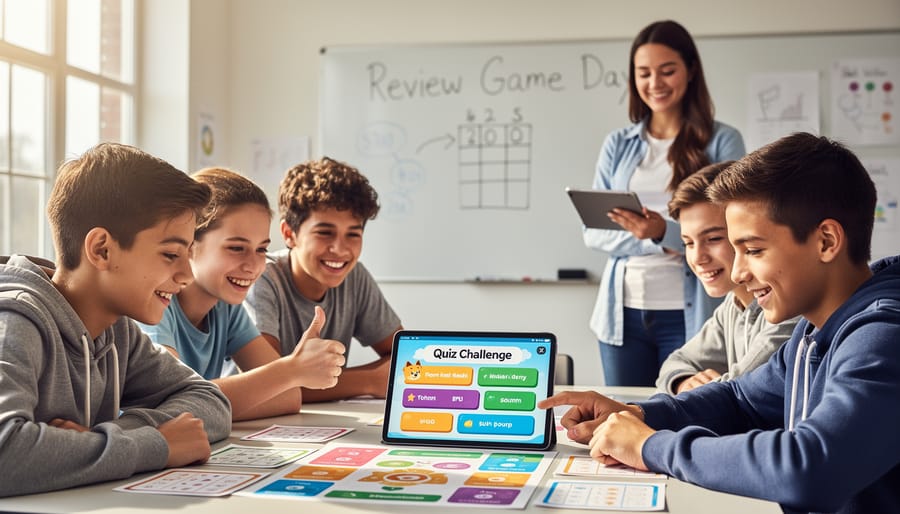
Building Test Confidence Through Game-Based Practice
Creating Low-Stakes Pressure
Let’s be honest—tests can feel stressful! But here’s the thing: students perform better when they’ve experienced that adrenaline rush before the actual exam. Game-based review creates what we call “low-stakes pressure,” a safe environment where students can practice handling time limits and friendly competition without real consequences.
Think about adding timers to your review games. When students race against the clock to answer questions, they’re building mental stamina and learning to manage that ticking-clock feeling. The beauty? If they run out of time, it’s just a game—no grade on the line!
Scoreboards and leaderboards add another layer of manageable pressure. Students experience the motivation to perform well while understanding that today’s score won’t affect their GPA. This competition, when framed positively, teaches them to stay focused under observation and bounce back from mistakes.
The key is keeping it supportive. Celebrate improvement, not just high scores. Emphasize that games are practice grounds for building confidence. When test day arrives, that real exam won’t feel so foreign because your students have already navigated similar pressure in a fun, encouraging setting. They’ve trained for this moment!
Practicing Quick Decision-Making
Games naturally create the perfect environment for developing quick decision-making skills. When students play fast-paced review games, they learn to trust their instincts and make choices under time pressure—just like during a test. This builds confidence in their ability to tackle questions efficiently without second-guessing themselves endlessly.
Through gameplay, students practice essential strategies like process of elimination. When they’re unsure of an answer, they learn to quickly rule out obviously incorrect options and choose from what remains. This skill becomes automatic with repeated practice, making it easier to apply during actual assessments.
Review games also teach students when and how to make educated guesses. Combined with memory and recall practice, students develop the ability to pull from what they know and make informed choices even when they’re uncertain. The game format removes the fear of being wrong, encouraging students to practice this valuable skill in a low-stakes setting.
Essential Test-Taking Strategies Your Students Need
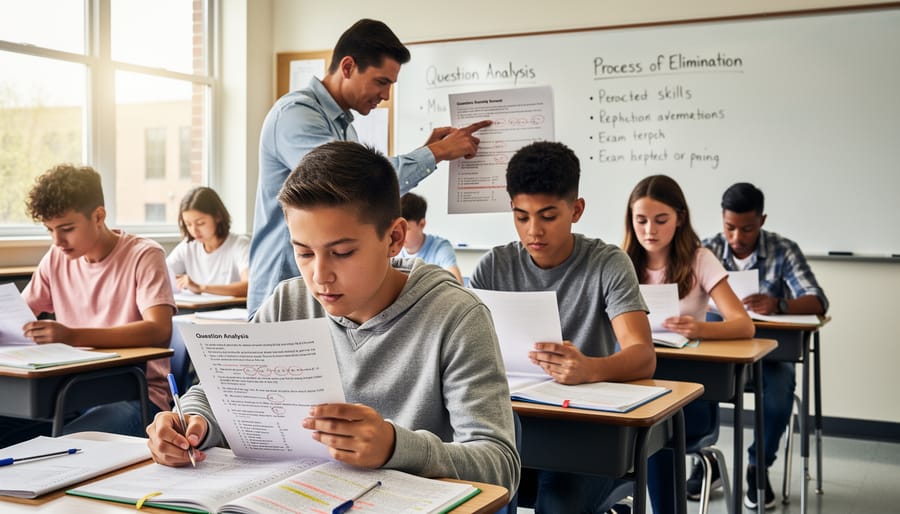
Reading Questions Carefully (Without Overthinking)
The secret to reading questions carefully isn’t reading slowly—it’s reading strategically! Teach your students to circle or underline key words like “except,” “always,” “most likely,” or “best describes.” These little words change everything about what the question is asking.
Here’s a simple classroom trick: during review games, pause after reading each question aloud and ask students to identify the action word (compare, explain, identify) and any qualifiers (not, only, primarily). This builds the habit of spotting what matters before jumping to answers.
Watch out for common traps too! Students often answer the question they wish was asked instead of what’s actually there. Practice by creating questions with similar-looking answer choices during your review sessions. When students see how small words change meanings in a low-stakes game environment, they become more careful readers during actual tests. The key is making this detective work feel fun rather than stressful—exactly what interactive review games accomplish!
Smart Time Management Techniques
Time management can make or break a test performance, but it’s a skill students can absolutely master with practice. Start by teaching the “first-pass strategy”—answer the easiest questions first to build confidence and bank points quickly. Encourage students to set mental checkpoints, like finishing half the questions when half the time remains.
When students hit a tough question, teach them to mark it and move on rather than getting stuck. Those extra minutes are better spent grabbing sure points elsewhere. They can always circle back if time allows.
Here’s the exciting part: timed review games naturally build this exact skill without feeling like drill work! When students play fast-paced review activities, they learn to make quick decisions under pressure and develop that internal clock for pacing. They experience firsthand what happens when they overthink one question versus moving efficiently through content.
Make time management fun by gradually adjusting game timers as students improve. This customization helps them build speed and confidence in a low-stakes environment, so when test day arrives, smart pacing feels like second nature.
Process of Elimination Mastery
Process of elimination is one of the most powerful test-taking tools you can teach your students. Start by showing them how to identify and cross out obviously wrong answers first. Even eliminating one incorrect choice dramatically improves their odds of success. Train students to look for extreme words like “always” or “never,” which often signal incorrect options, and to spot answers that don’t match the question’s timeframe or context.
Multiple-choice game formats give students fantastic low-stakes practice with this strategy. When students play review games repeatedly, they develop pattern recognition skills and learn to spot common distractors. The game environment removes testing anxiety, letting them experiment with elimination techniques freely. They can discuss their reasoning with teammates, explaining why certain answers don’t fit. This collaborative approach builds confidence and reinforces the systematic thinking needed during actual assessments. Plus, immediate feedback in games helps students refine their elimination skills in real-time, making the strategy second nature when test day arrives.
Checking Work Without Second-Guessing
Here’s the great news: most students actually know more than they think they do! The trick is helping them trust their knowledge during test time. Encourage your students to check their work systematically—reading through questions once to catch silly mistakes or skipped items—but set a time limit for reviews. Overthinking rarely improves answers and often creates unnecessary doubt.
Build this confidence through regular practice with review games where students answer quickly and see immediate feedback. When they realize their first instincts are usually correct, they develop independent thinking skills and trust in their preparation. Create a classroom mantra: “Check once, trust yourself, move forward.” This mindset shift transforms anxious test-takers into confident performers who know when to review and when to trust their gut.
Managing Test Anxiety in the Moment
When test anxiety strikes mid-exam, students need quick tools to reset. Teach them deep breathing techniques—breathe in for four counts, hold for four, exhale for four. This instantly calms the nervous system. Encourage positive self-talk by replacing “I can’t do this” with “I’ve prepared and I’m doing my best.” If stuck on a question, move on and circle back later to avoid spiraling.
Here’s where review games become powerful practice grounds. During game-based learning, students experience similar pressure—the timer ticking down, peers watching, needing quick answers. These low-stakes moments let them practice staying composed when challenged. The more they navigate this friendly pressure during class games, the more naturally they’ll apply these calming strategies during actual tests. It’s rehearsal for the real thing, making anxiety management second nature.
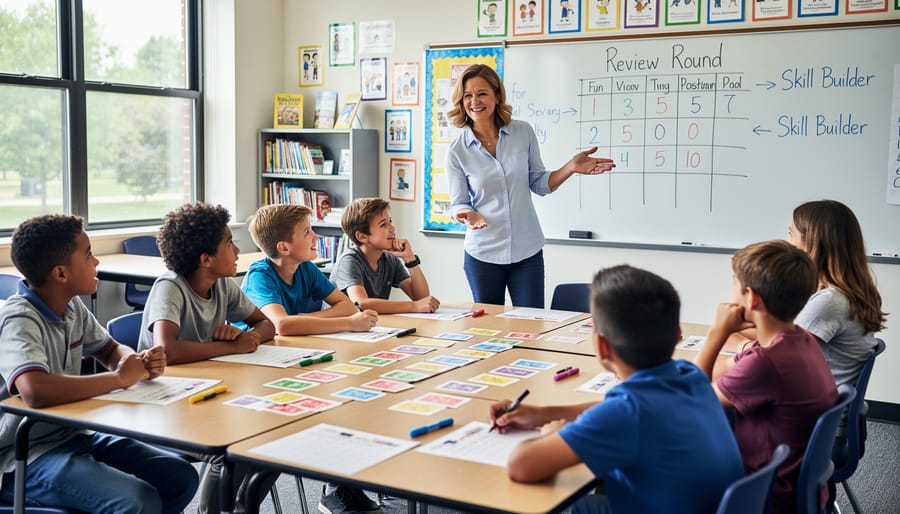
Turning Review Games Into Test-Prep Powerhouses
Match Your Game Format to Your Test Format
Here’s the thing: if your students are prepping for a multiple-choice test, practicing with essay questions won’t cut it! The format matters just as much as the content.
When you’re creating review games, take a moment to mirror the actual test structure. Heading into a standardized test with multiple-choice questions? Choose game templates that use the same format. Your students need to practice recognizing distractors, eliminating wrong answers, and managing that specific decision-making process.
The beauty of customizable game templates is that you control everything. Preparing students for true/false assessments? Set up games that build quick decision-making skills. Have a short-answer test coming up? Design games where students must recall and type answers rather than simply recognize them.
This alignment builds familiarity and reduces test anxiety. When students sit down for the real assessment, the format feels like second nature because they’ve been practicing it all along. Think of it as a dress rehearsal—same stage, same setup, just way more fun!
Add Strategic Thinking Elements
Transform your review games into true learning experiences by adding elements that push students beyond simple recall. Think bonus rounds where students must choose between an easy question worth fewer points or a challenging one worth more—suddenly they’re weighing risk versus reward! Add lifelines like “phone a classmate” or “eliminate two answers” to mirror real test-taking strategies such as collaboration and process of elimination.
Decision points make students pause and strategize. Should they answer quickly for a time bonus, or slow down to avoid penalties? These choices mirror the actual decisions students face during timed tests. You’re building strategic thinking development while keeping the energy high.
Try penalty-free practice rounds where students can experiment with different approaches without fear of losing points. This safe space encourages them to develop their own test-taking style and discover what works best for them—confidence-building that transfers directly to real assessments.
Debrief After Games to Reinforce Skills
The magic happens after the game ends! Don’t let those valuable learning moments slip away. Take just a few minutes to debrief with your students, focusing not only on which answers were correct but on how they arrived at those answers. This reflection time helps cement the test-taking strategies you’ve been teaching.
Ask questions that spark strategic thinking: “What clues in the question helped you eliminate wrong answers?” or “How did you decide which answer to choose when you weren’t completely sure?” You might also try “Did anyone use a specific strategy that really worked for them?” These quick conversations help students recognize their own problem-solving patterns and learn from each other’s approaches.
Keep it light and celebratory. Acknowledge both correct answers and smart strategic thinking. When students hear their peers explain successful strategies, those techniques become more memorable and easier to apply next time. This brief reflection transforms game time from just fun practice into genuine skill-building that translates directly to better test performance.
Creating a Test-Ready Classroom Culture
The secret to confident test-takers isn’t cramming the night before—it’s creating a classroom where test strategies become second nature throughout the year. When you weave these skills into your everyday teaching, students build their confidence gradually and naturally.
Start by making strategy conversations part of your regular routine. When reviewing material, talk openly about how to eliminate wrong answers, manage time, or identify keywords in questions. The more casual and frequent these discussions are, the less intimidating they become.
Review games are your best friend here. They create the perfect low-stakes environment where students can practice test-taking techniques without the pressure. When students play games regularly, they’re actually rehearsing how to think quickly, recall information under time constraints, and stay focused—all essential test-taking skills wrapped up in something fun.
Make customization a priority too. Adjust game questions to mirror the types of questions students will see on actual tests. Mix in multiple choice, true/false, and short answer formats. This familiarity builds comfort and reduces anxiety when the real test arrives.
Celebrate small wins along the way. Recognize when a student uses a good strategy during a game or review session. These positive reinforcements help students see test-taking skills as valuable tools they’re actively developing, not just hoops to jump through. When test day arrives, your students will feel prepared because they’ve been practicing all along.
Here’s the truth: test preparation shouldn’t feel like punishment. When you shift your mindset from drilling content to building skills, everything changes. Your students aren’t just memorizing facts—they’re developing strategies that make them confident, capable test-takers for life.
The best part? This skill-building doesn’t have to happen through boring worksheets or stressful timed drills. When you incorporate game-based practice into your test prep routine, you’re meeting students where they are. They’re engaged, they’re motivated, and they’re actually retaining the strategies you teach them. Plus, you can customize these activities to target exactly what your class needs most.
So why settle for test prep that drains the energy from your classroom? You have the power to transform those dreaded review sessions into exciting practice opportunities that students actually look forward to. Start small—try one game-based activity this week. Notice how your students light up when learning feels fun again. Remember, every game you play isn’t just reviewing content; it’s building the test-taking muscles your students need to succeed. Ready to make test prep something your students actually want to do? Let’s get started.