This Three-Step Learning Model Turns Students Into Independent Thinkers
Imagine your students taking charge of their own learning—setting goals, monitoring their progress, and reflecting on what works. That’s the heart of Zimmerman’s Self-Regulated Learning Model, and it’s simpler to implement than you might think.
Barry Zimmerman’s framework breaks learning into three powerful phases: forethought (planning and goal-setting), performance (executing strategies and self-monitoring), and self-reflection (evaluating outcomes and adjusting approaches). Unlike abstract theories that stay in textbooks, this model gives you a practical roadmap for teaching students how to become independent learners who actually understand how they learn best.
The beauty of this approach? It transforms your classroom from a place where you manage every detail into a space where students develop metacognitive skills—thinking about their thinking. When students learn to ask themselves “What’s my goal?”, “Am I on track?”, and “What should I do differently next time?”, they’re building habits that extend far beyond your classroom walls.
This model isn’t just about academic achievement. It’s about equipping students with lifelong learning tools they’ll use in every subject, every grade, and eventually, every aspect of their lives. The best part? You can start small, introducing one phase at a time through activities your students already enjoy.
Ready to see how these three phases work in real classrooms—and discover interactive strategies that make self-regulated learning engaging and fun? Let’s break down each phase with practical examples you can use tomorrow.
What Is Zimmerman’s Self-Regulated Learning Model?
Imagine your students taking charge of their own learning journey—setting goals, monitoring their progress, and adjusting their strategies when something isn’t working. That’s exactly what Zimmerman’s Self-Regulated Learning Model is all about!
Developed by educational psychologist Barry Zimmerman, this model describes how learners can become active participants in their education rather than passive receivers of information. Think of it as giving students a roadmap and toolkit for learning success. The model breaks down the learning process into three manageable phases that work together in a continuous cycle.
What makes this model so valuable for your classroom? It shifts the focus from what you teach to how your students learn. When students understand and practice self-regulated learning, they develop crucial skills like planning ahead, staying focused during tasks, and reflecting on what worked or didn’t work. These aren’t just school skills—they’re life skills that will serve your students well beyond graduation.
The beauty of Zimmerman’s model is that it’s incredibly practical. You don’t need fancy equipment or complicated training to implement it. Whether you’re teaching elementary reading or high school chemistry, the principles stay the same. Students learn to ask themselves key questions: What’s my goal? What strategies will I use? How am I doing? What should I change next time?
For educators like you, this model provides a framework for creating lessons that build student independence and confidence. It helps students develop metacognition—the ability to think about their own thinking—which research consistently shows is linked to better academic outcomes and deeper understanding.
The Three Phases Every Student Goes Through
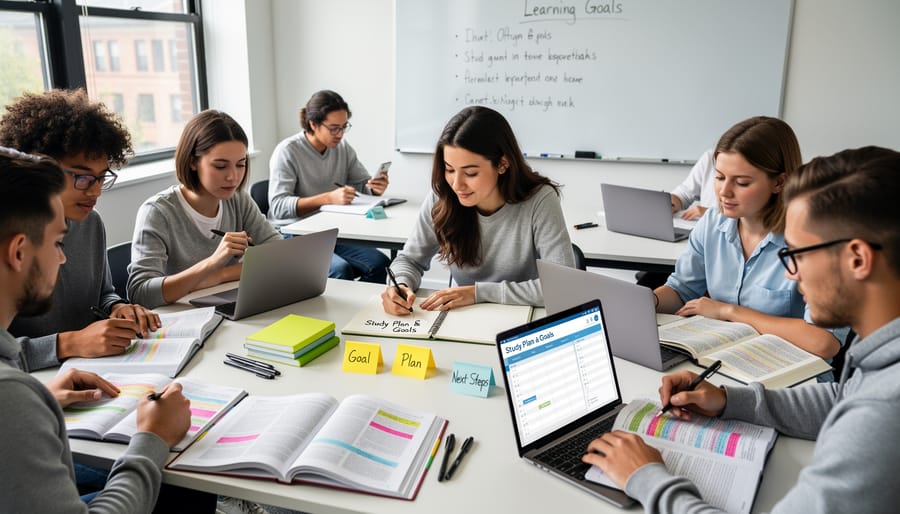
Phase 1: Forethought (Before Learning Begins)
This is where the magic begins! Before your students even crack open a textbook or start an activity, the Forethought phase sets the stage for successful learning. Think of it as the mental preparation that athletes do before a big game.
During this crucial phase, students engage in three key activities: setting goals, planning their approach, and building motivation. When you understand what’s happening in your students’ minds during this phase, you can better support them in becoming independent learners.
Let’s break down what this looks like in your classroom. Goal-setting means helping students identify what they want to achieve. Instead of vague aims like “do well on the test,” encourage specific targets such as “master multiplication tables up to 12” or “identify three main causes of the Civil War.” The more concrete the goal, the better!
Planning comes next. This is where students think strategically about how they’ll reach their goals. Will they use flashcards? Create a study schedule? Form a study group? Your role is to guide them in selecting strategies that match their learning style and the task at hand.
Motivation is the fuel that keeps everything running. Students assess their self-efficacy (their belief in their ability to succeed) and think about why the learning matters. You can boost this by connecting lessons to real-world applications and celebrating small wins along the way.
In practice, you might start a new unit by having students write down one specific goal, sketch out a study plan, and share why they’re excited to learn the material. This simple routine activates the Forethought phase and prepares their brains for deeper learning ahead!
Phase 2: Performance (During the Learning Process)
This is where the magic happens! Phase 2 is all about what students do while they’re actively engaged in learning. Think of it as the “doing” phase where all that planning from Phase 1 gets put into action.
During this performance phase, students become active managers of their own learning experience. They’re not just passively absorbing information anymore. Instead, they’re keeping track of how well they’re understanding the material, staying focused on the task at hand, and using specific strategies to help them succeed.
Self-monitoring is a big deal here. Students need to check in with themselves regularly. Are they understanding the content? Is their strategy working? Do they need to adjust their approach? It’s like having an internal coach who keeps asking, “How’s it going? Do you need to change anything?” This ongoing awareness helps students catch problems before they become too big to handle.
Attention control is another key element. Let’s face it, distractions are everywhere! Students who master this phase learn to maintain focus on their learning goals, even when their phone buzzes or their classmates start chatting. They develop tricks to keep themselves on track, whether that’s finding a quiet spot, using timers, or breaking tasks into smaller chunks.
Task strategies are the tools students use to process and remember information. These might include summarizing what they’ve learned, creating visual organizers, practicing with flashcards, or teaching concepts to a peer. The best part? Students can customize these strategies to match their personal learning style, making the whole process more effective and enjoyable.
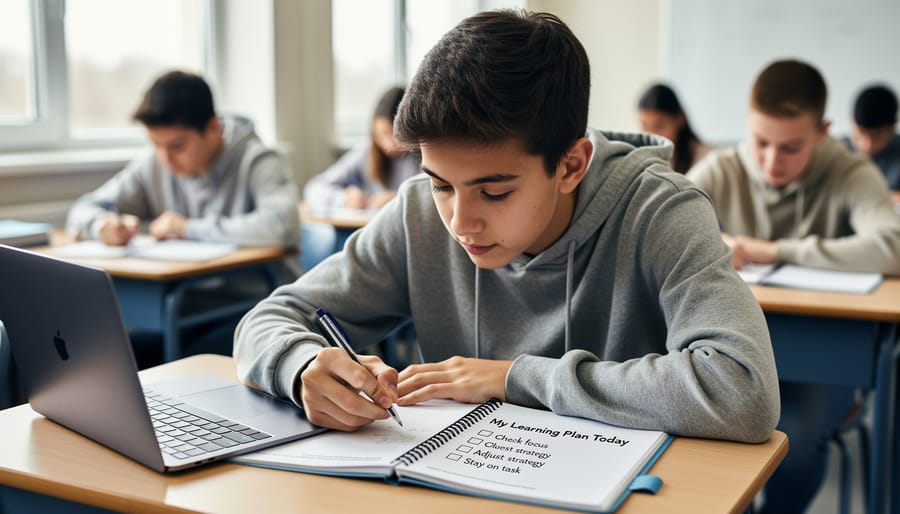
Phase 3: Self-Reflection (After Learning)
This is where the magic of growth happens! After students complete a task or learning activity, they need time to look back and evaluate how things went. This self-reflection phase is all about helping students become their own best coaches.
Start by encouraging students to ask themselves honest questions: Did my strategy work? What helped me succeed? What got in the way? This self-evaluation builds awareness and helps students recognize patterns in their learning. The key is creating a classroom culture where reflection feels natural, not like extra work.
Here’s where attribution comes in—and it’s super important! Students need to understand why they succeeded or struggled. Did they do well because they studied smart, used a helpful strategy, or asked for help? Or do they think it was just luck? When students attribute success to their own efforts and strategies rather than external factors, they feel more in control and motivated to keep improving.
Make reflection practical and engaging. After a quiz or project, give students a few minutes to jot down what worked and what they’d do differently next time. You can even turn this into a quick class discussion or exit ticket activity. Some teachers create reflection journals or use digital tools to track progress over time.
The beautiful part? When students genuinely reflect on their performance, they naturally start planning better strategies for next time. They’re building that self-regulation muscle, learning to adjust their approach, and becoming more independent learners. That’s exactly what we’re aiming for!
Why This Model Works (The Metacognition Connection)
Here’s what makes Zimmerman’s model so powerful for your classroom: it’s built on the idea that students learn best when they think about their own thinking. Sound a bit like inception? Let’s break it down in a practical way.
When your students engage in metacognition, they’re essentially becoming observers of their own learning process. They’re asking themselves questions like “How am I doing with this?” and “What strategy should I try next?” This awareness is the secret sauce that transforms passive learners into active, self-directed ones.
The beauty of Zimmerman’s three-phase cycle is that it creates natural checkpoints for metacognitive thinking. Before starting a task, students think about what they already know and what strategies might work. During the task, they monitor their progress and adjust when something isn’t clicking. After completing it, they reflect on what worked and what didn’t. Each phase builds metacognitive muscle.
Think of it like teaching someone to ride a bike. At first, you consciously think about every movement: pedaling, balancing, steering. But as metacognitive skills develop, students internalize these checkpoints. They naturally start planning their approach to new challenges, monitoring their understanding during lessons, and reflecting on their performance afterward.
This is why the model works across all subjects and grade levels. Whether your students are solving math problems, writing essays, or conducting science experiments, the metacognitive framework remains the same. They’re learning how to learn, not just memorizing content. And that’s a skill that sticks with them far beyond your classroom walls, creating lifelong learners who can tackle any challenge with confidence.
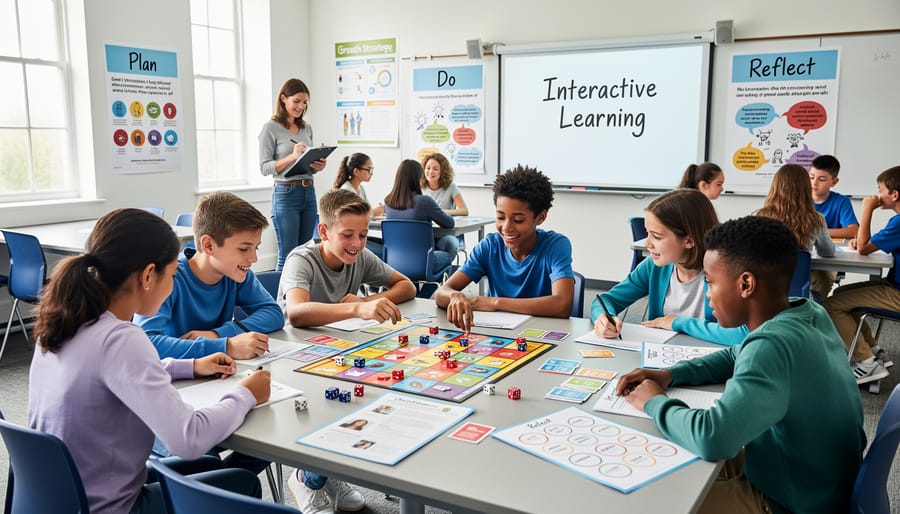
Building These Skills Through Classroom Games
Games That Build Forethought Skills
The beauty of game-based learning is that many formats naturally encourage students to plan ahead and set goals before diving in. Try incorporating quiz-based tournaments where students must create a strategy before competing—this mirrors the forethought phase perfectly. Team challenges work wonderfully too, as students need to assign roles and predict questions they might encounter.
Goal-setting games are particularly effective. Have students write down their target score or number of correct answers before starting a review game. This simple act transforms play into purposeful practice. You can also use prediction activities where learners estimate which topics will appear most frequently, encouraging them to prioritize their study focus.
Board-game style digital activities that include planning rounds give students time to think strategically. Consider games where teams can choose their difficulty level or select specific content categories—this puts decision-making front and center. The key is choosing formats that pause for reflection before action, helping students internalize that planning step that’s so crucial to self-regulated learning.
Games That Strengthen Performance Monitoring
Games offer a fantastic way to help students practice performance monitoring in real-time! When students play review games, they naturally track their progress through points, levels, or leaderboards, making self-assessment fun and immediate. The beauty of game-based learning is that students can see what’s working and what isn’t right away.
During gameplay, students actively adjust their strategies based on feedback. If a quiz game shows they’re struggling with multiplication facts, they can focus their attention there during the next round. This mirrors Zimmerman’s performance phase perfectly—students are monitoring their understanding while staying engaged and motivated.
You can enhance this process by encouraging students to pause between rounds and reflect on their approach. Ask questions like “What strategy helped you answer faster?” or “Which topics need more practice?” This builds metacognitive awareness while keeping the energy high. Games with customizable difficulty levels are especially powerful because students can challenge themselves appropriately, maintaining that sweet spot between engagement and growth while developing crucial self-monitoring skills.
Games That Promote Self-Reflection
The magic happens when games include built-in opportunities for students to pause and think about their learning journey. Look for game formats that naturally encourage reflection during or after gameplay. Quiz-style games with immediate feedback help students assess what they know and identify gaps in understanding right away.
Games that display progress charts or skill trackers give students visual proof of their growth, making the self-evaluation phase tangible and motivating. Consider incorporating debriefing sessions after competitive games where students discuss strategies they used, what worked, and what they’d change next time.
Self-assessment features like confidence ratings before answering questions add another layer of metacognitive thinking. Students don’t just answer—they evaluate their own readiness first. Post-game reflection prompts such as “What surprised you today?” or “Which question challenged you most?” transform gameplay into meaningful learning experiences.
The best part? You can customize these reflection components to match your students’ needs and grade levels, keeping the process fresh and relevant throughout the year.
Quick Wins: Start Tomorrow in Your Classroom
Ready to bring Zimmerman’s model to life in your classroom? Here are simple tweaks you can start using tomorrow!
Begin with goal-setting cards. Before any lesson or activity, give students 2 minutes to write down one specific thing they want to achieve. It could be “learn three new vocabulary words” or “improve my problem-solving speed.” This quick forethought phase exercise gets them mentally prepared and focused.
Transform your existing review games by adding a reflection round. After playing, ask students to spend 3 minutes answering: What strategy helped you most? What would you do differently next time? This builds metacognitive awareness without creating extra work for you.
Create simple self-monitoring checklists students can use during independent work. Include prompts like “Am I staying focused?” and “Do I need to try a different approach?” Students check in every 10 minutes, building performance control habits naturally.
End lessons with quick exit tickets that ask students to rate their effort, identify what helped them learn, and note one adjustment for next time. This self-reflection phase takes just 2 minutes but powerfully reinforces the complete cycle.
The beauty of these strategies? They slot right into your existing activities without requiring new materials or extensive planning. Start with one technique, see what works for your students, and customize from there. Small consistent changes create big learning gains!
Here’s the exciting truth about Zimmerman’s self-regulated learning model: it’s not about achieving perfection overnight. It’s about embracing the beautiful cycle of learning, reflecting, and growing. Each time your students move through the forethought, performance, and self-reflection phases, they’re building crucial skills that will serve them for life.
Remember, even small changes in your classroom can spark significant growth. When you introduce a quick goal-setting activity before a lesson, you’re activating forethought. When you pause mid-task to ask students how their strategy is working, you’re strengthening performance monitoring. And when you create space for reflection after an activity, you’re closing the loop and setting the stage for the next learning cycle to begin.
The magic happens when you support this process with engaging, interactive tools that make learning feel less like work and more like discovery. Games, customizable activities, and collaborative challenges naturally encourage students to set goals, monitor their progress, and reflect on their strategies. These tools don’t just make learning fun; they provide the structure students need to develop self-regulation skills without feeling overwhelmed.
So start small, stay consistent, and celebrate progress. Your efforts to nurture self-regulated learners today will create confident, independent thinkers tomorrow. The cycle continues, and with each rotation, your students grow stronger.