Why Play-Based Assessment Works Better Than Traditional Testing for Every Student
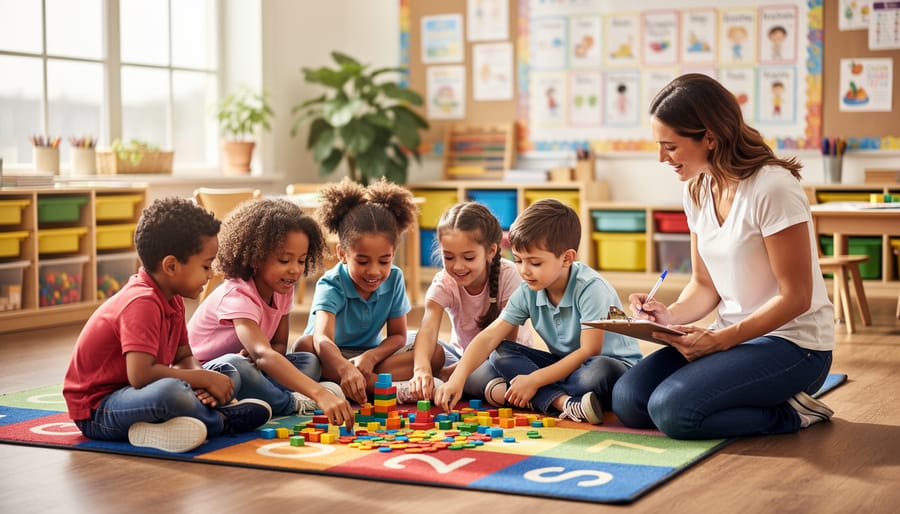
Watch your students during free play and you’re already doing assessment – you just need to know what to look for. Play-based assessment transforms everyday classroom activities into powerful opportunities to understand how each student learns, solves problems, and interacts with others, all without the stress of traditional testing.
This approach works beautifully for every learner in your classroom. Students with different abilities, language backgrounds, and learning styles can demonstrate their knowledge through actions rather than worksheets. A child who struggles with written tests might show advanced spatial reasoning while building blocks, or reveal strong mathematical thinking during a counting game. You’re meeting students where they naturally shine.
The best part? You don’t need fancy tools or complete curriculum overhauls. Start by observing students during games and activities you already use, noting specific skills they demonstrate. Document what you see with quick notes, photos, or checklists. These observations become your progress monitoring data – concrete evidence of growth over time that parents and administrators can understand.
Play-based assessment feels less like testing and more like getting to know your students as learners. You’ll discover strengths you never knew existed and catch learning gaps before they become bigger problems. Plus, students stay engaged and motivated because they’re simply playing, not performing under pressure. This is assessment that actually helps you teach better while keeping the joy in learning.
What Play-Based Assessment Actually Means in Your Classroom
The Core Principles That Make It Work
Play-based assessment works because it taps into what students do naturally: play, explore, and engage. Instead of sitting at desks taking tests, children reveal their true abilities through activities that feel fun and stress-free. Let’s break down what makes this approach so effective.
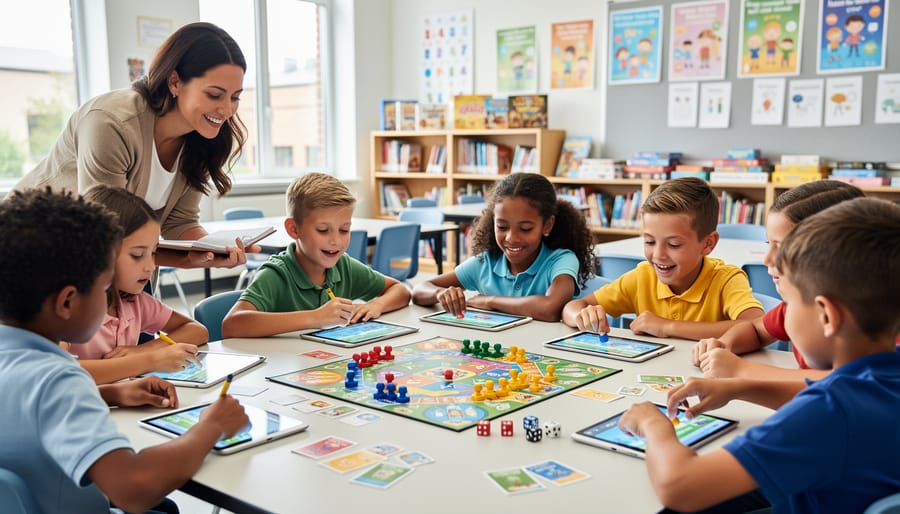
First up is naturalistic observation. This means watching students in their element, during activities they genuinely enjoy. When you observe kids building with blocks, playing board games, or solving puzzles together, you’re seeing their real skills shine through. They’re not performing for a grade; they’re just being themselves, which gives you authentic insights into their thinking, problem-solving, and social abilities.
Next, engagement-driven tasks keep students motivated and focused. When assessment feels like play rather than a test, students stay involved longer and show you what they can really do. This approach connects beautifully with UDL principles because it offers multiple ways for students to demonstrate their knowledge without the pressure of traditional testing.
Finally, authentic skill demonstration happens naturally during play activities. Whether students are collaborating on a scavenger hunt, strategizing during a card game, or creating during an art project, they’re showing you their critical thinking, communication, and creativity in real time. You’re not guessing what they know; you’re watching them apply their skills in meaningful contexts that mirror real-world situations.
Why This Approach Changes Everything for Inclusive Classrooms
Breaking Down Barriers Traditional Tests Create
Traditional tests often create invisible walls that keep many students from showing what they truly know. Think about a child with test anxiety—their hands shake, their mind goes blank, and suddenly everything they learned disappears. Or consider English language learners who understand the math concept perfectly but struggle with the written instructions. Students with ADHD might lose focus during lengthy written exams, while those with dyslexia may know all the answers but can’t get through the reading-heavy questions fast enough.
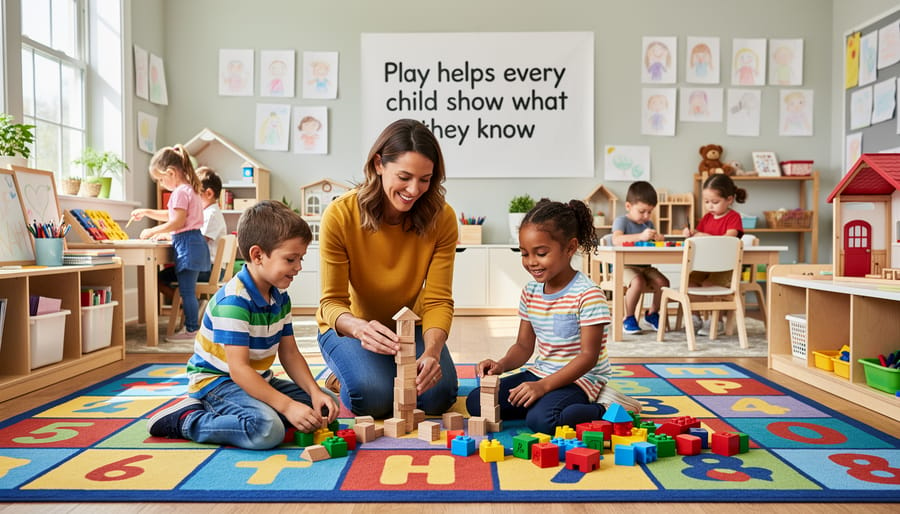
Play-based assessment completely changes this picture. When you observe students during game activities, you’re seeing their authentic abilities shine through. A child who freezes during traditional spelling tests might confidently sound out words while playing a classroom board game. Students who need movement can demonstrate their understanding while physically participating rather than sitting still at a desk.
The beauty of play-based methods is their natural flexibility. You can incorporate sensory-friendly game adaptations for students with sensory processing differences, ensuring everyone can participate comfortably. Similarly, communication supports during play help nonverbal students or those with speech differences demonstrate their knowledge without language being a barrier.
Instead of one-size-fits-all testing, play-based assessment meets students where they are, removing obstacles and letting their true capabilities emerge naturally through engagement and interaction.
Simple Ways to Track Progress Through Play
Quick Observation Techniques You Can Use Tomorrow
Ready to start gathering valuable insights during play? Here are some super simple observation techniques that’ll fit right into your classroom routine without adding extra stress to your day.
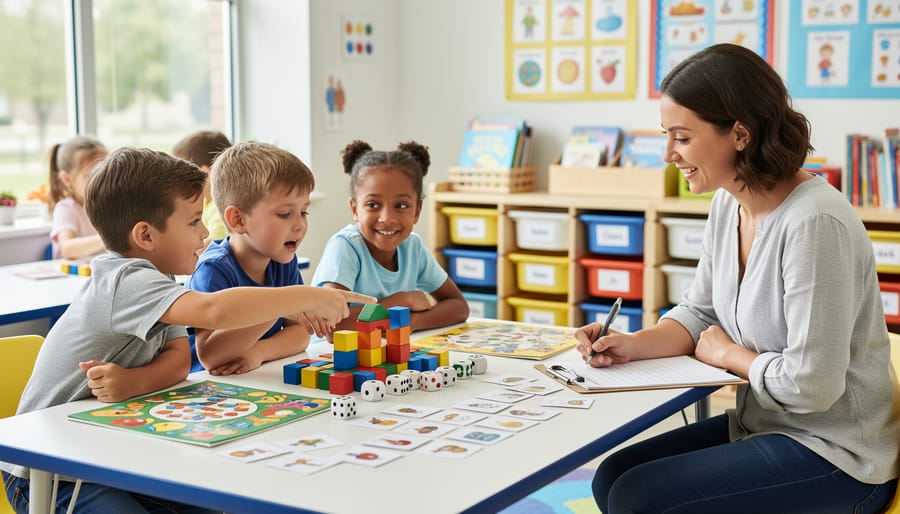
Start with quick observation checklists that focus on specific skills. Keep a clipboard handy with student names and 3-4 target skills you’re watching for, like “takes turns,” “solves problems independently,” or “counts objects accurately.” During a 15-minute game session, simply add checkmarks or quick notes beside each name. This method takes seconds but gives you concrete data over time.
Sticky note snapshots are your new best friend! Grab different colored sticky notes for different students or skills. When you notice something noteworthy during play, jot down the student’s name, date, and what you observed. At the end of the day, stick them in individual student folders. These brief anecdotal notes create a powerful progress portfolio without requiring you to remember everything later.
Try the “5-minute focus” approach. Choose one student per game session to watch more closely. Set a timer for five minutes and record what you see them doing, saying, and creating during play. This focused observation gives you rich details about individual learning patterns without overwhelming yourself trying to watch everyone at once.
Keep a voice memo app on your phone or tablet for quick audio notes. While students play, quietly record your observations hands-free. Later, you can transcribe key points or simply keep the audio as documentation. It’s faster than writing and captures your immediate impressions.
The beauty of these techniques is their flexibility. Mix and match based on your schedule, class size, and what feels manageable. Start with just one method and build from there as you get comfortable.
Turning Your Review Games Into Assessment Gold
Your favorite classroom review games are actually assessment powerhouses waiting to happen! The secret is looking at those interactive activities through an assessment lens while keeping the energy high.
Start by identifying what you’re actually measuring. When students play Jeopardy-style games or interactive quizzes, you’re gathering real-time data about their understanding. The beauty of game-based learning approaches is that students demonstrate knowledge naturally without the pressure of traditional tests.
Here’s the game-changer: customize your review templates to target specific learning objectives. Instead of random questions, align each game prompt with standards you need to assess. This transforms fun activities into valuable assessment moments.
Track progress effortlessly by using digital game platforms that automatically record responses. You’ll see patterns emerge showing who grasps concepts and who needs support, all while students think they’re just playing.
Make it even more powerful by including varied question types. Mix multiple choice with open-ended responses, or add visual elements for different learning styles. This gives you a fuller picture of student understanding.
The best part? Students stay engaged because it feels like play, not testing. They’ll participate more authentically, giving you better assessment data than anxiety-filled quizzes ever could. You’re not sacrificing rigor for fun; you’re enhancing assessment quality through engagement.
Making It Work in Your Real Classroom
Start Small: Your First Play-Based Assessment This Week
Ready to dip your toes into play-based assessment? Let’s start with something super simple you can try this week with materials you already have.
Grab a basic board game format or create a simple path on paper with 10-15 spaces. This becomes your assessment tool! Here’s how it works: students move along the path by answering questions, solving problems, or demonstrating skills related to what you’re currently teaching. Maybe it’s multiplication facts, vocabulary words, or identifying story elements.
The magic happens in what you observe. While students play, notice how they approach problems. Do they count on their fingers? Use a strategy? Ask for help? These observations tell you so much more than a worksheet ever could.
Keep it flexible and customize based on your needs. You can differentiate by having multiple question cards at different difficulty levels, allowing students to choose their challenge level. Some students might answer orally while others write responses. The game format stays the same, but everyone accesses it at their level.
Start with just 10 minutes during a transition time or as a station activity. You don’t need fancy materials or extensive planning. A hand-drawn path, some index cards with questions, and a die or spinner are enough to begin gathering valuable assessment data while students think they’re just having fun. That’s the beauty of play-based assessment!
Customizing Games for Different Learning Goals
The beauty of play-based assessment is that one game template can serve countless learning goals with just a few tweaks. Think of your favorite review game as a flexible framework that you can customize for any subject or skill level.
Start by identifying the specific skill you want to assess. Are you checking math fluency, vocabulary retention, reading comprehension, or problem-solving abilities? Once you know your target, adjust the game questions or challenges accordingly. A simple matching game can assess multiplication facts for third graders or chemical formulas for high schoolers.
Consider differentiation within the same game. You can color-code question cards by difficulty level, allowing students to choose their challenge or letting you assign appropriate levels based on individual needs. This approach supports all learners while keeping everyone engaged in the same activity.
Don’t forget to incorporate culturally responsive game design principles. Use examples, scenarios, and characters that reflect your students’ diverse backgrounds and experiences. This makes assessment more meaningful and accessible for everyone.
Try layering multiple skills into one game. A board game could assess content knowledge through questions while also evaluating collaboration skills and strategic thinking through gameplay mechanics. This holistic approach gives you richer assessment data.
Keep a collection of adaptable templates that work across subjects. With minor modifications to content and rules, the same game structure can become your go-to assessment tool throughout the year, saving you valuable planning time while maintaining student engagement.
What to Do With the Information You Gather
Gathering all this wonderful information through play is just the beginning! Now let’s talk about what to do with everything you’ve observed to make it really work for your students.
Start by keeping simple, organized records. You don’t need fancy systems—a notebook, digital document, or even voice memos work great. Jot down quick notes right after play sessions while details are fresh. Focus on specific behaviors you observed: “Maya collaborated with three peers during the building challenge” or “James solved the puzzle independently after two attempts.” These concrete examples tell a much richer story than generic comments.
Create a simple organizational system that works for you. Consider keeping a folder for each student with observation notes, photos of their work, and quick anecdotes. Digital portfolios are fantastic too, especially since you can easily share them with parents and include photos or short videos of students engaged in play activities.
When it’s time to communicate with parents, translate your observations into clear, positive language. Instead of educational jargon, share specific examples: “During our math game today, your child showed amazing problem-solving skills by finding three different solutions!” Parents love seeing their children in action, so include photos or work samples when possible.
For administrators, connect your play-based observations to learning standards and goals. Show how that block-building activity addressed spatial reasoning standards or how the collaborative game developed communication skills. This helps everyone see the serious learning happening through play.
Most importantly, use what you’ve learned to guide your teaching. Notice a student struggling with turn-taking? Plan more cooperative games. See someone excelling at pattern recognition? Challenge them with more complex activities. Your observations become your roadmap for differentiation and customization, helping you meet each student exactly where they are.
Remember, this process gets easier with practice. Start small, stay consistent, and celebrate the insights you’re gaining about your amazing students!
You’re already doing amazing work in your classroom, and play-based assessment isn’t about adding more to your plate. It’s about working smarter, not harder. Instead of creating separate assessment times, you’re simply paying attention to what students are already showing you during the activities they love most.
Ready to get started? Pick just one game-based activity this week. Maybe it’s a math game where students sort objects, or a vocabulary challenge that gets them moving around the room. As they play, grab a clipboard and jot down quick observations. Notice who jumps right in, who needs a buddy, and who finds creative solutions you never expected. That’s it. You’ve just completed a play-based assessment.
The beauty of this approach is that it grows with you. Start small, get comfortable, and gradually add more game-based moments to your routine. Before you know it, you’ll have a rich, colorful picture of each student’s strengths and needs without a single worksheet in sight. Your students will be more engaged, you’ll gather better insights, and learning will feel joyful again. Take that first step today and watch the magic unfold.