Transform Your Game Debriefs with the 3-2-1 Reflection Template
Transform your post-lesson debriefs into meaningful learning moments with the 3 2 1 reflection template—a simple yet powerful tool that helps students process what they’ve learned in just minutes. This versatile strategy asks students to identify three key takeaways, two interesting facts or connections, and one lingering question from your lesson or classroom game activities.
The beauty of this reflection method lies in its flexibility. You can adapt it to any subject, grade level, or activity type, making it perfect for wrapping up everything from science experiments to literature discussions. Students love the structured format because it feels manageable, while you’ll appreciate how it reveals gaps in understanding and sparks deeper thinking.
Whether you’re new to reflection activities or looking to refresh your current routine, this template offers an engaging way to close your lessons with purpose. Plus, with endless customization options, you can tailor the prompts to match your specific learning goals and keep students engaged day after day.
What Is the 3-2-1 Reflection Template?
The 3-2-1 Reflection Template is a super simple yet powerful tool that helps students process what they’ve just learned through classroom games or activities. Think of it as a quick mental snapshot that captures their learning journey in just three easy steps.
Here’s how it works: students identify 3 things they learned, 2 interesting discoveries that caught their attention, and 1 question that’s still on their mind. That’s it! No complicated forms or lengthy essays required.
What makes this template so effective is its beautiful simplicity. The structure naturally guides students from broader learning (three items) to more focused insights (two discoveries) and finally to deeper thinking (one remaining question). It takes just a few minutes to complete, making it perfect for wrapping up any classroom game without losing momentum or student engagement.
The best part? This template adapts to absolutely any subject or grade level. Whether you’re teaching multiplication facts through a math relay race or exploring historical events with a trivia competition, the 3-2-1 format fits seamlessly. You can use it with kindergarteners learning letter sounds or high schoolers debating complex topics.
You’ll love how this template encourages every student to participate. Even reluctant learners find it manageable because it’s not overwhelming. Plus, that final question component keeps curiosity alive and opens doors for your next lesson, creating a natural bridge between today’s game and tomorrow’s learning adventure.

Why This Template Works After Classroom Games
Bridges the Gap Between Fun and Learning
The magic of the 3 2 1 template is how smoothly it shifts students from active play into thoughtful reflection without losing their energy. After a high-energy game, students are buzzing with excitement, and you want to channel that enthusiasm rather than shut it down. This template acts as a perfect bridge because it keeps things simple and structured. The numbered format feels familiar and non-threatening, almost like another game itself. Students know exactly what’s expected: share three things, then two, then one. There’s no confusion or resistance because the instructions are crystal clear. Plus, you can customize it to match whatever game you just played, making the reflection feel like a natural extension of the fun rather than a completely separate task. Whether students are writing, drawing, or discussing their responses, they stay engaged because the format respects their time and meets them where they are emotionally and mentally.
Quick Yet Meaningful
Let’s be honest – you’re busy! Between lesson planning, grading, and everything else on your plate, who has time for complicated reflection activities? That’s the beauty of the 3-2-1 template. It takes just 5-10 minutes but delivers real insight into student learning. The structured format gives students clear prompts to respond to, so they’re not staring at a blank page wondering what to write. Three things, two things, one thing – it’s simple enough that even your youngest learners can jump right in without lengthy explanations. Yet this simplicity doesn’t mean shallow thinking. By asking targeted questions, you’re guiding students to identify key concepts, make connections, and voice questions they might otherwise keep to themselves. It’s the perfect balance of quick and meaningful, fitting seamlessly into lesson closures while giving you valuable feedback about what’s actually sticking.
How to Use the 3-2-1 Template with Your Game Activities
Before the Game: Set Expectations
The secret to successful reflection? Let your students know it’s coming! Before you start any game or activity, take a moment to tell your class they’ll be sharing their thoughts afterward using the 3-2-1 format. This simple heads-up works wonders because students will naturally pay closer attention when they know they’ll need to reflect later.
Try saying something like, “After we play, you’ll share 3 things you learned, 2 things you found interesting, and 1 question you still have.” Write the format on the board so it’s visible throughout the activity. This preview helps students mentally prepare and actively engage rather than just going through the motions. You’ll notice they start taking mental notes during gameplay, which deepens their learning experience and makes the reflection portion much richer and more meaningful for everyone.
During Debrief: Facilitate Effectively
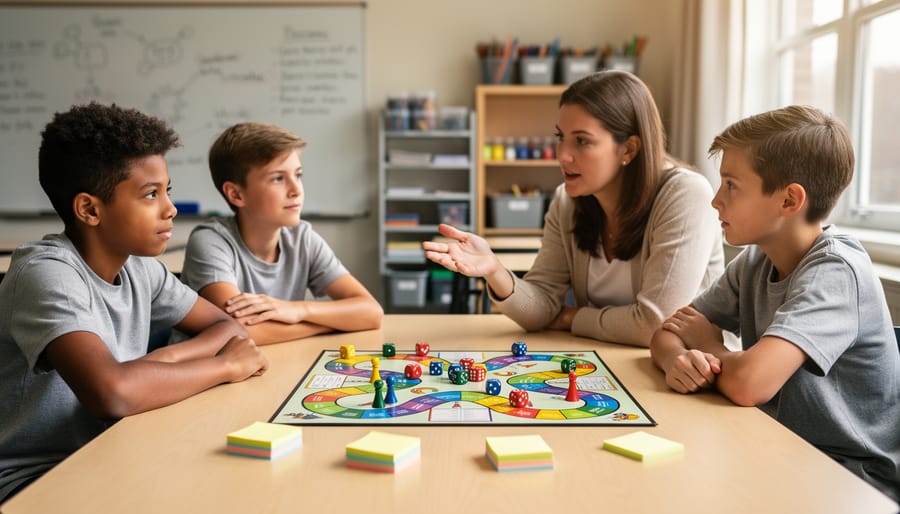
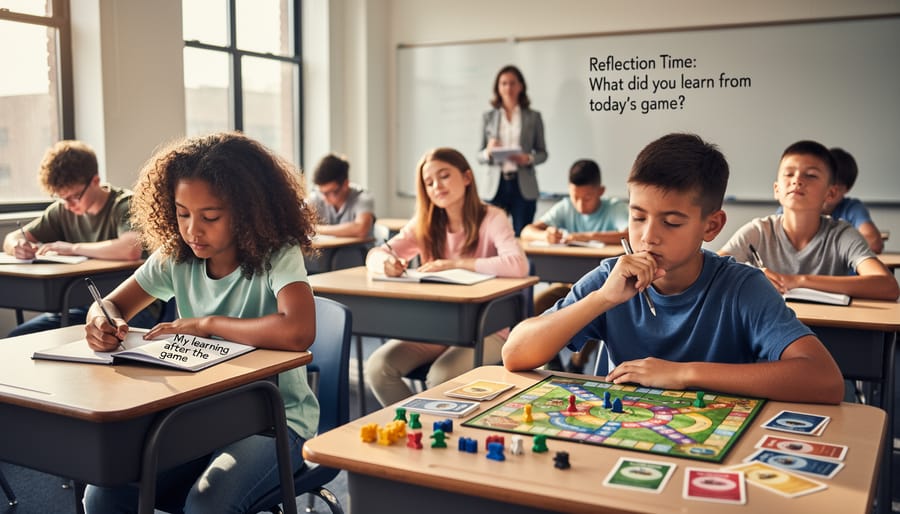
The beauty of the 3-2-1 template is its flexibility! Start by deciding which format works best for your activity and students. For quick debriefs after high-energy games, have students complete their reflections individually first. This gives everyone thinking time and ensures quieter voices are heard.
Then, invite students to share with a partner. Pair-sharing builds confidence and often sparks deeper insights as students hear different perspectives. You might say, “Turn to your neighbor and share one thing you learned today!”
For whole-class discussion, guide students through each section sequentially. Ask volunteers to share their three takeaways, then move to two questions, and finally discuss the one action item. This creates a natural flow and prevents overwhelming your students.
Mix it up based on your goals! Use individual reflection for assessment, pairs for collaboration practice, or whole-class sharing to build community. You can even combine approaches—individual writing followed by small group discussion works wonderfully for deeper processing. The key is choosing what serves your students best in that moment.
After Reflection: Capture the Learning
Once students complete their reflections, you’ve got gold! For quick processing, invite volunteers to share one response aloud—it sparks great discussions and validates different perspectives. Create a gallery walk where students post their reflections around the room for peers to read. You can also snap photos of completed templates to track growth over time or identify concepts that need revisiting. Collect the sheets periodically to gauge class understanding and adjust your teaching accordingly. Some teachers keep reflection journals where students store their 3-2-1s, creating a powerful record of learning throughout the year. The beauty is in the flexibility—use these insights however works best for your classroom rhythm!
Creative Ways to Customize Your 3-2-1 Template

Adapt the Prompts for Different Games
The beauty of the 3-2-1 template is how easily you can customize it for any classroom game! Let’s look at some fun adaptations that will make your debriefs even more meaningful.
For trivia games, try: 3 facts I learned today, 2 questions I still have, 1 topic I want to explore further. This keeps the learning momentum going beyond the game itself.
After team-building activities, switch to: 3 strengths our team showed, 2 challenges we overcame together, 1 skill we’ll improve next time. This helps students recognize their collaborative growth.
For review games before tests, use: 3 concepts I feel confident about, 2 areas I need to study more, 1 study strategy I’ll use tonight. This promotes metacognition and test preparation.
You can even get creative with specific content areas! In math games, try: 3 strategies that worked, 2 mistakes that taught me something, 1 problem type I mastered. The possibilities are endless, and your students will appreciate the variety while still enjoying the familiar structure.
Format Options for Different Grade Levels
Flexibility is key when adapting 3-2-1 reflections across grade levels! For younger students (K-2), consider using visual options like drawing their three favorite things or holding up fingers to show responses. Picture cards work wonderfully too. Primary grades often succeed with verbal reflections during circle time rather than written responses.
Older elementary students (3-5) can handle written templates, and you can easily print your reflection template for quick distribution. Middle and high schoolers excel with digital formats like Google Forms or Padlet, allowing anonymous submissions if needed.
Mix it up to keep things fresh! Try verbal reflections one day, sticky notes the next, and digital submissions later. This variety supports making games work for all learners by honoring different communication styles. The beauty of 3-2-1 is its adaptability—choose whatever format energizes your students most!
Make It Game-Themed
Want to take your reflection activity to the next level? Make your template visually match your game theme! If you’ve been playing a space-themed trivia game, design your 3-2-1 template with stars, planets, and cosmic colors. Sports games? Add basketballs or soccer balls as bullet points. You can even change the language to fit your theme—instead of “3 things I learned,” try “3 treasures I discovered” for a pirate adventure game or “3 power-ups I gained” for a video game theme. Use matching fonts and color schemes from your game slides to create that seamless, professional look. This small touch makes the reflection feel like a natural extension of the fun rather than a separate worksheet. Plus, when students see that cohesive design, they stay engaged and excited to participate. Get creative and watch how theme consistency boosts participation!
Sample 3-2-1 Prompts for Classroom Games
Ready to jump right in? Here are some game-specific 3-2-1 prompts you can use tomorrow! These variations keep your reflections fresh and perfectly matched to what you’re teaching.
For Math Games:
– 3 strategies I used, 2 mistakes that helped me learn, 1 tip for next time
– 3 numbers that mattered most, 2 patterns I noticed, 1 question I still have
– 3 steps in my solution, 2 ways to check my answer, 1 challenge I overcame
For PE and Movement Games:
– 3 skills I practiced, 2 moments of teamwork, 1 way I improved
– 3 muscles I used, 2 strategies that worked, 1 goal for next game
– 3 things I did well, 2 ways I supported teammates, 1 thing I’ll practice
For Science Experiments:
– 3 observations I made, 2 predictions that surprised me, 1 conclusion
– 3 steps we followed, 2 things that changed, 1 new question
– 3 facts I learned, 2 connections to real life, 1 experiment I want to try
For Reading and Vocabulary Games:
– 3 new words I learned, 2 ways I’ll use them, 1 favorite word
– 3 clues that helped me, 2 strategies I used, 1 tricky moment
For Team-Building Activities:
– 3 ways we worked together, 2 challenges we solved, 1 celebration
– 3 people who helped me, 2 things I contributed, 1 proud moment
Mix and match these prompts or customize them to fit your specific game and learning objectives!
Common Mistakes to Avoid
Even great tools can fall flat if we’re not careful! Here are a few quick pitfalls to watch out for when using the 3-2-1 template.
First, avoid rushing through the reflection. If you squeeze it into the last two minutes of class while students are packing up, you’re turning it into busy work. Give this process the time it deserves—at least 5-10 minutes—so students can genuinely think through their responses.
Second, provide adequate think time before students share or write. Jumping straight into responses without a moment to process leads to surface-level answers. Try giving 30-60 seconds of silent thinking before they put pen to paper.
Third, don’t use the same prompts every single time. Yes, consistency helps, but using identical questions week after week makes the activity feel stale. Mix it up occasionally to keep engagement high and thinking fresh.
Finally, resist the urge to skip the follow-up. If you never acknowledge or use student reflections, they’ll quickly realize it doesn’t really matter. Even a quick comment or building tomorrow’s lesson around their feedback shows you value their input and keeps the reflection meaningful.
The 3-2-1 reflection template is your new secret weapon for turning every classroom game into a powerful learning experience. This simple structure takes just minutes to implement but delivers lasting impact by helping students process what they’ve learned, celebrate their wins, and identify next steps. The beauty of this tool lies in its flexibility—you can customize it to match any game, any grade level, and any learning objective.
Ready to give it a try? Pull out this template after your next classroom game and watch your students engage in meaningful reflection. Whether you use sticky notes, digital tools, or simple conversation, the 3-2-1 format works seamlessly with your teaching style. Make it a regular part of your game toolkit, and you’ll quickly see students becoming more thoughtful, self-aware learners who carry lessons beyond game time into everyday classroom life.