How AI Adaptive Learning Transforms Your Classroom Into a Personalized Powerhouse
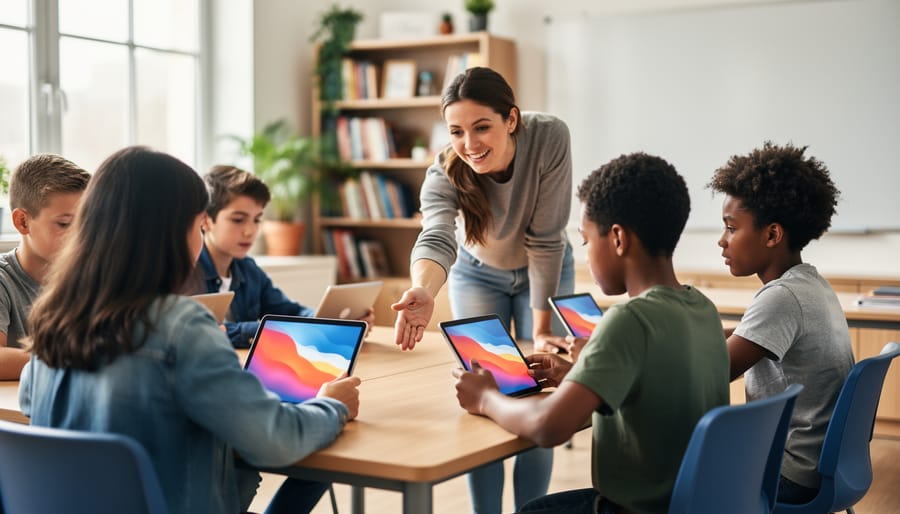
Imagine walking into your classroom and discovering that every lesson automatically adjusts to each student’s unique learning pace, strengths, and challenges. That’s the power of AI adaptive learning, and it’s already transforming classrooms like yours without requiring a computer science degree to implement.
AI adaptive learning uses smart technology to personalize instruction in real-time, identifying exactly where students struggle and adjusting difficulty levels, content delivery, and practice opportunities accordingly. Think of it as having a teaching assistant who instantly recognizes when Sarah needs more visual examples for fractions while Miguel is ready for advanced problem-solving, then delivers precisely what each student needs at that moment.
The best part? You don’t need fancy equipment or complicated systems to get started. Many tools you already love, from educational games to quiz platforms, now include adaptive features that work behind the scenes. These technologies track student responses, recognize patterns in their learning, and automatically customize the next question or activity to keep every learner in their optimal growth zone—challenged but not overwhelmed, supported but not bored.
Ready to bring this game-changing approach into your teaching toolkit? Let’s explore how AI adaptive learning works in practical, everyday classroom situations.
What Is AI Adaptive Learning (And Why Should You Care)?
Think of AI adaptive learning as your ultimate teaching assistant—one that never gets tired and remembers exactly where each student needs support. In simple terms, it’s technology that watches how students interact with learning material and automatically adjusts the difficulty, pace, and content to match their individual needs.
Here’s how it works in practice: when a student answers questions correctly, the system recognizes they’re ready for more challenging material. Struggling with a concept? The AI notices and offers additional practice, different explanations, or scaffolded support before moving forward. It’s like having a one-on-one tutor for every student simultaneously.
You’re probably already doing this naturally in your classroom. When you notice a student breezing through multiplication facts, you give them more complex problems. When someone’s stuck on fractions, you pull out manipulatives or try a different approach. AI adaptive learning simply scales this personalized attention across your entire class, even when you’re helping other students.
The beauty is that it happens in real-time. While you’re working with small groups or managing classroom activities, the technology is continuously gathering data on each student’s progress and adapting accordingly. It tracks which concepts they’ve mastered, where they’re struggling, and how quickly they’re progressing.
This doesn’t replace your teaching expertise—it enhances it. You still design the learning experiences, set the goals, and provide that crucial human connection. The AI just handles the heavy lifting of personalization, freeing you to focus on what you do best: inspiring and supporting your students. Plus, you get valuable insights into each learner’s journey, making your instruction even more targeted and effective.
The Magic Behind Adaptive Learning Technology
Real-Time Adjustments That Actually Work
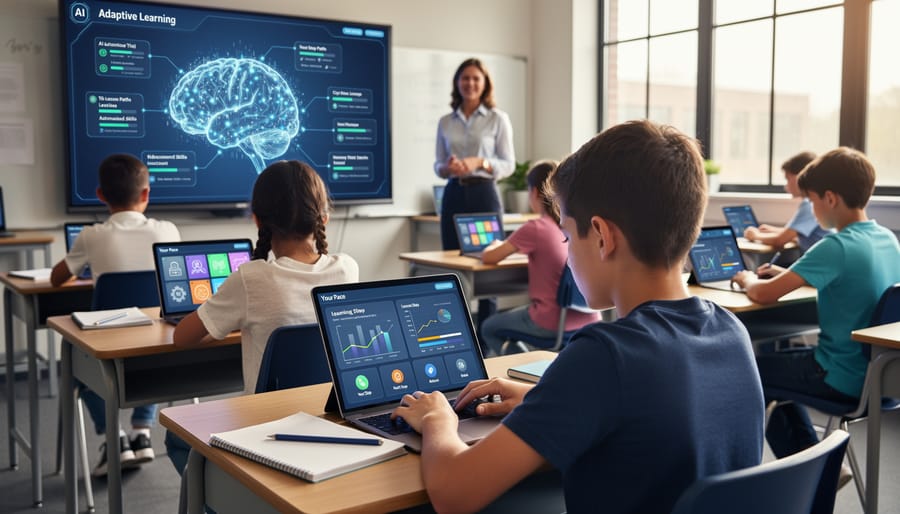
Here’s the magic behind adaptive learning: AI works like an attentive teaching assistant that never blinks! As students engage with content, the system continuously monitors their responses, tracking which questions they answer quickly versus which ones cause hesitation. When a student struggles with a particular concept, the AI instantly notices patterns in their mistakes and response times.
Instead of plowing forward or forcing students to stay stuck, the technology makes immediate adjustments. If a student is breezing through material, the difficulty ramps up to maintain engagement and challenge. Struggling with fractions? The AI provides additional practice problems at a simpler level, offers hints, or presents the concept in a different format before moving ahead.
This happens seamlessly during the learning session, not days later when you’re grading papers. Think of it as having a personalized tutor for each student who knows exactly when to encourage, when to challenge, and when to take a step back. The best part? You can see these adjustments happening in real-time dashboards, giving you valuable insights into where each student truly stands without administering lengthy assessments.
Data That Helps You Teach Smarter
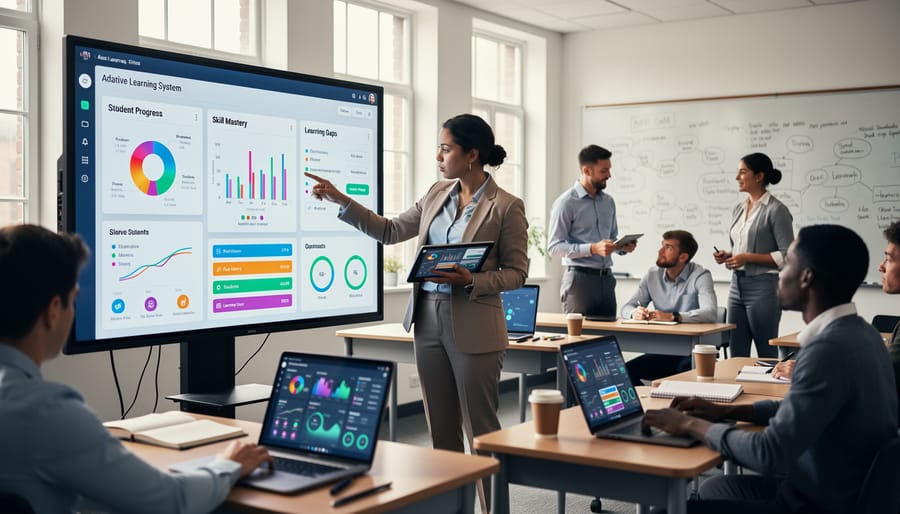
One of the biggest game-changers with AI adaptive learning is the powerful feedback it gives you as a teacher. Instead of wondering which students are struggling or which concepts need more attention, adaptive systems track everything in real-time and show you exactly what’s happening in your classroom.
These platforms generate data-driven insights that reveal patterns you might miss during regular instruction. You’ll see which topics students consistently find challenging, who needs extra support, and which learners are ready for enrichment activities. The best part? This information comes to you in easy-to-read dashboards and reports, not complicated spreadsheets.
This means you can customize your lesson plans based on actual evidence rather than guesswork. Spotted a learning gap in fractions? Adjust tomorrow’s lesson. Notice a group of students racing ahead? Prepare extension activities. With adaptive learning tools, you’re teaching smarter because you have the information you need right at your fingertips, empowering you to make confident decisions that directly impact student success.
Bringing AI Adaptive Learning Into Your Classroom
Pair Adaptive Tools with Interactive Review Games
Here’s the magic combination: AI adaptive learning identifies exactly what each student needs, and interactive review games make practicing those skills fun and memorable! Think of it as a one-two punch for student success.
After your adaptive learning platform pinpoints specific skills for review, you can create customized PowerPoint games that target those exact concepts. Did your adaptive tool show that five students are struggling with multiplying fractions while another group needs decimal challenges? No problem! Design separate game boards or questions that meet each group where they are.
The beauty of this pairing is flexibility. You can quickly adjust game content to match the personalized learning paths your students are following. Maybe your adaptive system reveals that certain students need more visual support while others thrive with word problems. Your review games can incorporate both formats, giving everyone the practice they need in ways that work best for them.
Plus, when you combine adaptive insights with learning analytics from your review games, you get an even clearer picture of student progress. You’ll see which concepts stick during game play and which need more reinforcement.
The best part? Students don’t feel like they’re doing extra work. They’re having fun while reinforcing the personalized content their adaptive learning platform identified. It’s differentiation that feels like celebration, not separation.
Start Small and Build Confidence
Ready to give AI adaptive learning a try? Here’s the secret: you don’t need to transform your entire curriculum overnight! Start with just one subject or unit where you’d like to see more personalized learning happening. Maybe it’s math review on Fridays or vocabulary practice in language arts.
Review sessions are perfect launching pads for adaptive approaches. Try incorporating game-based activities that automatically adjust difficulty based on student responses. These feel less like tests and more like challenges, keeping kids motivated while the AI works behind the scenes to customize their experience.
The beauty of starting small is that you’ll build confidence as you see what works. You’ll notice which students thrive with adaptive challenges and discover how different question types engage your class. Plus, when students experience success at their own level, their enthusiasm becomes contagious!
Once you’re comfortable with one subject, expanding to others becomes natural. You’ll already know the rhythm, and your students will be eager for more personalized learning adventures. Remember, every expert started with a single step, and that’s all you need to take today.
Make It Fun, Not Frustrating
The magic of AI adaptive learning shines brightest when students stay motivated and excited about their progress. Think of it like a video game that adjusts its difficulty level just right—not so easy that kids get bored, but not so hard that they want to give up. When you implement adaptive learning in your classroom, focus on celebrating small wins and keeping the experience positive. Let AI handle the heavy lifting of tracking progress and adjusting content difficulty, while you add those personal touches that make learning truly enjoyable. Use encouraging feedback, incorporate game-like elements, and let students see their growth over time. Remember, personalization isn’t just about finding gaps—it’s about building confidence and keeping that spark of curiosity alive in every learner.
Real Benefits You’ll See in Your Students
Every Student Gets What They Need
Here’s the beautiful part: with AI adaptive learning, you don’t have to manually create five different versions of every assignment or spend hours planning individualized instruction. The technology does the heavy lifting for you!
When students interact with adaptive platforms, the AI automatically adjusts the difficulty level, pacing, and even the types of questions based on each learner’s responses. Your advanced students get appropriately challenging material that keeps them engaged, while students who need more support receive additional practice and scaffolding exactly where they need it.
This means differentiation happens naturally during gameplay or practice sessions. You can track student progress and see who’s mastering concepts and who needs extra help, all without creating endless worksheets or feeling overwhelmed by classroom management.
The best part? Students often don’t even realize they’re receiving different content because everyone stays engaged at their own level. No one feels singled out or left behind. It’s personalized learning that actually works in real classroom settings, giving you more time to focus on meaningful interactions with your students rather than paperwork.
Confidence Grows When Learning Fits
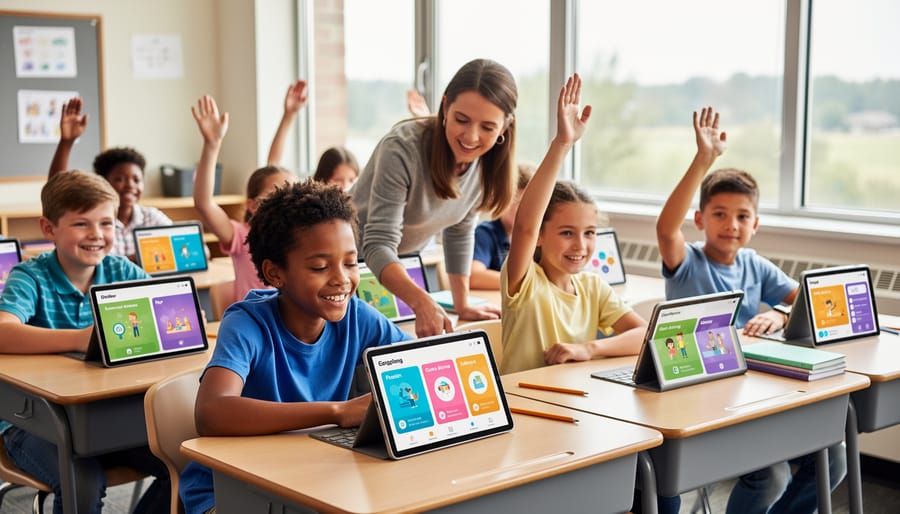
Think about the last time you saw a student light up after finally mastering a challenging concept. That magic moment happens when the difficulty level is just right—not too easy to bore them, not too hard to frustrate them. This is exactly what AI adaptive learning delivers consistently.
When students work at their perfect challenge level, something wonderful happens. They stop feeling overwhelmed or disengaged and start believing in themselves. A struggling reader who receives texts at just the right complexity level stops avoiding reading time. A math student who gets problems that stretch their skills without breaking their spirit starts volunteering answers.
AI adaptive learning creates this sweet spot automatically. The system notices when a student breezes through questions and increases difficulty. When someone struggles, it steps back and provides more scaffolding. Students get continuous feedback that shows them their progress, which builds momentum and motivation.
The beauty is that every student experiences success at their own pace. There’s no shame in moving slower or feeling held back when advancing faster. Each learner follows a personalized path that celebrates their individual growth. This customization removes the comparison trap that can crush confidence in traditional classrooms.
When students feel appropriately challenged, they develop a growth mindset. They start seeing mistakes as learning opportunities rather than failures. This shift transforms classroom energy from anxious to enthusiastic, creating an environment where everyone wants to participate and improve.
Simple Ways to Customize Your Approach
Ready to bring adaptive learning into your classroom without getting overwhelmed? Here are some practical ways to personalize instruction and create more engaging learning experiences for your students.
Start by gathering simple data about your learners. Quick check-ins, exit tickets, or digital polls can reveal what students know and what they’re still working on. Use this information to adjust your next lesson or group students strategically. You don’t need fancy algorithms to make smart decisions about instruction.
Mix up your review activities based on student needs. Some learners thrive with competitive games, while others prefer collaborative challenges. Tools like interactive review platforms let you create different game modes and difficulty levels, so everyone stays engaged at their own pace.
Build in choice whenever possible. Let students select which topics to practice or how they want to demonstrate understanding. This autonomy mirrors what adaptive technology does automatically, putting learners in the driver’s seat of their education.
Use flexible grouping strategies. Pair students based on complementary skills one day, then regroup by interest level the next. This dynamic approach keeps learning fresh and targeted.
Turn your classroom games into smart teaching moments by observing which questions challenge students most. Adjust future content based on these patterns, creating your own responsive teaching cycle that adapts naturally to student needs.
Here’s the good news: bringing adaptive learning into your classroom doesn’t mean throwing out your lesson plans or starting from scratch. It’s really about enhancing the great teaching you’re already doing. Think of adaptive learning as your behind-the-scenes assistant, quietly personalizing the experience for each student while you focus on what you do best.
The magic happens when you combine personalized approaches with tools your students actually enjoy using. Interactive review games that adapt to individual needs turn practice time into something students look forward to rather than dread. You can customize these experiences to match your teaching style and curriculum goals without needing a tech degree.
Start small. Pick one area where students could benefit from more personalized practice. Try out an adaptive tool during review sessions. See what works. The beauty of this approach is its flexibility—you’re in control, adjusting and fine-tuning as you go. When you pair adaptive technology with engaging activities, you create a learning environment where every student can thrive at their own pace while staying motivated and connected to the material.